Table of Contents
- The Dawn of a New Era: September 6, 1885, Plovdiv Awakens
- Bulgaria Divided: The Political Landscape of the Late 19th Century
- The Treaty of Berlin and Its Discontents
- Rise of Nationalism and the Longing for Unity
- The Principality of Bulgaria and Eastern Rumelia: Two States, One Nation
- Key Players and Visionaries Behind the Unification Movement
- The Spark in Plovdiv: Proclaiming Unification on September 6, 1885
- The Bloodless Coup: How Unification Unfolded Without a Shot
- Immediate Reactions: Cheers Within and Shock Beyond the Borders
- The Response of the Great Powers: Between Indifference and Opposition
- Serbia’s War Against Bulgaria: A Clash Fueled by Unification
- The Battlefields of 1885: Courage, Strategy, and Unexpected Outcomes
- The Spirit of Bulgarian Valor and the Battle of Slivnitsa
- European Diplomacy in Turmoil: Recognition and Rejection
- The Long Road to International Recognition of Unification
- Political Repercussions Within Bulgaria: Unity, Challenges, and Reforms
- Cultural Renaissance and the Rise of a Bulgarian National Identity
- The Legacy of Unification on Balkan Geopolitics
- How Bulgarian Unification Inspired Other National Movements
- Memory and Commemoration: Unification in Bulgarian Consciousness
- Conclusion: A Moment That Forged a Nation’s Heart
- FAQs About Bulgarian Unification
- External Resource
- Internal Link
On a crisp autumn day, the sun rose over Plovdiv with a brightness that seemed to echo the heartbeat of a nation poised to rewrite its destiny. The air was electric with anticipation, a potent mixture of hope, defiance, and an unyielding desire for unity. September 6, 1885—a date etched in the collective memory of Bulgaria—heralded the proclamation of Bulgarian Unification, an event that forever altered the political landscape of the Balkans. The streets of Plovdiv buzzed with an energy palpable enough to make history itself pause and take notice.
The unification of the Principality of Bulgaria with the region of Eastern Rumelia was not a spontaneous outbreak of patriotism but the culmination of years of simmering tensions, political maneuvering, and nationalist aspirations. It was the bold act of a people breaking the chains of imposed division, challenging the verdicts of empires and treaties that sought to keep them fragmented. By the evening, what had been two separate entities on a map became one nation, igniting a spark whose flames would engulf the Balkans and reverberate far beyond.
This is the story of that historic day, woven with intrigue, bravery, and the relentless pursuit of national identity. It is the story of Bulgaria reclaiming its soul, standing proud amidst the currents of imperial politics and war, and setting out on the path to sovereign self-determination.
Bulgaria Divided: The Political Landscape of the Late 19th Century
To comprehend the true magnitude of the Unification proclaimed in Plovdiv, we must first journey back to the Balkan Peninsula’s complex political tapestry in the late 1800s. The region was a mosaic of ethnicities, religions, and competitive nationalisms, all tangled within the web of Great Power rivalries: Austro-Hungary, Russia, the Ottoman Empire, France, Britain, and Germany all had stakes in these lands.
Bulgaria itself was a creation of recent history. The Russo-Turkish War of 1877-1878 ended Ottoman rule in much of the Balkans and birthed the Treaty of San Stefano—an ambitious agreement laying out a vast Bulgarian state. But the treaty alarmed the European powers, especially Austria-Hungary and Britain, who feared a newly empowered Russia in the Balkans. Thus was born the Treaty of Berlin (1878), which carved up Bulgaria into three distinct parts: the autonomous Principality of Bulgaria in the north, a Ottoman-controlled region of Macedonia, and the autonomous but Ottoman-sanctioned province of Eastern Rumelia in the south.
This division, largely arbitrary and dictated by distant diplomats, plunged Bulgaria into a liminal state—half-independent, half-subject, half-divided, yet wholly inseparable in the hearts of its people.
The Treaty of Berlin and Its Discontents
The Treaty of Berlin was more than a mere political compromise; it was an ideological wound. It split the Bulgarian people by administrative lines, sowing seeds of frustration and regrouping nationalist forces. The question was painfully clear: could Bulgarians accept a fractured nation, or would the dream of reunification persist?
The Principality of Bulgaria enjoyed autonomy under the sovereignty of the Ottoman Sultan, whereas Eastern Rumelia remained officially Ottoman territory with a Christian governor appointed by the Sultan but chosen from Bulgarians. Despite these technicalities, the population was overwhelmingly Bulgarian and shared cultural and linguistic bonds.
The treaty’s architects failed to grasp the intangible forces of national identity spirited through the population. The Bulgarians resented imposed borders as alien and unjust, and many quietly hoped for reunification—but open rebellion was a gamble with immense geopolitical risks.
Rise of Nationalism and the Longing for Unity
From the early 1880s, nationalist fervor intensified across Bulgarian lands. Secret committees and patriotic societies galvanized public opinion, emphasizing shared folklore, language, religion, and the memory of past glories under the medieval Bulgarian empires.
The idea of uniting all Bulgarian-inhabited territories became a rallying cry—more than mere political aim, it was framed as a matter of national survival and dignity. Intellectuals and military officers, including influential figures such as Stefan Stambolov and Georgi Stranski, started envisioning a bold strategy to force the issue out of diplomatic impasse.
Eastern Rumelia, despite its formal Ottoman status, grew restless under foreign lieutenant governors. The population increasingly aligned emotionally and politically with the Principality of Bulgaria, making the unity question not only emotional but pragmatic.
The Principality of Bulgaria and Eastern Rumelia: Two States, One Nation
By 1885, the two Bulgarian entities functioned as political siblings torn apart by foreign decrees. The Principality, under the cautious but popular ruling Prince Alexander Battenberg, had secured internal autonomy and was developing its political institutions. Eastern Rumelia, however, was the stage of slow Ottoman decline and growing Bulgarian nationalism, constrained under Ottoman oversight that felt more symbolic than effective.
Economic ties remained strong across the border, with trade, movement of people, and even military sympathies reinforcing the invisible but undeniable unity.
Key Players and Visionaries Behind the Unification Movement
The unification did not spring from a spontaneous popular uprising but was carefully orchestrated by a coalition of military officers, politicians, and revolutionaries. Major figures like Dimitar Rizov, the future diplomat and writer, and Georgi Stranski, a high-ranking medical officer turned revolutionary, took center stage.
Prince Alexander Battenberg's role is particularly fascinating. Although initially cautious and hesitant about overt unification, he seemingly acquiesced and later embraced the movement, recognizing its inevitability and popular momentum. The movement’s secretive planning ensured a swift and decisive execution, avoiding the bloodshed of a larger revolt.
The Spark in Plovdiv: Proclaiming Unification on September 6, 1885
In the early hours of September 6, 1885, a group of Bulgarian officers led by Major Danail Nikolaev and the revolutionary Georgi Stranski executed a bloodless coup in Plovdiv. The provincial governor, Gavril Krastevich, was detained but treated with respect—there was no desire for violent overthrow but for legal and national restoration.
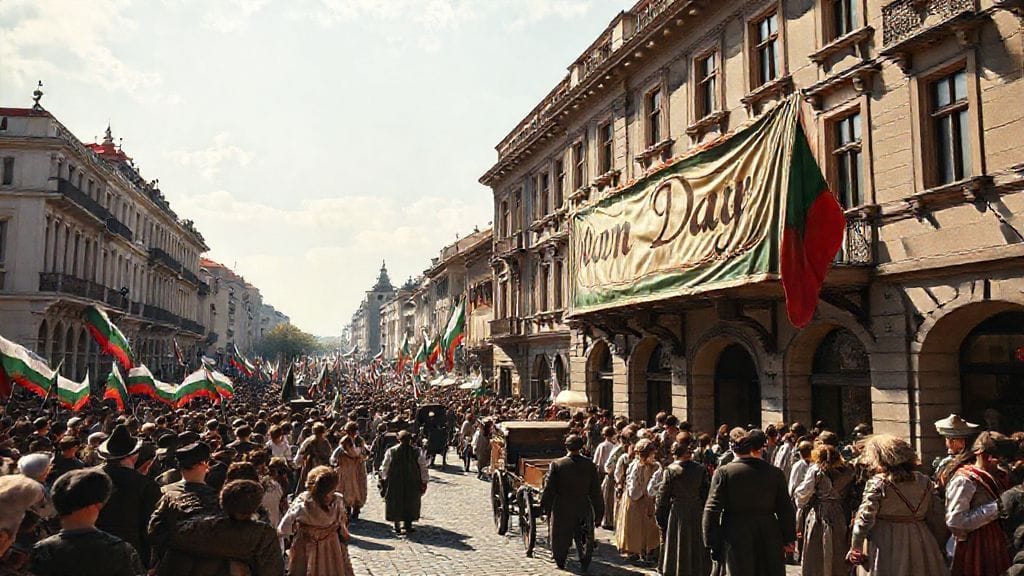
The Bulgarian flag was raised over government buildings, and the proclamation was read: Eastern Rumelia declared its unification with the Principality of Bulgaria. Streets filled with jubilant crowds singing patriotic songs; church bells rang out like the echo of centuries-old prayers answered at last.
This act of defiance stunned the Balkans and caught the European powers off guard—it was a single day's work with consequences unimaginable.
The Bloodless Coup: How Unification Unfolded Without a Shot
Remarkably, the takeover was virtually bloodless. This speaks volumes about the complex loyalties across the region and the charisma of the movement’s leaders. While Ottoman authorities were momentarily paralyzed—there was no real will, nor capacity, to suppress the unification with force.
The execution’s efficiency and respect for civil order helped legitimize the unification in the eyes of Bulgarians and reduce internal conflict.
Immediate Reactions: Cheers Within and Shock Beyond the Borders
Within Bulgaria, the mood was euphoric. Nationalist newspapers celebrated the event as the culmination of decades of struggle. Families hugged strangers on the street; church services were held in gratitude, and political assemblies began discussing how to consolidate the new reality.
Abroad, the reactions were mixed. Russia, still a protector and patron of Bulgaria, expressed cautious concern—fearing that the unplanned unification could destabilize the fragile balance. The Ottoman Empire was officially outraged but lacked the capability to respond effectively.
Serbia, a regional rival with its own nationalist ambitions, felt threatened and soon moved towards confrontation.
The Response of the Great Powers: Between Indifference and Opposition
The Great Powers, caught between respect for the Treaty of Berlin and realpolitik considerations, hesitated. Britain and Austria-Hungary, wary of a growing Slavic state under Russian influence, played down the event or opposed it outright.
Russia, disillusioned by Prince Alexander's independent stance, withheld immediate support, complicating Bulgaria's diplomatic position.
These reactions set the stage for a power struggle in and around Bulgaria, where local boldness clashed with imperial caution.
Serbia’s War Against Bulgaria: A Clash Fueled by Unification
In November 1885, Serbia declared war, perceiving Bulgaria’s unification as a threat to its own territorial ambitions and regional influence. King Milan I of Serbia expected an easy victory; instead, Serbia found itself confronting a united and fiercely patriotic Bulgaria.
The conflict was brief but intense, characterized by battles where the Bulgarian forces, though numerically inferior, fought with unexpected skill and determination.
The Battlefields of 1885: Courage, Strategy, and Unexpected Outcomes
The Battle of Slivnitsa became the defining moment of the conflict. Bulgarian troops, led by capable commanders including Prince Alexander himself, repelled the Serbian offensive with effective tactics and high morale.
This victory solidified the unification's reality, disproving skeptics who doubted Bulgaria’s strength as a cohesive state. The war ended in early December with the Treaty of Bucharest, affirming the status quo.
The Spirit of Bulgarian Valor and the Battle of Slivnitsa
The battle not only was a military success but also a defining cultural narrative. It became a symbol of the Bulgarian spirit—undaunted by odds, united by purpose, and capable of defending its sovereignty.
Veterans were celebrated, songs and poems immortalized the event, and it became a cornerstone of the modern Bulgarian identity.
European Diplomacy in Turmoil: Recognition and Rejection
Following the war, Bulgaria faced a delicate diplomatic dance. The European powers sought to preserve peace but also resisted quick recognition of the unification. Russia’s estrangement and Austria-Hungary’s hostility complicated matters.
It wasn’t until years later, through persistent diplomacy and changing geopolitical tides, that Bulgarian unification gained full international recognition.
The Long Road to International Recognition of Unification
Throughout the 1890s, Bulgarian politicians worked tirelessly to normalize relations and assert the legitimacy of their united state. Eventually, the Great Powers conceded, recognizing a new regional balance.
This recognition was crucial not only for Bulgaria’s sovereignty but also as a precedent for national self-determination movements elsewhere.
Political Repercussions Within Bulgaria: Unity, Challenges, and Reforms
Unification brought both triumph and turbulence at home. Integrating two administrations, economies, and societies was no simple feat. Political debates raged over governance, military organization, and economic policy.
Yet, under able leaders like Stefan Stambolov, Bulgaria embarked on a path of modernization, asserting its voice on the European stage.
Cultural Renaissance and the Rise of a Bulgarian National Identity
The symbolic resonance of unification sparked a cultural renaissance. Literature, arts, and education flourished, fueled by pride and a new sense of national mission.
National holidays, monuments, and historical commemorations bound citizens to their shared past and common future.
The Legacy of Unification on Balkan Geopolitics
The Bulgarian unification altered the trajectory of Balkan history. It inspired regional nationalist movements in Macedonia, Serbia, and beyond while unsettling the fragile peace maintained by the Ottoman and Austro-Hungarian empires.
It arguably set the stage for further conflicts culminating in the Balkan Wars and, eventually, the First World War.
How Bulgarian Unification Inspired Other National Movements
The success of the Bulgarian example reverberated among other ethnic groups under imperial domination, showing that bold, coordinated action could reshape political realities even against great odds.
It also underscored the power of national identity, unity, and popular support in achieving political goals.
Memory and Commemoration: Unification in Bulgarian Consciousness
Today, Bulgarian Unification is celebrated as a foundational moment, marked annually on September 6th with parades, speeches, and cultural events nationwide.
It remains a source of pride and a reminder of the sacrifices and dreams that forged modern Bulgaria.
Conclusion
The proclamation of Bulgarian Unification in Plovdiv on that early September day in 1885 was more than a geographical or political event—it was the awakening of a nation's soul, a moment when dreams crystallized into reality against a backdrop of empires and intrigue. It was a testament to the enduring human desire for self-determination, to shape one’s destiny beyond the lines drawn by others.
This daring act, undertaken with both prudence and passion, galvanized the Bulgarian people and set a precedent in the age of nationalism sweeping through Europe. It demonstrated how courage and unity could overcome division and foreign domination, writing a chapter of history that resonates even today.
The unification reshaped the Balkans and echoed through generations, inspiring countless others to believe in the power of national identity and solidarity.
FAQs About Bulgarian Unification
Q1: What triggered the Bulgarian Unification in 1885?
A1: The unification was driven by deep-seated nationalist aspirations fueled by dissatisfaction with the Treaty of Berlin’s division of Bulgarian lands, combined with political and military coordination among Bulgarian leaders eager to end foreign-imposed fragmentation.
Q2: Why was Eastern Rumelia separate from the Principality of Bulgaria?
A2: Following the Treaty of Berlin (1878), the Great Powers created Eastern Rumelia as an autonomous Ottoman province with a Christian governor as a compromise to limit Russian influence and maintain balance in the Balkans.
Q3: How was the unification achieved without large-scale violence?
A3: The unification was executed as a bloodless coup with the cooperation of local Bulgarian officials and military officers in Eastern Rumelia, minimizing conflict and avoiding Ottoman military intervention.
Q4: What was Serbia’s role in the aftermath of unification?
A4: Serbia viewed Bulgarian unification as a threat to its regional ambitions and declared war in November 1885, but Bulgaria successfully defended itself, winning key battles and solidifying its new status.
Q5: How did the Great Powers react to Bulgarian Unification?
A5: The reaction was mixed and cautious. Russia and Austria-Hungary were initially opposed or uneasy, Britain was suspicious, and the Ottoman Empire protested but was largely powerless to intervene.
Q6: What long-term impact did the unification have on Bulgaria?
A6: It paved the way for full sovereignty, enhanced national unity, triggered political and cultural renaissance, and shaped Bulgaria’s role in Balkan geopolitics leading into the 20th century.
Q7: How is Bulgarian Unification commemorated today?
A7: Bulgaria celebrates September 6 annually with cultural events and official ceremonies honoring the historic act of unity, which is seen as a pivotal moment in the nation’s modern foundation.
Q8: Did Bulgarian Unification influence other Balkan nations?
A8: Yes, it inspired similar nationalist movements and highlighted the potency of unity against imperial divisions, influencing regional dynamics for decades.