Table of Contents
- The Dawn of January 26, 1887: Shadows Over Dogali
- Italy’s Colonial Ambitions in the Horn of Africa
- The Geopolitical Chessboard: Ethiopia Between Empires
- Ras Alula Engida: The Man Who Would Not Yield
- Prelude to Battle: The Road to Dogali
- The Italian Expeditionary Force: Underestimating the Highlands
- The Ethiopian Army’s Mobilization: Unity and Resolve
- The Clash at Dogali: A Day of Fire and Iron
- Strategies and Tactics: Mountain Warfare on the Edge
- Moments of Heroism and Tragedy Amidst the Smoke
- The Turning Tide: How Ethiopia Carved a Victory
- Italy’s Defeat: Shockwaves Across Europe
- Ethiopian Morale and National Pride Rekindled
- The International Response: Powers React to Dogali
- Ramifications for Italian Colonial Policy
- Dogali’s Place in Ethiopian Collective Memory
- The Battle’s Role in Shaping Modern Ethiopian Identity
- Ras Alula’s Legacy: Heroism Beyond Borders
- Echoes of Dogali in Later Colonial Conflicts
- The Battle Through the Lens of Historians
- Dogali Today: Memorials and Reverberations
- Lessons from Dogali: Resistance, Diplomacy, and Power
- Conclusion: Beyond the Battlefield, the Triumph of Will
- FAQs: Unpacking the Ethiopian Victory at Dogali
- External Resource
- Internal Link
1. The Dawn of January 26, 1887: Shadows Over Dogali
The early morning mist clung to the rugged highlands surrounding Dogali, a remote Ethiopian village perched on the edge of the Red Sea’s embrace. The cold air was thick with anticipation—a portent of the clash about to unfold. From the jagged ridges, a tapestry of warriors emerged, their spears gleaming faintly in the morning light, voices chanting ancient war songs that echoed into the valley below. Opposite them, Italian soldiers, uniformed and marching with the arrogance of a colonial power, advanced toward their destiny unaware that their fatal miscalculation would etch this day into the annals of history. January 26, 1887, was no ordinary day—it was the day when Ethiopia decisively confronted Italian imperial ambitions at Dogali, and a small force defied the might of Europe in a stunning act of resistance.
2. Italy’s Colonial Ambitions in the Horn of Africa
In the latter half of the 19th century, the European powers were locked in a frenetic scramble for colonies, driven by desires for resources, strategic positions, and national prestige. Italy, a newly unified nation eager to assert itself on the global stage, cast its gaze eastward toward the Horn of Africa, a region fragmented yet rich with potential.
Italian aspirations centered on establishing control over Eritrea and parts of Somalia, territories that offered maritime access and opportunities to exploit trade routes. Though late to the colonial game, Italy was determined to carve out an empire worthy of its ambitions.
But Ethiopia stood as a formidable barrier—a sovereign kingdom under Emperor Yohannes IV and, later, Emperor Menelik II, with deep-rooted traditions of independence and a resilient military. Italy’s designs clashed directly with Ethiopia’s sovereignty, igniting tensions that would lead inexorably to confrontation.
3. The Geopolitical Chessboard: Ethiopia Between Empires
The 1880s found Ethiopia navigating a perilous path amidst the competing interests of the British, French, Ottoman, and Italian empires. British influence lured the highlands from one direction, while French and Ottoman maneuverings threatened to destabilize the fragile alliances within.
Ethiopia, under the stewardship of resolute leaders, balanced diplomatic overtures with a clear assertion of autonomy, leveraging its knowledge of terrain and fierce warrior tradition as key assets. The global significance of Ethiopia lay not only in its resources but in its symbolic status as the last independent African empire—a beacon of resistance amid a rapidly colonizing continent.
This broader geopolitical tension framed the backdrop of Dogali, where imperial overreach would be met with an unexpected and formidable resistance.
4. Ras Alula Engida: The Man Who Would Not Yield
At the heart of Ethiopia’s defense stood Ras Alula Engida, a military genius and statesman with a reputation as unyielding as the landscape itself. Known as the “African Garibaldi,” Ras Alula combined tactical brilliance with an unwavering loyalty to Ethiopia’s sovereignty.
Having earned his stripes battling internal rebellions and foreign threats alike, he was the ideal figure to lead the charge against Italian encroachments. His profound understanding of both modern and traditional warfare equipped him to harmonize the diverse forces under his command, blending riflemen armed with modern firearms and seasoned warriors wielding spears and swords.
For Ras Alula, Dogali was not simply a battlefield; it was a crucible in which Ethiopia’s future would be forged.
5. Prelude to Battle: The Road to Dogali
The Italian incursion began as a modest expedition aiming to secure supply lines, but it quickly escalated into a defining encounter. On the eve of battle, Lieutenant Colonel Tommaso De Cristoforis led a force of approximately 500 men eastward from Massawa, a coastal town under Italian occupation.
Their objective was to resupply the isolated garrisons and establish firmer control over the hinterlands. However, Italian commanders underestimated the speed and vigor with which Ethiopian forces could respond.
Reports filtered back of Ethiopian mobilization, yet the Italian column pressed onward, unaware that they were edging into a trap shaped by both the land and the indomitable will of their adversaries.
6. The Italian Expeditionary Force: Underestimating the Highlands
The Italian troops, battle-hardened yet ill-prepared for the unforgiving highland terrain, marched with confidence. Commanded by De Cristoforis, they moved in a tight formation, burdened by heavy equipment and supply wagons.
Their failure lay in their tactical rigidity and lack of adequate reconnaissance. The mountainous roads and narrow passes that favored guerrilla tactics were ill-suited to conventional European infantry maneuvers.
Moreover, their reliance on European military doctrine blinded them to the realities of Ethiopian combat, where agility, knowledge of terrain, and highland warfare traditions reigned supreme.
7. The Ethiopian Army’s Mobilization: Unity and Resolve
In stark contrast, Ras Alula mobilized a diverse force drawn from several Ethiopian provinces, assembling warriors equipped with an eclectic mix of weapons—including rifles supplied by European traders and traditional arms.
The Ethiopian strategy capitalized on intimate terrain knowledge, leveraging ambush points along the rocky passes and ridges that flanked the Italian route.
This unity across ethnolinguistic lines underscored the fierce determination to repel foreign invaders, turning Dogali into more than a military confrontation—it became a symbol of national unity and resistance.
8. The Clash at Dogali: A Day of Fire and Iron
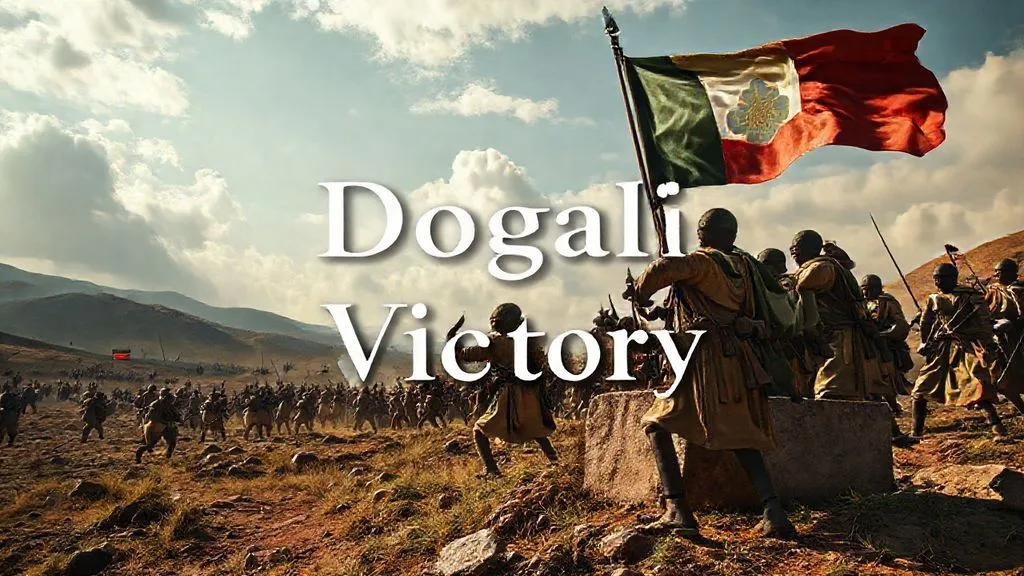
January 26 dawned bright and clear, but beneath the calm sky, tension crackled. As the Italian column reached the constricted pass near Dogali, Ras Alula’s forces struck.
The battle erupted with ferocious intensity. Ethiopian warriors swarmed the Italian flanks from the high ground, using rolling boulders, musket fire, and swift charges to disrupt and disorient.
The Italians, though disciplined, found themselves trapped in a deadly vise, forced into defensive positions amid relentless attacks. For hours, the clash raged—gunfire mingled with the cries of the wounded and the thunder of hooves.
9. Strategies and Tactics: Mountain Warfare on the Edge
Ras Alula’s use of terrain was masterful. By controlling higher ground, his forces deprived the Italians of mobility and reinforcement potential. Ambushes struck where the Italians least expected, turning the landscape itself into a weapon.
Italian attempts to regroup were thwarted by the relentless pace of Ethiopian attacks. The Ethiopian forces alternated between volleys of rifle fire and close-quarter combat, exploiting the Italians’ fragility in the rugged environment.
These tactics showcased a sophisticated understanding of asymmetrical warfare well ahead of their time.
10. Moments of Heroism and Tragedy Amidst the Smoke
Among the chaos, individual acts of valor emerged. Italian soldiers, trapped but resolute, fought with desperate courage. Lieutenant Colonel De Cristoforis himself continued to inspire his men, rallying them despite mounting casualties.
On the Ethiopian side, warriors charged fearlessly, sustaining losses but pressing the advantage. Stories emerged of fighters who refused to retreat, their names etched in oral histories as symbols of sacrifice.
Yet, the battle was not without tragedy. The bloodshed left a scar on both sides—a painful reminder of the human cost of empire and resistance.
11. The Turning Tide: How Ethiopia Carved a Victory
As afternoon waned, the Italian force’s cohesion crumbled. Ammunition depleted and surrounded, the survivors attempted a desperate retreat but were systematically cut down.
Ras Alula’s forces closed the encirclement, and victory was secured. Over 400 Italian soldiers were killed or captured; the survivors’ retreat turned into a rout.
Dogali’s victory was monumental—not only tactically but as a blow to Italian morale and imperial ambition.
12. Italy’s Defeat: Shockwaves Across Europe
News of the Italian defeat at Dogali reverberated across Europe. Press reports painted the disaster as a humiliation for the ambitious but inexperienced Italian army.
The loss called into question Italy’s readiness and strategy for colonial expansion, encouraging skepticism among government circles and the public.
For a newly unified nation eager to claim its place among the great powers, the setback at Dogali was bitter, forcing a strategic reassessment.
13. Ethiopian Morale and National Pride Rekindled
Conversely, Ethiopia basked in renewed confidence and pride. The victory at Dogali became a rallying point for Ethiopians, reinforcing narratives of resilience and sovereignty.
The battle fueled national unity and strengthened Emperor Yohannes IV’s position, setting the tone for future confrontations with colonial powers.
Dogali was celebrated in poems, songs, and oral traditions as a triumph of the underdog—an African nation standing tall against European aggression.
14. The International Response: Powers React to Dogali
The battle did not go unnoticed by other imperial powers. Britain, France, and the Ottoman Empire watched closely, recalibrating their approaches to Ethiopia’s independence.
Dogali served as a stark warning: Ethiopia was a force to be reckoned with, not a passive colony to be carved up.
Diplomatic overtures and treaties in the wake of Dogali reflected a grudging recognition of Ethiopian sovereignty by some, while others redoubled efforts to influence the region through indirect means.
15. Ramifications for Italian Colonial Policy
Dogali marked a turning point in Italian colonial ambitions, highlighting the need for better planning, stronger forces, and alliances.
Though Italy would eventually return with a larger and better-equipped force, the memory of Dogali tempered their approach and sowed seeds of caution.
It also led to diplomatic attempts to secure concessions from Ethiopia, recognizing the limits of military conquest without broad support.
16. Dogali’s Place in Ethiopian Collective Memory
Beyond military significance, Dogali entered the Ethiopian psychological landscape as a symbol of resistance.
Generations would recount the bravery of Ras Alula and his warriors, embedding the battle in textbooks, folklore, and cultural memory.
Dogali became a touchstone for Ethiopian identity—proof that determination and unity could defy overwhelming odds.
17. The Battle’s Role in Shaping Modern Ethiopian Identity
As Ethiopia modernized, Dogali was invoked as an emblem of national sovereignty and pride.
It reinforced the narrative that Ethiopia was not merely a victim of imperialism but an active agent shaping its destiny.
The battle’s legacy influenced political discourse, military doctrine, and cultural expression throughout the 20th century.
18. Ras Alula’s Legacy: Heroism Beyond Borders
Ras Alula himself became a towering figure—respected not only within Ethiopia but also admired abroad.
His leadership at Dogali showcased African military acumen that challenged European preconceptions.
Today, monuments and streets bear his name, preserving the memory of a leader whose courage transcended his era.
19. Echoes of Dogali in Later Colonial Conflicts
The lessons of Dogali echoed in subsequent colonial encounters in Africa, serving as a case study in resistance warfare.
It inspired other anti-colonial movements, showing that local forces could confront technologically advanced invaders with effective strategy and resolve.
Dogali became an emblem—not only Ethiopian but pan-African—in the fight against colonial domination.
20. The Battle Through the Lens of Historians
Scholars have analyzed Dogali from various perspectives—military, political, cultural—highlighting its multifaceted impact.
While earlier accounts sometimes downplayed Ethiopian agency, recent historiography emphasizes the battle’s significance in global imperial history.
Dogali stands as a point where local determination intersected with global power dynamics, reshaping narratives of resistance.
21. Dogali Today: Memorials and Reverberations
Modern Ethiopia commemorates Dogali with monuments and annual remembrances.
The battlefield site attracts historians and tourists alike, seeking to connect with this pivotal moment.
Efforts to preserve Dogali’s legacy intertwine heritage with education, ensuring the story endures.
22. Lessons from Dogali: Resistance, Diplomacy, and Power
Dogali teaches profound lessons about the limits of military power and the importance of understanding local contexts.
It underscores the value of unity and leadership in crisis and the enduring impact of symbolic victories.
For all the tragedy of war, Dogali remains testament to the human spirit’s capacity to resist domination.
23. Conclusion: Beyond the Battlefield, the Triumph of Will
The Ethiopian victory at Dogali was more than a military triumph; it was a testament to vision, courage, and the resilience of a people determined to shape their destiny.
Against overwhelming odds, a force from the highlands taught an aspiring colonial power that sovereignty is not a gift—it is fought for, earned, and defended with unwavering resolve.
Dogali’s legacy endures, inspiring those who continue to struggle for justice and freedom across the world.
Conclusion
Dogali resonates today not merely as a historical battle but as a vivid symbol of defiance against imperial overreach. The narrative of an under-equipped, vastly outnumbering Ethiopian force overcoming an entrenched European power brings to life the human dimensions of courage and sacrifice. Ras Alula Engida’s genius and the tenacity of Ethiopian warriors forged a moment that halted progress of colonization in the region, reasserting Africa’s agency during an era marked by domination. Yet Dogali also reminds us of the fragile line between war and peace—how history hinges on the choices of leaders and the resilience of people.
In reflecting on Dogali’s significance, we find echoes of that battle in struggles for freedom across continents, reinforcing the timeless value of hope, unity, and determination. For Ethiopia, it remains a proud chapter; for the world, a compelling story of resistance and an invitation to never underestimate the power of will against might.
FAQs
Q1: What were the primary causes leading to the Battle of Dogali?
The battle arose from Italian colonial ambitions to expand their foothold in Eritrea and control access to Ethiopia. Ethiopia’s refusal to cede sovereignty and Italy’s underestimation of Ethiopian resilience led to armed conflict.
Q2: Who was Ras Alula Engida, and why was he significant?
Ras Alula was Ethiopia’s foremost military commander, known for his strategic brilliance and unyielding defense of Ethiopian territory. He orchestrated the victory at Dogali, solidifying his legacy as a national hero.
Q3: How did the geography of Dogali influence the battle?
The rugged mountainous terrain favored Ethiopian forces familiar with highland warfare. Control of high ground allowed effective ambushes against the Italian column, turning the environment into a strategic ally.
Q4: What were the immediate consequences of the Ethiopian victory?
Italy suffered a humiliating defeat that stalled its colonial expansion efforts. Ethiopia’s morale surged and it gained greater recognition of its sovereignty from foreign powers.
Q5: How did the battle impact Italian colonial policy?
Dogali exposed weaknesses in Italy’s military planning, leading to strategic reassessments and eventual military upgrades before future engagements in the region.
Q6: Is Dogali remembered differently in Ethiopia and Italy today?
Yes. In Ethiopia, Dogali is a celebrated moment of national pride, while in Italy it is often recalled as a painful defeat that highlighted early colonial missteps.
Q7: Did Dogali influence other anti-colonial movements?
Indeed, Dogali is cited as an inspiring example of successful resistance, influencing later uprisings and contributing to pan-African narratives of defiance.
Q8: What lessons does the Battle of Dogali offer modern readers?
The battle teaches resilience, the importance of understanding local contexts, and how leadership and unity can overcome seemingly insurmountable odds.