Table of Contents
- The Heartbeat of a Nation: Omdurman in June 1889
- From Mahdi to Khalifa: The Rise of a New Power
- The Mahdist Movement: Origins, Faith, and Fury
- The Vision of Muhammad Ahmad: The Mahdi’s Sacred Mission
- Khalifa Abdullahi: The Shadow at the Helm
- Omdurman: The Epicenter of Revolution and Rule
- The Transition of Power: Challenges and Consolidations
- Daily Life under the Khalifa’s Rule: Between Faith and Fear
- The Military Machine: Weapons, Warriors, and Warfare
- Interactions with the British and Foreign Powers
- The Economy of the Mahdist State: Trade, Tributes, and Sustainability
- Religious Laws and Social Reforms: Governing a New Order
- Internal Struggles and Fissures within the Mahdist State
- The Role of Tribes and Ethnic Groups in the Mahdist Era
- The Legacy of the 1889 Omdurman Peak: A City of Martyrs and Glory
- The Fall and Aftermath: Seeds of the Future Sudan
- Remembering the Khalifa: Histories, Myths, and Memories
The Heartbeat of a Nation: Omdurman in June 1889
In the blistering heat of a Sudanese June, the city of Omdurman pulsated as never before. The air, thick with the dust of the desert and the cries of the faithful, carried the weight of an empire poised at its zenith. It was June 1889, the peak of the Mahdist State under the Khalifa Abdullah ibn Muhammad — a month that would mark the crucible of a fervent and revolutionary power that reshaped the Nile Valley’s political and spiritual landscape.
Omdurman, a sprawling confluence of tents, mosques, and hastily built fortifications, stood like a beacon amidst the desert sands. The city was more than a geographical locus; it was the heartbeat of a fiery nationalism born from religious zeal and forged amidst centuries of oppression under Turco-Egyptian rule and European imperial encroachment.
But to fully appreciate this moment—the peak of Mahdist power under Khalifa Abdullahi—we must journey backward, to understand the storm that birthed this state, the men who forged it, and the struggles that shaped its brief but transformative existence.
From Mahdi to Khalifa: The Rise of a New Power
The story of the Mahdist State is inseparable from that of Muhammad Ahmad, who in 1881 proclaimed himself the Mahdi, the “Rightly Guided One,” destined to cleanse Islam and drive foreign occupiers from Sudan. His prophetic declaration galvanized disparate Sudanese tribes and religious sects into a single, electrified movement swelling with millennial fervor and political will.
Yet, Muhammad Ahmad would not live to see the full flowering of the state he sowed. His death in 1885 thrust into the limelight his closest trusted companion and chosen successor, Abdullahi ibn Muhammad, better known as the Khalifa, or “successor.”
The Khalifa inherited a realm stitched together by faith and sword, rich in revolutionary zeal yet riddled with practical challenges: governance, external threats, tribal rivalries, and the immense task of sustaining a nascent state amid relentless desert winds of uncertainty.
June 1889 represents the apex of this endeavor—a time when Khalifa Abdullahi consolidated his power in Omdurman and extended the Mahdist vision with a distinct assertiveness that would define the twilight of the 19th century in Sudan.
The Mahdist Movement: Origins, Faith, and Fury
To understand the tides of 1889, one must first grasp the ideological and historical currents that birthed the Mahdist uprising. The roots lie deep in decades of exploitation and decline. Sudan in the mid-19th century was caught under the yoke of Turco-Egyptian administrators backed by British imperial interests, imposing taxes, slave raids, and brutal order that simmered resentment.
Muhammad Ahmad’s declaration as Mahdi was more than a religious awakening; it was a nationalist call against foreign domination, a spiritual crusade intertwined with political liberation. Claiming divine ordination, he united Sufi orders, rural tribes, and disenfranchised Muslims alike, promising a new era guided by Sharia law and social justice.
The Mahdist jihad, or holy war, grew rapidly, the message and momentum sweeping across Sudan like wildfire. Villages surrendered, garrisons fell, and in 1885, the Mahdists stormed Khartoum, ending Turco-Egyptian rule and replacing it with a state the West struggled to categorize—as religious puritanism, political rebellion, or proto-nationalism.
The Vision of Muhammad Ahmad: The Mahdi’s Sacred Mission
Muhammad Ahmad’s charismatic leadership was both a spiritual and political beacon. He framed his mission as eradicating corruption and foreign influence to restore Islamic purity and justice. His followers saw him as the apocalyptic figure who would usher in an era of divine justice before the final Day of Judgment.
His policies combined religious reform, militant activism, and grassroots mobilization. He opposed idolatrous practices among local communities, abolished slavery within his territories, and sought to institutionalize Islamic law. Under his guidance, the Mahdist state was both a theocracy and a war machine, melding devotion with discipline.
Yet the Mahdi’s sudden death in 1885 left his ambitious vision dangerously incomplete. The mantle passed to Abdullahi, his lieutenant and brother-in-law, who now faced the herculean task of transforming spiritual revolution into stable government.
Khalifa Abdullahi: The Shadow at the Helm
Khalifa Abdullahi ibn Muhammad was not the radiant preacher that the Mahdi was, but his strategic mind and ruthless pragmatism made him a formidable leader. From 1885 onward, Khalifa’s rule was marked by consolidation and expansion but also by repression and internal strife.
He faced rebellion both from foreign powers eyeing Sudan—primarily the British and Egyptians—and from within, where tribal loyalties and personal ambitions threatened unity. Abdullahi’s response was to centralize power in Omdurman, breaking down aristocratic tribal leaders’ influence and reorganizing the military.
His rule combined strict religious adherence and autocratic control. The city of Omdurman under the Khalifa assumed the form of a militarized holy city, hosting a volatile mix of preachers, soldiers, and administrators.
Omdurman: The Epicenter of Revolution and Rule
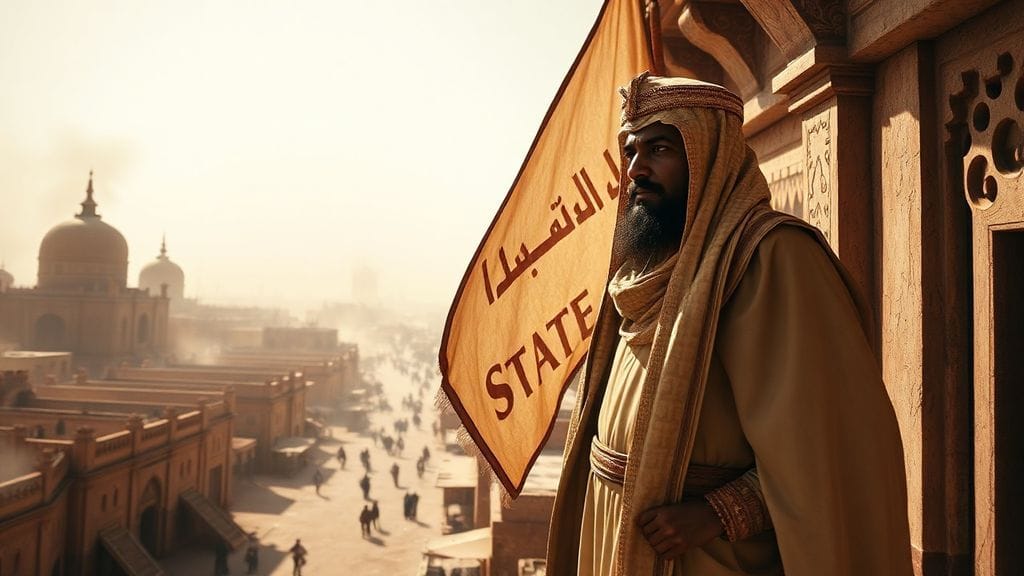
Omdurman, situated on the west bank of the Nile opposite Khartoum, became more than just the capital: it was the symbolic heart of the Mahdist State. By June 1889, the city had grown into a buzzing metropolis of tents, mudbrick structures, and towering mosque minarets.
Pilgrims, soldiers, and merchants mixed freely here, creating a tumultuous yet vibrant atmosphere. Markets bustled with goods from across Sudan and beyond; the call to prayer echoed alongside the clamor of military drills.
Under Khalifa Abdullahi, the urban fabric of Omdurman was reshaped to reflect the new order. Fortifications were improved, and the city was fortified to withstand anticipated attacks from Anglo-Egyptian forces, who nursed a desire to reclaim Sudan and avenge the humiliations of previous defeats.
The Transition of Power: Challenges and Consolidations
The period leading to June 1889 was fraught with political upheavals. Abdullahi had to bridge the legacy of the Mahdi’s charismatic charisma and his own more bureaucratic approach—no small feat. His reign required deft navigation of Sudan’s fractured tribal politics.
Some tribal leaders resisted the centralization of power, weary of the strict religious codes and limitations imposed by the Khalifa’s administration. Others welcomed stability, tired of endless tribal warfare and foreign domination.
The Khalifa also undertook the expansion of Mahdist authority deeper into Kordofan, Darfur, and parts of eastern Sudan, seeking to stretch the reach of the state and prevent the British from gaining footholds.
Daily Life under the Khalifa’s Rule: Between Faith and Fear
For the ordinary Sudanese under the Mahdist regime, daily existence was a complex mix of hope, piety, hardship, and fear. Religious devotion was mandatory, with strict enforcement of codes concerning dress, prayer, and public behavior.
The Khalifa’s administration instituted harsh punishments for infractions, sometimes resulting in public executions or lashings. Women’s roles shifted under religious strictures, and slavery—while officially condemned—persisted in various forms.
Yet, amid austerity, a shared sense of purpose permeated society. Markets flourished, social services were provided through religious charities, and a sense of unity against foreign enemies imbued public sentiment.
The Military Machine: Weapons, Warriors, and Warfare
The strength of the Mahdist State under Khalifa Abdullahi rested heavily on its military capabilities. By 1889, the Mahdist army was a disciplined, fanatical force, driven by religious zeal and commanded by experienced commanders.
Despite limited access to modern European weapons—due to trade blockades—the Mahdist warriors adapted by mastering traditional arms like spears, swords, and rifles captured from enemies.
Military camps near Omdurman were a hive of activity, training troops, strategizing campaigns, and preparing defenses. The Khalifa’s military expeditions extended across the region, clashing repeatedly with neighboring tribes, Ethiopian forces, and the still-relentless Anglo-Egyptian troops.
Interactions with the British and Foreign Powers
Even at its height in 1889, the Mahdist State never existed in isolation. The British Empire, nursing the loss of Khartoum and the death of General Charles Gordon in 1885, remained determined to reclaim control of Sudan.
Diplomatic and military maneuvers were continuous. The Khalifa’s government attempted to negotiate and at times sought recognition, but the British dismissed the Mahdists as fanatical rebels.
European explorers, missionaries, and traders provided intelligence—often unwelcome—and helped fuel British resolve, which culminated years later in military campaigns that would eventually bring an end to Mahdist rule.
The Economy of the Mahdist State: Trade, Tributes, and Sustainability
Sustaining a state in the arid Sudanese interior under ideological and military siege required ingenious economic adaptations. The Mahdist economy was a patchwork of agriculture, trade caravans, and tributes forced from conquered regions.
Khartoum-Omdurman was a hub for goods like millet, sorghum, dates, and the occasional luxury item like ivory and gum arabic. However, embargoes imposed by foreign powers made imports scarce, hampering development.
Taxation was strict, often burdensome, and militarized caravans guarded trade routes. Slavery, despite Islamic prohibitions preached by the Mahdi, persisted, revealing tensions within the proclaimed puritanical regime.
Religious Laws and Social Reforms: Governing a New Order
The Khalifa’s administration leaned heavily on religious legislation to govern daily life. Sharia law was codified and strictly enforced; alcohol was banned, and smoking outlawed. Public morality campaigns targeted anything seen as decadent or un-Islamic.
At the same time, education was centralized around Quranic schools, and religious scholars gained unprecedented influence. These reforms were often welcomed by devout Muslims but unevenly accepted across the diverse population.
Women faced intensified restrictions; divorce was difficult, and their movement and dress were closely policed. Yet, some tribes retained traditional customs, leading to latent tensions within the social fabric.
Internal Struggles and Fissures within the Mahdist State
The Mahdist State’s greatest enemy was often itself. Throughout 1889, political purges, rebellions, and conspiracies punctuated the Khalifa’s rule.
Certain tribal factions refused to accept centralized control, while discontent simmered over economic hardship and the rigidity of religious laws. The Khalifa responded with brutal suppression, alienating many.
Moreover, succession debates stirred unease. Some Mahdi loyalists viewed the Khalifa as a usurper or inadequate successor, while others sought to carve out regional autonomy. This internal tension substantially weakened the state’s long-term viability.
The Role of Tribes and Ethnic Groups in the Mahdist Era
Sudan’s vast and diverse ethnic landscape played a crucial role in shaping the Mahdist State. The Mahdi’s original power base drew heavily from the Ta’aisha tribe and allied groups, while others, like the Shaigia and the Baggara Arabs, oscillated between support and opposition.
The Khalifa’s policies attempted to homogenize power but faced constant resistance from the fragmented tribal mosaic, each with its own traditions, allegiances, and grievances.
Understanding the Khalifa’s Sudan requires appreciating this constant balancing act between uniting for religious and political goals and honoring the deep-rooted tribal identities that challenged central authority.
The Legacy of the 1889 Omdurman Peak: A City of Martyrs and Glory
By mid-1889, Omdurman stood as a city emblematic of religious fervor, military might, and complex governance. The intense atmosphere of the city—the drumbeats of war, the chanting prayers, the jeering markets—embodied the tensions and hopes of the Mahdist dream.
Omdurman became a place of pilgrimage, a crucible from which the Mahdist identity would resonate through Sudanese history. The city bore witness to thousands of martyrs, soldiers, and civilians who dreamt of a free, just Sudan.
This peak, however, was fragile. The internal contradictions and external pressures that converged here would soon reveal the limits of Khalifa’s rule.
The Fall and Aftermath: Seeds of the Future Sudan
Although 1889 marked the height of Mahdist authority, it also marked the beginning of unavoidable decline. Anglo-Egyptian forces regrouped and intensified their campaigns, reclaiming lost territories methodically.
The Khalifa’s regime crumbled in the early 1890s under military defeats, famine, and internal dissent. The decisive Battle of Omdurman in 1898, long after June 1889 but seeded in its era, heralded the end of Mahdist rule.
Yet, the Mahdist State’s imprint on Sudan’s national consciousness endured. Its revolutionary ideals of self-rule, religious identity, and anti-colonial resistance became pillars of Sudan’s modern nationalist movements.
Remembering the Khalifa: Histories, Myths, and Memories
Today, Khalifa Abdullahi remains a polarizing figure—seen by some as a tyrant who suffocated freedoms and by others as a heroic defender of Sudanese sovereignty and Islamic faith.
Historical narratives vary, oscillating between colonial dismissals of the Mahdist regime as fanaticism and Sudanese reflections on a proud chapter of resistance.
Omdurman itself, having evolved into a modern city, still carries in its streets and monuments echoes of the Khalifa’s reign—a testament to the indomitable spirit of a people who dared dream of freedom and faith in the harshest of times.
Conclusion
The Mahdist State at its peak in June 1889 under Khalifa Abdullahi represents a hauntingly dramatic chapter in Sudanese and African history—a story of faith, war, and the ephemeral nature of revolutionary power. It is a moment where spiritual fervor collided with the harsh realities of governing a fragmented but fiercely proud land.
Omdurman’s dusty streets and fragile walls bore witness to a people’s yearning for dignity against imperial domination—a yearning that would ripple through Sudan for over a century, inspiring generations of resistance and identity.
Though the Khalifa’s rule collapsed under external pressures and internal contradictions, the scars and stories from this period continue to remind us how faith and politics, hope and hardship, are inextricable threads of human destinies.
This era challenges us to confront the complexities of revolutionary leadership, the cost of zealotry, and the enduring quest for justice in a world shaped by empire and resistance.
FAQs
Q1: Who was Khalifa Abdullahi and what was his role in the Mahdist State?
A1: Khalifa Abdullahi ibn Muhammad was the successor to Muhammad Ahmad, the Mahdi. After the Mahdi’s death in 1885, Abdullahi consolidated power, serving as both political and military leader, steering the Mahdist State through its peak and eventual decline.
Q2: What was the significance of Omdurman in 1889?
A2: Omdurman was the capital and symbolic heart of the Mahdist State, serving as the political, religious, and military center during its peak under the Khalifa. It embodied the revolutionary spirit and theocratic governance of the regime.
Q3: How did the Mahdist State emerge and what were its objectives?
A3: Emerging from religious revolt led by Muhammad Ahmad, the Mahdist State aimed to expel foreign rulers, establish an Islamic theocracy, and purify Sudanese society according to Sharia law. It combined nationalist and religious goals.
Q4: What were the main challenges faced by the Khalifa in governing Sudan?
A4: He grappled with tribal rivalries, economic blockades, military threats from British-Egyptian forces, enforcing strict religious laws, and maintaining cohesion in a diverse and often fractious population.
Q5: How did the international community view the Mahdist State during Khalifa Abdullahi’s rule?
A5: The Mahdist State was largely seen as a rebellious and fanatical regime by the British and Egyptians. It was considered a threat to colonial interests and was therefore targeted for military reconquest.
Q6: What legacy did the Mahdist State leave for Sudan?
A6: Beyond its military history, it left a potent symbol of resistance against imperialism, a foundation for Sudanese national identity, and ongoing debates about religion, governance, and cultural unity.
Q7: How did the military strategies of the Mahdist army influence their initial successes?
A7: Their use of guerrilla tactics, religious motivation, and adaptability to the harsh desert environment, combined with the capture and reuse of enemy firearms, allowed them to defeat better-equipped opponents initially.
Q8: Why did the Mahdist State eventually collapse?
A8: Internal divisions, economic hardships, and the superior military technology and strategy of the Anglo-Egyptian forces led to the state’s downfall by the late 1890s.