Table of Contents
- The Quiet Cove of Shimonoseki: A Historic April Day
- A Clash of Empires: Prelude to War
- China on the Brink: The Late Qing Dynasty’s Challenges
- Japan's Rising Ambitions: The Meiji Restoration’s Ripple Effects
- The First Sino-Japanese War: Battlefields and Breakthroughs
- From Sea to Shore: Key Engagements That Shaped the Outcome
- Diplomatic Maneuvers: Setting the Stage for Peace
- The Treaty Room at Shimonoseki: A Moment Frozen in Time
- Terms of Capitulation: A Nation Reshaped
- Taiwan’s Fate: The Island’s New Masters
- Korea’s Independence: A Geopolitical Redrawing
- Port Arthur and Liaodong Peninsula: Strategic Acquisitions
- The Clash of Great Powers: Russia, Germany, and France Intervene
- The Triple Intervention: The Undermining of Japanese Gains
- Japan’s National Psyche: Pride Mixed with Resentment
- China’s Path Forward: Reform and Reaction
- Economic Consequences: Indemnities and Industrial Pivot
- Cultural Ripples: Literature, Art, and Memory
- The Treaty’s Shadow on Sino-Japanese Relations
- Legacy in East Asia: The Seeds of Future Conflicts
- Reflections from the Negotiators: Voices from Shimonoseki
- International Reactions: The World Watches East Asia
- The Treaty of Shimonoseki in Historical Perspective
- Conclusion: Echoes Through Time
- FAQs
- External Resource
- Internal Link
The Quiet Cove of Shimonoseki: A Historic April Day
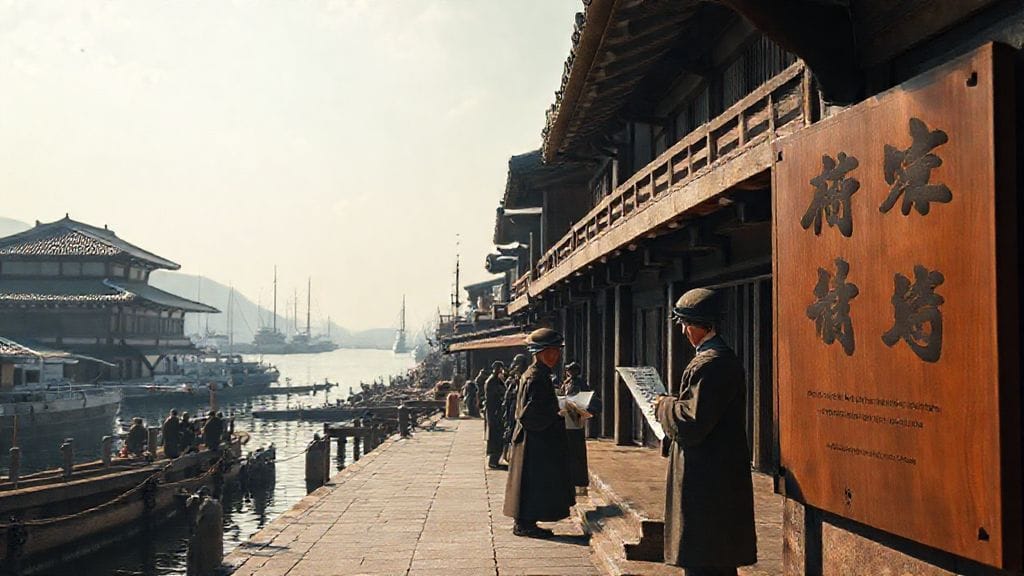
On a crisp spring morning in April 1895, the tranquil shores of Shimonoseki, a small Japanese city nestled at the western tip of Honshu, seemed an unlikely stage for a world-changing event. The sea breeze, carrying the scents of salt and pine, whispered over a gathering of diplomats, generals, and officials who, with solemn faces and measured steps, entered the imposing chamber where history was about to be inked. The Treaty of Shimonoseki would soon mark the end of a bloody conflict, redraw borders, and signal a profound shift in power in East Asia.
The air held a mixture of relief and tension, victory and humiliation—emotions that reverberated well beyond the walls of that unfinished treaty room. For Japan, freshly modernized and emboldened, it was a triumphant dawn heralding its ascent from feudal isolation to imperial might. For China’s Qing dynasty, it was a bitter confirmation of decline and impotence that would shake the foundations of its centuries-old rule.
But what led to that moment, and what would come after, would shape the destiny of not just two nations, but much of the world.
A Clash of Empires: Prelude to War
The story behind the Treaty of Shimonoseki begins in the turbulent years of the late nineteenth century when two great empires—China’s Qing dynasty and Japan’s Meiji government—found their ambitions colliding over Korea. Long a tributary to China, Korea was both a prize and a geopolitical buffer zone, its fate intimately linked to the destinies of its powerful neighbors.
China, under the Qing, was struggling to maintain its vast empire and ancient traditions amid internal rebellions, a stagnant economy, and increasing foreign pressures. Japan, having burst through centuries of self-imposed isolation following the Meiji Restoration of 1868, was rapidly industrializing, adopting Western technologies and military models, with newfound nationalist ardor.
The conflict was inevitable. Korean domestic revolts and calls for reform led disparate factions to seek support from both Beijing and Tokyo. When Japan sent troops to Korea to support its influence, China responded in kind, igniting a war that exposed the decrepit state of the Qing military and the ferocity of Japan’s modernized forces.
China on the Brink: The Late Qing Dynasty’s Challenges
By the 1890s, the Qing dynasty was a house on the brink of collapse. Decades of corruption, bureaucratic inefficiency, and failure to reform militarily and economically had left China vulnerable to foreign influence and internal turmoil. The humiliations of the Opium Wars decades earlier lingered painfully in the national consciousness, and the sweeping disruptions of the Taiping Rebellion continued to cast long shadows.
China’s policies were split between conservative factions who resisted reform and progressives who sought selective modernization. Yet the military remained archaic, poorly equipped, and ill-prepared to face the new threats emerging on its borders.
Meanwhile, rumors of Japan's military modernization traveled swiftly; its army and navy, modeled on Western paradigms, had surpassed expectations, using new weaponry and strategic doctrines that transformed the island nation into a regional power.
Japan's Rising Ambitions: The Meiji Restoration’s Ripple Effects
Japan’s ambition was fueled by a breathtaking transformation. Between 1868 and 1895, the Meiji government dismantled the feudal order, built railways, factories, and a conscript army, and fostered a national identity rooted in modernity and strength.
Fueled by a doctrine of “Enrich the country, strengthen the army,” Japan was rapidly asserting itself. The Korean Peninsula was viewed not only as a critical neighbor but a gateway for deeper economic and strategic interests on the Asian continent.
As Japanese forces advanced into Korea—and later China’s northeastern territories—their confidence grew. Japan envisioned itself as the new leader of Asia, a claim hitherto unchallenged by the old celestial empire.
The First Sino-Japanese War: Battlefields and Breakthroughs
The outbreak of war in 1894 was swift and decisive. Japan’s well-trained army outmaneuvered Qing forces repeatedly, both on land and at sea. From the initial clashes at Asan and Pyongyang to the critical naval Battle of the Yalu River, Japanese forces demonstrated superior tactics and firepower.
The war was not a prolonged slog but a stark lesson in modernization’s power. The Qing navy, once considered formidable, was decimated. The Japanese pushed into Manchuria and threatened Beijing itself.
Each major defeat sapped the Qing regime’s prestige, while Japan’s newfound military prowess filled newspapers and cafes alike with stories of victory. The war was as much psychological as military, signaling an irreversible shift in East Asian hegemony.
From Sea to Shore: Key Engagements That Shaped the Outcome
Naval supremacy was the keystone of Japan’s strategy. The decisive Battle of the Yalu River in September 1894 saw the Japanese Combined Fleet destroying much of China’s Beiyang fleet, tipping sea control firmly in Japan’s favor.
On land, battles such as the siege of Weihaiwei led to the surrender of significant Qing forces. Japan’s army, leveraging rail lines and improved logistics, advanced methodically, demonstrating how industrialization was no mere abstract policy but a lethal advantage.
Even as battlefields burned and armies retreated, the international community watched nervously. The war’s outcome would upset the fragile balance of power both regionally and globally.
Diplomatic Maneuvers: Setting the Stage for Peace
By early 1895, with Qing forces battered and foreign powers eyeing their own gains, the need for peace overtook the brutality of conflict. Diplomats converged in Shimonoseki, where negotiations began amid palpable unease.
China’s representatives, including Li Hongzhang, a veteran statesman, faced the daunting task of salvaging what they could. Japan’s envoys, emboldened by victories, pressed for sweeping concessions.
Behind closed doors, intricate diplomacy unfolded: Japan's demands were steep, China’s capacity to resist limited. Meanwhile, Russia, Germany, and France watched from the sidelines with growing concern.
The Treaty Room at Shimonoseki: A Moment Frozen in Time
On April 17, 1895, the Treaty of Shimonoseki was signed, formalizing Japan’s triumph. The room where the ink dried was filled with tension—victory for some, humiliation for others.
The treaty dictated far-reaching terms: China recognized Korean independence (in effect a Japanese protectorate), ceded Taiwan and the Pescadores Islands to Japan, opened several ports to Japanese trade, and paid a colossal indemnity of 200 million taels.
Japan now controlled key territories and resources; China’s imperial dignity was shattered. For all present, the document symbolized a new world order emerging in East Asia.
Terms of Capitulation: A Nation Reshaped
The treaty was not simply a peace agreement: it was a blueprint for remapping power. Korea’s “independence” was nominal—a euphemism for Japanese dominance. Taiwan’s transfer marked Japan’s entry into colonial empire-building.
The indemnity strained China’s already fragile economy, while the opening of more treaty ports enhanced Japanese commercial reach.
These stipulations reshaped national borders and alliances, and laid bare the vulnerabilities of the once-invincible Qing dynasty.
Taiwan’s Fate: The Island’s New Masters
Taiwan, known as Formosa to the West, had long been part of Qing territory but its transfer to Japan marked a watershed moment. The island was rich in resources and strategically positioned as a gateway to the Pacific.
Japan’s acquisition of Taiwan was the first significant colonial possession outside its home islands. It embarked on a comprehensive campaign of modernization and control, often brutal, aiming to integrate the island into its expanding empire.
For the Taiwanese people, the change represented upheaval, resistance, and adaptation amidst imperial ambitions.
Korea’s Independence: A Geopolitical Redrawing
The treaty’s clause declaring Korea independent was, paradoxically, Japan’s most potent tool for control. Freed from China’s suzerainty, Korea found itself increasingly under Japanese influence politically and economically.
This “independence” sparked internal political turmoil within Korea, exacerbated by pro-Japanese and pro-Russian factions vying for influence. The stage was set for Japan’s eventual annexation of Korea in 1910.
Thus, the treaty planted the seeds for decades of Korean resistance and suffering under imperial rule.
Port Arthur and Liaodong Peninsula: Strategic Acquisitions
Japan’s victory entitled it to important territorial gains in the Liaodong Peninsula, including Port Arthur, a warm-water port of immense strategic value.
However, the prospect of Japan controlling such a key military and commercial outpost unsettled Russia, Germany, and France, who feared the balance of power tipping in Japan’s favor.
This international tension would soon explode into diplomatic confrontation, revealing complex imperial rivalries beyond East Asia itself.
The Clash of Great Powers: Russia, Germany, and France Intervene
The Triple Intervention of April 1895 forced Japan to relinquish the Liaodong Peninsula in exchange for increased indemnities from China.
Facing threats and pressure from these three empires, Japan was forced into a humiliating concession, highlighting its still-precarious position on the world stage despite battlefield victories.
This diplomatic setback shaped Japan’s foreign policy for years to come and deepened its determination to build an unchallengeable imperial stature.
The Triple Intervention: The Undermining of Japanese Gains
The intervention shocked the Japanese public and government alike, fueling a fiery nationalism and calls for military expansion.
It exposed the limits of Japan’s power and the complexities of global imperial politics, where defeating an Asian rival was overshadowed by great power competition.
This humiliation was a bitter pill, but one that galvanized Japan’s resolve to modernize further and assert itself internationally.
Japan’s National Psyche: Pride Mixed with Resentment
Back home, celebrations of victory quickly mixed with frustration over diplomatic losses. Newspapers and political leaders decried the Triple Intervention as a betrayal and a sign that Japan had to grow stronger.
The treaty era marked a turning point in Japanese identity—from a reactive state trying to survive in a Western-dominated world, to an assertive empire demanding recognition and respect.
This duality of pride and wounded honor animated Japan’s politics and culture well into the twentieth century.
China’s Path Forward: Reform and Reaction
For China, the treaty’s fallout intensified debates over reform. The Qing court faced humbling demands to modernize, amidst conservative resistance and nationalist movements.
The defeat inspired figures such as Kang Youwei and Liang Qichao to advocate for sweeping political and social changes, yet the dynasty’s grip weakened.
The humiliation seeded revolutionary sentiments that would culminate in the 1911 revolution, ending imperial China and ushering in republicanism.
Economic Consequences: Indemnities and Industrial Pivot
The massive indemnity extracted from China had ripple effects on both economies. While it strained Qing finances disastrously, it fueled Japan’s industrial progress.
Japan invested the indemnity money in expanding infrastructure, industry, and military capacity, accelerating its transformation into a modern industrial power.
Conversely, China’s economic weakness deepened, exacerbating social unrest and foreign exploitation.
Cultural Ripples: Literature, Art, and Memory
The treaty and the war entered the popular imagination across East Asia. Japanese literature and art celebrated victory and modernity, while Chinese culture mourned loss and sought renewal.
Incidents like the burning of the Old Summer Palace lingered in collective memory, symbolizing national disgrace and the need for revival.
Memorials, poems, and political rhetoric turned the conflict into a touchstone of identity and resistance.
The Treaty’s Shadow on Sino-Japanese Relations
The Treaty of Shimonoseki left an indelible scar on the relationship between Japan and China, shaping mistrust and rivalry that would erupt violently again in the 20th century.
It entrenched perceptions of Asian power dynamics and colonial hierarchies, from which healing would prove difficult.
Even today, echoes of 1895 resonate in East Asian diplomacy and historical memory.
Legacy in East Asia: The Seeds of Future Conflicts
The treaty laid foundational stones for future regional conflict, from the Russo-Japanese War (1904-05) to the brutal Sino-Japanese wars of the 1930s and beyond.
It transformed Japan into an imperial power, challenged China’s sovereignty, and intensified foreign intervention in Korea and Manchuria.
The geopolitical shifts of 1895 sparked a century of upheaval, illuminating the complex interplay of modernization, nationalism, and empire.
Reflections from the Negotiators: Voices from Shimonoseki
Diplomats like Li Hongzhang bore the weight of national humiliation but faced the reality of power politics. His famous remark, “China lost the war but will not lose her dignity,” reflected both sorrow and resilience.
Japanese envoys saw the treaty as validation of Meiji reforms and a stepping-stone toward a “Greater East Asia” vision, foreshadowing later ambitions.
These contrasting perspectives humanize the cold legal text and reveal the emotional stakes behind every clause and signature.
International Reactions: The World Watches East Asia
Around the globe, the war and treaty drew intense interest. Western powers assessed Japan as a rising competitor, testing new power balances.
The United States, Britain, and others recalibrated their Asian policies with caution. Press reports framed the conflict as a clash not only between nations but civilizations.
The treaty marked Asia’s entry into the age of imperialism—a pivotal moment in the global narrative.
The Treaty of Shimonoseki in Historical Perspective
More than a century later, the Treaty of Shimonoseki remains a critical study of imperialism, modernization, and the complex dynamics between East Asia’s past and future.
It is a reminder that peace treaties are not just documents, but storytelling devices imbued with power, loss, hope, and the unending struggle of nations to define themselves.
Conclusion
The Treaty of Shimonoseki was both an end and a beginning. It drew the curtain on one chapter of East Asian history—the waning of China’s imperial dominance and Japan’s rapid rise. Yet, it also opened the door to decades of conflict, reform, resistance, and transformation. The treaty’s accords, signed quietly on that bright April morning, echoed thunderously through time: in imperial ambitions, fractured sovereignties, and the hearts of millions.
To study Shimonoseki is to peer into a moment when history was fragile, malleable, and fiercely contested. It invites us to reflect on the human cost of power struggles and on the resilience of nations forced to renew themselves in defeat or triumph. Its legacy reminds us that the past is never far behind and that the tides of history continue to shape the present with lasting force.
FAQs
Q1: What were the main causes of the First Sino-Japanese War?
The principal causes included competition over influence in Korea, Japan’s rapid modernization versus China’s stagnant Qing dynasty, and conflicting interests in the Korean Peninsula where nationalist uprisings and foreign interventions heightened tensions.
Q2: Who were the key figures involved in the Treaty of Shimonoseki?
On the Japanese side, figures like Prime Minister Itō Hirobumi and Foreign Minister Mutsu Munemitsu played crucial roles. The Chinese delegation was led by statesman Li Hongzhang, who sought to limit the damage despite China’s defeat.
Q3: How did the Treaty affect Korea?
The treaty declared Korea independent from China, ending Qing suzerainty but effectively placing Korea under Japanese influence, which eventually led to its annexation by Japan in 1910.
Q4: Why did Russia, Germany, and France intervene after the treaty was signed?
They were concerned about Japan’s growing power and territorial acquisitions, especially on the strategic Liaodong Peninsula, and pressured Japan to relinquish these gains to preserve the regional balance of power.
Q5: What were the economic consequences of the indemnity imposed on China?
China had to pay 200 million taels in indemnities, severely straining its finances, while Japan used the funds to accelerate industrialization and military expansion.
Q6: How did the treaty influence Japan’s national identity?
The treaty’s combination of military victory and diplomatic setback fostered a national psyche of pride mingled with wounded honor, fueling further militarization and imperial ambition.
Q7: What legacy did the Treaty of Shimonoseki leave for East Asia?
It redefined power relations, shattered the Qing dynasty’s dominance, established Japan as a colonial power, and sowed the seeds for future conflicts throughout the twentieth century.
Q8: How is the Treaty remembered today in Japan and China?
In Japan, it is often viewed as a triumph marking modernization; in China, as a symbol of national humiliation and the urgent need for reform and resistance against imperialism.