Table of Contents
- Introduction
- Facebook Before the IPO
- Building the Buzz
- Planning the Offering
- The IPO Day: May 18, 2012
- Market Turbulence and Technical Glitches
- Financial Results and Market Performance
- Investor Reactions and Controversies
- Impact on Facebook’s Strategy
- Broader Impact on Tech IPOs
- Media and Public Perception
- Long-Term Legacy
- Conclusion
- External Resource
- Internal Link
1. Introduction
On May 18, 2012, Facebook—the world’s most popular social media platform—launched its initial public offering (IPO) on the NASDAQ, raising $16 billion and instantly becoming one of the largest IPOs in U.S. history. What seemed like a celebration of Silicon Valley success quickly became a cautionary tale filled with technical glitches, investor confusion, and media frenzy. But behind the numbers and the headlines was a defining moment that forever changed the landscape of social networking and the tech industry.
2. Facebook Before the IPO
In 2004, a college project launched from a Harvard dorm room took its first steps. Facebook, created by Mark Zuckerberg and his classmates, started as a networking site for students. It grew fast—really fast. Within a few years, it wasn’t just a campus tool; it had gone global. By 2012, Facebook had over 900 million active users and was collecting massive amounts of data, attracting advertisers in droves.
Revenue was booming, with profits rising sharply thanks to online ads, and the company was ready for its debut in the stock market. Yet, going public meant opening the books—and the future—to a much broader and more demanding audience.
3. Building the Buzz
There was no shortage of hype surrounding the Facebook IPO. Media outlets ran non-stop coverage. Analysts speculated on how high the stock could soar. Investors lined up. Facebook was more than a tech company; it had become a cultural phenomenon. The expectation wasn’t just growth—it was domination.
Underwriters, led by Morgan Stanley, alongside JPMorgan Chase and Goldman Sachs, anticipated a public thirst for shares. Facebook increased its price range from $28–$35 to $38 per share, the high end of the spectrum. The final valuation? Over $100 billion.
4. Planning the Offering
Going public is a logistical feat. Facebook filed its S-1 form with the U.S. Securities and Exchange Commission (SEC) in February 2012, giving insight into the company’s revenue model, user base, and risks. The roadshow—a marketing tour to promote the IPO—was one of the most widely followed in Wall Street history.
The offering aimed to raise funds not for growth, but primarily to allow early investors and insiders to cash out. This was a point of controversy, as it raised concerns about long-term confidence in the company.
5. The IPO Day: May 18, 2012
Anticipation peaked on the morning of the IPO. Zuckerberg, wearing his iconic hoodie, rang the bell remotely. The stock was listed under the ticker FB. It opened at $42, briefly surged, then quickly dipped to its offering price.
It wasn’t the skyrocketing debut many had expected. Behind the scenes, something was going wrong.
6. Market Turbulence and Technical Glitches
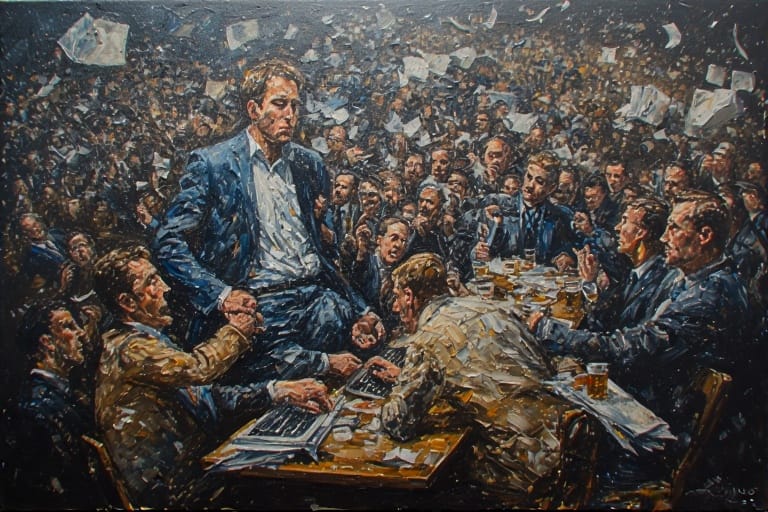
The NASDAQ exchange was overwhelmed. A software glitch delayed order confirmations for hours. Investors were left in the dark—unsure if their buy or sell orders had gone through. Chaos ensued.
These malfunctions caused instability in the market and led to lawsuits. NASDAQ later paid over $60 million in fines and settlements. The launch, meant to be historic and smooth, became infamous.
7. Financial Results and Market Performance
Despite the rough start, Facebook still raised $16 billion—making it the third-largest IPO in U.S. history at the time. However, the stock’s performance was underwhelming. Over the next few weeks, shares dipped below $30. By September, they had fallen under $18, cutting the company’s value nearly in half.
Many small investors felt burned. Analysts questioned the company’s ability to generate mobile ad revenue. Yet, the fundamentals remained strong, and over time, Facebook would prove its skeptics wrong.
8. Investor Reactions and Controversies
There was backlash. Many retail investors claimed they were misled. Allegations surfaced that some banks had lowered earnings forecasts during the roadshow but failed to disclose them to the public.
A series of lawsuits followed. The SEC and FINRA (Financial Industry Regulatory Authority) launched investigations. Though Facebook itself wasn’t found guilty of wrongdoing, the episode shook confidence in IPOs and in tech valuations.
9. Impact on Facebook’s Strategy
The turbulent IPO forced Facebook to shift gears. It doubled down on mobile monetization, which had been a weak point. Investments poured into improving mobile apps, mobile ads, and analytics.
By 2013, Facebook was thriving on mobile. The missteps of 2012 became a catalyst for innovation. The company acquired Instagram, later WhatsApp and Oculus, expanding its empire beyond a single platform.
10. Broader Impact on Tech IPOs
The Facebook IPO sent ripples through the tech world. It led to more cautious investor behavior and tighter scrutiny of tech valuations. Companies delayed their IPOs, refined their models, and prepared better.
It also signaled the end of blind enthusiasm for every tech startup. Investors began demanding clearer paths to profitability—not just user numbers.
11. Media and Public Perception
The media painted the IPO as a rollercoaster. One day it was a triumph; the next, a disaster. Public perception was mixed. Some admired Zuckerberg’s nonchalant demeanor; others criticized the overvaluation.
But one thing was clear—Facebook had made history. It joined the elite club of public tech giants and had the capital to match its ambitions.
12. Long-Term Legacy
Looking back, the Facebook IPO was both flawed and foundational. Despite its rocky start, the company rebounded, its stock eventually skyrocketing beyond $300 in the years that followed.
The IPO taught investors, regulators, and tech founders valuable lessons about transparency, infrastructure, and hype. It marked the moment when social media turned into Wall Street power.
Today, Facebook—now Meta Platforms Inc.—remains a titan of the tech world. And it all began on that hectic day in May 2012.
13. Conclusion
The Facebook IPO was more than a financial event—it was a cultural milestone. It captured the promise and peril of the digital age. The stock may have stumbled, but the company didn’t.
In the end, Facebook’s debut changed the game—not just for itself, but for every tech firm that followed.