Table of Contents
- The Shadow over Rome: Setting the Stage for the Siege
- Who Was Alaric? The Man Behind the Goths’ Rising Star
- The Western Roman Empire in Turmoil: Political and Military Crises
- The March to the Eternal City: Prelude to the Siege
- The First Siege Begins: Rome Under the Gothic Shadow
- Rome’s Defenses and the People’s Resolve: Between Fear and Defiance
- Alaric’s Strategy: Starvation, Siegecraft, and Psychological Warfare
- The Intrigue Inside Rome’s Walls: Politics, Betrayal, and Diplomacy
- Hunger and Despair: The Human Cost of the Siege
- The Role of Stilicho and the Imperial Court: Allies or Adversaries?
- The Papal Factor: Religious Authority in a Time of Crisis
- Negotiations and Stalemate: The Siege’s Uncertain Endgame
- The Lifting of the Siege: What Forced Alaric’s Withdrawal?
- Immediate Aftermath: Relief, Ruin, and the City’s Fragile Future
- The Siege’s Legacy: Foreshadowing the Fall of Rome?
- Alaric’s Next Moves: From Siege to Sack
- The Siege in Contemporary and Later Chronicles: Myth and Reality
- Archaeological Echoes: Traces of the Desperate Days of 408-09
- Lessons from Alaric’s First Siege for an Empire in Decline
- The Eternal City Under Siege: A Symbol of Empire’s Fragility
The Shadow over Rome: Setting the Stage for the Siege
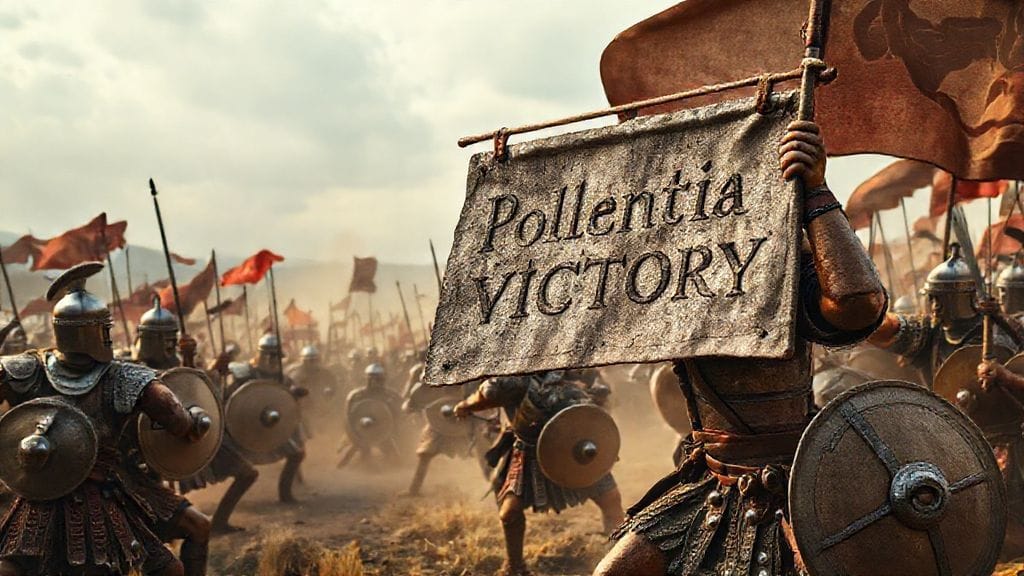
In the autumn of 408 AD, a grim shadow descended upon the venerable city of Rome. The horizon was darkened not by storms or gods’ wrath, but by the looming presence of a Gothic army encamped just beyond the city walls. Banners fluttered subtly against the cold winds as Alaric, the Gothic chieftain, prepared to tighten his grip around the Eternal City. For centuries, Rome had stood as the indomitable heart of an empire, a beacon of grandeur and civilization—and yet, as the first siege began, the city was neither invincible nor at peace. Anxiety twisted through the streets like a palpable fog; inside the walls, the citizenry clung to hope and superstition in equal measure.
The siege was not merely a military maneuver but a dramatic rupture in Rome’s narrative—one that mirrored the deeper fractures tearing through an empire struggling against its own unraveling. Historians often recount the fall of Rome with a melancholic fatalism, and this siege, culminating in a tense retreat by Alaric’s forces the following year, marks a vital, dramatic chapter. It was a glimpse of the vulnerability lurking beneath the surface of imperial power, an episode rich with tension, diplomacy, and human suffering.
Who Was Alaric? The Man Behind the Goths’ Rising Star
Alaric I was far from the stereotypical barbarian warlord painted by Roman chroniclers. Born in the late 4th century among the Visigoths, Alaric was a shrewd military leader and a man deeply embedded in the complex politics that defined the Late Roman Empire’s uneasy relationship with “barbarian” peoples. His rise to prominence emerged from a mix of military skill, diplomatic acuity, and an unwavering drive to secure a place for his people inside the collapsing Roman order.
Unlike other Gothic leaders, Alaric was well acquainted with Roman tactics, culture, and politics; he had served in the Roman army and understood the empire’s strengths and weaknesses intimately. Yet, beneath the polish, there simmered growing discontent—both from the Goths frustrated by broken promises of land and pay, and from Romans wary of the “barbarian” presence within their borders. Alaric embodied this liminality: neither fully outsider nor Roman, he was the catalyst for the coming storm.
The Western Roman Empire in Turmoil: Political and Military Crises
To understand the siege’s significance, one must first grasp the Empire’s precarious condition. By 408, the Western Roman Empire was a shell of its former self. Political authority had fractured, with emperors more figureheads than commanders. The imperial court in Ravenna wrestled desperately with generals, religious leaders, and foreign tribes, each plotting and maneuvering to secure their own survival.
The military was depleted by years of internal conflict, external invasions, and economic instability. The once-mighty legions had dissolved into patchworks of mercenaries, foederati (federated allies), and desperate recruits. Rome itself, though immortalized in art and literature, was no longer the bustling powerhouse it had been even a century earlier—its population had decreased, its walls were scarred, and its ability to project power had diminished.
This climate of weakness and struggle was fertile ground for Alaric to assert his demands. His grievances hinged on issues such as land allotments for his army and royal titles meaningful enough to legitimize his people’s place within the empire—demands Rome was wryly unable or unwilling to fulfill.
The March to the Eternal City: Prelude to the Siege
When Alaric advanced toward Rome in late 408, the city’s defenders were caught largely unprepared. News traveled slowly, and the sudden arrival of Gothic forces sent waves of panic through the populace. Soldiers scrambled to reinforce crumbling walls; merchants shuttered their shops; families braced for the long, uncertain ordeal to come.
The approach was marked less by outright battle and more by calculated intimidation. Alaric’s forces encamped just beyond the city, cutting off supply routes and signaling their readiness to starve the city into submission. The camp was a flurry of activity, with Gothic warriors maintaining strict discipline, scouts patrolling the perimeter, and Alaric himself overseeing operations with austere command.
Rome hadn’t yet seen a siege of this scale in centuries—its last great assault by the Gauls in 390 BC had evolved into legend. Now the distant history was reawakening with brutal immediacy.
The First Siege Begins: Rome Under the Gothic Shadow
The siege’s initial days were filled with relentless pressure. Goths picked at the edges of Rome’s defenses to test their strength while avoiding a costly frontal assault. Alaric knew the city’s walls were strong, but its morale and provisions were fragile.
Inside Rome, the situation grew grim. Markets emptied quickly as trade routes were severed. Food supplies dwindled, and rationing became severe. The urban poor, the elderly, and children suffered most acutely while the elite debated strategies and conspiracies. Among these walls, tension pulsed—not only from hunger but from political uncertainty and fear of betrayal.
Rumors swirled that pro-Gothic sympathizers would open gates from within. Yet the citizenry, bound by a fierce attachment to the city’s legacy, refused to yield.
Rome’s Defenses and the People’s Resolve: Between Fear and Defiance
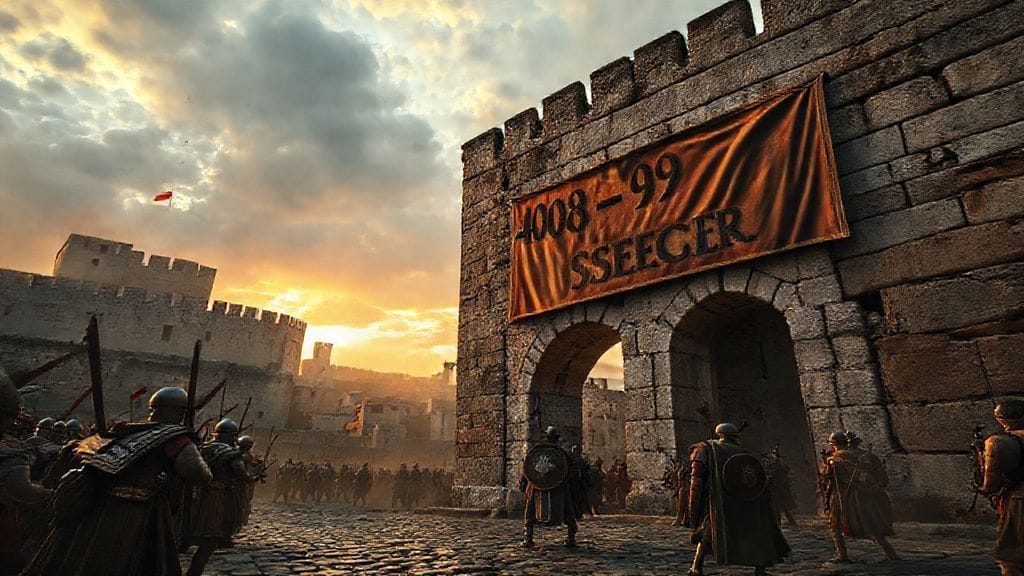
The Aurelian Walls, built centuries earlier to protect Rome from invasions, served as a formidable barrier. But walls are only as strong as those who man them. The defenders consisted of a mix of veteran soldiers, hastily conscripted militia, and nervous senatorial guards. Leadership was divided among generals, some skeptical of Alaric’s intentions, others eager to seek peace at any cost.
The civilians’ resolve was tested daily. Food-shortages bred panic, and desperation led some to looting and crime. Yet, despite this, many Romans chose defiance over surrender, buoyed by religious faith, civic pride, and a stubborn hope.
One senator famously declared, “Rome’s spirit is eternal, not the flesh.” This resilience, however, could not erase the physical hunger gnawing through the city’s streets.
Alaric’s Strategy: Starvation, Siegecraft, and Psychological Warfare
Alaric’s approach to the siege was a masterclass in patience and strategy. Rather than attempt a costly and uncertain breach, he sought to weaken his adversary by cutting off supplies and breaking Rome’s spirit.
His forces blocked all roads leading into the city, intercepting traders and intercepting reinforcements. Gothic raiding parties struck nearby farms to destroy food stockpiles further afield and prevent any relief efforts.
But this was not only a battle of food and weapons—it was psychological. Alaric sent envoys bearing both threats and promises, testing political divisions within the city. The Gothic chieftain understood well that the siege was as much about diplomacy as military might.
The Intrigue Inside Rome’s Walls: Politics, Betrayal, and Diplomacy
Behind Rome’s fortified walls, the siege catalyzed a shadow war. Factions vied for influence—some advocating negotiation with Alaric, others demanding total resistance. Imperial officials were paralyzed by indecision, fearful of undermining their authority yet desperate for survival.
Count Heraclianus sought to muster relief forces but faced resistance from political rivals and the emperor’s court in Ravenna. Meanwhile, whispers of collusion between corrupt officials and the Goths stirred public outrage.
This volatile political landscape mirrored the wider disarray of the empire, where loyalty was fluid and self-interest often outweighed duty. The siege exposed how Rome’s enemies were not always beyond the gates but often within.
Hunger and Despair: The Human Cost of the Siege
The siege was a crucible of suffering. As months dragged on, starvation tightened its grip. Desperation birthed strange phenomena—reports of cannibalism surfaced in some quarters, a chilling testament to the extremity of conditions.
Families huddled in darkened rooms, sharing meager scraps while the dead went uncollected in alleys. Children’s cries echoed where laughter once bloomed. Yet amid tragedy, stories of solidarity emerged: neighbors sharing bread, priests offering comfort, and makeshift infirmaries tending the sick.
A Christian bishop reputedly declared, “Though Rome may starve, its soul shall not perish.” Such words crystallized the resilience of human spirit amid devastation.
The Role of Stilicho and the Imperial Court: Allies or Adversaries?
Flavius Stilicho, the powerful magister militum and guardian of Emperor Honorius, occupied a pivotal role during the siege. Though he held nominal command over Western forces, his earlier political machinations and uncertain loyalties complicated the city’s hopes for relief.
Stilicho’s troops were occupied elsewhere, and his strained relationship with the emperor diminished coordinated responses. His eventual downfall—assassinated on political charges in 408—occurred in the siege’s shadow, leaving Rome increasingly isolated.
Many historians argue that Stilicho’s fall was a turning point, eliminating one of Rome’s few effective defenders and indirectly facilitating Gothic advances.
The Papal Factor: Religious Authority in a Time of Crisis
The Christian Church in Rome, led by the Bishop of Rome, increasingly shaped the city’s response. Papal leaders preached calm and urged submission to God’s will, positioning themselves as spiritual bulwarks amid chaos.
Church leaders also negotiated quietly with Gothic commanders behind the scenes, seeking to protect sacred spaces and vulnerable citizens. Their involvement foreshadowed the rising political role that the papacy would assume in subsequent centuries.
The siege illustrated how faith and religion became intertwined with survival, politics, and identity in a crumbling empire.
Negotiations and Stalemate: The Siege’s Uncertain Endgame
By early 409, the siege had settled into a deadly stalemate. Alaric’s forces had not breached the walls, yet Rome teetered on the brink of collapse. Negotiations began cautiously, with Alaric demanding formal recognition and supplies.
Emperor Honorius, safely ensconced in distant Ravenna, wavered between military defiance and appeasement, reflecting his court’s fractured will.
After months of hardship, a tacit agreement emerged: Alaric would lift the siege in exchange for subsidies, feeding supplies, and political concessions. This uneasy truce was a temporary reprieve, not a resolution.
The Lifting of the Siege: What Forced Alaric’s Withdrawal?
What finally compelled Alaric to withdraw from Rome was a confluence of strategic considerations. The Gothic army had suffered attrition and needed to secure winter quarters. Political pressures from other barbarian groups and Roman factions demanded mobility.
Moreover, Alaric sought to reposition for further negotiations and campaigns. The siege of 408–09 thus ended not in conquest but withdrawal, a gesture signaling that this was only the first act in a tragic drama.
Rome emerged battered but unbroken, while Alaric’s forces remained a persistent threat.
Immediate Aftermath: Relief, Ruin, and the City’s Fragile Future
Relief swept through Rome like a tentative breath after months underwater. Food trickled back, walls were repaired, and the city’s citizens attempted to return to some semblance of normality.
Yet the scars were deep—economically depleted, socially fractured, and politically unstable. The siege exposed fundamental weaknesses that would soon culminate in even graver calamities.
Alaric’s Gothic forces, emboldened by their near success, would return in 410 for a far more devastating encounter—the sack of Rome—a historical rupture that echoed through centuries.
The Siege’s Legacy: Foreshadowing the Fall of Rome?
The first siege of Rome by Alaric was more than a military episode; it was the harbinger of the empire’s slow unraveling. It marked the impotence of Roman authority and the rise of barbarian power within the empire’s heartland.
The siege shattered illusions of invulnerability and redefined Rome—not as an eternal stronghold but a vulnerable city, vulnerable to persuasion, destruction, or compromise. For many contemporaries, it symbolized the twilight of classical civilization and the dawn of a new, uncertain age.
Alaric’s Next Moves: From Siege to Sack
After withdrawing, Alaric did not fade into obscurity. Instead, he consolidated his forces and prepared for a decisive blow. In 410, only months later, Alaric returned to Rome and launched the first sack of the city in nearly 800 years.
This brutal yet relatively restrained pillage was a watershed event. It left a profound psychological wound that reshaped Europe’s cultural and political trajectories. But behind this tragedy lay the unresolved tensions and failures visible already in the 408-409 siege.
The Siege in Contemporary and Later Chronicles: Myth and Reality
Chroniclers of the Late Antiquity depicted the siege with varied lenses. Some portrayed Alaric as a savage destroyer; others as a tragic figure seeking justice for his people. Writers like Orosius and Zosimus graphed the siege against a backdrop of divine judgment and imperial decay.
Over the centuries, the siege has been mythologized—part cautionary tale, part epic drama—its facts often enshrouded in legend. Modern historians sift these narratives to unravel the complex truths beneath the layers of storytelling.
Archaeological Echoes: Traces of the Desperate Days of 408-09
Archaeology in Rome has uncovered subtle traces from this period—disruptions in urban habitation layers, hastily constructed fortifications, and remnants of food scarcity. These physical clues complement textual sources, painting a portrait of a city confronting crisis on multiple fronts.
They hint at the intensity of the siege’s human experience beyond grand political narratives—fire-damaged homes, mass graves, and starvation markers etched in bones.
Lessons from Alaric’s First Siege for an Empire in Decline
The siege offers enduring lessons on leadership, resilience, and decline. It warns of the dangers when empires lose cohesion, when diplomacy fails, and when people suffer in silence behind formidable walls.
Alaric’s siege was a moment when history shifted imperceptibly toward transformation—an empire’s twilight stretched over ages yet crystallized in the suffering and hope of Rome’s citizens.
The Eternal City Under Siege: A Symbol of Empire’s Fragility
Rome in 408-09 reminds us that even the greatest powers can hesitate before their end. The siege exposed vulnerabilities not just of stone and mortar but of spirit and governance.
It forces reflection on how civilizations endure—or crumble—under pressure and how history’s great cities might face similar storms. The Eternal City’s fate is both unique and universal: a mirror for all who look upon the rise and fall of empires.
Conclusion
Alaric’s first siege of Rome stands as a powerful and poignant episode in the twilight of the Western Roman Empire. It was a time when the Eternal City, long a symbol of strength and grandeur, faced humiliation, hunger, and the prospect of ruin—not by the overwhelming force of siege engines or relentless assault, but by the subtle grinding of attrition, politics, and human endurance.
This siege reveals the complexities of an empire in decline: the mix of fear and courage, betrayal and loyalty, despair and hope. It captures the human experience amid historical forces beyond individuals’ control and sets a stage for later cataclysms that would shape Europe profoundly.
Ultimately, this story is not just about armies or emperors but about the fragile endurance of a city and its people—echoes of which still resonate whenever society faces its own moments of existential crisis.
FAQs
Q1: What motivated Alaric to lay siege to Rome for the first time in 408-409?
Alaric sought recognition, land, and resources for his Gothic followers, feeling betrayed by broken promises from Roman authorities. The siege was a means to pressure the empire into concessions.
Q2: How did the citizens of Rome cope with the siege’s hardships?
They endured hunger, fear, and political uncertainty with a mixture of resilience and despair. Acts of communal solidarity and religious faith helped sustain morale despite extreme conditions.
Q3: Why didn’t Alaric's army take Rome by force during the first siege?
Rome’s formidable walls and determined resistance made a direct assault costly. Alaric preferred siege tactics aiming at starvation and negotiation, conserving his forces for future campaigns.
Q4: What role did Emperor Honorius and his court play during the siege?
Emperor Honorius, based in Ravenna, was largely ineffective, indecisive, and insulated. His court was politically fragmented, undermining coordinated defense or diplomatic efforts.
Q5: How did the lifting of the siege in 409 affect the Western Roman Empire?
It temporarily relieved Rome but exposed unresolved tensions. It emboldened Alaric and set the stage for the devastating sack of Rome in 410, accelerating the empire’s decline.
Q6: In what ways did the siege reveal the changing nature of Rome’s power?
It highlighted the empire’s military weakness, political disarray, and dependency on barbarian forces, while showing Rome’s transformation from imperial center to a city vulnerable to external pressures.
Q7: What was the role of the Church during the siege?
The Church provided spiritual support, negotiated for the protection of civilians and holy sites, and began asserting a more prominent political role in the city’s governance.
Q8: How has modern scholarship interpreted Alaric’s siege of Rome?
Contemporary historians view the siege as a complex episode illustrating the interplay of military strategy, politics, and social resilience in the empire’s twilight, moving beyond simplistic barbarian invasion narratives.