Table of Contents
- Introduction
- What Was the Glass-Steagall Act?
- Origins and Historical Significance
- The Growing Push for Deregulation
- Gramm-Leach-Bliley Act Explained
- Political Backing and Lobbying Power
- Clinton’s Role and Bipartisan Support
- Immediate Effects on the Banking Industry
- Rise of Megabanks and Financial Conglomerates
- Critics and Warning Signs
- The Link to the 2008 Financial Crisis
- Reassessment and Ongoing Debate
- Global Influence of the Repeal
- Conclusion
- External Resource
- Internal Link
1. Introduction
On November 12, 1999, a seismic shift occurred in the financial regulatory landscape of the United States. President Bill Clinton signed into law the Gramm-Leach-Bliley Act (GLBA), officially repealing key provisions of the Glass-Steagall Act of 1933. With the stroke of a pen, the U.S. government dismantled the firewall that had kept commercial banks and investment banks separate for more than six decades.
This move was hailed by some as a modernization of outdated laws to reflect the realities of a global financial market. Others warned that it would open the floodgates for risky behavior and financial excess. In hindsight, the repeal of Glass-Steagall is often seen as a crucial turning point that paved the way for the 2008 global financial crisis.
2. What Was the Glass-Steagall Act?
Passed during the depths of the Great Depression, the Glass-Steagall Act was designed to restore public confidence in the banking system. It created a clear line between commercial banking—which involves taking deposits and making loans—and investment banking, which focuses on securities underwriting and trading.
The idea was simple: banks that manage people’s savings should not gamble with them in volatile markets. By keeping these activities separate, lawmakers aimed to protect depositors and ensure the stability of the financial system.
3. Origins and Historical Significance
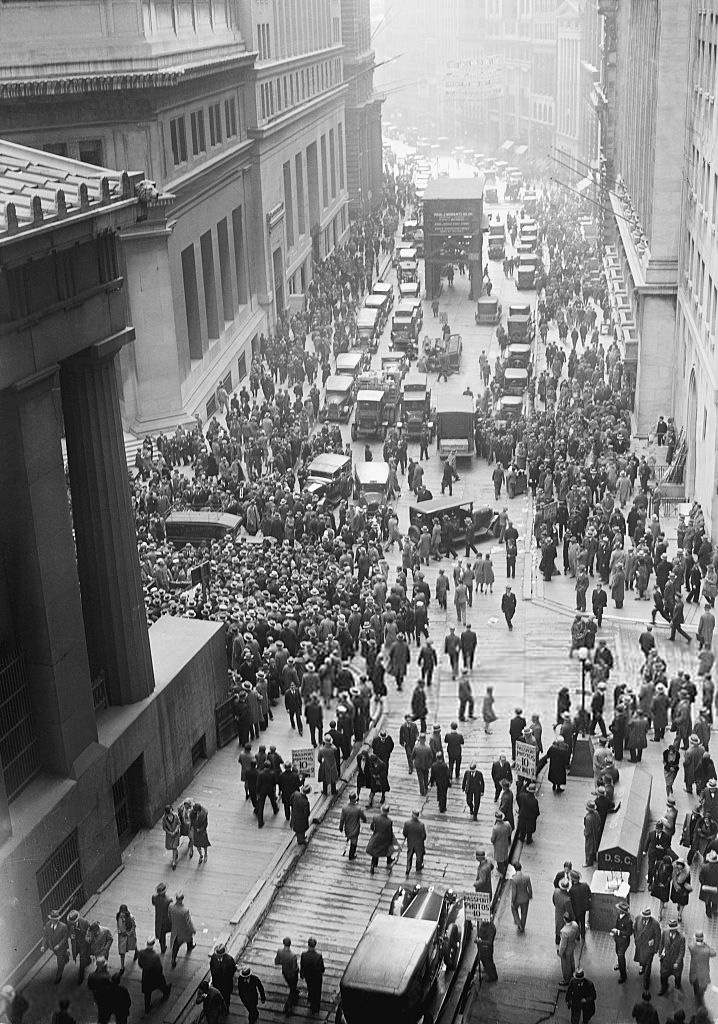
The 1929 stock market crash and the subsequent wave of bank failures revealed the dangers of speculative banking practices. Glass-Steagall, named after Senator Carter Glass and Representative Henry Steagall, aimed to curb these risks.
It also led to the creation of the Federal Deposit Insurance Corporation (FDIC), which insures bank deposits. For decades, this act became the cornerstone of American financial regulation, credited with stabilizing the banking industry through numerous economic cycles.
4. The Growing Push for Deregulation
By the 1980s and 1990s, critics argued that Glass-Steagall was outdated. Financial innovation had blurred the lines between banking functions, and large institutions were eager to expand into new markets.
Banks began lobbying aggressively to remove the restrictions. Some already operated in gray areas, using subsidiaries to engage in activities technically off-limits. The political climate of the time—pro-business and increasingly global—provided fertile ground for change.
5. Gramm-Leach-Bliley Act Explained
The Financial Services Modernization Act of 1999, also known as the Gramm-Leach-Bliley Act, eliminated the separation between commercial and investment banking. It allowed financial institutions to consolidate and offer a full range of services—banking, insurance, and securities—all under one roof.
The bill passed the Senate with an overwhelming majority—90 to 8—and the House with similar support. It reflected a bipartisan consensus that deregulation would lead to more competitive and globally viable U.S. financial firms.
6. Political Backing and Lobbying Power
Wall Street’s influence on Washington played a major role in the repeal. Financial giants like Citigroup and J.P. Morgan spent millions lobbying for deregulation. The success of Citigroup’s merger with Travelers Group—an insurance company—demonstrated how the law was already being bent.
The repeal was seen as a green light for consolidation, and lawmakers justified their support as pro-growth and pro-innovation.
7. Clinton’s Role and Bipartisan Support
President Clinton signed the bill into law, describing it as a necessary update for a modern economy. Treasury Secretary Larry Summers and Fed Chairman Alan Greenspan echoed these sentiments.
Republican Senator Phil Gramm, a chief architect of the bill, hailed it as a way to allow American banks to compete globally. The fact that Democrats and Republicans aligned so strongly on this issue speaks volumes about the prevailing economic ideology at the time.
8. Immediate Effects on the Banking Industry
The repeal cleared the path for the creation of massive financial conglomerates. Citigroup, Bank of America, and others rapidly expanded their reach. Commercial banks now had the green light to underwrite and trade securities, manage hedge funds, and dive into complex derivatives.
This consolidation allowed firms to diversify revenue but also amplified systemic risk. Institutions became “too big to fail.”
9. Rise of Megabanks and Financial Conglomerates
What followed was a boom in banking mergers and acquisitions. The new giants were no longer confined by old boundaries. They could offer everything from mortgages to investment portfolios to insurance policies—all under one umbrella.
This model, however, came with hidden dangers. With more activities bundled together, transparency suffered, and conflicts of interest flourished.
10. Critics and Warning Signs
Some economists and policymakers raised red flags early on. They warned that deregulation encouraged excessive risk-taking and created an environment ripe for financial instability.
Notably, former Fed Chairman Paul Volcker expressed concern about the growing influence of speculative trading within commercial banks. But these voices were often drowned out in the euphoria of deregulation.
11. The Link to the 2008 Financial Crisis
When the global financial crisis erupted in 2008, many pointed to the repeal of Glass-Steagall as a root cause. Banks had bundled risky mortgage-backed securities, engaged in shadow banking, and overleveraged their balance sheets—all while being backed by depositors’ funds.
Though not the sole factor, the lack of regulatory separation allowed the crisis to spread rapidly across sectors. The collapse of Lehman Brothers, the bailout of AIG, and the near-failure of numerous banks were stark reminders of systemic fragility.
12. Reassessment and Ongoing Debate
In the aftermath of the crisis, calls to reinstate Glass-Steagall resurfaced. The Volcker Rule, part of the Dodd-Frank Act of 2010, attempted to limit proprietary trading by commercial banks—but it fell short of a full return to Glass-Steagall.
Debates continue today. Should we separate banking functions again? Can modern risk management tools replace strict regulatory lines? Opinions remain divided.
13. Global Influence of the Repeal
The U.S. repeal influenced other countries to reconsider their own banking regulations. In the EU, Japan, and elsewhere, financial conglomerates gained traction. However, after 2008, global regulators began reassessing the wisdom of such integration.
The Glass-Steagall story became a global cautionary tale—a reminder of the delicate balance between innovation and oversight.
14. Conclusion
The repeal of the Glass-Steagall Act in 1999 was more than a legal change—it was a philosophical shift. Deregulation promised efficiency, competitiveness, and innovation, but it also laid the groundwork for unprecedented financial risks.
Two decades later, the effects are still being felt. Whether seen as progress or peril, the day Glass-Steagall fell marked the beginning of a new—and far more complex—era in global finance.
15. External Resource
🌐 Wikipedia – Glass–Steagall Act