Table of Contents
- The Dawn of October 19, 439: A City on the Brink
- Carthage Before the Storm: Prosperity and Pressure in Late Antiquity
- The Vandals: From Nomads to Kingdom Builders
- Geopolitical Tensions in the Western Mediterranean
- The Rise of Gaiseric: The Architect of Vandal Ambitions
- Prelude to Conquest: The Vandal Crossing into North Africa
- The Siege of Carthage: Strategy, Deception, and Determination
- October 19, 439: The Fall of a Metropolis
- The Capture of Carthage’s Wealth and Treasure
- The Fate of Carthaginian Citizens and Refugees
- The End of Roman Supremacy in North Africa
- The Establishment of the Vandal Kingdom
- Religious Tensions: Arian Vandals Versus Nicene Christians
- Impact on Mediterranean Trade and Economy
- The Byzantine Response: Plans for Reconquest
- Long-Term Legacy: Vandal Rule and Its Place in History
- Archaeological Discoveries: Traces of a Lost Civilization
- Contemporary Accounts: Procopius and Others
- Myths and Misconceptions: The “Vandal” Legacy
- Lessons from Carthage: Power, Decline, and Resilience
1. The Dawn of October 19, 439: A City on the Brink
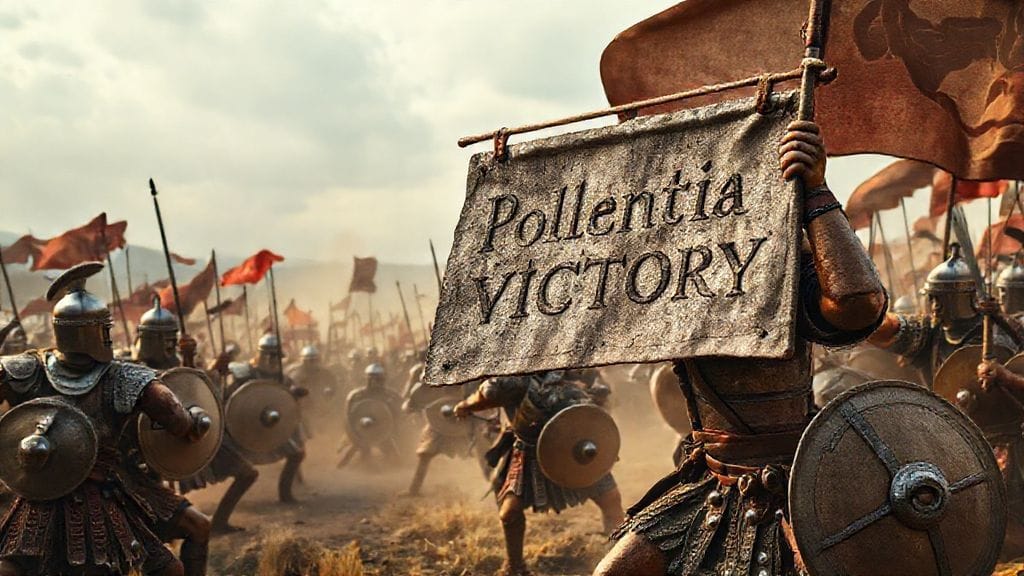
It was a morning unlike any other for the residents of Carthage, the jewel of North Africa. The sun rose over the azure Mediterranean with a deceptive calm, as if unaware that within hours, the city’s fate would be sealed. Streets that had buzzed with merchants, farmers, and officials now echoed with an undercurrent of panic. Whispers of Vandal scouts on the horizon turned into cries of alarm as the ancient walls, famed for their impregnability, were breached. Armies clashed with desperate defenders; the city's mighty harbor, previously a symbol of Roman maritime power, was darkened by enemy ships. By the day’s end, Carthage, one of the grandest cities of the Western Roman world, had fallen into the hands of the Vandals.
2. Carthage Before the Storm: Prosperity and Pressure in Late Antiquity
Carthage was no ordinary city. Founded centuries earlier by the Phoenicians, it had risen repeatedly from ashes—most notably after the Punic Wars against Rome—only to become a centerpiece of Roman authority in Africa. By the mid-5th century, it was a bustling center of trade, agriculture, and culture, vital for the grain supply of Rome and the empire’s economic lifeline.
Yet beneath this veneer of prosperity lay growing tensions. The Western Roman Empire was crumbling under relentless internal strife and external invasions. In North Africa, Roman administrative control had weakened, and the social fabric was fraying. Corruption, heavy taxation, and shifting allegiances made the city vulnerable. Carthage’s famed walls and fortifications were impressive, but centuries of neglect in their maintenance meant cracks had begun to show.
3. The Vandals: From Nomads to Kingdom Builders
The Vandals were far from the ruthless barbarians of popular imagination. Originating from Central and Northern Europe, they had wandered through Gaul and Spain, finally crossing into North Africa in 429 under their charismatic king, Gaiseric. What began as a migration quickly transformed into an ambitious campaign of conquest.
Unlike other Germanic tribes, the Vandals embraced a naval strategy, mastering the waters of the western Mediterranean. Their move to seize Africa was calculated: controlling Carthage meant access to immense wealth, strategic ports, and leverage over Rome itself.
4. Geopolitical Tensions in the Western Mediterranean
The Mediterranean basin of the 5th century was a cauldron of shifting alliances and imminent threats. The Eastern Roman Empire (Byzantium) still held significant power, but the Western Empire was fractured and faltering. Vandals exploited these divisions, pressing into Roman territories where defenses were weak or distracted by other conflicts.
North Africa was especially crucial. Beyond its wealth, its loss would deprive Rome of vital grain and revenue. The Vandals’ advance unsettled other powers, with Visigoths and Suebi watching warily, and the Eastern Roman court plotting responses.
5. The Rise of Gaiseric: The Architect of Vandal Ambitions
Gaiseric’s rise to leadership was pivotal. Known for his cunning and ruthlessness, he transformed the Vandals from a roaming tribe into a kingdom-state—a political entity with ambitions beyond mere survival.
His reign was marked by strategic marriages, diplomatic maneuvers, and brutal military campaigns. Gaiseric’s vision was clear: to establish a lasting dominion over North Africa, using Carthage as a capital from which to challenge Rome’s fading grip.
6. Prelude to Conquest: The Vandal Crossing into North Africa
In 429, the Vandals launched their infamous crossing from southern Spain to North Africa. The exact details remain partly shrouded in mystery, but what is uncontested is the speed and efficiency with which they established a foothold.
The Roman response was hampered by internal dissensions and underestimation of the Vandal threat. Carthage itself was spared immediate attack initially, lulling its defenders into a false sense of security even as the Vandals ravaged the countryside.
7. The Siege of Carthage: Strategy, Deception, and Determination
The final assault on Carthage in 439 was not an overnight event. It was the culmination of months of siege, psychological warfare, and political intrigue. The Vandals employed a combination of naval blockades and land attacks, cutting the city from reinforcements and supplies.
Carthaginian defenders, a mix of Roman soldiers and local militias, fought fiercely but were hamstrung by betrayal and exhaustion. Accounts tell of secret negotiations, sabotaged gates, and a populace torn between resistance and survival.
8. October 19, 439: The Fall of a Metropolis
On that fateful day, Vandal forces breached the city walls. The fighting was brutal and chaotic, with houses set ablaze and forced surrenders demanded. Gaiseric entered Carthage triumphantly, securing the city’s administrative centers and port facilities.
Carthage’s fall was a psychological blow to Rome and a turning point in Mediterranean history. The loss of this prize marked a decisive shift in power and heralded the rise of barbarian kingdoms in Roman lands.
9. The Capture of Carthage’s Wealth and Treasure
The Vandals did not merely take territory; they laid hands on immense wealth. Carthage had accumulated riches from trade, agriculture, and Rome’s imperial coffers. Historical records speak of sumptuous treasures, golden artifacts, and pilfered Christian relics spirited away to Vandal coffers.
This plunder financed further campaigns and emboldened Gaiseric’s regime. Yet it also fueled lasting resentment and narratives of vandalism etched deep in history.
10. The Fate of Carthaginian Citizens and Refugees
The human cost of the conquest was devastating. Many Carthaginians were enslaved or displaced. Christian communities faced persecution, especially as Vandals adhered to Arian Christianity, considered heretical by Roman Nicene Christians.
Refugees fled towards other Roman territories or inland, carrying stories of suffering and loss. The social fabric of Carthage was irrevocably changed.
11. The End of Roman Supremacy in North Africa
With Carthage under Vandal control, Roman dominion in North Africa crumbled. Provincial governors capitulated or fled; border defenses weakened further. North Africa transitioned from a Roman breadbasket to a Vandal stronghold, effectively snapping one of the empire’s critical arteries.
This loss hastened the decline of the Western Roman Empire, which would fall completely within a few decades.
12. The Establishment of the Vandal Kingdom
From their new capital, the Vandals forged one of the earliest post-Roman kingdoms. They administered cities, minted coins, and engaged in regional diplomacy. Carthage flourished anew under Vandal rule, albeit differently—marked by militarism and religious tensions.
Their kingdom spanned beyond Carthage, encompassing much of North Africa’s coastline, becoming a significant player in Mediterranean politics.
13. Religious Tensions: Arian Vandals Versus Nicene Christians
Religion was a constant fault line. Vandals followed Arian Christianity, rejecting the Nicene Creed embraced by the Roman population and church. This theological divide exacerbated conflict, with persecutions, church confiscations, and doctrinal disputes punctuating Vandal rule.
Yet, some periods saw pragmatic tolerance, as political necessity often overrode religious dogma.
14. Impact on Mediterranean Trade and Economy
Carthage’s fall disrupted trade routes crucial for grain, olive oil, and other commodities. The Vandals controlled key sea lanes, issuing ransom and extortion demands on merchant vessels and coastal towns.
This shift destabilized regional economies, forcing Rome and Byzantium to reconsider naval strategies and economic policies.
15. The Byzantine Response: Plans for Reconquest
The Eastern Roman Empire, under Emperor Justinian, viewed the Vandal kingdom as a usurper to imperial legacy. Nearly a century later, in 533, a massive Byzantine expedition under General Belisarius was dispatched to retake Carthage.
This campaign signaled the beginning of the Byzantine attempt to restore Roman authority in the West, culminating in the Vandalic War and the temporary recovery of North Africa.
16. Long-Term Legacy: Vandal Rule and Its Place in History
Though short-lived, the Vandal kingdom left an indelible mark. It challenged conceptions of barbarian “savagery,” laying foundations for successor kingdoms. The idea of Vandals as mindless destroyers was largely a product of later Roman and Christian narrative biases.
Their rule exemplifies the complex interplay of culture, religion, and power in the early medieval Mediterranean.
17. Archaeological Discoveries: Traces of a Lost Civilization
Excavations of Carthage have unearthed layers of Roman and Vandal occupation. Ruins of fortifications, churches, and domestic buildings reveal a city adapting to new rulers. Artifacts such as coins bearing Vandal kings’ likenesses and inscriptions provide evidence of political change.
These discoveries enrich our understanding of this turbulent era.
18. Contemporary Accounts: Procopius and Others
Writers like Procopius, a Byzantine historian, chronicled the era with a mixture of fascination and disdain. His works provide invaluable, though sometimes biased, insights into Vandals and their kingdom.
Other sources, including chronicles from North African bishops, offer perspectives about the mingling of conquest and everyday life.
19. Myths and Misconceptions: The “Vandal” Legacy
The word “vandalism” owes its origins to perceptions of this tribe’s sack of Rome and Carthage. Yet historical evidence suggests a more nuanced picture: periods of governance, cultural integration, and economic activity alongside acts of violence.
Correcting these myths allows a richer appreciation of the early medieval transition.
20. Lessons from Carthage: Power, Decline, and Resilience
The seizure of Carthage by the Vandals illustrates the impermanence of empires and the fluidity of identities. It reminds us that history is shaped by complex forces—military might, political will, cultural negotiation—not just by simplistic narratives of conquest.
Carthage’s story resonates as a tale of resilience amid upheaval, a city reborn under new stars yet forever tied to its ancient past.
Conclusion
The fall of Carthage in 439 was not merely the capture of a city—it was the seismic unmaking of an imperial world and the birth of a new order in the Mediterranean. Through fire, sword, and strategy, the Vandals, once nomadic tribes, carved out a kingdom that challenged Rome’s fading greatness. Yet, beneath the clamor of battle and conquest lay stories of everyday survival, of faith tested, and cultures intertwined.
Carthage’s fall invites reflection on the fragility of power and the enduring human spirit that survives through epochs of change. It's a story told in stones and scrolls, whispered in the winds off the Mediterranean—a lasting testament to history’s constant ebb and flow.
FAQs
Q1: Who were the Vandals, and why did they move into North Africa?
A1: The Vandals were a Germanic tribe that migrated from Central Europe, crossing into North Africa around 429 under King Gaiseric. They sought fertile lands, wealth, and strategic control of the Mediterranean trade routes.
Q2: Why was Carthage so important to the Roman Empire?
A2: Carthage was a major economic and administrative center, vital for supplying grain and resources to Rome. Its harbor and location made it pivotal for controlling the western Mediterranean.
Q3: How did the Vandals manage to capture Carthage?
A3: Through a combination of naval power, military strategy, exploitation of Roman weaknesses, and perhaps internal betrayal within Carthage, the Vandals besieged and breached the city defenses by October 19, 439.
Q4: What was the religious impact of Vandal rule in North Africa?
A4: The Vandals followed Arian Christianity, leading to conflicts and persecutions against Nicene Christian populations, though the intensity fluctuated over time according to political needs.
Q5: How did the fall of Carthage affect the wider Roman world?
A5: It severed critical economic and military supply lines for Rome, hastening the decline of the Western Roman Empire, and signaled the rise of barbarian kingdoms controlling former Roman territories.
Q6: What was the Byzantine Empire’s response to Vandal rule?
A6: In the 6th century, Emperor Justinian launched a military campaign led by General Belisarius that successfully reconquered Carthage in 533, reintegrating North Africa into the Roman world temporarily.
Q7: Are there archaeological remains of the Vandal presence in Carthage?
A7: Yes, excavations reveal Vandal-era fortifications, inscriptions, and coins, offering valuable evidence of their governance and cultural impact.
Q8: How has history’s view of the Vandals evolved?
A8: Once labeled purely destructive barbarians, historical research now portrays the Vandals as complex rulers who contributed to early medieval political and cultural developments.