Table of Contents
- The Calm Before the Storm: Rome in the Mid-5th Century
- The Rise of the Vandals: From Warriors to Kings
- Geopolitical Turmoil: A Fragmented Western Roman Empire
- The Seeds of Destruction: Why Rome Was Vulnerable
- King Genseric’s Ambition: The Vandal Vision for Power
- The Journey Across the Mediterranean: From Africa to Italy
- The Night of the Sack: June 2, 455, A City’s Fall
- Pillage and Paradox: The Vandal Approach to Rome
- The Role of Political Intrigue: Petronius Maximus and the Tyranny of Fear
- Religious Tensions and the Clash of Faiths
- The Sack’s Immediate Aftermath: Shockwaves Through Europe
- Rome’s Diminishing Glory: The End of an Era
- The Economic Toll: Destruction and Recovery
- Cultural and Societal Impact on the Eternal City
- The Legacy of the Vandals: From Scourges to Historical Misunderstood
- Rome and Vandal Relations Post-Sack
- Echoes Through Time: The Sack of 455 in Memory and Myth
- Comparing the Sacks: 410, 455, and Beyond
- The Fall of the Western Roman Empire: A Turning Point in History
- Conclusion: The Eternal City Endures — Scarred but Unbroken
- FAQs About the Vandal Sack of Rome
- External Resource
- Internal Link
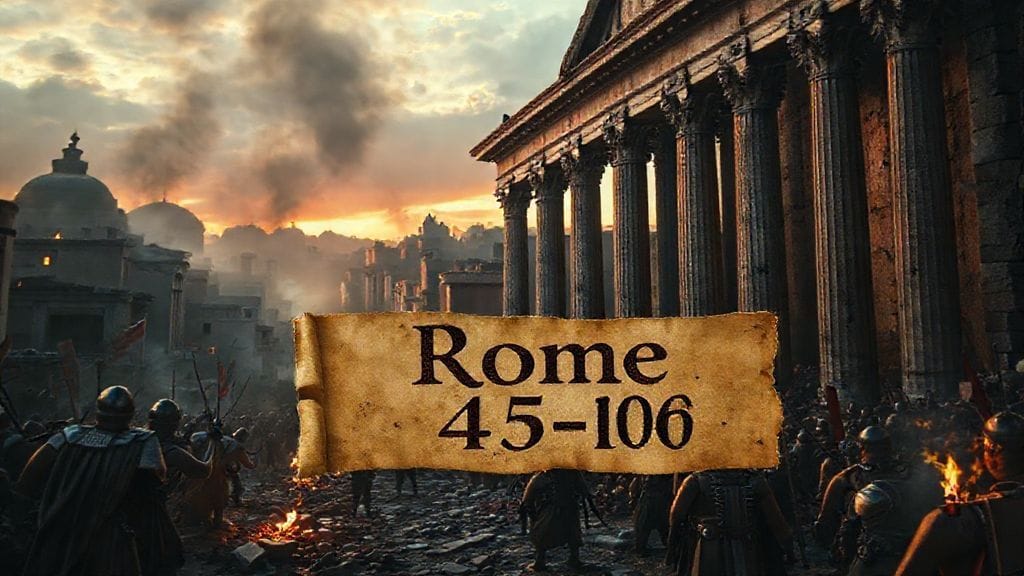
In the humid dusk of early June 455 AD, the ancient heartbeat of Rome faltered. Thunderous footsteps echoed through its marble streets, as warriors with foreign tongues and fierce eyes descended upon the once-majestic capital of the Western Roman Empire. This was no ordinary assault; it was the long-anticipated sack by the Vandals, ruthless in reputation and relentless in action. As shadows lengthened across the Tiber, the city’s grandeur began to crumble under the weight of history’s inexorable march.
1. The Calm Before the Storm: Rome in the Mid-5th Century
Rome at the start of 455 was a city caught between the glory of its past and the chaos of its present. Its vast aqueducts and colonnaded forums stood as mute testimonies to centuries of political and cultural dominance. Yet beneath this veneer of grandeur, the city was crumbling — physically and morally. The once invincible Western Roman Empire was now reduced to a patchwork of territories ruled by fragile coalitions, where internal strife, corruption, and external threats simmered dangerously.
The imperial seat was shaky, with emperors who ruled briefly and often under the shadow of growing military powers. Economic hardship plagued the populace, while the aristocracy scrambled to secure privileges and land. Yet even in these precarious times, Rome retained its symbolic power—an eternal city that all of Europe looked to, whether in admiration or in aspiration.
2. The Rise of the Vandals: From Warriors to Kings
Far from the Italian peninsula, another force was gathering strength: the Vandals, a Germanic people who had carved out a formidable kingdom in North Africa. Emerging originally from the forests of central Europe, the Vandals had a tumultuous history of migrations, battles, and settlements. By the early 5th century, under the astute leadership of King Genseric, they had crossed the straits from Spain, laid claim to Roman territories in North Africa, and established a substantial maritime power.
Their control over the vital grain supplies of the region was a blow to Rome’s survival, but it also gave the Vandals leverage. In many ways, they had become one of the heirs to Roman power, not through respect for tradition but via violent conquest and strategic acumen.
3. Geopolitical Turmoil: A Fragmented Western Roman Empire
The Western Roman Empire was not the monolithic entity of centuries past. By 455, it was fractured and vulnerable. Barbarian groups such as the Visigoths, Ostrogoths, Franks, and Vandals contested its territories. The military itself had often been filled with mercenaries of non-Roman origin, further complicating loyalties.
At the heart of the empire’s instability was its leadership. After the assassination of Emperor Valentinian III in 455, a power vacuum opened. Petronius Maximus, a Roman senator with ambitions as grand as the worn palaces of the Palatine Hill, seized the moment to claim the throne, but without military strength to support his claim. This lack of unified command was precisely what the Vandals aimed to exploit.
4. The Seeds of Destruction: Why Rome Was Vulnerable
Why did Rome fall? It was not merely because the Vandals were brutal or because the city’s defenses failed, but because the empire’s very fabric was fraying. Rome's walls, once impregnable, were poorly maintained. The city’s army was weak, and loyalty was divided. Importantly, the political elite had become shortsighted, putting personal gain above common security.
Additionally, shifts in trade routes and the loss of North African provinces cut off vital resources. The city’s feared position of dominance was more myth than reality. This vulnerability set the stage for an event that historians still debate: could Rome have been saved from the impending storm if only its rulers had acted differently?
5. King Genseric’s Ambition: The Vandal Vision for Power
Genseric was not simply a marauder; he was a shrewd statesman with a long-term vision. Seizing Rome would cement his status as a king among kings and legitimize the Vandal Kingdom as a successor to Roman grandeur. His strategy was both military and psychological.
He waited for the right moment — the death of Valentinian III and the resulting chaos. His forces, disciplined and battle-hardened from years of campaigning, were ready. Crossing the Mediterranean was not a mere raid; it was a calculated political move designed to weaken Roman power irreversibly.
6. The Journey Across the Mediterranean: From Africa to Italy
In the spring of 455, Vandal ships, some described by contemporary chroniclers as a daunting fleet of hundreds, sailed from Carthage. The logistics of transporting an army of thousands of warriors, plus their families and loot, across the Mediterranean were formidable. Yet the Vandals managed to do so with remarkable efficiency.
Their arrival surprised many in Rome, partly because the empire had not fully anticipated an attack from the sea. The Mediterranean waters, once dominated by Roman fleets, were now contested by new powers like the Vandals, threatening the empire’s core in unprecedented ways.
7. The Night of the Sack: June 2, 455, A City’s Fall
The sack itself began on June 2, when Vandal forces entered the city as Petronius Maximus fled, abandoning the citizens to their fate. Contemporary accounts vary, painting a picture of chaos and fury but also a surprisingly restrained pillage compared to the earlier Gothic sack of 410.
Streets echoed with cries of despair and the clash of steel; private homes and temples were looted, priceless artworks and treasures stolen. Yet, according to some sources, the Vandals spared many of Rome's churches and religious sites, suggesting a certain tactical respect, or perhaps a religious motivation — Genseric was an Arian Christian, as were many Vandals, distinct from Rome’s Catholic majority.
8. Pillage and Paradox: The Vandal Approach to Rome
The term "vandalism" derives from these events, connoting wanton destruction, but the Vandals’ sack was arguably more measured than commonly depicted. Genseric's primary aim was to seize assets and assert dominance, not simply to destroy.
They took captives, including Empress Licinia Eudoxia, the widow of Valentinian III, back to Carthage as leverage. This human cost was severe, imprinting trauma that would echo in Roman memory and legend. But the paradox remains: they looted deeply, yet spared some of Rome’s cultural treasures.
9. The Role of Political Intrigue: Petronius Maximus and the Tyranny of Fear
The fall of Rome was as much political as it was military. Petronius Maximus’ reign lasted mere weeks; his seizure of power alienated many factions. His hasty marriage to Valentinian’s widow caused outrage.
His cowardice in failing to defend Rome or negotiate with the Vandals contributed directly to the city’s defeat. The corridors of power in Rome were rife with betrayal and short-sighted ambition, framing the sack as a symptom of internal decay, not just external invasion.
10. Religious Tensions and the Clash of Faiths
Religion added a complex dimension. The Vandals followed Arian Christianity, deemed heretical by Roman Catholics. This theological divide fueled enmities and misunderstandings.
Although the Vandals respected churches during the sack, their occupation of North Africa involved persecution of Catholic clergy. Rome’s Christians saw the sack as divine punishment, a “judgment of God,” weaving religion into the narrative of decline and humiliation.
11. The Sack’s Immediate Aftermath: Shockwaves Through Europe
The news of Rome’s sack sent ripples across Europe and the Mediterranean. For many, the symbolic heart of the Roman world had been vanquished again, deepening fears that the ancient world’s structures were crumbling irreversibly.
Empires and kingdoms closely watched the fallout. Some sought to capitalize on the Western Empire’s weakness; others prepared for what many believed would be the inevitable fall of Rome itself.
12. Rome’s Diminishing Glory: The End of an Era
Though Rome remained a city, its role as capital and imperial center was finished. Power gradually shifted to Ravenna, and soon to other rising kingdoms.
The sack of 455 marked a definitive point of no return. Rome was no longer the grand empire’s beating heart but a whispered memory of a once-mighty past echoing through deserted forums and overgrown temples.
13. The Economic Toll: Destruction and Recovery
The pillage devastated Rome’s already fraying economy. Wealth was drained; trade routes were further disrupted. The loss of North African grain shipments compounded shortages.
Yet, the population endured. Small-scale commerce, artisanal production, and localized governance kept the city alive, though permanently diminished. Recovery was slow, and the city never regained its imperial primacy.
14. Cultural and Societal Impact on the Eternal City
The sack deepened social fractures. The urban poor faced violence and deprivation, while elites fled or negotiated survival. The cultural life of the city stagnated, yet monasteries and churches became new centers of learning and authority.
This transformation from imperial capital to religious refuge would shape medieval Rome—and later European civilization.
15. The Legacy of the Vandals: From Scourges to Historical Misunderstood
For centuries, the Vandals were vilified as barbaric destroyers, their name synonymous with cultural ruin. Modern historians challenge this view, arguing for a nuanced understanding of their political and cultural role.
Their kingdom in North Africa lasted nearly a century, influencing Mediterranean politics and trade. The sack of Rome, while devastating, was one episode in a complex story of migration, identity, and empire.
16. Rome and Vandal Relations Post-Sack
After the sack, intermittent conflicts and uneasy truces marked interactions. The Vandals controlled key Mediterranean territories and naval routes, challenging Rome’s successors.
This period was an age of shifting alliances and fragile peace, where Rome no longer dictated terms but adapted to a new world order.
17. Echoes Through Time: The Sack of 455 in Memory and Myth
The sack inspired a litany of chronicles, poems, and later artistic depictions. It became emblematic of empire’s fragility and human suffering.
From Procopius to modern scholars, the event remains a touchstone in understanding the fall of antiquity.
18. Comparing the Sacks: 410, 455, and Beyond
Rome’s sack by the Visigoths in 410 and later by other groups echoed with similar themes of decline, resilience, and transformation.
Yet each sack revealed different qualities: the Visigoths burned and withdrew; the Vandals took prize and stayed longer. These nuances matter in grasping the slow death of the Roman world.
19. The Fall of the Western Roman Empire: A Turning Point in History
The sack of 455 accelerated the Western Empire’s collapse, which officially came in 476 AD with the deposition of Romulus Augustulus.
This epochal transformation led to the European Middle Ages, reshaping politics, religion, and culture for centuries.
20. Conclusion: The Eternal City Endures — Scarred but Unbroken
Despite the devastation, Rome endured. The Vandals’ sack was a wound, deep and lasting, but not the end. The city adapted, rebuilt, and became a beacon for new civilizations.
Its story is one of resilience in the face of tragedy—a testimony to human endurance amid historical upheaval.
Conclusion
The sack of Rome in 455 was more than an episode of looting and conquest; it was a symbolic fracture marking the twilight of the Western Roman Empire. Behind the smoke and shattered stones lay a world in transformation — a civilization struggling to survive amidst political treachery, religious fault lines, and shifting power. King Genseric’s Vandals were not mere barbarians but agents of change, heralding a new order in the Mediterranean.
Yet, the Eternal City itself proved more eternal than its enemies envisioned. Scarred by history’s ravages, it persisted — its stones still echoing with stories of glory, loss, and rebirth. Understanding this event invites us to see how history’s great empires fall not just through battles but through the slow unraveling of their own strengths.
FAQs About the Vandal Sack of Rome
Q1: Why did the Vandals sack Rome in 455?
A1: The Vandals, led by King Genseric, took advantage of political chaos after Emperor Valentinian III’s death. Their sack was a calculated move to assert power, seize wealth, and weaken the already fragile Western Roman Empire.
Q2: How did the sack of 455 differ from the earlier sack by the Visigoths in 410?
A2: While both were traumatic, the Visigoths’ sack was notably violent and brief, leading to widespread destruction. The Vandals’ sack, although thorough in plundering, was reportedly more restrained in destruction, sparing many churches.
Q3: What role did Petronius Maximus play in the sack of Rome?
A3: Petronius Maximus seized power amidst crisis but failed to defend Rome effectively. His flight from the city hastened its fall and deepened the chaos during the Vandals’ attack.
Q4: What were the religious dynamics during the sack?
A4: The Vandals were Arians, while Rome’s inhabitants were predominantly Catholic, breeding tension. However, the Vandals spared many Christian sites during the sack, possibly out of religious respect or strategy.
Q5: How did the sack of 455 impact the Western Roman Empire’s decline?
A5: It hastened the empire’s collapse by draining resources, shaking morale, and demonstrating the empire’s weakness to other powers and internal factions.
Q6: Why is the Vandal sack associated with the term “vandalism”?
A6: The sack’s notoriety for looting and destruction contributed to the modern term “vandalism,” although historians today debate the extent and nature of the damage caused.
Q7: What happened to Rome after the sack?
A7: Rome never regained imperial primacy but survived as a city. It became more focused on religious and local power structures, setting the stage for its medieval renaissance.
Q8: How do historians today view the Vandals and their sack of Rome?
A8: Modern scholarship attempts to view the Vandals more fairly—acknowledging their political savvy and cultural impact rather than simply branding them as destructive barbarians.

