Table of Contents
- Dawn of a New Era: Theodoric’s Journey Begins
- The Ostrogoths in Flux: From Eastern Shadows to Western Aspirations
- The Fall of the Western Roman Empire: A Fragile Landscape
- The Balkan Crossroads: Sirmium at the Heart of Conflict
- Theodoric’s Vision: Beyond Barbarian Labels
- Alliance and Ambition: Negotiating Power in the Balkans
- The March Westward: A Tidal Movement of Peoples
- The Clash of Cultures: Roman Legacy and Gothic Identity
- Tactical Genius: Theodoric’s Military Prowess in the Balkans
- The Politics of Survival: Ostrogoths, Byzantines, and Local Powers
- Life in the Wake of Conquest: Societal Shifts in Sirmium
- Theodoric’s Leadership Style: Diplomacy Meets Warfare
- Religion and Rule: Arian Christianity in a Catholic World
- The Strategic Importance of the Balkans for Late Antiquity
- Sirmium’s Fall and Forgotten Glory
- Theodoric’s Westward Ambition: Setting the Stage for Italy
- The Aftermath: Ostrogothic Influence on Balkan and Italian Affairs
- The Legacy of 488: Memory and Myth in Ostrogothic History
- Closing Reflections: Theodoric’s Journey as a Turning Point
1. Dawn of a New Era: Theodoric’s Journey Begins
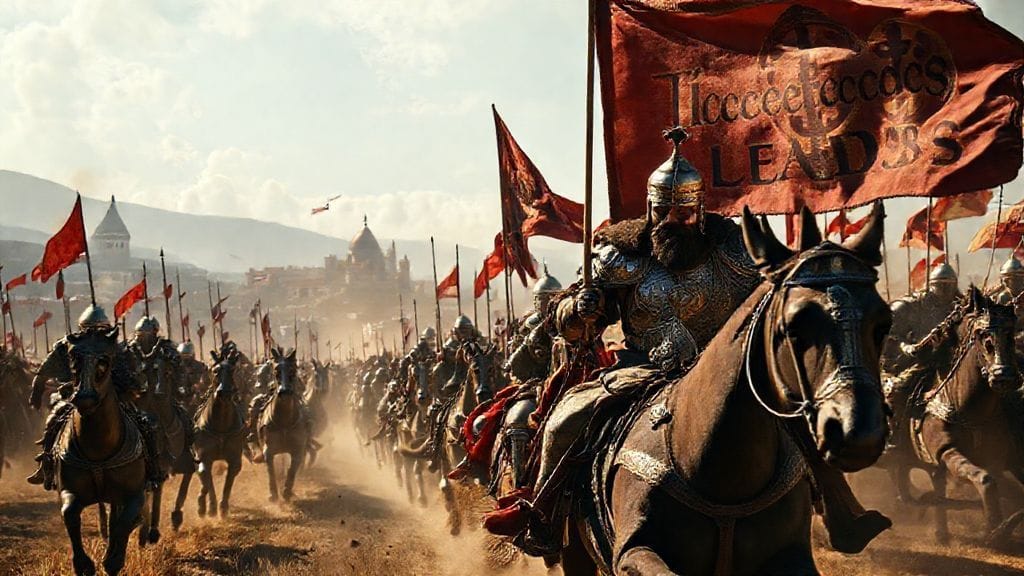
As dawn broke over the ancient city of Sirmium in 488 AD, a palpable tension hung in the smoky air. The Ostrogothic king, Theodoric, stood poised to lead his people westward — across a landscape scarred by the collapse of empires and fresh from the tremors of political upheaval. This moment was not merely a passage of armies; it was the birth of a new chapter in European history. Theodoric’s march would reshape kingdoms, cultures, and identities, heralding the twilight of Roman hegemony and the rise of barbarian kingdoms that would define the early medieval era.
The city of Sirmium itself — a fortified jewel in the Balkan crown — bore witness to this pivot. Once a proud Roman stronghold, its walls were now echoing with the footsteps of the Ostrogoths, carrying with them the hopes and fears of a people caught between empire and wilderness. Theodoric’s decision to lead his tribe west was bold, fraught with peril and promise. But these crossroads were no accident; they represented the larger, volatile canvas of the post-Roman world.
2. The Ostrogoths in Flux: From Eastern Shadows to Western Aspirations
To understand the magnitude of Theodoric’s journey, one must step back into the shifting shadows of the late 5th century. The Ostrogoths, a branch of the larger Gothic tribes, had long oscillated between the Roman fringes and the steppes of Eastern Europe. Initially subdued under the vast Eastern Roman (Byzantine) sphere of influence, their autonomy was a fragile veneer over centuries of displacement and adaptation.
Their homeland, the Pannonian plains stretching through modern Hungary and the Balkans, had become a crucible of cultural hybridity. The Ostrogoths were no longer the fierce barbarians chronicled by Roman writers centuries before, but a people wrestling with a dual identity — remnants of Germanic roots mingled with Roman customs, language, and religion.
Theodoric himself embodied this intricate balance. Raised partly in Constantinople as a political hostage, he absorbed Roman military tactics, governance ideals, and diplomacy, all while nurturing a fierce loyalty to his Gothic heritage. This complicated lineage fueled his vision of a new order, one where the Ostrogoths could claim their rightful place within the ruins of the Roman world.
3. The Fall of the Western Roman Empire: A Fragile Landscape
By 488, the Western Roman Empire had collapsed nearly two decades earlier, its central authority evaporated under waves of invasions, economic decline, and internal strife. What remained was a patchwork of successor kingdoms, contested territories, and a Byzantine Eastern Empire desperately holding onto its imperial dreams.
Italy, once the heart of Roman civilization, was fragmented, its cities and fortresses vulnerable to Lombard incursions and internal decay. The Balkans, although still nominally under Byzantine control, were a battleground of competing tribes and empires. Theodoric’s move westward was in many ways a calculated gamble — a bold attempt to seize the vacuum of power before rivals could solidify their claims.
Beneath this geopolitical uncertainty, the people endured hardship and uncertainty. Fortifications crumbled, local elites shifted loyalties, and rural populations faced the brutal shocks of raiding armies and shifting borders. Into this turmoil Theodoric stepped, championing a new political vision to replace chaos with order.
4. The Balkan Crossroads: Sirmium at the Heart of Conflict
Sirmium, nestled on the banks of the Sava River in today’s Serbia, stood at a crucial intersection of trade routes, military roads, and cultural paths. Once a prized Roman provincial capital, it had witnessed centuries of shifting allegiances. By the late 5th century, it was more than just a city — it was a symbolic prize signifying control over the Balkans.
Controlling Sirmium meant controlling the gateway westward and the lifeblood of the region’s commerce and communication. It was here that Theodoric marshaled his forces, leveraging the city as a staging ground to launch the Ostrogothic push into Italy. But Sirmium was also a tinderbox; Roman officials, Byzantine generals, and local Gothic factions all eyed it uneasily.
The battles for and around Sirmium were fierce and drawn out. The city’s battered walls held stories of desperate resistance, heroic sacrifices, and brutal sieges. As Theodoric secured this vital foothold, he demonstrated a blend of martial strength and strategic acumen that would define his reign.
5. Theodoric’s Vision: Beyond Barbarian Labels
Much of what we know about Theodoric emerges through the lens of Roman historians, who often boxed him into the stereotype of the “barbarian king.” Yet this figure was far more nuanced. Theodoric envisioned a kingdom that combined the best of Gothic strength with Roman administrative sophistication.
His leadership was marked by efforts to establish legal codes, stabilize economies, and foster religious tolerance — a delicate balancing act in a region rife with Arian Christians, Catholic Orthodox, and pagan traditions. Theodoric’s court embraced Roman art, architecture, and bureaucracy, signaling not a rupture but a transformation of Roman civilization.
For the Ostrogoths, Theodoric was a unifier — a leader who could wield traditional Gothic martial prowess while forging alliances with Roman aristocrats and imperial authorities. His rule promised not destruction, but a new synthesis.
6. Alliance and Ambition: Negotiating Power in the Balkans
Political maneuvering was as crucial as battlefield victories. Theodoric was a consummate negotiator, forging alliances with key powers to secure his reign. His relations with the Byzantine emperor Zeno were complex – a dance of diplomacy and mutual suspicion where recognition was traded for military support and guarantees.
By securing treaties and royal marriage alliances, Theodoric cemented his legitimacy and expanded his sphere of influence. These political alliances enabled the Ostrogoths to move west with a stronger backing, not as mere marauders but as legitimate rulers.
Yet these alliances were fragile. The interplay of ambitions between Ostrogoths, Byzantines, and local Balkan warlords often erupted into proxy conflicts and betrayals. Theodoric’s ability to navigate this web was a testament to his statesmanship.
7. The March Westward: A Tidal Movement of Peoples
In the summer of 488, Theodoric’s forces began their westward march from the Balkans — a movement representing more than a military campaign. It was an exodus of an entire people seeking new lands, safety, and sovereignty. Tens of thousands of Ostrogoths, along with their families, retainers, and allies, traversed the rugged terrain, rivers, and forests.
This migration was fraught with hardship: skirmishes with hostile tribes, logistical challenges, and the ever-present threat of famine and disease. Still, under Theodoric’s leadership, this colossal movement retained cohesion and purpose.
The march across the Balkans and into Italy was a defining moment in ‘barbarian’ migrations that shaped medieval Europe. A wave of transformation was sweeping the continent, with Theodoric’s Ostrogoths among the most disciplined and organized.
8. The Clash of Cultures: Roman Legacy and Gothic Identity
Theodoric’s westward campaign was more than a territorial conquest; it was a cultural encounter. The Ostrogoths found themselves inheriting Roman cities, laws, and landscapes vastly different from their steppe origins.
This meeting sparked tensions and symbioses. Roman citizens viewed their Gothic overlords with suspicion, while the Ostrogoths had to adapt to urban life, complex governance, and a religious landscape dominated by Christianity’s various sects.
Despite the tensions, the fusion of Roman and Gothic cultures gave birth to a distinctive new identity — a hybrid civilization that preserved fragmented Roman heritage while injecting Germanic vigor and innovation.
9. Tactical Genius: Theodoric’s Military Prowess in the Balkans
Military historians praise Theodoric for his strategic brilliance during the Balkan campaigns. Unlike many of his contemporaries who relied on sheer numbers or brutal raids, Theodoric employed tactical discipline, intelligence gathering, and adaptive maneuvers.
He deftly used terrain to his advantage, orchestrated coordinated attacks and sieges, and maintained strict command and control over disparate tribal groups. This ability ensured relatively minimal casualties and swift victories, consolidating Ostrogothic power.
One celebrated battle outside Sirmium showcased Theodoric’s daring encirclement of a Byzantine force, turning the tide decisively in his favor and opening the path westward.
10. The Politics of Survival: Ostrogoths, Byzantines, and Local Powers
The volatile Balkans were a chessboard of competing interests. The Ostrogoths were not mere invaders; they were players in a complex political arena where survival depended on cunning alliances and betrayals.
The Eastern Roman (Byzantine) Empire tried to manipulate Gothic factions to maintain influence, while local Slavic and other tribal groups vied for autonomy. Theodoric’s diplomatic acumen allowed him to maintain a precarious balance — exploiting Byzantine weakness without outright breaking with the imperial center.
This delicate equilibrium was a microcosm of Late Antiquity’s broader challenges — the collision of fading imperial frameworks with emerging barbarian kingdoms.
11. Life in the Wake of Conquest: Societal Shifts in Sirmium
Conquest brought upheaval but also adaptation. Theodoric’s administration introduced stability to Sirmium after years of conflict. The city’s harbors reopened, markets resumed, and a cautious peace allowed artisans and farmers to reclaim their livelihoods.
Yet social tensions simmered beneath the surface. Roman elites colonized alongside Gothic warriors, while local populations experienced shifts in land ownership and legal status. Religious divisions complicated coexistence, particularly between the Arian Gothic rulers and the Catholic majority.
Daily life in Sirmium during this period was a mosaic of resilience, negotiation, and cautious hope for a more stable future.
12. Theodoric’s Leadership Style: Diplomacy Meets Warfare
What set Theodoric apart was his dual aptitude for war and statecraft. His leadership blended military authority with a commitment to governance grounded in law, order, and cultural respect.
Unlike typical barbarian chieftains, Theodoric cultivated a court that mirrored Roman imperial grandeur. He invested in infrastructure, justice, and patronage of the arts. His willingness to listen to Roman elites and incorporate their traditions earned him grudging acceptance.
Thus, his leadership transcended mere conquest — it was a project of restoration and renewal, forged in the fires of conquest but rooted in vision.
13. Religion and Rule: Arian Christianity in a Catholic World
Religion played a complex role during these transformative years. Theodoric and the Ostrogoths adhered mostly to Arian Christianity — considered heretical by Catholic Romans.
This divergence created friction, particularly in the Balkans and later in Italy. Yet Theodoric exhibited religious tolerance, protecting Catholic clergy and preserving churches, aware that spiritual peace was key to political stability.
His reign represents one of the rare medieval episodes where religious pluralism was pragmatically maintained amidst doctrinal clashes.
14. The Strategic Importance of the Balkans for Late Antiquity
The Balkans were a pivot of the ancient world — a gateway between East and West, empire and barbarians. Controlling this region meant influence over trade routes vital for grain, silk, and precious metals, and military access to Italy and central Europe.
Theodoric’s presence here underscored the region’s role as a battlefield and bridge between fading Roman authority and emerging Germanic powers. Its complex geography nurtured ethnic diversity and political fragmentation, making it the perfect arena for power struggles.
The Ostrogothic foothold in the Balkans was the first step in reshaping the continent’s future.
15. Sirmium’s Fall and Forgotten Glory
Theodoric’s eventual conquest of Sirmium symbolized the collapse of Roman control over the Balkans. Yet, paradoxically, its storied history faded after this moment.
Once a metropolis of imperial ambition, Sirmium declined with the shifting tides of empire and invasion. Its capture marked not an end, but a transformation — from Roman capital to Gothic stronghold, and later to medieval relic.
The city’s story reminds us of the ephemeral nature of power and the cycles of rise and fall that define history.
16. Theodoric’s Westward Ambition: Setting the Stage for Italy
The capture and control of the Balkans were stepping stones to Theodoric’s ultimate goal: Italy. From Sirmium, he launched his decisive campaign in the late 480s and early 490s, culminating in his kingship over the Ostrogothic Kingdom of Italy.
This westward push reshaped Italian political life, blending Gothic and Roman legacies and redefining the peninsula’s destiny for decades.
The successful Balkan campaign was a linchpin, showcasing Theodoric’s strategic vision and prowess.
17. The Aftermath: Ostrogothic Influence on Balkan and Italian Affairs
The effects of Theodoric’s Balkan campaign rippled far beyond 488. Ostrogothic rule introduced new governance models, legal reforms, and military structures that informed both Balkan and Italian medieval polities.
Though eventually eclipsed by later invasions, the Ostrogothic presence left cultural and political imprints, including architectural innovations and legal traditions blending Roman and Gothic elements.
In the Balkans, this era remains a watershed in the transition from Roman antiquity to medieval Europe.
18. The Legacy of 488: Memory and Myth in Ostrogothic History
For centuries, Theodoric’s march from Sirmium has been shrouded in legend and contested narratives. Medieval chroniclers often romanticized his story, painting him as either a noble king or ruthless conqueror, depending on their biases.
Modern historians strive to untangle these myths to reveal the genuine complexities of his reign. The events of 488, embodying the clash of fading empire and rising barbarian power, remain a powerful symbol of transformation in European history.
19. Closing Reflections: Theodoric’s Journey as a Turning Point
Theodoric’s leadership during the migration from Sirmium westward stands as one of the defining moments in Late Antiquity. It was neither a simple invasion nor a chaotic flight, but a carefully planned and executed quest for a new order.
This transition crafted the foundation of medieval Europe, blending Gothic dynamism with Roman endurance.
In the dust and stones of the Balkans, Theodoric’s story calls to us — a tale of ambition, resilience, and the relentless passage of history.
Conclusion
The journey led by Theodoric from Sirmium into the heart of the collapsing Western Roman world remains a profound testament to the fluidity and dynamism of history. It was not merely a migration of a tribe but a deliberate, visionary undertaking that reshaped the political and cultural landscape of Europe. Theodoric’s story challenges the simplistic narrative of “barbarian invasions,” revealing a leader of extraordinary complexity: a warrior, diplomat, and guardian of a world caught between past and future.
Theodoric’s march embodied the twilight of antiquity and the dawn of the medieval age. It speaks to the endurance of human ambition amid uncertainty and change. This episode reminds us that history is always in motion, a flowing river carrying civilizations forward — sometimes tumultuous, sometimes serene — forever transformed by the journeys of its people.
FAQs
1. Who was Theodoric, and why is his leadership significant?
Theodoric was the king of the Ostrogoths who led his people from the Balkans westward into Italy, establishing one of the key barbarian kingdoms of the early medieval period. His rule balanced Gothic traditions with Roman governance, shaping Europe’s transition from antiquity to the Middle Ages.
2. What made Sirmium a strategic focal point in 488?
Sirmium was a major fortified city and crossroads in the Balkans, controlling vital trade and military routes between East and West. Its capture by Theodoric was critical for launching his campaign into Italy and asserting Ostrogothic dominance in the region.
3. How did Theodoric manage relations with the Byzantine Empire?
Theodoric engaged in complex diplomacy with Byzantine Emperor Zeno, balancing submission, alliance, and military threats. Through treaties and political marriages, he gained legitimacy while maintaining autonomy.
4. What role did religion play in Theodoric’s rule?
While Theodoric and the Ostrogoths were predominantly Arian Christians, he practiced relative religious tolerance, protecting Catholic institutions to maintain political stability amidst doctrinal divides.
5. How did the Ostrogothic presence affect the Balkans after 488?
The Ostrogoths introduced administrative reforms and military structures drawing on Roman traditions, influencing cultural and political developments in the Balkans and Italy during the early medieval period.
6. In what ways did Theodoric’s leadership differ from other “barbarian” kings?
Unlike many contemporaries, Theodoric combined military prowess with diplomatic skill and respect for Roman culture, establishing a stable kingdom rather than a transient conquest.
7. Why is Theodoric’s march considered a turning point in European history?
It symbolized the transition from the Roman imperial world to medieval kingdoms, blending cultures and political systems that shaped Europe’s future for centuries.
8. How is Theodoric remembered in historical memory?
Historical accounts vary, with some portraying him as a noble ruler, others as a ruthless conqueror. Today, historians recognize his complex legacy as a unifier and state-builder during a tumultuous era.

