Table of Contents
- The Twilight of an Empire: Setting the Stage in Late Antiquity
- The Rise of Julius Nepos: From Roman General to Emperor
- The Crisis of 475: A Fractured Western Roman World
- Dalmatia’s Strategic Importance in the Waning Empire
- Salona (Solin): The Forgotten Capital of Late Roman Dalmatia
- Nepos Proclaimed Emperor: Legitimacy in a Time of Chaos
- The Rivalry with Romulus Augustulus: Two Emperors, One Empire
- Political Intrigues and Power Struggles in Italy and Dalmatia
- Nepos’ Recognition by the Eastern Roman Empire: Imperial Sanction
- Military Campaigns and the Attempt to Reclaim Italy
- The Role of Orestes and the Usurpation of Romulus Augustulus
- Nepos’ Rule in Dalmatia: Governance and Diplomacy
- The Socio-Economic Landscape of Dalmatia under Nepos
- The Fall of Romulus Augustulus and the End of Western Imperial Rule
- Julius Nepos’ Assassination and the Aftermath in Dalmatia
- The Legacy of Julius Nepos: Between Legend and History
- The Eastern Empire’s Continued Claims and the Fragmentation of the West
- Dalmatia’s Transition from Roman Province to Medieval Crossroads
- How Nepos’ Recognition Shaped Later Perceptions of Legitimacy
- Cultural and Archaeological Traces in Salona: Witnesses of Nepos’ Time
- The Historical Debate: Was Nepos Truly the Last Western Roman Emperor?
- Conclusion: Nepos’ Place in the Twilight of Rome
- FAQs: Unraveling the Mystery of Julius Nepos and Dalmatia’s Last Days
- External Resource
- Internal Link
In the sultry midsummer of 475, the ancient city of Salona, nestled in the rugged Dalmatian coast along the shimmering Adriatic Sea, witnessed an event that quietly echoed through the veiled corridors of imperial history. Julius Nepos, a man whose name would soon become entangled with the final, faltering breaths of the Western Roman Empire, was solemnly recognized by local authorities and military commanders in Dalmatia as the legitimate ruler of an empire rapidly unraveling. This acknowledgment was more than ceremonial—it was a desperate grasp at continuity, an attempt to cling to the ideals and symbols of an empire barely holding itself together. Against a backdrop of political chaos, shadowy intrigues, and the persistent threat of barbarian incursions, Nepos’ recognition in Salona marked a poignant, if fleeting, affirmation of imperial legitimacy—an ember glowing faintly before Rome’s final dusk.
1. The Twilight of an Empire: Setting the Stage in Late Antiquity
By the mid-fifth century, the Western Roman Empire was no longer a monolith of immense power but a fractured entity, racing toward dissolution. The once-mighty legions struggled to maintain borders, fraught with internal decay, economic instability, and relentless pressure from migrating peoples such as the Visigoths, Vandals, and Huns. The city of Rome, its glory faded, witnessed puppet emperors and military strongmen vying for control. The imperial title, once commanding reverence across continents, had become both a prize and a curse.
2. The Rise of Julius Nepos: From Roman General to Emperor
Julius Nepos was not a mere claimant but a seasoned diplomat and general, born of the provincial elite. His career spanned administrative acumen in Gaul and Illyricum and deep ties to the Eastern Roman court in Constantinople. A man known for a conciliatory nature, Nepos was elevated as a stabilizing force, chosen by the Eastern Emperor Leo I as a candidate to restore order in the West. His ascent was emblematic of a transitional imperial vision seeking to preserve unity through diplomacy amid inevitable fragmentation.
3. The Crisis of 475: A Fractured Western Roman World
The year 475 found the Western Empire at a critical juncture. The young emperor Romulus Augustulus, merely a teenager, was a figurehead dominated by his father Orestes, a Roman general intent on wielding power behind the throne. The legitimacy of Romulus was doubtful, his rule heavily contested within Italy and beyond. Meanwhile, Julius Nepos, having been deposed in Italy, retreated to Dalmatia—a rugged region on the empire's eastern Adriatic frontier—and from this stronghold claimed his rightful place as emperor in exile.
4. Dalmatia’s Strategic Importance in the Waning Empire
Dalmatia, with its natural harbors and mountainous hinterland, was more than a backwater province; it was a bulwark between the Eastern Roman Empire and the turbulent western territories. Serving as a refuge and a military staging ground, Dalmatia provided a strategic foothold for Nepos. Its position allowed him to exert influence over the Adriatic Sea, maintain communications with Constantinople, and project power into Italy when possible.
5. Salona (Solin): The Forgotten Capital of Late Roman Dalmatia
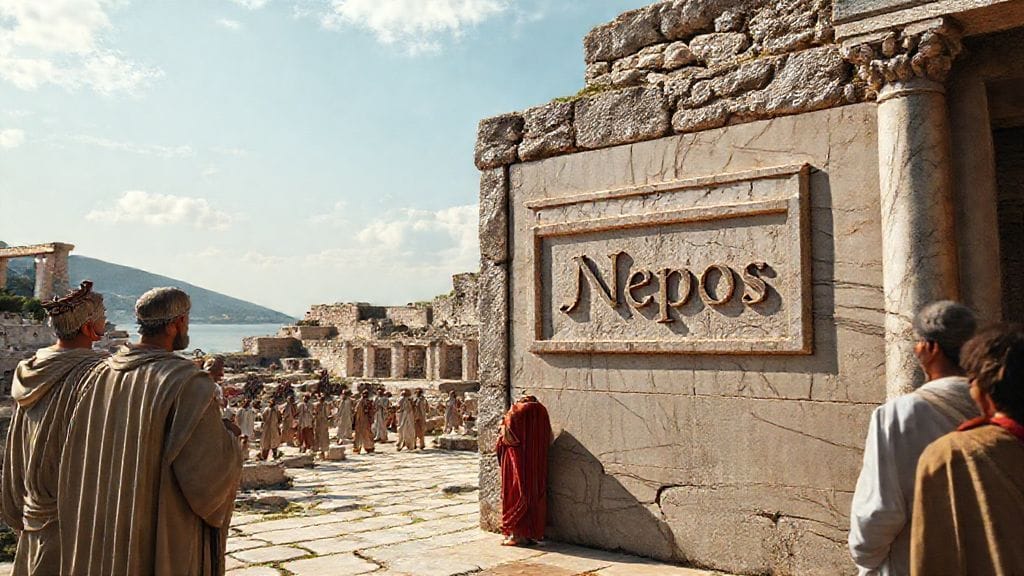
Once a flourishing Roman city, Salona had been the capital of the Roman province of Dalmatia. By the 5th century, its ruins still echoed with the grandeur of Roman architecture and administrative prowess. It was in Salona, with its ancient walls and bustling port, that Julius Nepos found his seat of power, administering a court that symbolized continuity amid the empire’s unraveling fabric.
6. Nepos Proclaimed Emperor: Legitimacy in a Time of Chaos
While Romulus Augustulus held sway in Ravenna, the de facto capital of the Western Empire, Nepos’ recognition in Dalmatia was an alternative assertion of legitimacy. Supported by the Eastern Roman Emperor Leo I and recognized by local governors and military officers, Nepos embodied a lawful claim to imperial dignity. This endorsement was critical not only politically but symbolically—it asserted the unity of empire under a ruler aligned with Constantinople.
7. The Rivalry with Romulus Augustulus: Two Emperors, One Empire
The peculiar situation of two simultaneous Western Roman claimants complicated the last chapters of the empire’s saga. Romulus Augustulus, often viewed as the last Western emperor, was not recognized by the East and lacked broad support outside Italy. Nepos, though exiled and controlling only a fragment of the former empire, held official Eastern backing, a fact that historians continually debate in assessing who truly was the final emperor.
8. Political Intrigues and Power Struggles in Italy and Dalmatia
Tensions mounted as military and political machinations unfolded. Orestes’ hold on power in Italy weakened under pressures from Germanic mercenaries and barbarian kings. Meanwhile, Nepos maneuvered diplomatically to gain allies, attempting to reclaim Italy. The narrative of shifting loyalties, betrayals, and complex negotiations reflects the broader instability of late Roman politics where generals often held more sway than emperors.
9. Nepos’ Recognition by the Eastern Roman Empire: Imperial Sanction
The Eastern Roman Empire, centered in Constantinople, was a vital force in shaping western imperial politics. Emperor Leo I’s recognition of Nepos was not a mere formality but an act rooted in maintaining the illusion of a unified Roman state. Through Nepos, Constantinople aimed to reassert authority over the West, preserve administrative structures, and check the growing influence of barbarian rulers.
10. Military Campaigns and the Attempt to Reclaim Italy
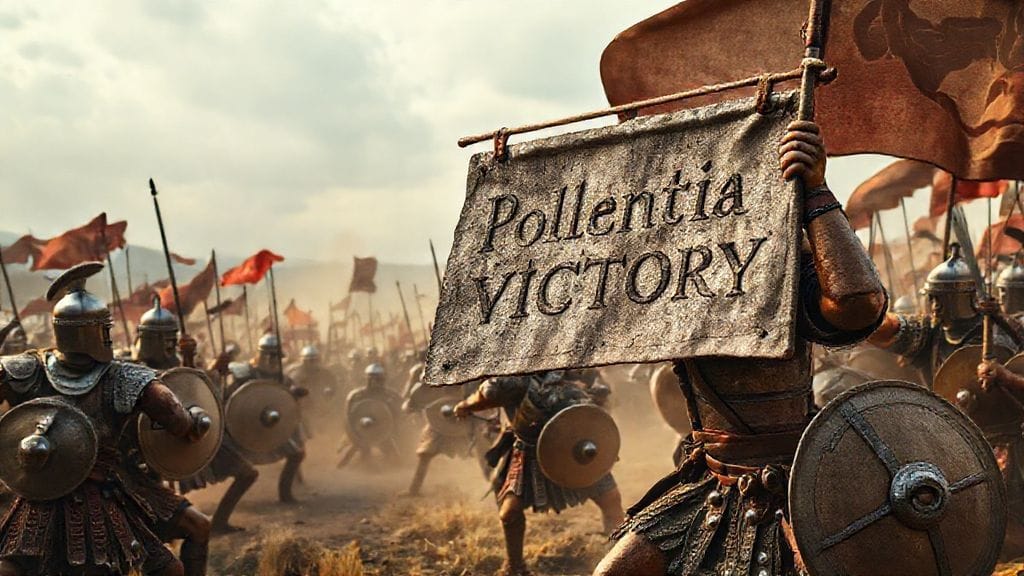
Despite his limited resources, Nepos embarked on efforts to restore imperial control over Italy. These campaigns were fraught with difficulty—logistical challenges, lack of strong alliances, and the rise of barbarian warlords like Odoacer complicated his ambitions. Although these attempts ultimately failed, they reveal Nepos as a determined and perhaps idealistic figure seeking to hold together a crumbling imperial dream.
11. The Role of Orestes and the Usurpation of Romulus Augustulus
Orestes, the kingmaker behind Romulus Augustulus, was central in the final demise of Western imperial structure. His policies alienated barbarian forces, leading to his overthrow by Odoacer. The deposition of Romulus Augustulus by Odoacer in 476 is classically regarded as the fall of the Western Empire, but Nepos’ continued recognition in Dalmatia challenges this simplistic narrative.
12. Nepos’ Rule in Dalmatia: Governance and Diplomacy
In Dalmatia, Nepos ruled with a combination of Roman administrative practices and pragmatic diplomacy with local tribes and external powers. His governorship was marked by efforts to maintain fiscal order, reinforce fortifications, and navigate the complex ethnic tapestry of the region. Dalmatia under Nepos thus represented a last vestige of Roman provincial order.
13. The Socio-Economic Landscape of Dalmatia under Nepos
Far from the chaos in Italy, Dalmatia maintained a relatively stable socio-economic fabric. Agriculture, maritime trade, and local crafts thrived along the Adriatic coast. Nepos’ administration sought to support these activities amidst a shrinking imperial budget, highlighting the resilience of provincial life even as central authority declined.
14. The Fall of Romulus Augustulus and the End of Western Imperial Rule
The deposition of Romulus Augustulus by Odoacer sent shockwaves through the ancient world and is often cited as the endpoint of the Western Roman Empire. However, Nepos’ continued claim from Dalmatia complicates this story—it suggests that some vestiges of Roman authority endured, even if only symbolically, beyond the loss of Italy.
15. Julius Nepos’ Assassination and the Aftermath in Dalmatia
In 480, Julius Nepos was assassinated under mysterious circumstances, likely orchestrated by local rivals. His death effectively ended any remaining Western imperial claim. Dalmatia soon fell under Odoacer’s control, further consolidating the collapse of Western Roman governance and signaling a new era dominated by barbarian leadership.
16. The Legacy of Julius Nepos: Between Legend and History
Nepos occupies a liminal space in history—regarded by some as the last true Western emperor, by others as a ruler in exile with little real power. His legacy reveals the complexities of late Roman imperial identity and the blurred boundaries between legality and practical authority during the empire’s decline.
17. The Eastern Empire’s Continued Claims and the Fragmentation of the West
The Eastern Roman Empire never fully abandoned claims to the West. Nepos’ recognition by Constantinople was part of a broader policy aimed at maintaining imperial unity. Yet, in reality, the West fragmented into barbarian kingdoms, foreshadowing the medieval political map of Europe.
18. Dalmatia’s Transition from Roman Province to Medieval Crossroads
Post-Nepos, Dalmatia became a contested frontier among Ostrogoths, Byzantines, and later Slavic peoples. The region’s Roman heritage mingled with emerging medieval cultures, reflecting the dynamic cultural transformations of the early Middle Ages.
19. How Nepos’ Recognition Shaped Later Perceptions of Legitimacy
The notion that Nepos was the legitimate last Western emperor influenced medieval and modern scholarship. His case exemplifies the tensions between de facto rule and imperial legitimacy, shaping narratives about authority that resonate in political discourse far beyond his time.
20. Cultural and Archaeological Traces in Salona: Witnesses of Nepos’ Time
Today, ruins in Solin, the successor city of Salona, offer archaeological testimony to the city’s late antique prominence. Remnants of fortifications, churches, and inscriptions provide valuable insights into the urban and political environment inhabited by Nepos.
21. The Historical Debate: Was Nepos Truly the Last Western Roman Emperor?
Historians continue to debate whether Julius Nepos or Romulus Augustulus deserves the title of last Western Roman emperor. While Augustulus was the last to reign in Italy, Nepos’ recognition by the East and his continued rule in Dalmatia present a compelling counterpoint to traditional narratives.
22. Conclusion: Nepos’ Place in the Twilight of Rome
Julius Nepos stands as a poignant symbol of Rome’s dying gasp: a figure of dignity and legitimacy presiding over a fractured realm. His recognition in Dalmatia is a testament to the persistence of imperial ideals even as the tangible empire crumbled. Through Nepos, we glimpse both the fragility and the enduring spirit of a world on the cusp of transformation.
Conclusion
The recognition of Julius Nepos in Dalmatia, specifically in Salona, offers a profound window into the final chapters of the Western Roman Empire. Far from a mere footnote, this episode reveals a man caught in the tide of history, striving to uphold an empire in its last throes. Nepos’ reign, though constrained and marked by exile, carried the mantle of Roman legitimacy when the western imperial edifice was disintegrating. It invites us to reconsider the binary of empire and barbarian, center and periphery, law and power.
Nepos’ story is not just about political survival but about identity, continuity, and the human yearning for order amid chaos. Dalmatia, in its rugged resilience, sheltered one of Rome’s last voices before the dawn of the medieval world. And in the light of his rule, we see the complexity of endings—not as abrupt breaks but as layered transitions forged of struggle, hope, and enduring memory.
FAQs
1. Who was Julius Nepos, and why is he significant?
Julius Nepos was a Roman general and administrator who became one of the last recognized Western Roman emperors. His significance lies in his Eastern backing and his control of Dalmatia after being deposed in Italy, challenging the narrative that Romulus Augustulus was the last emperor.
2. Why was Dalmatia important during Nepos’ reign?
Dalmatia was strategically located on the Adriatic coast, serving as a military stronghold and administrative center. It allowed Nepos to maintain a claim to imperial power and communicate with Constantinople.
3. How did Julius Nepos come to power?
Supported by the Eastern Emperor Leo I, Nepos was installed as the Western Roman Emperor in 474 to restore order. However, he was soon ousted from Italy by rebels and forced to govern from Dalmatia.
4. What was the relationship between Julius Nepos and Romulus Augustulus?
Romulus Augustulus was installed by his father Orestes in Italy after Nepos’ exile. While Augustulus ruled locally, Nepos was still recognized by the East as the legitimate emperor, creating a complex duality.
5. What happened to Julius Nepos after his assassination?
After Nepos was assassinated in 480, Dalmatia fell under the control of Odoacer, further cementing the end of Western Roman imperial authority.
6. Does Julius Nepos count as the last Western Roman emperor?
Historically debated, many scholars argue that Nepos’ Eastern recognition and continued rule in Dalmatia technically makes him the last Western emperor, rather than Romulus Augustulus.
7. How did the Eastern Roman Empire view Nepos’ reign?
The East saw Nepos as a legitimate ruler and hoped to use his position to maintain influence in the West. Nepos was a part of liaison efforts to preserve imperial unity amid fragmentation.
8. What archaeological evidence remains of Nepos’ rule?
Remains in modern Solin (ancient Salona) include fortifications, inscriptions, and ruins that reflect the city’s significance during Nepos’ tenure and hint at late Roman provincial life.