Table of Contents
- A New Dawn on the Iberian Horizon: The Visigoths Enter Hispania
- The Late Roman World in Turmoil: Setting the Stage for Invasion
- Who Were the Visigoths? From Foederati to Kings
- The Sack of Rome (410): Prelude to the Move into Hispania
- The Political Fragmentation of Hispania: Tarraconensis in Crisis
- Crossing the Pyrenees: The Visigothic Migration into the Peninsula
- King Ataulf’s Vision: Permanent Settlement and an Ambitious Dream
- Hispania’s Roman Elite: Reactions and Realignments
- Confrontations with Local Powers and Roman Authorities
- The Role of the Eastern Roman Empire: Between Support and Neglect
- The Visigoths Take Control: Establishing a Foothold in Tarraconensis
- The Treaty of 418: Between Roman Authority and Gothic Autonomy
- Shifting Alliances: The Foederati Status and Its Limits
- The Making of a New Society: Visigothic Law and Culture in Hispania
- Economic and Demographic Impacts on Tarraconensis and Beyond
- The Christian Factor: Religious Transformation amid Conflict
- The Slow Decline of Roman Hispania: Fragmentation and Transition
- The Visigothic Kingdom’s Legacy: Foundations for Medieval Spain
- Memory and Myth: How Later Generations Remembered the Invasion
- Conclusion: A Turning Point in the History of the Iberian Peninsula
- FAQs: Exploring the Visigothic Arrival in Hispania
- External Resource
- Internal Link
A New Dawn on the Iberian Horizon: The Visigoths Enter Hispania
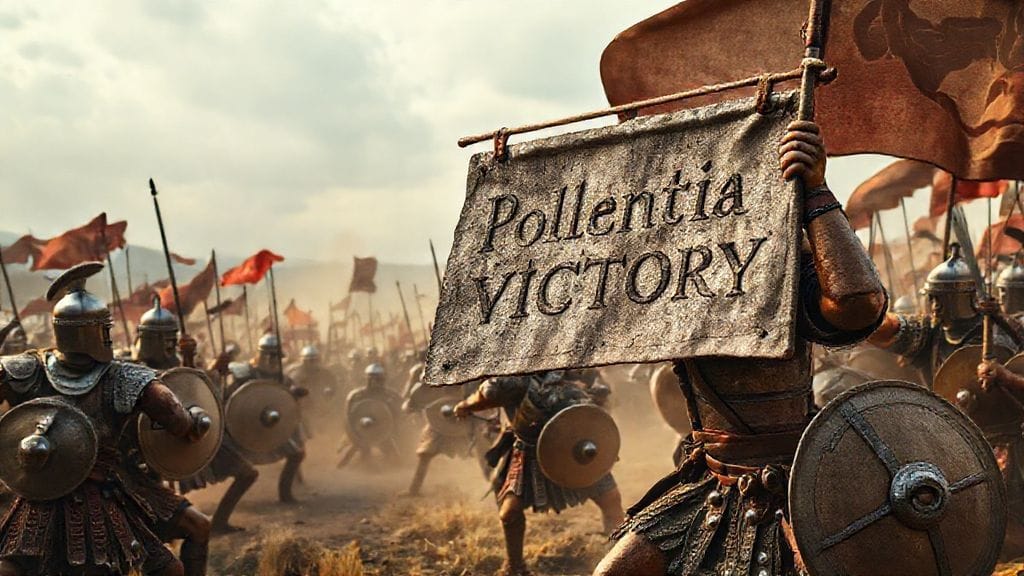
In the lingering light of a warm Mediterranean afternoon, along the rugged mountainous passes of the Pyrenees, groups of armored warriors pressed forward. These were the Visigoths, a people forged in the fires of migration, war, and survival, who in the early fifth century had taken an irrevocable step — entering Hispania permanently. The year was between 415 and 418 CE, and the event marked a profound seismic shift in the political and cultural landscape of the Iberian Peninsula. No longer mere foederati—federated allies on Rome's fringes—the Visigoths crossed into what was once the heart of Roman Hispania, settling and reshaping a land struggling with decay, upheaval, and the winds of change.
The story of the Visigoths entering Hispania is not merely one of conquest or migration. It is a deeply human tale — of ambition and desperation, of alliances forged and shattered, of cultural transformation and the slow birth pains of a medieval kingdom. It challenges the grandeur and the collapse of Rome, reminding us how history’s great empires fade not with cataclysms, but whispers and footsteps of new peoples shaping old lands.
The Late Roman World in Turmoil: Setting the Stage for Invasion
By the early 5th century, the Roman Empire’s western half was a patchwork of instability. Politically fragmented, economically strained, and militarily vulnerable, Rome’s grip was faltering. Hispania, once a jewel of Roman provincial administration, suffered deeply from internal divisions and barbarian incursions.
The once vibrant province of Tarraconensis, spanning the northeastern sectors of Hispania, had suffered decades of invasions, administrative neglect, and demographic shifts. The Roman military, stretched thin across three continents, struggled to hold back a tide of migratory tribes—Visigoths, Vandals, Suebi—each seeking their stake in the crumbling imperial order.
Amidst this chaos, the Visigoths, descendants of the Gothic tribes north of the Danube, had undergone a dramatic transformation. Once fierce traders and raiders, they had become contracted allies—foederati—charged with maintaining Roman interests while pursuing their own survival.
Who Were the Visigoths? From Foederati to Kings
Tracing their origins to the Greutungi Goths, the Visigoths were a Germanic people who had long occupied a nebulous position within the Roman world. Their relationship with the Empire was complex: at times foes, at times allies. Their metamorphosis culminated in the settlement within Roman territories after the infamous Battle of Adrianople (378 CE) and especially following their dramatic sack of Rome in 410.
The sack itself was not merely a military victory; it was a symbolic rupture in the Roman mindset, heralding a new era where so-called “barbarian” tribes demanded not only recognition but land and autonomy. The Visigothic king, Ataulf, who succeeded Alaric after the latter’s death, envisioned his people not as transient marauders but as rulers within the Roman order, fusing Gothic strength with Roman legacy.
The Sack of Rome (410): Prelude to the Move into Hispania
The Visigothic sack of Rome in 410 was a defining moment in Late Antiquity. For thirteen days, the city groaned under the weight of Visigothic occupation, a city once deemed eternal brought to its knees.
Yet, this event was only the beginning of the Visigothic journey westward. Ataulf, Alaric’s successor, viewed Hispania not as a periphery but as a potential heartland for settlement. The sack shattered illusions but also opened a door: Roman concessions for land and status in exchange for peace and collaboration.
The intent shifted — no longer an itinerant marauder, the Visigoth was now a claimant. The desire to settle permanently in Hispania grew with political pragmatism and the need for stability for his displaced people.
The Political Fragmentation of Hispania: Tarraconensis in Crisis
Hispania, divided into several provinces, was a land in flux. Tarraconensis, in particular, had long been a center of Roman power but was now vulnerable. Its wealth, farmlands, and strategic position made it coveted yet dangerously exposed.
Roman governors faced internal dissent, weakened defenses, and constant pressure from neighboring tribes. Local Roman elites jockeyed for power, some hoping to collaborate with the Visigoths to maintain status, others resisting any barbarian foothold.
This fragmentation made Hispania both fragile and inviting — a prime target for Ataulf’s ambitions yet a challenging environment to establish sovereignty.
Crossing the Pyrenees: The Visigothic Migration into the Peninsula
Between 415 and 418, Visigothic bands marched south over the Pyrenean passes, descending into Tarraconensis. This crossing was more than a military maneuver; it was a symbolic passage into a new chapter.
The journey was fraught with hardship: rugged terrain, hostile locals, and fragmented Roman defense. But the Visigoths’ disciplined leadership and determination ensured their advance.
Settlements were established, Roman villas occupied, and old Roman infrastructure appropriated. The transition left an indelible mark on the landscape and population dynamics.
King Ataulf’s Vision: Permanent Settlement and an Ambitious Dream
Ataulf’s reign was short but transformative. He envisioned a Visigothic kingdom that blended Gothic martial prowess with Roman civilization. His dream was to create an enduring polity within Hispania that respected Roman law and custom but favored Gothic elites.
To this end, Ataulf sought collaboration with Roman authorities and sought marriage alliances—most famously with the Roman noblewoman Galla Placidia—to secure legitimacy and peace.
Yet his vision was met with suspicion and opposition by many in the empire and even within Gothic ranks.
Hispania’s Roman Elite: Reactions and Realignments
The Roman senatorial and landowning class in Hispania found themselves at a crossroads. Some saw the Visigoths as protectors from more chaotic tribes; others as brutal usurpers.
Many sought accommodation, offering wealth and privileges in exchange for peace. Others resisted, hoping for a restoration of strong Roman authority or alternative allegiances.
This elite fragmentation both facilitated and hindered the Visigoths’ settlement efforts, shaping the power dynamics for decades to come.
Confrontations with Local Powers and Roman Authorities
Though some power negotiated peacefully, many confrontations erupted. Local Roman officials antagonized by Visigothic incursion attempted to rally resistance.
Disputes over land, sovereignty, and authority sparked intermittent violence. The Visigoths responded with military force when necessary yet also showed pragmatic restraint.
These clashes underscored the fragile nature of the Visigothic foothold in Tarraconensis and the contested nature of power during this era.
The Role of the Eastern Roman Empire: Between Support and Neglect
The Eastern Roman Empire, with its capital at Constantinople, watched the western provinces closely but provided inconsistent support.
Resource constraints and other pressing conflicts often left the western Roman authorities to their own devices. At times, the east endorsed treaties with the Visigoths; at others, it disavowed them.
This ambivalence shaped the geopolitical chessboard, allowing the Visigoths more freedom but also uncertainty in their new domain.
The Visigoths Take Control: Establishing a Foothold in Tarraconensis
By 418, the Visigoths had secured a significant presence in Tarraconensis. Their control was a strange fusion of military dominance and political cooperation.
Garrisons were set, councils formed, and local economies adapted to the new power structure. Roman systems persisted but under Visigothic oversight, marking a unique fusion of Roman administrative models with Gothic leadership.
This foothold became the foundation for the later Visigothic Kingdom of Spain.
The Treaty of 418: Between Roman Authority and Gothic Autonomy
The pivotal moment came with the formalization of the foederati status for the Visigoths in Hispania around 418 CE. This treaty recognized their right to settle in Tarraconensis and govern it as semi-autonomous allies of Rome.
Foreseeing the inevitable, Rome ceded military and civil jurisdiction. Ataulf’s successor continued to negotiate terms aiming to solidify their kingdom’s legal foundations.
This treaty represented a fragile compromise — a testament to Rome’s waning power and the Visigoths’ rising influence.
Shifting Alliances: The Foederati Status and Its Limits
The foederati arrangement was unique but inherently unstable. It granted the Visigoths land and status but left them tethered to an ever-weaker Roman Empire.
While it provided legitimacy, it also necessitated delicate diplomacy, balancing Visigothic independence with nominal Roman loyalty.
As internal Roman politics fluctuated and external threats emerged, these alliances strained, foreshadowing future conflicts and realignments.
The Making of a New Society: Visigothic Law and Culture in Hispania
The Visigothic presence gradually transformed the cultural and legal fabric of Hispania.
Blending Roman legal traditions with Gothic customs, new codes emerged, notably blending Roman jurisprudence with Germanic tribal law—a process culminating later in the Lex Visigothorum.
Culturally, the Visigoths began integrating and influencing local art, architecture, language, and religion, setting the stage for medieval Iberia.
Economic and Demographic Impacts on Tarraconensis and Beyond
The arrival of the Visigoths spurred economic disruption but also renewal. While warfare and instability harmed urban centers and trade, the Visigoths’ settlement introduced new agricultural practices and fostered local production networks.
Population movements included both Gothic settlers and Roman natives, creating a diverse demographic mix.
Long-term economic adaptation included adjusting the rural economy towards a feudalizing system, foreshadowing medieval patterns.
The Christian Factor: Religious Transformation amid Conflict
Religion played a deep and often turbulent role. The Visigoths were predominantly Arian Christians, while the local Roman population largely adhered to Nicene (Catholic) Christianity.
This religious divide heightened tensions but also sowed seeds for dialogue and eventual conversion of the Visigoths to Catholicism, a key factor in later political integration.
Church leaders often mediated conflicts and symbolized the cultural fusion underway.
The Slow Decline of Roman Hispania: Fragmentation and Transition
The Visigothic settlement crystallized broader trends — the gradual dissolution of central Roman authority and the rise of barbarian successor states.
Roman Hispania ceased to exist as a unified political entity, replaced by fragmented domains ruled alternately by Romans, Visigoths, and other tribes.
Yet, this fragmentation was not mere collapse; it was transformation, making way for new political realities.
The Visigothic Kingdom’s Legacy: Foundations for Medieval Spain
The Visigoths’ entry and settlement laid the foundations of the later Visigothic Kingdom, which came to dominate much of Iberia by the mid-sixth century.
Their assimilated Roman-Germanic culture influenced laws, language, and institutions.
Even after the Muslim conquest centuries later, Visigothic legacies persisted in Spanish identity, legal tradition, and historical memory.
Memory and Myth: How Later Generations Remembered the Invasion
The Visigothic entry into Hispania became a subject of legends and historical reinterpretations.
Medieval chronicles often framed it through heroic or tragic lenses, blending fact and myth.
Modern historians continue to uncover nuanced truths behind these stark narratives, appreciating the complexity beyond “barbarian invasion” reductionism.
Conclusion
The permanent entry of the Visigoths into Hispania between 415 and 418 was more than a mere military or political event — it was a profound turning point layered with human drama, political intrigue, and lasting transformation. In their march across the Pyrenees and into Tarraconensis, the Visigoths not only reshaped the Iberian Peninsula’s maps but rewrote its destiny. They symbolized the twilight of Roman order and the dawn of new medieval polities that would define Europe’s future.
This story reminds us that history is rarely black and white. It is forged in the uncertain meeting of peoples, dreams, and ambitions. From turbulent conquest to cautious accommodation, from religious divisions to cultural fusion, the Visigoths’ journey into Hispania is a vivid testament to the resilience of human societies adapting — and enduring — through change.
FAQs
Q1: Why did the Visigoths decide to enter Hispania permanently?
A1: After years of wandering and conflict, the Visigoths, under King Ataulf, sought a stable homeland. Hispania’s wealth, weakened Roman defenses, and political fragmentation made it an attractive destination for permanent settlement.
Q2: What was the significance of Tarraconensis during this period?
A2: Tarraconensis was a vital Roman province with economic and strategic importance. It was also the region where the Visigoths first established a lasting foothold, marking the start of their dominance in the peninsula.
Q3: How did the Roman authorities react to the Visigothic settlement?
A3: Reactions varied — some Roman elites negotiated and accommodated the Visigoths, hoping for protection or stability, while others resisted militarily or politically. Overall, Rome's weakened state led to compromises like the 418 treaty.
Q4: What role did religion play in the Visigothic presence in Hispania?
A4: The Visigoths were primarily Arians, while the indigenous population was largely Nicene Christian, leading to religious tensions. Over time, the Visigoths converted to Catholicism, aiding political and cultural integration.
Q5: How did the Visigothic settlement impact the local economy and society?
A5: Initially disruptive, the settlement eventually stabilized the region economically and demographically. The Visigoths introduced new systems that would foreshadow medieval societal organization.
Q6: Did the Eastern Roman Empire try to intervene in Hispania during this period?
A6: The Eastern Empire had limited involvement due to other priorities. It provided occasional support but largely left the West to negotiate its fate, which enabled the Visigothic settlement.
Q7: What was the ultimate legacy of the Visigoths in Hispania?
A7: They established one of the first post-Roman kingdoms in Western Europe, influencing Spain's medieval political structures, legal codes, and cultural traditions that resonated through centuries.
Q8: How is the Visigothic entry into Hispania remembered today?
A8: It is recognized as a complex historical event that ended Roman dominance but also sowed the seeds for medieval Spain. Modern historians approach it with nuance, looking beyond simplistic invasion narratives.