Table of Contents
- The Dawn of a New Era: The Kingdom of the Franks at the Turn of the Sixth Century
- Clovis I: The Architect of Frankish Unity
- The Gallic Church Before Orléans: A Fragmented Faith
- The Calling of the First Council of Orléans: A Royal Initiative
- Orléans, 511: Setting the Stage for Reform
- The Gathering of Bishops: Faces and Voices of Gaul
- The Council’s Deliberations: Negotiating Power and Piety
- Canonical Reforms: Shaping Ecclesiastical Discipline
- The Relationship Between Crown and Church: Mutual Reinforcement
- Defining Clerical Roles: From Bishops to Parish Priests
- Property and Wealth: The Church’s Economic Foundations
- The Council’s Stance on Pagan Practices: A Shifting Religious Landscape
- Addressing Social Issues: Almsgiving and Moral Conduct
- The Council's Decisions on Heresy and Orthodoxy
- The Role of Women in Church Life: Emerging Norms
- The Political Implications: Church as a Pillar of Merovingian Authority
- Immediate Aftermath: Implementation and Resistance
- Long-Term Consequences: The Church of Gaul Consolidated
- The Council’s Historic Legacy: A Foundation for Medieval Christendom
- Reflections on Power, Faith, and Identity in Early Medieval Europe
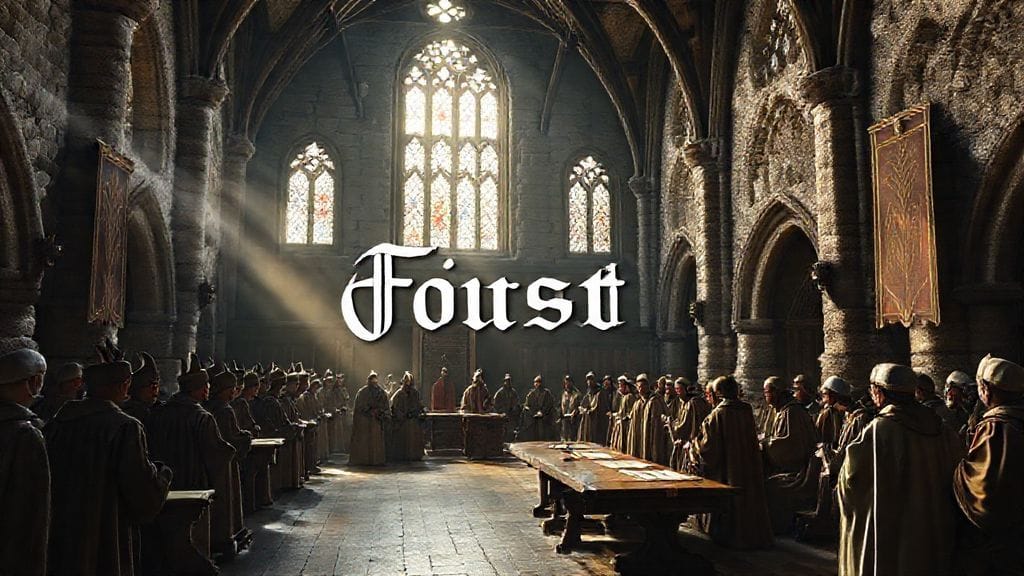
On a chilly spring day in 511, the city of Orléans bore witness to a gathering unlike any it had seen before—a convocation of men whose decisions would ripple across centuries. The newly united Frankish kingdom, under the forged hand of Clovis I, was still settling after decades of internecine war and territorial conquest. As bishops and royal envoys filled the basilicas and council chambers, the air was thick with anticipation and solemnity. It was here, within these ancient walls, that the First Council of Orléans set forth ambitious plans not just to unify the Gallic Church but to intertwine its fate irrevocably with that of the young Frankish monarchy.
This was no mere synod of ecclesiastical routine. It was a bold statement. A declaration that faith and governance would, from now on, be mutually sustaining pillars upon which the nascent kingdom would rise.
The Dawn of a New Era: The Kingdom of the Franks at the Turn of the Sixth Century
The early 6th century was a time of transformation and uncertainty in Western Europe. The Roman Empire’s collapse had left a vast patchwork of successor kingdoms in its wake, and among these, the Franks stood poised to become a dominant force. Yet the nascent Merovingian dynasty faced a kingdom still filled with the vestiges of Roman provincial administration, competing tribal customs, and a fragmented ecclesiastical structure.
Gaul, once the Roman heartland, was still dotted with remnants of its imperial past—ruined cities, decayed roads, scattered Latin-speaking elites. The Church, meanwhile, operated as a loose network of bishops who exercised moral authority but rarely managed cohesive doctrinal or organizational unity. Into this mosaic stepped Clovis I, a warrior king of formidable ambition whose conversion to Catholic Christianity in 496 set the stage for profound change.
Clovis I: The Architect of Frankish Unity
Clovis’s conversion, reportedly on the eve of a decisive battle, was more than a simple spiritual awakening. It was an astute political act—wielding faith as a tool for legitimacy and alliance. By embracing Nicene Christianity, as opposed to the Arianism prevalent among other Germanic rulers, Clovis positioned himself as the defender of orthodox faith and, by extension, heir to Roman patrimony.
His reign focused not only on expanding territory but also on consolidating control through religion. The Church was no longer just a spiritual guide but an essential vehicle for social order, education, and law. However, integration relied on an effective and orthodox ecclesiastical hierarchy—one that Clovis sought to shape with the First Council of Orléans.
The Gallic Church Before Orléans: A Fragmented Faith
Before the council, the Church in Gaul was a patchwork of regional practices, inconsistent discipline, and varying degrees of Roman influence. Bishops exercised significant autonomy, often aligned with local aristocracies, and lacked a uniform code of conduct or canon law to guide their ministries.
Many communities were still exposed to lingering pagan practices or superstitions, and clergy standards fluctuated widely. This inconsistency posed a challenge: how to maintain doctrinal purity and strengthen the Church’s role as a unifier within the kingdom?
The Calling of the First Council of Orléans: A Royal Initiative
Understanding the Church’s central role, Clovis personally called the council, convening approximately 30 bishops from all over Gaul in the city of Orléans. While church councils were not unprecedented, this gathering marked the first time the Merovingian monarch directly steered ecclesiastical reform—a decisive step in aligning royal and clerical ambitions.
The invitation sent a clear message: the Church must be organized not merely in spiritual terms but as an institution supporting a centralized political order.
Orléans, 511: Setting the Stage for Reform
Orléans, a city with deep Roman roots and a burgeoning strategic significance, was chosen for its accessibility and symbolic weight. The council convened in early summer, with participants ranging from seasoned archbishops to younger clergy eager to engage with pressing matters of governance.
What followed was a careful but determined deliberation. The bishops sought to reconcile ancient canons with the realities of a new ruling elite, all under the watchful eye of royal representatives.
The Gathering of Bishops: Faces and Voices of Gaul
Among the most notable figures was St. Avitus, bishop of Vienne, whose eloquence and theological knowledge lent weight to the proceedings. His presence was emblematic of the council’s dual mission: grounding reforms in orthodox doctrine while engaging with contemporary challenges.
These bishops were not mere religious functionaries but local power brokers, intellectuals, and sometimes key political actors—each bringing their own regional nuances to the debate.
The Council’s Deliberations: Negotiating Power and Piety
Discussions spanned a multitude of topics: the conduct of clergy, the administration of sacraments, the Church’s property rights, and the relationship between ecclesiastical and secular authorities. Underlying these technical debates was an unmistakable negotiation over the Church’s role within a kingdom still finding its footing.
The council sought to define boundaries—between the sacred and profane, between episcopal authority and royal power—while also crafting a unified framework that could outlast individual personalities.
Canonical Reforms: Shaping Ecclesiastical Discipline
One of the council’s primary achievements was the codification of canons regulating clerical behavior. These included prohibitions against simony (the buying and selling of church offices), rules about celibacy and morality, and guidelines for ordination.
By standardizing conduct, the council worked to professionalize the clergy and elevate their moral authority—vital steps for maintaining public trust and political legitimacy.
The Relationship Between Crown and Church: Mutual Reinforcement
The council marked a turning point in the alliance between Merovingian kingship and the Church. Clovis and his successors gained the Church’s support as a source of spiritual legitimacy, while the Church acquired royal protection and a voice in governance.
This symbiosis was delicate but potent, laying the groundwork for centuries of intertwined political-religious authority that would define medieval Europe.
Defining Clerical Roles: From Bishops to Parish Priests
Detailed in the canons were roles and hierarchies within ecclesiastical office. Bishops were confirmed as central figures in pastoral care, judicial authority, and ecclesiastical discipline, while parish priests were entrusted with the day-to-day spiritual welfare of the people.
This structuring improved the Church’s ability to administer sacraments and moral guidance throughout the kingdom’s expanding rural and urban communities.
Property and Wealth: The Church’s Economic Foundations
Economic issues were not overlooked. The council addressed questions of church land ownership, the handling of tithes, and the management of charitable funds.
By formalizing property rights and financial practices, the Council ensured that the Church could sustain itself materially, adding another layer of stability to its newly unified structure.
The Council’s Stance on Pagan Practices: A Shifting Religious Landscape
Despite the Church’s dominance, pagan customs persisted across Gaul’s countryside. The council’s edicts condemned pagan rites and superstitions, urging clergy to lead conversion efforts and enforce Christian practices.
This spiritual cleansing was as much cultural as religious, accelerating the kingdom’s transition away from its pre-Christian past.
Addressing Social Issues: Almsgiving and Moral Conduct
Social care was elevated in the council’s decrees. Clergy were mandated to oversee charitable activities, care for the poor, and promote moral behavior among the laity.
These stipulations reinforced the Church’s role as not only spiritual shepherd but also guardian of social order and compassion.
The Council's Decisions on Heresy and Orthodoxy
Doctrinal purity was critical. The council condemned heretical movements and outlined procedures for dealing with suspected heretics.
This vigilance was a reflection of both religious conviction and political caution, as unity in belief translated into unity in loyalty.
The Role of Women in Church Life: Emerging Norms
While women’s public roles remained restricted, the council touched on issues surrounding consecrated virgins and monastic women, emphasizing chastity and devotion.
These early norms helped shape the Church’s evolving relationship with female piety and religious life.
The Political Implications: Church as a Pillar of Merovingian Authority
Beyond the spiritual, the council’s decisions had profound political implications. The Church became a key legitimizing force for the Merovingian dynasty, endorsing royal rule as divinely sanctioned.
This endorsement was crucial in a kingdom still marked by regional loyalties and nascent administrative structures.
Immediate Aftermath: Implementation and Resistance
Implementation of the council’s decrees was uneven. While many bishops embraced the reforms eagerly, local customs and rivalries sometimes impeded progress.
Nevertheless, the council set a precedent, and future gatherings would build on this foundation, gradually weaving ecclesiastical discipline into the fabric of Frankish society.
Long-Term Consequences: The Church of Gaul Consolidated
In the centuries that followed, the Church became an indispensable arm of the Frankish kingdom’s governance. The council’s framework helped ensure doctrinal cohesion and the Church’s growing influence in law, education, and culture.
It also played a pivotal role in shaping medieval Christendom, serving as an early model of cooperation between throne and altar.
The Council’s Historic Legacy: A Foundation for Medieval Christendom
Viewed through the lens of history, the First Council of Orléans stands as a landmark in the formation of Western Christendom. By reorganizing the Gallic Church and aligning it closely with royal power, it charted a course that would influence ecclesiastical and secular dynamics for centuries, including the Carolingian reforms and beyond.
Reflections on Power, Faith, and Identity in Early Medieval Europe
The council exemplifies the complexities of a world in flux, where religious faith and political ambition intertwined tightly. It invites us to consider how faith institutions adapt to, shape, and at times resist the worldly powers that rise around them.
Above all, the council reminds us that history is neither simple nor static—it is a story of human aspirations, fears, and the enduring quest to define belonging and authority.
Conclusion
The First Council of Orléans was more than a mere religious assembly; it was a defining moment for both the Church and the nascent Frankish kingdom. Against the backdrop of a post-Roman world struggling for coherence, the council crafted a vision of unity rooted in faith and order. Its decrees reinforced a Church disciplined yet dynamic, closely allied with royal power, and committed to guiding a diverse and often tumultuous society.
As we look back over fifteen centuries later, the council’s legacy is unmistakable: it was a crucial step in the formation of medieval Christendom, the intertwining of church and state, and the emergence of Europe’s cultural and spiritual identity. In its halls, the seeds of modern Western society were planted—reminding us that history is lived and shaped by moments of intentional, visionary reform amid uncertainty and change.
FAQs
1. Why was the First Council of Orléans convened in 511?
The Council was called by King Clovis I to reorganize and unify the Gallic Church, aligning ecclesiastical structures with the newly established Frankish monarchy to ensure doctrinal consistency and political stability.
2. How did the council affect the relationship between the Church and the Frankish kings?
It forged a close alliance where the Church supported royal authority spiritually, while the kings protected Church interests, establishing a model for church-state relations in medieval Europe.
3. What were some key reforms introduced by the council?
It standardized clerical behavior, regulated church property, condemned pagan practices, improved the administration of sacraments, and addressed social responsibilities such as almsgiving.
4. Who were the main participants in the council?
Approximately thirty bishops from across Gaul, including influential figures like St. Avitus of Vienne, gathered alongside royal representatives supporting the king’s agenda.
5. Did the council immediately succeed in reforming the Church?
Implementation was gradual and faced resistance due to local traditions and power dynamics, but it set enduring precedents for ecclesiastical discipline and church-state collaboration.
6. What role did the council play in combating paganism?
It condemned residual pagan practices, encouraging the Church to enforce Christian rites and accelerate conversion among rural populations.
7. How did the council’s decisions influence future church councils and medieval policy?
It provided a foundational model of church organization and royal involvement that would be emulated and expanded upon in later councils and reforms.
8. Why is the First Council of Orléans seen as a turning point in medieval European history?
Because it codified a partnership between a Christian church and a burgeoning European kingdom, shaping the political and religious landscape for centuries.

