Table of Contents
- The Storm Before the Siege: Europe on the Brink
- The Gothic War: A Long Shadow over Italy
- Enter the Franks: Ambitions Stirring Beyond the Alps
- Italy in Turmoil: The State of the Po Valley in 553
- The Franks’ Strategy: Crossing the Natural Barrier
- The Invasion Begins: First Clashes in the Alpine Passes
- The Battle for Control: Fighting for the Po Valley
- Key Figures: Leaders and Warriors of the Conflict
- Logistics in the Mountains: The Challenges of Alpine Warfare
- The Byzantine Response: Justinian’s Grip on Italy
- Civilian Life Caught in the Crossfire
- Turning Points: Critical Engagements of 553–554
- The Fall and Rise of Fortresses: Strategic Nodes Shifting Hands
- The Impact of the War on Italian Cities and Countryside
- The Role of the Lombards: Shadows of Future Invasions
- The End of the Frankish Invasion: Withdrawal or Defeat?
- Aftermath and Political Repercussions in Italy and Beyond
- The War’s Legacy in European History
- Remembering the Gothic War: Myths and Chronicles
- Lessons From the Alps: Military Innovation and Geographic Destiny
- Conclusion: A Conflict That Shaped the Medieval World
- FAQs: Unraveling the Frankish Invasion during the Gothic War
- External Resource
- Internal Link
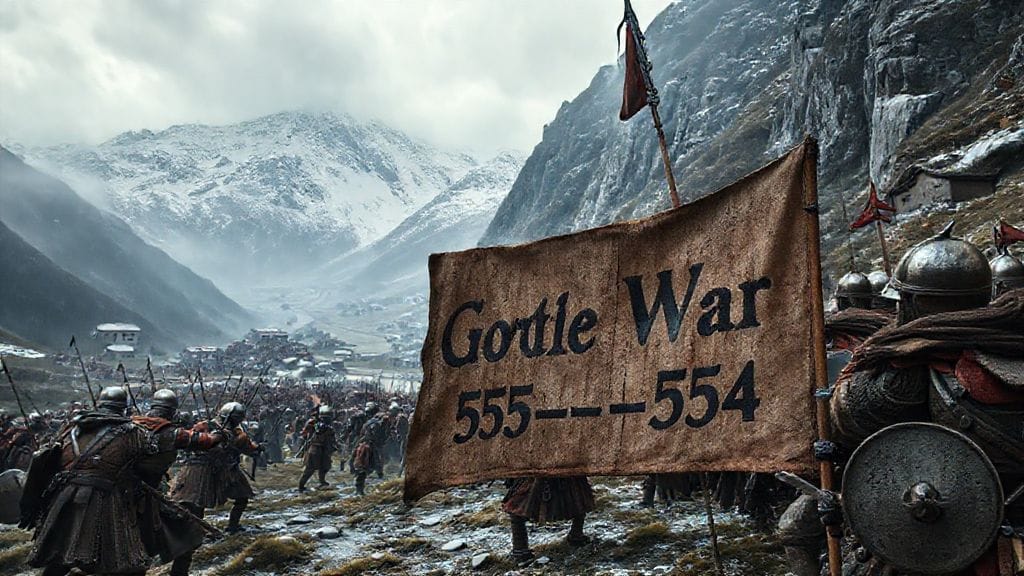
The cold wind swept across the jagged peaks of the Alps as armies gathered beneath the shadow of ancient fortresses. Below, the fertile plains of the Po Valley stretched, a prize coveted by empires and clans alike. The year was 553 AD, and Europe stood at a crossroads. The Franks, a fierce Germanic people long pressing at the borders of Roman lands, now poised themselves for an audacious invasion into Italy—cutting through the legendary Alpine passes into the heart of a land worn but not yet broken by decades of conflict. This was not merely a battle for territory; it was the clash of worlds, ambitions, and ideologies set against the dramatic backdrop of the Gothic War that had ravaged Italy for years. In the silence before battle, one could almost hear the echoes of Rome’s storied past mingling with the clangor of swords yet to be drawn.
1. The Storm Before the Siege: Europe on the Brink
In the middle of the 6th century, Europe was a turbulent tapestry of fading Roman legacies and emerging barbarian kingdoms. The Eastern Roman Empire—or Byzantine Empire under Emperor Justinian I—was embroiled in an ambitious campaign to reclaim the former glory of Rome, restoring lost territories in the West. Italy, shaken by decades of sieges and shifting allegiances, was a critical focus. Yet, the power vacuum and instability lulled numerous groups into seizing advantage.
The Franks, ruling a vast kingdom across what is now France and western Germany, had grown in strength and ambition. Their desire to test the defenses of the Italian peninsula underscored a broader struggle: the decline of centralized Roman authority and the fractured, violent realignment of Europe. What made this impending invasion particularly deadly was the setting—an intricate dance across the treacherous highlands of the Alps and into the fertile Po Valley below.
2. The Gothic War: A Long Shadow over Italy
This Frankish adventure could not be disentangled from the long and brutal Gothic War (535–554), a conflict that pitted the forces of the Byzantine Empire against the Ostrogothic Kingdom controlling Italy. The war was one of the most devastating in late antique Europe, decimating cities, disrupting economies, and displacing populations.
At its core, the war was about legitimacy and survival. The Byzantines, under Justinian’s ambitious reconquest, sought to restore imperial rule after the collapse of the Western Roman Empire, while the Ostrogoths fought desperately to retain their kingdom. Yet the war left Italy fractured; the Ostrogoths weakened and Byzantine control tenuous. Into this power vacuum stepped the Franks, perceiving opportunity amid chaos.
3. Enter the Franks: Ambitions Stirring Beyond the Alps
The Franks had long been restless neighbors to the Roman and Gothic dominions south of the Alps. Under King Theudebald, the Frankish kingdom solidified its power, but ambitions stretched beyond their borders. Italy, with its wealth and symbolic prestige as the heartland of the former empire, beckoned irresistibly.
Their objectives were multifaceted—securing trade routes, gaining fertile lands, and influencing the Italian political scene where a Byzantine administration struggled against Gothic remnants and local dissent. The Frankish foray into Italy was as much a gambit of power projection as it was a military campaign.
4. Italy in Turmoil: The State of the Po Valley in 553
The Po Valley—the rich, sprawling northern plain—was a jewel in Italy’s crown but also a strategic lynchpin during the Gothic War. By 553, the valley was marked by desolation in parts, with towns and fortifications recovering from sieges and skirmishes. Byzantine forces maintained a fragile presence, while Gothic resistance lingered in isolated pockets.
The local populace bore the brunt: farming decimated, trade routes clogged, and shifting control skewering civil administration. Into this fragile landscape marched the Franks, their warbands prepared for rapid engagements but challenged by the geography and political chaos.
5. The Franks’ Strategy: Crossing the Natural Barrier
The Alps had always been both barrier and gateway. For centuries, armies sought its key passes—such as the Great St. Bernard, Mont Cenis, and Col de Tende—to funnel forces into Italy. The Franks knew that success hinged on harnessing these mountain corridors.
Their strategy involved divisions crossing multiple high passes, aiming to converge swiftly on the Po Valley, surprising Byzantine units spread thin across the region. Yet the harsh terrain, unpredictable weather, and fortified mountain positions made this undertaking perilous—one that required not only brute strength but logistical finesse.
6. The Invasion Begins: First Clashes in the Alpine Passes
In late 553, Frankish forces initiated their crossing, pushing through narrow paths entangled with natural obstacles. Scouts reported Byzantine and Gothic defenders entrenched, prepared to inflict heavy losses.
Skirmishes erupted amidst rocky outcrops, with Frankish warriors battling cold, hunger, and skilled defenders. The sound of arrows whistled through alpine air; shield and sword met in violent confrontations that tested the limits of endurance. Yet the determination of the Frankish warriors—and their adaptability—allowed them to break through several passes, turning the tide gradually.
7. The Battle for Control: Fighting for the Po Valley
Once through the passes, the Franks faced the daunting task of seizing the Po Valley’s urban centers and river crossings. Towns like Milan, Piacenza, and Pavia offered formidable challenges. Byzantine commanders, such as Narses, were expert strategists who sought to blunt the Frankish advance with counterattacks and defensive fortifications.
The battles unfolded in chaotic street fighting, ambushes in river valleys, and pitched engagements on plains scarred by years of war. The Franks fought not just armies, but exhaustion and stretched supply lines. Casualties mounted on both sides. These combat episodes were critical in defining control of Northern Italy during this phase of the Gothic War.
8. Key Figures: Leaders and Warriors of the Conflict
This campaign featured larger-than-life personalities etched into the annals of history. King Theudebald led the Franks with a mix of resolute ambition and caution. On the Byzantine side, the renowned general Narses—an astute battle commander with a complex past—commanded forces defending Italy's fractured territories.
In addition, Gothic leaders still loyal to their cause operated in the shadows, conducting guerrilla actions that complicated the invaders’ mission. These human actors shaped outcomes amid mountains and plains—each move and countermove a testament to leadership, resilience, and human will.
9. Logistics in the Mountains: The Challenges of Alpine Warfare
The success of medieval armies often hinged on supply chains—food, weaponry, communication. The Alps posed an extraordinary logistical nightmare. Narrow pathways slowed transport; sudden snowfalls cut off routes; disease and starvation were constant threats.
To sustain their campaign, the Franks had to innovate—leveraging local guides, establishing supply depots, and coordinating diverse contingents. Yet the unpredictability of alpine conditions meant that countless soldiers succumbed to exposure and exhaustion, making the terrain an unyielding adversary in its own right.
10. The Byzantine Response: Justinian’s Grip on Italy
Emperor Justinian’s ambitious reconquest policy meant no quarter for invaders. Byzantine reinforcements trickled slowly but steadily to Italy, while diplomacy sought to fracture Frankish alliances. The famous general Narses orchestrated defensive campaigns aimed not only at holding territory but at exploiting the natural advantages of the land.
Despite setbacks, the Byzantine administration attempted to stabilize key urban areas, restoring order where possible, collecting taxes, and maintaining Roman law traditions as a foundation of legitimacy. This political backdrop framed the military struggle and added layers of complexity.
11. Civilian Life Caught in the Crossfire
Beneath the clashing armies, ordinary Italians endured untold suffering. Villages laid waste, crops abandoned, families displaced. The war turned fertile fields into battlefields and trade routes into perilous gauntlets.
Chroniclers speak of famine alongside battle cries; monasteries, the keepers of knowledge and culture, sometimes became refugee havens or targets. The emotional toll on civilians—caught between Frankish raiders, Gothic loyalists, and Byzantine forces—left scars that would linger long after the fighting ceased.
12. Turning Points: Critical Engagements of 553–554
Several battles during these two years proved pivotal. One notable engagement near the foothills of the Apennines saw Frankish forces nearly encircled, their survival hinging on audacious counterattacks. Elsewhere, sieges of fortified towns tested the endurance of soldiers and civilians alike.
These moments shifted momentum repeatedly, highlighting not just the brutality but the unpredictability of warfare in this era. Each victory was costly, every defeat a potential death knell for invading ambitions.
13. The Fall and Rise of Fortresses: Strategic Nodes Shifting Hands
Fortresses were more than stone and mortar; they were symbols of control and power. Throughout the conflict, key strongholds in the Alps and Po Valley changed hands multiple times.
Cities like Turin and Brescia witnessed sieges where defenders clung to gates and towers amid relentless assaults. The capture or loss of these nodes dictated movement of armies and control of surrounding land. Moreover, their fates influenced morale on both sides.
14. The Impact of the War on Italian Cities and Countryside
The relentless fighting undermined Italy’s urban centers and rural productivity. Infrastructure cracked under strain—roads decayed, aqueducts damaged, marketplaces deserted.
Economies tilted towards subsistence; craftsmanship and trade waned. Yet amidst devastation, pockets of resilience emerged—monastic communities preserved culture; cities rebuilt walls; local leaders negotiated survival. The war was a crucible of destruction and endurance shaping Italy’s medieval transformation.
15. The Role of the Lombards: Shadows of Future Invasions
While the Franks clashed with Byzantines and Goths, another group, the Lombards, began to emerge from beyond the Alps. Their growing power and migration foreshadowed profound shifts in Italy’s destiny.
Though not yet central to this specific campaign, the Lombards watched, waiting for their moment to fill the void. Their later invasion would dramatically alter Italy’s political landscape, making the Frankish expedition a precursor to wider transformations.
16. The End of the Frankish Invasion: Withdrawal or Defeat?
By 554, the Frankish push into Italy slowed and eventually stalled. With Byzantine reinforcements regrouping, logistics fraying, and local resistance persisting, the Franks retreated from many positions.
Historians debate whether this withdrawal was a strategic recalibration or a forced defeat. What is clear is that the invasion did not achieve lasting territorial gains. Yet its impact resonated—altering power balances and signaling to Europe the fragility of Byzantine control.
17. Aftermath and Political Repercussions in Italy and Beyond
The cessation of major Frankish operations left Italy exhausted but under Byzantine nominal rule. However, the financial and human cost was immense. Regions remained vulnerable to internal rebellions and future invasions.
For the Frankish kingdom, lessons were learned about the perils of alpine warfare and projection of power. Meanwhile, Justinian’s dream of Roman restoration faced further challenges ahead, exposing limits as well as strengths.
18. The War’s Legacy in European History
Though overshadowed by grander events, the Frankish invasion during the Gothic War marked a critical moment in medieval history. It illustrated the transition from late antique imperial politics to medieval fragmented kingdoms.
The conflict presaged the rise of new powers, shifted military tactics, and altered cultural landscapes in Europe. Its echoes can be traced in the fabric of Italian and Frankish histories, casting long shadows over subsequent centuries.
19. Remembering the Gothic War: Myths and Chronicles
Chroniclers such as Procopius immortalized the Gothic War with vivid detail—mixing awe, horror, and political commentary. In later centuries, tales of heroic sieges and mountain battles entered local lore, shaping regional identities.
The Frankish invasion was often recounted as both a daring feat and a tragic folly. These stories, embroidered with myth, underscore how memory and history intertwine in shaping understandings of war and nationhood.
20. Lessons From the Alps: Military Innovation and Geographic Destiny
The campaign underscored how geography shapes military possibilities—how mountains are not mere obstacles but strategic players. The use of mountain passes, the management of logistics, and adaptation to climate and terrain set precedents for later military endeavors.
The Frankish experience taught that ambition must bend to nature’s laws. Future generals would build upon these hard-earned lessons in shaping medieval warfare.
Conclusion
The Frankish invasion of Italy during the Gothic War was more than a military incursion; it was a dramatic chapter in the collapse and remaking of Europe after Rome. Its narrative unfolds like an epic—of warriors braving frozen peaks, of cities torn by hope and despair, of emperors and kings wrestling for dreams of empire.
Though ultimately unsuccessful in territorial conquest, the campaign exposed the fragile networks of power and the relentless human spirit striving amidst chaos. It reminds us that history is not only about winners and losers, but about the complex interplay of place, people, and destiny—that in the sweep of time, even a failed invasion can alter the course of civilization.
FAQs
1. Why did the Franks invade Italy during the Gothic War?
The Franks saw opportunity amid the chaos of the Gothic War to expand influence, control trade routes, and capture wealthy territories like the Po Valley. The weakened Byzantine and Gothic positions offered a rare chance to press south beyond the Alps.
2. How did geography influence the invasion?
The Alps were a formidable natural barrier. Control of mountain passes was vital for moving troops and supplies. Harsh weather, narrow paths, and altitude sickness challenged the Franks, making the geography a silent but deadly opponent.
3. Who were the key leaders involved in this conflict?
King Theudebald led the Frankish forces, while Byzantine general Narses commanded defensive operations. Ostrogothic remnants, though weakened, also played roles in resisting invasions and supporting Byzantine efforts.
4. What was the Byzantine strategy to counter the Frankish advance?
The Byzantines leveraged fortifications, local knowledge, and rapid troop movements. They sought to delay and harass the invaders while preserving key cities, relying on superior logistics and political negotiation where possible.
5. What consequences did the invasion have on Italy?
The war devastated urban centers and countryside, disrupted economies, and displaced populations. It further weakened Italy’s political cohesion, setting the stage for future invasions like those of the Lombards.
6. Did the Franks achieve lasting control of any Italian territories?
No, their incursion was ultimately repelled or withdrawn by 554. They did not establish durable governance south of the Alps, but the campaign affected regional power dynamics significantly.
7. How is this episode remembered in history?
Chroniclers like Procopius documented it with vivid detail, mixing fact and legend. It is remembered as an example of the turbulent post-Roman period’s wars, embodying the emergence of medieval Europe.
8. What lessons were learned from this campaign?
Military leaders recognized the critical importance of mountain warfare logistics, the strength of defensive fortifications, and the limits of empire-building ambitious under difficult natural conditions.

