Table of Contents
- The Tumultuous Twilight of the Suevic Kingdom
- Gallaecia: A Land of Conflict and Legacy
- The Rise of the Visigoths in Hispania: From Foothold to Dominion
- The Suevic Kingdom in 585: Political Fragmentation and Vulnerability
- King Liuvigild: Architect of Visigothic Expansion
- Prelude to Conquest: Tensions and Skirmishes Along the Frontier
- The Campaign of 585: Visigothic Strategy and Military Maneuvers
- The Fall of the Suevic Capital: Lugo Under Siege
- Submission of the Suevic Nobility: Alliances and Capitulations
- Religious Dimensions: Arianism versus Catholicism in the Clash
- The Integration of Gallaecia into the Visigothic Realm
- Cultural and Administrative Transformations Post-Conquest
- Resistance and Rebellion: Echoes of Suevic Independence
- The Wider Impact on Hispania and the Iberian Peninsula
- Long-Term Legacy: From Visigothic Rule to Medieval Iberian Kingdoms
- Historiographical Perspectives: How Chroniclers Remembered the Event
- Archaeological Insights into the Suevic-Visigothic Transition
- Comparative Reflections: The Fall of the Suevic and Other Barbarian Kingdoms
- Conclusion: The End of an Era and the Dawn of a Unified Hispania
- FAQs: Unraveling the Suevic-Visigothic Confrontation
- External Resource: Further Reading and Reference
- Internal Link: Explore More on History Sphere
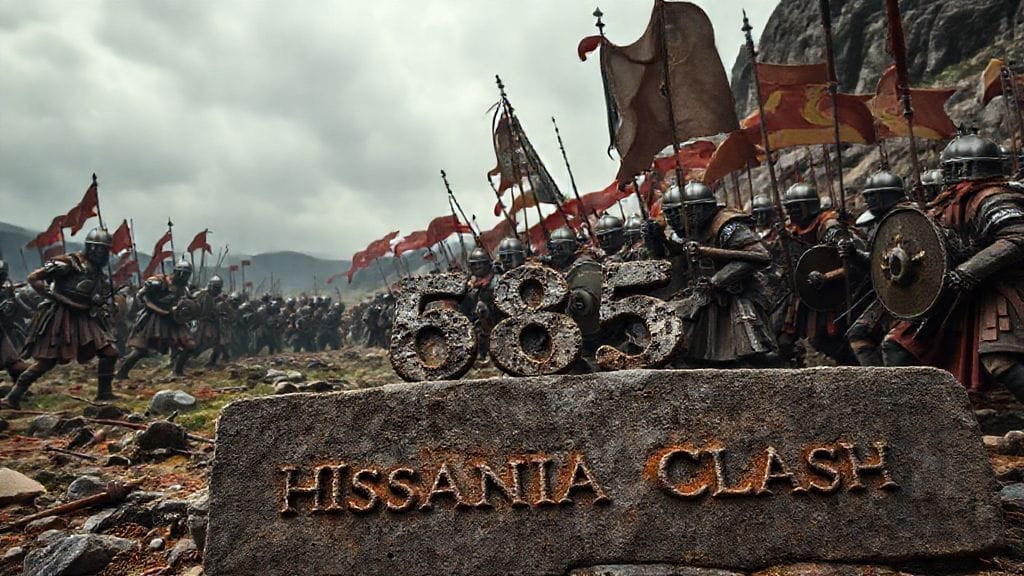
The forested hills and misty valleys of Gallaecia, in the year 585, murmured a tale of a fading sovereignty. In the dawning light of that autumn day, the Suevic Kingdom—once a beacon of Celtic-Germanic resilience in the northwest of the Iberian Peninsula—stared down its last days of autonomy. The visages of its leaders bore the weight of generations, now overshadowed by the relentless advance of the Visigothic hosts under the iron-willed King Liuvigild. As sword clashed with shield, and alliances fractured beneath the strain of politics and religion, the fate of a kingdom was sealed. This was not merely a military conquest; it was the extinguishing of a distinctive cultural light and the weaving of Gallaecia’s destiny into the fabric of Visigothic Hispania.
1. The Tumultuous Twilight of the Suevic Kingdom
For over two centuries, the Suevi had carved out a distinctive realm in Gallaecia, surviving the collapse of Roman authority and resisting the onslaught of successive waves of invaders. Their kingdom was an amalgam of Roman, Celtic, and Germanic traditions, a fragile yet enduring mosaic amid the chaos of late antiquity. By the mid-6th century, however, internal divisions, dynastic strife, and external pressures began to erode their power. The once commanding presence in northwestern Iberia now became vulnerable—an inviting prize to their ambitious neighbors, the Visigoths.
2. Gallaecia: A Land of Conflict and Legacy
The region of Gallaecia was more than a mere territory; it was a crucible of cultures and identities. Nestled in the rugged landscapes of modern-day Galicia and northern Portugal, it retained a profound connection to its Romanized past while cultivating a strong regional identity. The Suevic rulers cultivated ties with local aristocracies and the Christian Church, which would later play a critical role in legitimizing power. Yet Gallaecia’s isolation, its mountainous terrain and economic constraints, contributed to both its distinctiveness and its strategic vulnerability.
3. The Rise of the Visigoths in Hispania: From Foothold to Dominion
Meanwhile, southward, the Visigoths had firmly established themselves as the dominant power in Hispania after ousting the Byzantines and uniting most of the peninsula under their rule by the late 6th century. Their kingdom was a product of martial vigor and shrewd diplomacy, embodying a new order that sought both cohesion and consolidation of the diverse peoples of Iberia. Led by King Liuvigild, the Visigoths pursued an expansionist vision that aimed to bring the remaining independent polities, including the Suevic kingdom, under their sway.
4. The Suevic Kingdom in 585: Political Fragmentation and Vulnerability
By 585, the Suevic monarchy was weakened by factional rivalries and diminished central authority. Dynastic disputes had splintered the leadership, while the kingdom’s traditional alliances were fracturing under Visigothic pressure. The governing elite grappled with balancing autonomy against the overwhelming force of their neighbors. This political instability marked an opening for the Visigothic incursion—one that would not only conquer territory but also extinguish the independence of a once-prominent kingdom.
5. King Liuvigild: Architect of Visigothic Expansion
King Liuvigild, reigning since 569, was a formidable strategist and reformer. His ambition to unify Hispania drove his military campaigns and legal reforms. Known for his religious flexibility—eventually converting from Arianism to Catholicism to cement internal unity—Liuvigild understood that military might alone would not suffice. His rule blended diplomacy, religious policy, and warfare into a cohesive strategy that culminated in the subdued Suevic Kingdom.
6. Prelude to Conquest: Tensions and Skirmishes Along the Frontier
Tensions along the borderlands between Visigothic and Suevic territories escalated in the 580s, marked by raids, shifting loyalties among local leaders, and strategic positioning. The subtle dance of power saw attempts at negotiation and assassination, as both sides sought advantage. These skirmishes foreshadowed the decisive campaign yet to come.
7. The Campaign of 585: Visigothic Strategy and Military Maneuvers
In the summer of 585, Liuvigild launched a deliberate military campaign into Gallaecia. His forces, disciplined and experienced, advanced methodically, capturing key fortresses and cutting supply lines. The Visigothic army’s combination of cavalry mobility and infantry endurance overwhelmed the Suevic defenses, whose fragmented leadership struggled to mount a unified resistance.
8. The Fall of the Suevic Capital: Lugo Under Siege
The siege of Lugo, the Suevic capital, was the symbolic and strategic climax of the Visigothic advance. After weeks of encirclement and attrition, the city’s walls fell, surrendering the heartbeat of Suevic rule. Accounts speak of the rueful nobility who faced the grim choice between extermination and submission, choosing the latter in hopes of preservation under a new master.
9. Submission of the Suevic Nobility: Alliances and Capitulations
Following the capture of Lugo, Suevic leaders swore fealty to King Liuvigild, their oaths sealing the integration of Gallaecia into the Visigothic kingdom. These alliances were not merely forced; some factions viewed Visigothic overlordship as an opportunity to stabilize their dominion amid internal chaos. This pragmatic accommodation shaped the new power dynamics of the region.
10. Religious Dimensions: Arianism versus Catholicism in the Clash
The confrontation between Sueves and Visigoths was not solely political or military—it was imbued with profound religious undertones. The Suevic nobility had largely embraced Catholic Christianity early in their history, while the Visigoths retained Arian beliefs until Liuvigild’s reign. The conquest thus had spiritual implications, setting the stage for religious unification that would echo through Iberian history.
11. The Integration of Gallaecia into the Visigothic Realm
With the conquest complete, Gallaecia underwent administrative and social restructuring. Visigothic laws and governance systems were imposed, yet local traditions persisted. This fusion crafted a hybrid identity that merged Suevic legacy with Visigothic authority, influencing the region’s trajectory for centuries.
12. Cultural and Administrative Transformations Post-Conquest
Visigothic rule ushered in reforms touching every facet of life: legal codes were standardized, ecclesiastical hierarchies realigned, and infrastructure projects initiated. Latin persisted as the lingua franca, but both Suevic and Gothic cultural elements colored art, architecture, and societal norms.
13. Resistance and Rebellion: Echoes of Suevic Independence
Though subdued, remnants of Suevic resistance periodically flared, fueled by local kinship ties and memories of past sovereignty. Minor uprisings punctuated the subsequent decades, testifying to the enduring spirit of an identity at odds with its conquerors.
14. The Wider Impact on Hispania and the Iberian Peninsula
The absorption of the Suevic kingdom signaled the near completion of Visigothic consolidation of Hispania, setting the stage for a comparatively unified Iberian polity. This unity, however imperfect, shaped the peninsula’s medieval trajectory, influencing relations with emerging powers such as the Franks and later the Muslims.
15. Long-Term Legacy: From Visigothic Rule to Medieval Iberian Kingdoms
The Visigothic conquest laid the foundations for subsequent medieval kingdoms of northern Iberia. The fusion of Gothic and local aristocracy provided political structures later inherited and transformed by the Kingdom of Asturias and beyond. In cultural terms, the memory of the Suevi became woven into regional identities, particularly in Galicia.
16. Historiographical Perspectives: How Chroniclers Remembered the Event
Contemporary and near-contemporary chroniclers present differing perspectives. Isidore of Seville, writing under Visigothic patronage, depicted the conquest as a divine reunification of Hispania, while later regional sources reflect nostalgia and lamentation for lost Suevic independence.
17. Archaeological Insights into the Suevic-Visigothic Transition
Modern archaeology has unveiled fortifications, ecclesiastical sites, and urban remains shedding light on this turbulent transition. Artefacts reveal the coexistence of cultural influences and continuity of habitation despite political upheaval.
18. Comparative Reflections: The Fall of the Suevic and Other Barbarian Kingdoms
The Suevic kingdom’s demise echoes broader patterns of barbarian polity life cycles in post-Roman Europe: initial establishment, cultural synthesis, political fragmentation, and absorption by more powerful neighbors. This pattern enriches understanding of early medieval state formation.
19. Conclusion: The End of an Era and the Dawn of a Unified Hispania
The events of 585 represent both an ending and a beginning—a final chapter for the Suevi and a crucial step towards the lofty ambition of a unified Hispania under Visigothic rule. This conquest was thus more than territory won; it was the weaving of peoples, faiths, and traditions into the evolving tapestry of medieval Europe.
Conclusion
The fall of the Suevic Kingdom to the Visigoths in 585 is a poignant example of history’s relentless march. It reminds us that kingdoms are fragile entities—shaped as much by their internal strengths and weaknesses as by the ambitions and actions of their neighbors. The once vibrant and distinct Suevic realm, with its unique fusion of heritage, could not withstand the tidal wave of Visigothic power, ambition, and ingenuity.
Yet, rather than simply disappearing, Suevic culture persisted in new forms, influencing subsequent generations in Gallaecia and beyond. The Visigothic conquest was not a simple erasure but a complex process of transformation, negotiation, and accommodation. It is a testament to the enduring resilience of identity and the fluidity of history itself.
In contemplating this moment of upheaval, one feels the pulse of those who lived through it—the nobles weighing impossible choices, the soldiers facing uncertain fates, and the common people navigating a shifting world. Their stories, reconstructed through chronicles, archaeology, and scholarship, continue to echo, enriching our understanding of the subtle and dramatic forces that shaped early medieval Europe.
FAQs
1. What led to the decline of the Suevic Kingdom before 585?
Internal divisions, dynastic disputes, economic challenges, and the rising power of neighboring Visigoths weakened the Suevic Kingdom, making it vulnerable to conquest.
2. Who was King Liuvigild and why was he pivotal in this event?
Liuvigild was the Visigothic king who ruled from 569 to 586. His military acumen, political reforms, and religious policies enabled the Visigoths to expand their dominion and subdue the Suevic Kingdom.
3. How did religion play a role in the conflict between Sueves and Visigoths?
Religious differences underscored the conflict—Sueves were largely Catholic Christians, while Visigoths adhered to Arian Christianity until Liuvigild’s reign, which affected alliances and legitimacy.
4. What happened to the Suevic nobility after the conquest?
Many Suevic nobles submitted to Visigothic rule, swearing allegiance to King Liuvigild. While some lost power, others integrated into the Visigothic aristocracy, helping to administer the newly acquired territories.
5. Did the Suevic culture disappear after 585?
No, while political sovereignty ended, Suevic cultural and regional identity persisted in Gallaecia, influencing subsequent social and political developments.
6. How did this conquest affect the broader Iberian Peninsula?
The fall of the Suevic Kingdom marked a milestone in the political unification of Hispania under the Visigoths, shaping regional dynamics until the Muslim conquest in the early 8th century.
7. What are the main sources for studying the Suevic-Visigothic conflict?
Primary sources include chronicles like those of Isidore of Seville and Gregory of Tours, supplemented by archaeological evidence and later medieval historiography.
8. Why is the Suevic Kingdom significant in early medieval history?
It represents one of the earliest Germanic polities in Iberia, offering unique insights into post-Roman state-building, cultural interactions, and the complexities of early medieval political landscapes.

