Table of Contents
- A Dawn Amid Ruins: The Birth of Monte Cassino, 529
- Italy in Turmoil: The Dark Context of the Early 6th Century
- Who Was Saint Benedict? From Noble Roots to Spiritual Seeker
- The Benedictine Rule: Revolutionizing Monastic Life
- The Selection of Monte Cassino: Symbolism and Strategy
- Construction of the First Abbey: Stones, Sweat, and Prayer
- Life Within the Walls: Daily Rhythm of the Early Monks
- Trials and Tribulations: Challenges in the Monastery’s Early Years
- Monte Cassino as a Beacon: Intellectual and Spiritual Influence
- The Abbey’s Role in a Fragmented Italy
- Reeditions, Rebuilding, and Resilience Through Centuries
- Monte Cassino and the Spread of Benedictine Monasticism
- The Artistic and Architectural Legacy Initiated in 529
- The Rule’s Enduring Impact on Western Monasticism and Beyond
- Monte Cassino in the Awe of History: From Antiquity to Modernity
- Behind the Stone Walls: Anecdotes of Saint Benedict and His Disciples
- The Abbey Through Wars and Invasions: A Survival Story
- Monte Cassino as a Cultural Repository: Manuscripts and Learning
- How Monte Cassino Influenced European Civilization
- The Spiritual Legacy: Benedict’s Vision in Today’s World
- Conclusion: The Eternal Flame Kindled on a Hilltop
- FAQs: Understanding the Foundation and Legacy of Monte Cassino
- External Resource: Wikipedia Entry for Monte Cassino
- Internal Link: Visit History Sphere
1. A Dawn Amid Ruins: The Birth of Monte Cassino, 529
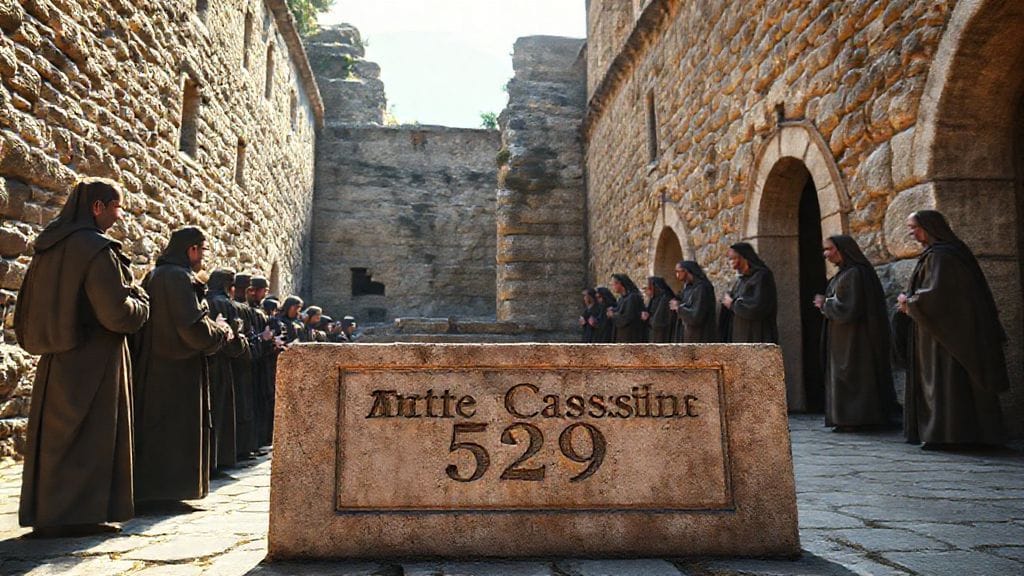
The air was crisp in the early spring of 529 AD atop a rocky hill in Italy, where the ruins of a Roman temple to Apollo stood silent witness. Here, under a sky brushed with pale light, a man of solemn conviction laid the groundwork for what would become a spiritual fortress for the ages: the Monastery of Monte Cassino. The scene was both modest and monumental—a handful of monks gathered around Benedict of Nursia, their abbot and guide, as he began carving out not just stone walls, but a new way of life.
The early morning mist hovered low across the valley, a subtle veil shading this decisive moment. In a fragmented world scarred by war, decay, and uncertainty, the founding of Monte Cassino offered the promise of order, discipline, and profound faith. But this foundation was not merely a religious act; it was the genesis of a cultural revolution that echoed far beyond those hilltop stones.
As Benedict drove the first cornerstone, few could foresee the indelible mark this place would leave on history. Yet the pulse of transformation was already beating strongly within the hearts of those first monks, whose lives were about to be entwined forever with the life-giving spirit of Monte Cassino.
2. Italy in Turmoil: The Dark Context of the Early 6th Century
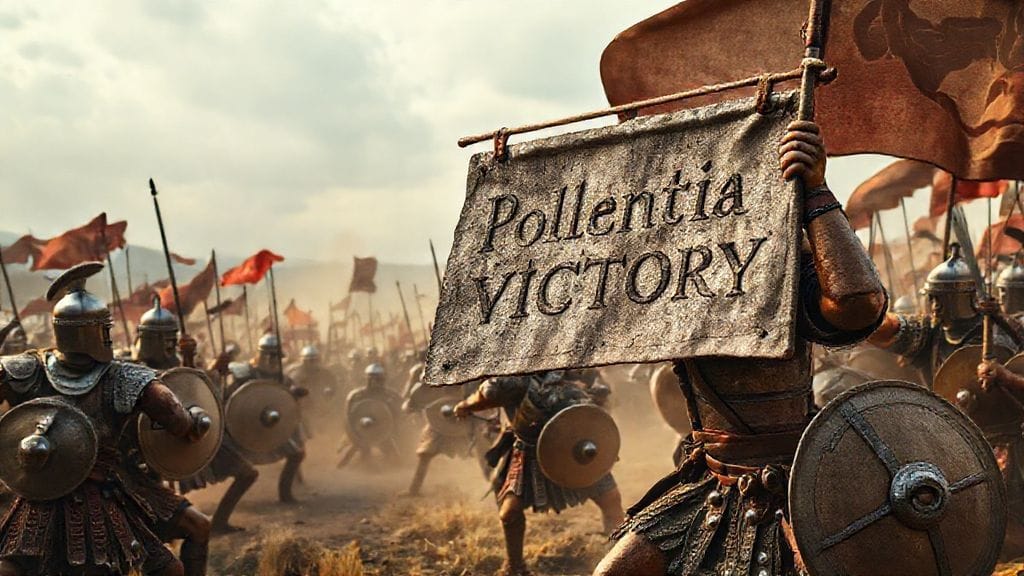
Italy in 529 was a land steeped in chaos and uncertainty. The once-glorious Roman Empire had crumbled, leaving behind a fractured peninsula torn by barbarian invasions, political disintegration, and economic slump. The Western Roman Empire had officially collapsed some five decades earlier, and the Ostrogothic Kingdom struggled to consolidate power amid lingering local loyalties and Gothic-Roman conflicts.
Cities lay in ruins or strict decline, trade faltered, and banditry thrived in the countryside. Christian communities, once vibrant and organized, faced disarray, as doctrinal disputes and external threats undermined ecclesiastical stability. Old pagan temples stood as haunting relics, silent and neglected, their former grandeur ghosts of a past civilization.
Amidst this fragmentation rose a yearning—not solely for stability, but for meaning in a world that had lost its bearings. Into this tempest stepped Benedict of Nursia, with a vision molded by both faith and practical wisdom, one that sought to renew spiritual and social order through monastic discipline.
3. Who Was Saint Benedict? From Noble Roots to Spiritual Seeker
Little is known about Saint Benedict's early life, but sources suggest he was born around 480 AD into a Roman noble family in Nursia (modern Norcia), in central Italy. Destined by his lineage to a prosperous secular future, Benedict chose instead the path of asceticism. Fleeing the corruption and moral decay he saw in Rome, he retreated into solitude to seek divine truth.
From hermit to mentor, Benedict’s journey was marked by intense personal struggle and spiritual insight. His charisma and wisdom attracted followers, considering him a beacon amid darkness. Yet he was no mere mystic: Benedict envisioned a community grounded in balance—between work and prayer, solitude and fellowship, humility and leadership.
Through his seminal “Rule of Saint Benedict,” drafted around the time of Monte Cassino’s foundation, he synthesized Christian monastic ideals into a practical manual for communal living, focusing on obedience, stability, and hospitality. This Rule would become one of the most influential documents in Western monasticism.
4. The Benedictine Rule: Revolutionizing Monastic Life
The Rule of Saint Benedict transcended earlier monastic codes by offering a complete framework for community life, instead of focusing solely on renunciation or solitude. It was notable for its moderation, avoiding extremes, and endorsing a life that balanced spiritual contemplation with manual labor.
The Rule prescribed a rigorous daily schedule: eight canonical hours punctuated by prayer, periods of study, and practical work such as agriculture or copying manuscripts. Monks were expected to live in humility, obedience to the abbot, and mutual support.
Perhaps most revolutionary was the Rule’s emphasis on stability—the commitment that monks would remain in one monastery their entire lives—starting with Monte Cassino, forging deep communal roots. This emphasis laid the foundation for the monastery to become a stable institution in the unstable world of post-Roman Europe.
5. The Selection of Monte Cassino: Symbolism and Strategy
Why Monte Cassino? The choice of this isolated hilltop, about 130 km southeast of Rome, was deliberate and symbolic. The site was historically sacred, overlooking the Via Latina, an ancient and significant Roman road. The hill had seen the rise and fall of Roman temples, including the temple of Apollo, whose ruins whispered echoes of pagan glory.
By building on this site, Benedict was reclaiming a pagan space for the Christian faith, signifying the transformation of old ways into new purpose. Strategically, the location offered isolation conducive to contemplation, yet proximity to roads that connected it to the wider world, allowing the community to exert influence beyond its walls.
This blending of retreat and engagement became a hallmark of Monte Cassino’s legacy—part fortress of soul and part beacon of civilization.
6. Construction of the First Abbey: Stones, Sweat, and Prayer
Monte Cassino’s first abbey was modest yet robust—stones quarried from the hill bore the hands of the monks themselves, symbolizing their commitment to both spiritual and earthly labor. There was no grand architectural blueprint. Instead, Benedict’s vision shaped a community where simplicity and utility merged.
The monks balanced the grueling work of building with the rigorous spiritual life. Their chants echoed through the valley, punctuating the sounds of hammer and chisel. They built chapels, dormitories, a refectory, and libraries—each stone laid an act of faith.
The process was slow, grueling, but imbued with a sense of divine purpose. This was not just a physical construction, but a metaphor for the building of a new spiritual order.
7. Life Within the Walls: Daily Rhythm of the Early Monks
Inside Monte Cassino, time was marked by the ringing of bells and the cadence of the Divine Office. From the early morning at Matins to the evening Vespers, prayer threaded the day like golden seams. Between these moments, monks tended the gardens, copied texts, studied scripture, and maintained the abbey.
The Rule’s insistence on ora et labora (“pray and work”) governed everything, creating a disciplined yet nurturing environment. Food was simple, hospitality generous, and obedience absolute. The abbot held near-absolute authority as spiritual father and temporal governor.
This rhythm fostered inner transformation and community cohesion, establishing a monastic life that balanced individual growth and collective responsibility.
8. Trials and Tribulations: Challenges in the Monastery’s Early Years
Yet, this new monastic experiment was not without its obstacles. Isolation demanded harsh endurance. Early monks faced threats from bandits, political instabilities, and even skepticism from ecclesiastical authorities wary of this emerging order.
Internal strife occasionally tested Benedict’s leadership and the stability of his community. Some monks chafed at the strictness of the Rule; others wrestled with the austerity demanded. Benedict’s insistence on discipline was uncompromising, but his reputation for wisdom and fairness gradually bonded the group.
The challenge of maintaining a spiritual haven amid external chaos was profound—but through these pressures, the monastery’s resilience was forged.
9. Monte Cassino as a Beacon: Intellectual and Spiritual Influence
As the monastery grew in stature, it became a center of learning and spiritual renewal. Its scriptorium tirelessly copied ancient manuscripts, preserving classical knowledge that might have been lost to time. Theology, philosophy, and the arts flourished under the aegis of Benedictine discipline.
The Benedictine Rule itself spread across Europe, inspiring the creation of countless monasteries. Monte Cassino’s model of balanced prayer and work radiated outward—a lighthouse in the dark medieval night. Pilgrims and scholars alike came seeking knowledge and guidance.
This intellectual blossoming helped to link the fragmented Christian world back to the ancient heritage of Rome, acting as a bridge between past and future.
10. The Abbey’s Role in a Fragmented Italy
In a land divided between Gothic rulers, Lombard invaders, and Byzantine claims, Monte Cassino played a unique role. Its spiritual authority commanded respect across factions, allowing it to mediate, negotiate land holdings, and sustain economic autonomy.
Far from an isolated sanctuary, Monte Cassino was enmeshed in the political and social fabric of Italy. Its farms and estates provided food and stability to surrounding regions.
Through its network of monasteries, it fostered cohesion in a disjointed epoch—an island of faith anchoring the shifting tides of history.
11. Reeditions, Rebuilding, and Resilience Through Centuries
The abbey faced destruction—first by invading Lombards in the 6th century, then through centuries of warfare and plague. Each time, Monte Cassino rose from ashes, rebuilt by monks and supported by rulers who recognized its importance.
These cycles of ruin and revival testify to the monastery’s extraordinary resilience. Its very stones became witnesses to the passage of time, embodying humanity’s ceaseless struggle to protect its spiritual heritage.
12. Monte Cassino and the Spread of Benedictine Monasticism
Monte Cassino became the archetype for Benedictine monastic life, sending missionaries and monks across Europe—from Ireland to Spain, France to Germany. This network formed the backbone of medieval Christendom’s religious, cultural, and educational life.
The Benedictine family’s spread helped contain barbarian chaos, foster learning, and produce the groundwork for the Renaissance centuries later.
13. The Artistic and Architectural Legacy Initiated in 529
Though the first basilica was simple, Monte Cassino would inspire evolving architectural styles: Romanesque solidity, Gothic aspirations, and Renaissance artistry. Frescoes, illuminated manuscripts, and sacred music that blossomed here influenced Europe’s cultural trajectory.
The monastery’s aesthetic expression reflected the Rule’s balance—orderly, harmonious, and imbued with spiritual symbolism.
14. The Rule’s Enduring Impact on Western Monasticism and Beyond
The Rule of Saint Benedict remains one of the most enduring texts of Western religious history. Its principles shaped the ethos of countless religious communities and infused secular institutions with ideals of discipline and community.
Throughout the centuries, the Rule’s call for stability, humility, and balanced labor found echoes in education, governance, and social thought, rendering the foundation of Monte Cassino a keystone in Western civilization.
15. Monte Cassino in the Awe of History: From Antiquity to Modernity
From the crumbling Roman temples beneath its foundations to its destruction in World War II and subsequent restoration, Monte Cassino’s history encapsulates the tumult and triumph of Europe itself.
It is a monument not only to faith but to human perseverance—the hill still rises in the Italian landscape, a sentinel of memory and hope.
16. Behind the Stone Walls: Anecdotes of Saint Benedict and His Disciples
Legend and history mingle in tales of Benedict’s miracles, strict but compassionate nature, and his disciples’ tales—such as Maurus’ fearless rescue of the drowning Placidus. These stories humanize the foundation of Monte Cassino, showing it not as an abstract institution but as a community of flesh and spirit.
Such anecdotes have inspired generations seeking courage and faith.
17. The Abbey Through Wars and Invasions: A Survival Story
Monte Cassino’s location made it vulnerable during waves of conflict—from Lombard raids to World War II bombings. The latter destroyed the abbey almost entirely in 1944, becoming one of the most tragic cultural losses of the war.
Yet each destruction was met not with surrender but rebuilding, embodying the spirit Benedict espoused—resilience rooted in hope and faith.
18. Monte Cassino as a Cultural Repository: Manuscripts and Learning
The abbey’s library was a treasure trove, preserving classical texts, theological works, and scientific manuscripts. Its monks’ meticulous copying preserved knowledge that would nourish medieval scholasticism and humanism.
Monte Cassino served as a beacon of intellectual continuity amid Europe’s so-called “dark ages.”
19. How Monte Cassino Influenced European Civilization
The monastery’s principles permeated medieval governance, education, and culture. Many medieval universities trace roots back to Benedictine monastic teaching.
Its model of communal life inspired notions of social responsibility and ethics that echo to modern democratic ideals.
20. The Spiritual Legacy: Benedict’s Vision in Today’s World
More than 1,500 years later, the principles of the Benedictine Rule continue to inspire monastic communities and laypersons alike. In a fragmented modern world, the call to balance contemplation with action, solitude with community, speaks profoundly to enduring human quests for meaning and peace.
Monte Cassino remains a symbol of spiritual refuge and human endurance.
21. Conclusion: The Eternal Flame Kindled on a Hilltop
The foundation of Monte Cassino was more than the establishment of a monastery; it was the planting of a seed that would grow through centuries, shaping Western spirituality, culture, and identity. In the simple act of building a stone refuge on a hill scarred by history, Saint Benedict ignited a flame that has burned through millennia—a light of order amid chaos, prayer amidst toil, faith amidst fragility.
Monte Cassino stands not only as a monument in stones but as living testimony to the power of vision anchored in resilience and hope.
22. FAQs: Understanding the Foundation and Legacy of Monte Cassino
Q1: Why was Monte Cassino chosen as the site for the monastery?
A: Monte Cassino was chosen for its isolated yet strategic location on a hilltop that overlooked key Roman routes, symbolizing the Christian transformation of a pagan site and providing both solitude and access.
Q2: What makes the Benedictine Rule distinct from earlier monastic codes?
A: Unlike earlier ascetic rules, the Benedictine Rule emphasized balance, community life, stability, moderated asceticism, and practical work alongside prayer.
Q3: How did Monte Cassino contribute to preserving knowledge during the Middle Ages?
A: The monastery’s scriptorium copied and preserved numerous ancient manuscripts, bridging classical heritage with medieval scholarship.
Q4: What challenges did the early monastery face?
A: Apart from external threats like raids and political instability, the community wrestled with maintaining strict discipline, resource scarcity, and occasional internal conflicts.
Q5: How was Monte Cassino affected during World War II?
A: The monastery was almost entirely destroyed by Allied bombing in 1944 during the Battle of Monte Cassino; it was later meticulously rebuilt.
Q6: What is the significance of Benedict’s Rule today?
A: The Rule continues to guide monastic communities worldwide and inspires secular approaches to balanced living, leadership, and community.
Q7: How did Monte Cassino influence broader European society?
A: Through its monastic network, educational pursuits, and ethical teachings, it helped stabilize medieval Europe socially and culturally.
Q8: Is Monte Cassino still active today?
A: Yes, the abbey remains an active Benedictine monastery and spiritual center, attracting pilgrims and scholars from around the world.
23. External Resource: Wikipedia Entry for Monte Cassino
https://en.wikipedia.org/wiki/Monte_Cassino