Table of Contents
- The Siege of Naples: A City on the Brink
- Gothic War: Clash of Empires and Faiths
- The Strategic Importance of Naples in 536
- The Belligerents: Byzantines versus Ostrogoths
- General Belisarius: The Emperor’s Brilliant Commander
- The Defenders: Gothic Tenacity and Local Loyalties
- Early Approaches: The Calm Before the Storm
- The Siege Begins: Walls Under Fire
- Psychological Warfare and the Weight of Hope
- The Civilians of Naples: Between Scourge and Survival
- Artillery and Engineering in Late Antiquity Siegecraft
- The Role of Hunger and Disease During the Siege
- Political Intrigue Within the City Walls
- The Turning Point: Breach and Resistance
- The Fall of Naples: Surrender and Consequences
- Aftermath: Byzantine Control and Gothic Retaliation
- The Siege in the Broader Context of Justinian’s Reconquest
- Naples’ Cultural and Economic Decline and Resilience
- Remembering the Siege: Chronicles and Legacy
- Lessons from the Siege: War, Morality, and Empire
- Toward a New Italy: The Gothic War’s Enduring Impact
- Conclusion: The Siege as a Crossroads of History
- FAQs About the Siege of Naples
- External Resource
- Internal Link
1. The Siege of Naples: A City on the Brink
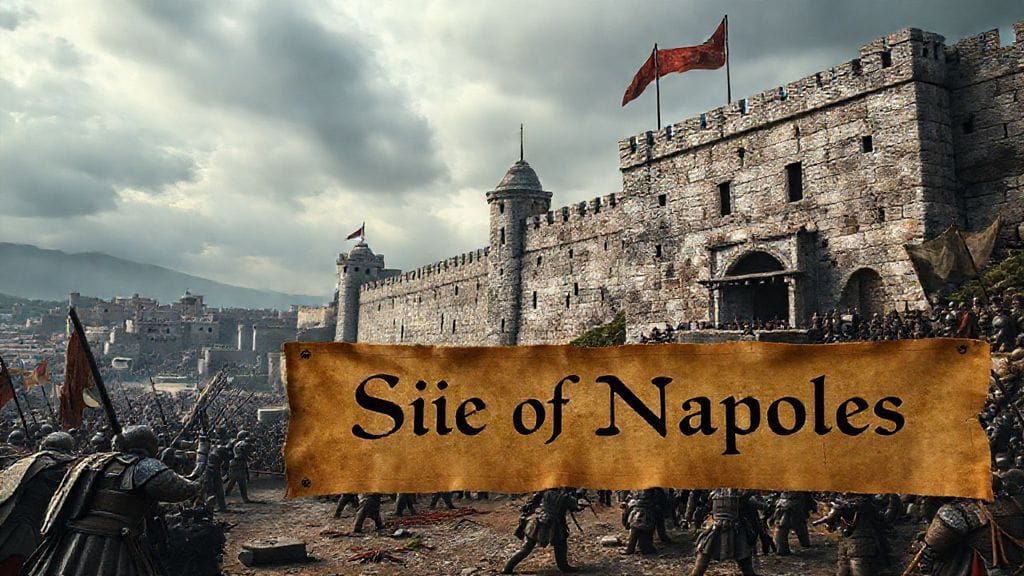
In the summer of 536 AD, the ancient city of Naples found itself ensnared in the relentless grip of war. The sea air, once fragrant with salt and olive groves, now carried the acrid smoke of burning roofs and the clamorous shouts of armies. On the cobblestone streets, children hid in doorways, while hardened warriors manned the ramparts with grim resolve. The smiling façade of Naples—rich in myth and history—was marred by the raw brutality of a siege that would test not only the strength of walls but the spirit of its people. This crucible of fire would come to epitomize the chaotic transformation of the Italian peninsula, caught between fading Gothic rule and the resurgence of Byzantine ambition.
2. Gothic War: Clash of Empires and Faiths
The Siege of Naples was but a pivotal episode in the larger and bloody Gothic War (535–554), a protracted conflict that would decide the fate of Italy for centuries. This war was not a mere territorial squabble but a violent collision of two worlds: the Ostrogothic Kingdom, heirs to Roman traditions yet ever distinct, against the Eastern Roman (Byzantine) Empire under Emperor Justinian I, whose vision was nothing less than the restoration of the old Roman Empire.
Born from tangled alliances, religious tensions—between Arian Goths and orthodox Catholics—and bitter questions of legitimacy and culture, the Gothic War was as ideological as it was military. Naples, with its strategic harbor and symbolic weight, became a coveted jewel, vital to control the Italian peninsula’s western coast.
3. The Strategic Importance of Naples in 536
Naples was more than a mere coastal city; it was an economic and cultural hub, a gateway into Italy’s southern provinces. Holding Naples meant commanding the sea lanes of the Tyrrhenian Sea and establishing a vital foothold for further campaigns into the heart of Gothic-controlled Italy.
For Justinian, Naples was the slender thread linking Byzantine reinforcements and supplies from the eastern Mediterranean to his armies in Italy. Its formidable walls, inherited from centuries past and strengthened in this era, promised a defensive bastion against the Gothic attempts to reclaim lost ground.
4. The Belligerents: Byzantines versus Ostrogoths
Opposing forces were led by contrasting figures—on one side, General Belisarius, atypical for his age, brilliant and cunning, the embodiment of imperial resurgence; on the other, Gothic commanders determined to preserve their realm and dignity amid turbulent times.
The Byzantines brought new tactics, troops hardened on the eastern frontiers, and a vision fueled by Justinian’s determination to vindicate Roman legacy. The Ostrogoths, meanwhile, fought not only for territory but for survival against a resurgent empire that many saw as foreign invaders.
5. General Belisarius: The Emperor’s Brilliant Commander
Belisarius is celebrated as one of antiquity's supreme military minds. His leadership during the Siege of Naples epitomized his strategic brilliance: calculating restraint, use of intelligence networks, and psychological manipulation as much as the direct force of arms.
Known for his fairness and respect even toward captured foes, Belisarius’s campaign was as much about winning hearts as seizing cities. At Naples, he balanced siege pressure with offers of clemency, hoping to avoid needless destruction that would alienate the local population.
6. The Defenders: Gothic Tenacity and Local Loyalties
Within the city walls, a motley array of defenders rallied under Gothic banners. These were seasoned warriors and local citizens alike, whose loyalties lay tangled between their Gothic rulers and their Roman heritage.
Despite being outnumbered and facing an opponent fueled by imperial ambition, the defenders of Naples displayed remarkable tenacity. Their motivations were complex—defense of homes and families, allegiance to Gothic king Theodahad, and a desire to preserve autonomy in the chaos of war.
7. Early Approaches: The Calm Before the Storm
Before the siege’s fury erupted, the surroundings were eerily still. Byzantine troops prepared camps, studying the city’s defenses and consolidating supply lines. Spies gathered intelligence; messengers sped between commanders.
Naples’s population braced itself with fragile hope. Traders and fishermen, used to the rhythms of peace, whispered prayers while boarding hidden routes to safeguard their belongings.
8. The Siege Begins: Walls Under Fire
When the first catapults flung boulders and flaming projectiles towards the city walls, the siege became tangible destruction. Daily bombardments cracked ancient stone, and battering rams tested the gates.
Belisarius’s forces demonstrated not just brute strength but artful engineering—digging trenches, erecting towers to outflank the walls, and cutting off supply routes by land and sea. The stress on defenders mounted with every passing day.
9. Psychological Warfare and the Weight of Hope
Sieges are as much battles of wills as of arms. Byzantine commanders deployed messages promising mercy in exchange for surrender, aimed at undermining the defenders' resolve.
Inside Naples, despair gnawed at spirits, but defiance burned fiercely. Stories circulated of fallen comrades and heroic stands, reinforcing a fragile hope that relief might come — or that the walls would not fall, no matter the cost.
10. The Civilians of Naples: Between Scourge and Survival
The siege was not just a military event; it was a human tragedy. Civilians endured hunger and exposure, while disease stalked the cramped quarters within the walls.
Wives, children, and elderly bore the brunt as warriors took turns defending the ramparts. Archaeological findings and later chronicles evoke haunting scenes of suffering—a population fractured but enduring in the grip of siege warfare’s cruelty.
11. Artillery and Engineering in Late Antiquity Siegecraft
The Siege of Naples highlights the evolution of siege technology after the fall of the Western Roman Empire. The Byzantines, inheriting Roman techniques and adapting eastern innovations, deployed torsion-powered catapults, siege towers, and sapping methods aimed at undermining walls.
Such mechanical marvels were accompanied by strategic genius in logistics and timing, turning the city’s ancient fortifications into a battleground of stone, wood, and fire.
12. The Role of Hunger and Disease During the Siege
Starvation was often the most effective weapon during sieges, and Naples was no exception. The blockade cut off vital food supplies, compelling the population to ration dwindling resources.
Epidemics, exacerbated by crowded and unsanitary conditions, decimated the defenders and civilians alike, weakening morale and fighting capacity. Chroniclers tell of bodies piled in streets and the desperate measures taken to survive—a grim testament to war’s collateral devastation.
13. Political Intrigue Within the City Walls
The siege also unfolded as a theater of internal strife. Factions within Naples debated the wisdom of resistance versus capitulation. Noble families, religious leaders, and military commanders sometimes clashed over loyalties and strategies.
Such intrigue eroded solidarity at critical moments, revealing how sieges attack not just cities but the fragile bonds holding communities together.
14. The Turning Point: Breach and Resistance
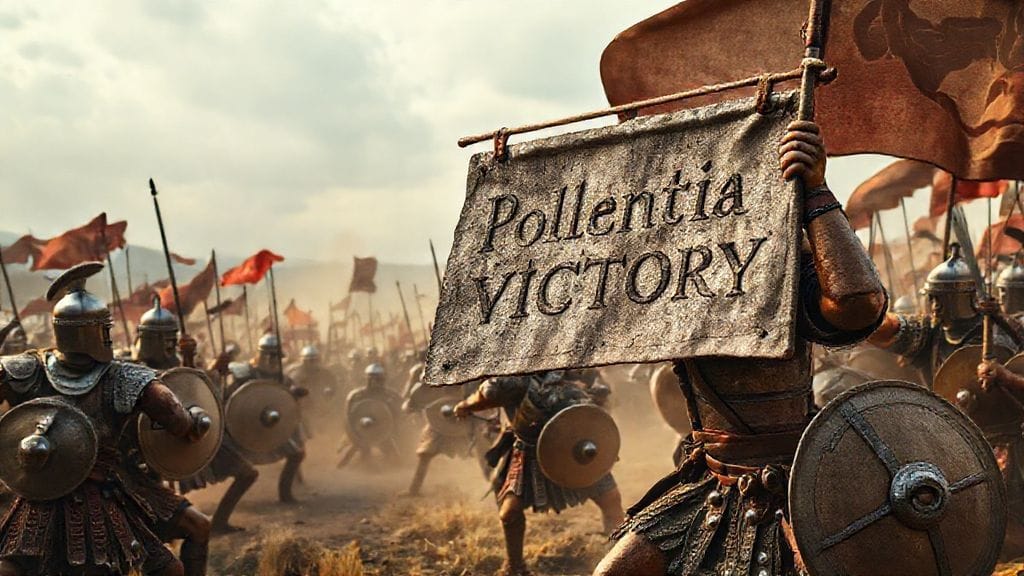
After weeks of relentless assault, the walls finally cracked under combined pressure of siege engines and determined infantry assault. Byzantine troops poured through the breaches amid fierce fighting.
Yet the defenders did not surrender easily. Street-by-street battles erupted, with urban warfare slowing the city’s fall and amplifying the siege’s brutality.
15. The Fall of Naples: Surrender and Consequences
Eventually, the defenders, battered and exhausted, laid down arms. Belisarius’s promised clemency generally soothed the city’s fall—Noble families retained some privileges; churches were spared.
But the social fabric was scarred. The siege ruptured Naples’s economy, displaced populations, and marked a shift in control that would ripple through Italian politics and society for years.
16. Aftermath: Byzantine Control and Gothic Retaliation
With Naples under Byzantine hands, Justinian’s forces gained a crucial strategic asset. Yet the war was far from over. Gothic forces launched counterattacks, plunging Italy into years more of devastation and shifting front lines.
Naples’s fall symbolized Byzantine momentum but also underscored the harsh price Italy would pay in this drawn-out conflict.
17. The Siege in the Broader Context of Justinian’s Reconquest
Justinian’s ambitious project to reclaim former Roman lands hinged on victories like Naples. This siege exemplified the challenges of reasserting imperial authority over a fragmented, war-torn world.
The Gothic War tested the resilience of both Byzantium and Italy, setting precedents for medieval warfare and foreshadowing centuries of shifting powers in the Mediterranean.
18. Naples’ Cultural and Economic Decline and Resilience
The war damaged Naples’s prosperity, yet the city persisted. Its survival was partly due to its maritime connections and cultural vitality, preserving Greco-Roman traditions amid renewed Byzantine influences.
This duality shaped Naples’s medieval development, enabling it to become a crossroads of civilizations despite nearly a century of turmoil.
19. Remembering the Siege: Chronicles and Legacy
Our knowledge of the siege comes from sources like Procopius, whose vivid descriptions combine military detail with human drama. These chronicles transformed the siege into a narrative about empire, heroism, and tragedy.
Later medieval historians and local traditions kept the memory alive, framing Naples as a city that endured through fire and war, an emblem of resilience.
20. Lessons from the Siege: War, Morality, and Empire
The siege offers enduring questions: the ethics of warfare, the fate of civilians, and the tension between imperial ambition and local realities. It reveals how military conquest reshapes societies, often at devastating human cost.
Belisarius’s conduct, the defenders’ courage, and the civilians’ suffering invite reflection on leadership, loyalty, and the human price of empire.
21. Toward a New Italy: The Gothic War’s Enduring Impact
Though the Byzantines achieved many victories, including Naples, the Gothic War fragmented Italy’s unity, weakening it against future invasions.
Yet the seeds of medieval political configurations and cultural identity were sown in this crucible. Naples and Italy emerged transformed—scarred but ready for the long journey ahead.
22. Conclusion: The Siege as a Crossroads of History
The Siege of Naples in 536 was more than a military engagement; it was a moment when past empires collided with emergent ones, when local identities were challenged by global ambitions. Within those stone walls, hope and despair intertwined, shaping the destiny of a city and a continent.
This episode remains a poignant reminder that history’s turning points are forged not only in the clash of armies but in the lives touched by war: warriors, civilians, leaders, and children who endured the storm with unyielding spirit.
FAQs About the Siege of Naples
Q1: Why was Naples so important during the Gothic War?
A1: Naples was strategically vital due to its port controlling access to southern Italy and the Tyrrhenian Sea. Its capture enabled the Byzantines to secure supply lines and a foothold for further campaigns.
Q2: Who commanded the Byzantine forces during the siege?
A2: The Byzantine army was led by General Belisarius, renowned for his strategic genius and loyalty to Emperor Justinian I.
Q3: How long did the siege last?
A3: The precise duration is debated, but sources indicate the siege unfolded over several intense weeks in 536 AD.
Q4: What role did civilians play during the siege?
A4: Civilians endured hardships including hunger, disease, and violence, supporting the defenders as best they could but suffering immense casualties.
Q5: How did the siege impact the Gothic War?
A5: The fall of Naples was a significant Byzantine victory, boosting their campaign in Italy while weakening Gothic resistance.
Q6: What sources document the siege?
A6: The primary historical account comes from Procopius’s Wars of Justinian, supplemented by later chronicles and archaeological evidence.
Q7: Did Belisarius show mercy after the city fell?
A7: Yes, Belisarius was known for clemency toward defeated cities, seeking to win loyalty rather than provoke resistance through harshness.
Q8: What legacy did the siege leave for Naples?
A8: Although the siege devastated Naples, the city rebuilt and eventually flourished again under Byzantine influence, shaping its medieval character.