Table of Contents
- The Dawn of a New Era: Arrival of the Slavs in the Balkans
- The Geopolitical Landscape of the Late 6th Century Balkans
- Rome’s Waning Grip: The Byzantine Empire’s Struggles
- Who Were the Slavs? Ethnogenesis and Early Culture
- The Push and the Pull: Causes of the Slavic Migrations
- First Encounters and Initial Settlements
- Moesia and Macedonia: The Heartlands Transformed
- The Slavic Lifestyle and Societal Structures
- Interactions with Native Populations: Conflict and Coexistence
- Byzantine Responses: Military Campaigns and Diplomacy
- The Role of the Avars and Other Nomadic Tribes
- Archaeological Evidence and Material Culture of Early Slavs
- Language and Identity in Transition
- The Impact on Urban Centers and Trade Routes
- Religion and Cultural Assimilation: Paganism Meets Christianity
- Long-term Consequences: The Formation of New Political Entities
- The Legacy in Balkan Demographics and Culture
- Memory and Myth: How Modern Nations Recall these Migrations
- Conclusion: From Migration to Integration – The Slavs’ Balkan Story
- FAQs: Unpacking the Waves of Change
- External Resource
- Internal Link
The Dawn of a New Era: Arrival of the Slavs in the Balkans
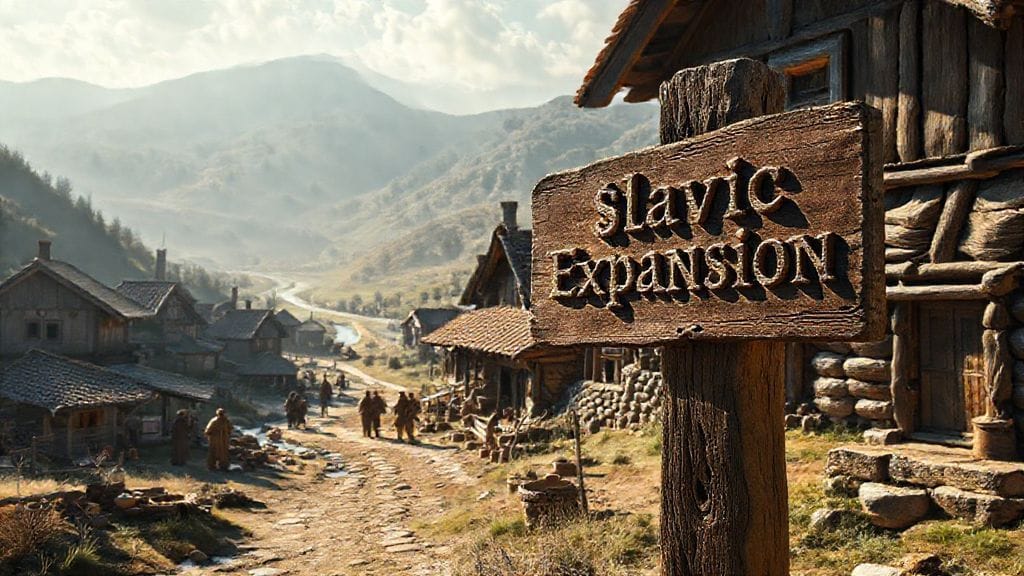
In the dull, gray light of dawn, the dense Balkan forests echoed with unfamiliar sounds. Slavic clans, with their simple wooden huts and tightly woven communities, pressed forward into new lands. They were not conquerors in the classical sense—no banners flew high nor vast armies marched in disciplined lines—but their arrival was no less transformative. In the late 6th century, the slow, steady spread of Slavic peoples into the Balkans, Moesia, and Macedonia marked a seismic shift in the cultural and political landscape of Southeastern Europe. Their journeys, fraught with peril, opportunity, and relentless adaptation, heralded the dawn of a new epoch, one where ancient Roman frontiers crumbled and a mosaic of new identities emerged.
This was no mere population movement—it was a profound reshaping of the region’s demographic and cultural contours. For centuries, the Balkans had been a crossroads of empires and peoples, yet few waves of migration would shape its destiny as indisputably as the Slavs’. This story is not just about barbarians flooding borders but about resilient communities carving new homes, mingling with existing populations, surviving in a world of chaos, and eventually laying foundations for future nations.
The Geopolitical Landscape of the Late 6th Century Balkans
To grasp the sheer magnitude of the Slavic expansion, one must first understand the era’s precarious geopolitical web. The late 6th century was a time of exhaustion for the Byzantine Empire—the eastern remnant of Rome. Although Emperor Justinian had once revived imperial ambitions with reconquests in the west, his successors inherited a volatile frontier beset by external pressures and internal decay.
The Balkans, including the provinces of Moesia and Macedonia, sat at the empire’s northern rim, acting as buffer zones against barbarian incursions. Yet these regions were also increasingly vulnerable: the Danube frontier, so vital to imperial defense, had grown porous. The once powerful imperial legions had thinned, and diplomatic ties with neighboring peoples frayed. Meanwhile, the Avars, a fierce nomadic confederation, exerted pressure from the north, driving smaller tribal groups either further south or deeper into Byzantine territories.
What remained was a fractured frontier where the Byzantine hold was increasingly tenuous—setting the stage for waves of migrating peoples seeking refuge, resources, or new settlement lands.
Rome’s Waning Grip: The Byzantine Empire’s Struggles
The Byzantine Empire, successor to Rome’s eastern glory, still carried prestige but faced the reality of overstretched resources. The plague of 541-542, known as the Plague of Justinian, had decimated populations and weakened military capacity. The continuous conflicts with the Persians in the east further drained imperial coffers, reducing the empire's ability to safeguard the Balkans effectively.
This imperial fatigue translated into deteriorating defenses along the Danube limes, long-standing border fortifications meant to repel invasions. With fewer troops available to guard vast and rugged borderlands, gaps appeared, temptations for opportunistic groups to cross.
Yet, the Byzantine response was not mere passivity. Attempts at fortified defense, occasional strikes against invaders, and diplomatic marriages tried to slow the tide. Nevertheless, the vast scope of the problem meant that the empire’s grasp was no longer ironclad but fragile and patchy.
Who Were the Slavs? Ethnogenesis and Early Culture
“Slavs” is a broad term encapsulating diverse tribal groups linked by language and cultural practices. Their origins trace back to areas north of the Carpathians and along the upper Vistula river, but by the 6th century, they were far from a homogenous entity.
The Slavs were semi-nomadic, living in small, kin-based communities, often relying on seasonal agriculture, hunting, and gathering. Their social organization was egalitarian compared to Roman hierarchical systems, with leadership emerging from clan elders or war chiefs during times of conflict. No grand states or kingdoms yet characterized their landscape; they were people of subsistence, resilient and adaptable.
Linguistically, Proto-Slavic dialects formed the foundation of their shared identity, though internal diversity was significant. Their material culture, known mainly through pottery, simple tools, and distinctive housing patterns, speaks of communities in transition, building permanent homes but still deeply connected to forests and rivers.
The Push and the Pull: Causes of the Slavic Migrations
Why did the Slavs begin moving en masse southward across the Danube into the Balkans during the late 6th century?
Several overlapping factors sparked what some historians call a “migration spiral.” Firstly, demographic pressures in their original homelands likely made the search for arable land necessary. The growth of communities strained available resources, particularly in heavily forested and marshy areas.
Secondly, external pressures came from the steppe—tribal confederations such as the Avars, whose expansion westward and southward displaced numerous smaller groups, pushing them into Byzantine territories seeking refuge or taking advantage of weakened borders.
Thirdly, the magnetic pull of the Byzantine lands—richer, more fertile, and relatively underpopulated due to ongoing wars and plagues—offered incentives to settle. Many Slavs were not mere raiders but settlers hoping to raise crops, herd animals, and live in stable communities.
The convergence of pressure from the north and attraction to the south created a dynamic migration process neither purely violent nor passive but complex and multifaceted.
First Encounters and Initial Settlements
As Slavic groups crossed the Danube, initial contact with Byzantine forces and local populations ranged from hostile clashes to uneasy truces. Early accounts from Byzantine chroniclers highlight raids and pillaging, but these are only one side of a more nuanced reality.
Slavs established settlements mainly in river valleys and fertile plains, often near existing Roman towns but sometimes in more remote forested areas. Their presence disrupted local economies and social orders yet also introduced new cultural and demographic elements.
These early settlements were typically small and scattered, but their persistence laid the groundwork for gradual expansion. Byzantine frontier commanders sometimes employed diplomacy, settling Slavs as foederati (allied settlers obliged to provide military service), a practice that allowed coexistence but also dependence.
Moesia and Macedonia: The Heartlands Transformed
Moesia and Macedonia, long integral Roman provinces, represented vital geostrategic and economic regions. The former, straddling the Danube and the Balkans, was key to border defense. Macedonia, with its mountain ranges and rich Roman cities, was a jewel of antiquity.
The Slavic migration reshaped both territories profoundly. Villages disappeared, cities shrank, and rural landscapes converted. Towns like Scupi (modern-day Skopje) suffered decline but also became zones of cultural contact. In urban settings, Slavs sometimes settled in marginal areas or outskirts, later integrating fully.
Meanwhile, rural zones saw more radical transformation: fields were abandoned or reworked, new villages bore Slavic names, and land-use changed reflecting Slavic agricultural patterns. This slow process transformed the character of these provinces: they ceased to be classic Roman lands and became the foundations of a Balkan Slavic hinterland.
The Slavic Lifestyle and Societal Structures
Far from being mere invaders, Slavs brought ways of life that differed fundamentally from Roman-Byzantine imperial norms. Their villages were typically compact groups of homes, built from wood and other local materials, surrounded by cultivated fields and sometimes fortified with rudimentary earthworks.
Social hierarchies existed but were fluid, pivoting on kinship and clan ties. Leadership was pragmatic, linked to military prowess or consensus rather than bureaucratic appointment. These structures allowed quick adaptation to battlefield situations and frontier hardships.
Economically, they relied on mixed agriculture: slash-and-burn techniques, cereal cultivation, animal husbandry, supplemented by fishing, hunting, and foraging. This self-sufficiency ensured survival even in times of external disruption.
Interactions with Native Populations: Conflict and Coexistence
The Balkans in the late 6th century were a patchwork of ethnicities and cultures—Romans, Thracians, Greeks, Illyrians, Dacians, and others lived alongside smaller tribes. The arrival of the Slavs upset the existing balance but also opened new channels of interaction.
Conflicts certainly occurred: raids on towns, disputes over land, and violent clashes. Byzantine chroniclers often depicted Slavs as barbaric savages. Yet, archaeological evidence also reveals intermarriage, cultural borrowing, and economic exchange.
Slavs sometimes assimilated local customs, while likewise, their hosts adopted elements of Slavic material culture or settled refugees in their domains. Over decades, coexistence grew, and boundaries blurred, foreshadowing the mixed civilizations that would dominate the medieval Balkans.
Byzantine Responses: Military Campaigns and Diplomacy
The Byzantine empire could not remain passive to these changes. Emperors and generals launched military expeditions attempting to repel or control Slavic incursions, with mixed results. Fortresses were rebuilt, patrols increased, and local militias trained.
Yet, full military victory was elusive. The empire increasingly resorted to diplomacy: trading, making treaties, and incorporating Slavs as auxiliaries in the Byzantine forces. Some leaders used Slavic warriors as mercenaries or settled them within imperial domains to act as buffer populations.
This blend of confrontation and accommodation allowed Byzantium to survive, albeit in a diminished form in the Balkans. It also facilitated the emergence of hybrid cultures—Byzantine-Slavic symbioses—that would define the Middle Ages in the region.
The Role of the Avars and Other Nomadic Tribes
The Avars were crucial actors in this drama. Arriving earlier in the 6th century, their confederation of nomadic peoples exerted pressure on both Slavs and Byzantines. They often acted as overlords, exacting tribute or directing raids.
For the Slavs, the Avars were both a threat and an ally. Many Slavs served under Avar khagans in military campaigns, gaining experience and weapons. Simultaneously, the Avars’ dominance spurred Slavic groups to disperse further south.
Other displaced groups, such as the Gepids and various Germanic tribes, added complexity to the ethnic and political mosaic, sometimes allying with Byzantines, sometimes with Slavs or Avars, weaving a chaotic web of shifting loyalties.
Archaeological Evidence and Material Culture of Early Slavs
While written sources remain limited and often biased, archaeology fills many gaps. Excavations across the Balkans have uncovered Slavic pottery styles—simple, hand-made ceramics known as Prague-type wares—that mark the spread of Slavic settlers.
Remains of wooden dwellings, agricultural tools, and burial sites reveal details about their daily lives and spiritual beliefs. The absence of grand monumental architecture contrasts sharply with Roman towns but affirms their rural, kin-based society.
Findings in places like Bulgaria, Serbia, and Macedonia illuminate settlement patterns and show the gradual transformation from dispersed hamlets to more permanent villages, signifying growing stability and integration.
Language and Identity in Transition
The Slavic migration was more than territorial—it was a linguistic and cultural wave that would reshape the Balkan identity. Proto-Slavic language spread north to south, blending with regional tongues and creating the basis for later Slavonic languages.
This linguistic shift was neither sudden nor uniform; local Greek and Latin dialects persisted, particularly in urban centers and ecclesiastical spheres. Yet, over centuries, Slavic dialects took root, influencing toponyms, social discourse, and administration.
Language, a living marker of identity, became a vehicle for both preservation and transformation, enabling the Slavs to assert themselves while absorbing elements of Byzantine and local traditions.
The Impact on Urban Centers and Trade Routes
The migration did not spare the cities. While many urban centers experienced decline due to invasions and economic disruption, some remained focal points of trade and culture.
Slavs settled in the peripheries of towns or along vital roadways, gradually inserting themselves into regional economies. Migration altered existing trade routes but also fostered new connections, particularly as Slavs traded agricultural products, livestock, and forest goods.
The decline of classical urbanism contrasted with the rise of more dispersed rural communities, setting the stage for the medieval Balkan landscape of fortified towns surrounded by Slavic village networks.
Religion and Cultural Assimilation: Paganism Meets Christianity
The Slavs arrived as pagans, worshippers of nature deities, animistic spirits, and ancestral cults. This religious identity contrasted sharply with the Christian Byzantine Empire.
Initially, Slavic paganism posed a cultural challenge. Missionary efforts were sporadic and met with limited success during late antiquity. Over time, contact with Christian neighbors, intermarriage, trade, and imperial policy facilitated gradual Christianization.
By the 9th century, when the Byzantine missionaries Cyril and Methodius introduced the Cyrillic script and Slavic liturgy, Christian identity solidified among Slavs. Yet pagan memories and customs persisted, woven into folklore and rituals.
Long-term Consequences: The Formation of New Political Entities
The late 6th-century migrations set a foundation for the formation of medieval Slavic polities. The demographic and cultural shifts paved the way for states such as the Bulgarian Empire, Serbian principalities, and later the medieval kingdoms of Croatia and Bosnia.
This transformation marked the Balkans’ shift from a Roman-Byzantine peninsula to a land dominated politically and culturally by Slavic peoples. The Byzantine Empire adjusted to new realities, coexisting and competing with rising Slavic powers.
What began as dispersed clans became federations, then kingdoms, influencing southeast European history for millennium to come.
The Legacy in Balkan Demographics and Culture
Today’s Balkan populations still bear traces of this ancient migration. Slavic languages dominate, and cultural elements—from music to folklore—echo early Slavic traditions mingled with local legacies.
The blending of peoples also fostered a region of immense complexity and diversity, where identity remains multifaceted and history layers deeply. The Slavic expansions are remembered both as a time of upheaval and as a source of origins.
Memory and Myth: How Modern Nations Recall these Migrations
Modern Slavic nations often look back on the late 6th-century migrations as a foundational moment. National histories weave narratives of heroic pioneer ancestors braving forests and enemies to claim new homelands.
Yet, these memories are shot through with myth and selective memory. The reality was more mixture, accommodation, and slow integration than pure conquest. Still, the migrations serve as powerful symbols of cultural endurance and renewal, resonating in national literatures and commemorations.
Conclusion: From Migration to Integration – The Slavs’ Balkan Story
The story of the Slavic expansion in the Balkans, Moesia, and Macedonia during the late 6th century is a tale of transformation, resilience, and identity. It is about ordinary people stepping into unknown lands, adapting to new environments, and creating the roots of modern Southeast Europe.
From the smoke rising over forest clearings to the echoes of a village chant beside a riverside, the migration waves brought change that was neither purely violent nor entirely peaceful. They redefined borders, reshaped cultures, and laid the foundation for centuries of history.
In this slow movement of peoples, we see the enduring human themes of survival, adaptation, and belonging. The Balkans would never be the same, but through this upheaval, new possibilities blossomed—a testament to history’s relentless flow and mankind’s profound capacity for change.
FAQs
Q1: What triggered the Slavic migration into the Balkans in the late 6th century?
A1: A mixture of demographic pressure in Slavic homelands, displacement by nomadic groups such as the Avars, and the opportunity presented by the Byzantine Empire’s weakened control over the Balkans propelled the migration.
Q2: How did the Byzantine Empire react to the Slavic settlements?
A2: Byzantines responded with a mix of military resistance, diplomatic alliances, and settler integration, sometimes employing Slavs as federated allies to stabilize frontier zones.
Q3: Were the Slavs purely raiders, or did they establish permanent settlements?
A3: Although initial raids occurred, most Slavs sought permanent settlement, farming land and building communities, which gradually transformed the region’s demographic and cultural fabric.
Q4: What role did the Avars play in the Slavic migrations?
A4: The Avars acted as both facilitators and oppressors, driving some Slavs southward, using others as military auxiliaries, and influencing political dynamics in the Balkans.
Q5: How did the Slavic presence affect urban centers like Skopje?
A5: Urban centers sometimes declined due to raids and economic disruptions but also became multicultural hubs where Slavic and Byzantine peoples interacted.
Q6: What evidence do archaeologists use to study early Slavic settlements?
A6: Archaeologists rely on pottery styles, wooden architecture remains, burial customs, and settlement layouts to trace Slavic expansion and cultural practices.
Q7: When did the Slavs start adopting Christianity in the Balkans?
A7: Christianization was gradual and intensified from the 9th century onwards, notably influenced by Byzantine missionaries Cyril and Methodius introducing Slavic liturgy.
Q8: How do modern Balkan nations view the Slavic migrations?
A8: The migrations are often celebrated as foundational myths shaping national identity, though historical reality is more complex, involving coexistence and cultural blending.

