Table of Contents
- The Shifting Sands of Armenia: Prelude to Reconciliation
- Byzantine-Armenian Relations Before 572: A Fractured Legacy
- The Rise of Theodosiopolis: Armenia’s Strategic Stronghold
- The Armenian Nobility’s Dilemma: Between Byzantium and Persia
- Emperor Justin II and the Eastern Frontier Policy
- The Bubbling Cauldron: Religious and Political Tensions in Armenia
- The 572 Accord: The Initial Steps Toward Reconciliation
- Armenian Nobles at the Byzantine Court: New Alliances and Old Grievances
- Military Cooperation and the Defensive Role of Theodosiopolis
- The Role of Armenian Clergy in Facilitating Peace
- Persian Reaction: The Sassanid Challenge to Byzantine Influence
- The Lull Before the Storm: Diplomatic Maneuvering, 573–580
- Maurice’s Campaigns and the Consolidation of Byzantine Authority
- The Ambivalent Nature of Armenian Identity amid Imperial Politics
- The Failed Rebellions and the Limits of Reconciliation
- Theodosiopolis under Siege: The Armenian Nobility’s Courage and Betrayal
- The Aftermath: How Partial Reconciliation Shaped Armenia’s Future
- Cultural and Religious Legacies of the Byzantine-Armenian Accord
- Armenian Nobility’s Place in Byzantine Aristocracy: Integration and Resistance
- Economic Implications: Trade, Tribute, and the Armenian Highlands
- Testimonies from the Era: Chronicles and Letters from Theodosiopolis
- Conclusion: The Enduring Echo of a Fragile Peace
- FAQs: Unraveling Theodosiopolis and the Armenian-Byzantine Reconciliation
- External Resource
- Internal Link
1. The Shifting Sands of Armenia: Prelude to Reconciliation
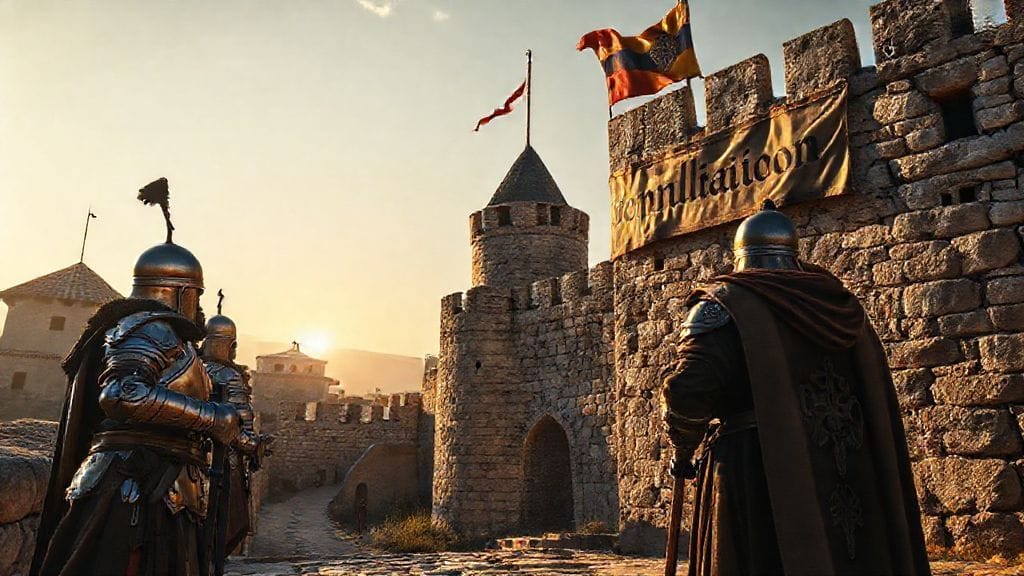
The cold dawn was just breaking over the fortress city of Theodosiopolis in the year 572. Its ramparts, perched on a rocky promontory beneath the towering peaks of the Armenian Highlands, cast long shadows upon the rugged terrain. The air was heavy—charged with uncertainty but also a tentative hope. For decades, the Armenian nobility had been caught in a relentless tug of war between the Byzantine Empire and its formidable eastern rival, the Sassanid Persians. But on this fragile morning, emissaries from Constantinople arrived with a message: the Byzantine emperor sought to reconcile, to embrace the Armenian lords beneath his imperial aegis once more.
This moment marked a seminal yet often overlooked chapter in late antiquity—a story of diplomacy, identity, conflict, and survival. The partial reconciliation of Armenian nobility with Byzantium, centered around Theodosiopolis from 572 to 591, would set the stage for Armenia’s complex fate amidst the great imperial struggles of the 6th century.
2. Byzantine-Armenian Relations Before 572: A Fractured Legacy
To understand the significance of this reconciliation, one must first peer into the fractured history that preceded it. Since the early 5th century, Armenia was caught between two colossal empires: Byzantium to the west and Persia to the east. This geopolitical reality rendered Armenia a chessboard for imperial ambitions and a crucible for cultural and religious conflicts.
The Treaty of Eternal Peace in 591 was still decades away, but prior to 572, relations had oscillated fiercely—alliances shifting, incursions frequent. Armenian noble families, often named “nakharars,” leveraged their regional influence but were forced to navigate the dangerous waters of empire with deft pragmatism. Byzantium sought to secure its eastern borders, while Persia aimed to reassert Zoroastrian dominance and political control over the region.
The religious landscape further complicated matters. Christianity had long been adopted in Armenia, but differing ecclesiastical allegiances threatened to fracture loyalties between Persian-backed Zoroastrian influence and Byzantine-supported Chalcedonian Christianity.
3. The Rise of Theodosiopolis: Armenia’s Strategic Stronghold
Amidst these tensions, Theodosiopolis (modern-day Erzurum) emerged as a critical military and political hub. Founded in the late Roman era and named after Emperor Theodosius I, the city’s significance grew as it guarded a vital pass that controlled the routes linking Anatolia and the Armenian highlands.
By the mid-6th century, Theodosiopolis was not just a fortress city but a symbol of Byzantine resolve to reaffirm its influence in Armenia. Its walls bore the marks of previous conflicts, and its towers echoed the pleas, fears, and ambitions of a region trapped between empires.
The city became a magnet for the Armenian nobility, some of whom saw in alliance with Byzantium a chance to secure their domains and privileges. Yet others viewed it with suspicion—a sign of submission and loss of autonomy.
4. The Armenian Nobility’s Dilemma: Between Byzantium and Persia
The Armenian nakharars were a proud, fiercely independent aristocracy. Their power was rooted in ancestral lands, kinship ties, and centuries-old customs. But by the 570s, the pressures from two empires forced them into a dilemma: to ally, resist, or navigate a cautious middle ground.
Some noble families, such as the Mamikonians and the Bagratunis, weighed the benefits of Byzantine alliance—a restoration of titles, lands, and military command—against the risk of alienating Persian overlords or their own kin.
Theodosiopolis became the crucible where these decisions were often made. The partial reconciliation reflected this complex calculus: it was not wholesale submission, but a nuanced, often uneasy, realignment intended to preserve Armenian interests in a shifting landscape.
5. Emperor Justin II and the Eastern Frontier Policy
Central to this reconciliation was Emperor Justin II, whose reign from 565 to 578 was marked by a vigorous—if turbulent—policy in the East. Unlike his predecessor Justinian I, Justin II inherited a more fragile empire, strained by wars on multiple fronts and economic challenges.
Recognizing the importance of securing Armenia as a buffer zone, Justin II sought to engage the Armenian nobility diplomatically. His emissaries promised respect for Armenian traditions and autonomy in exchange for loyalty and military cooperation.
However, his policies were fraught with difficulties. Byzantine resources were stretched thin, and mistrust between imperial officials and Armenian nobles often undermined efforts toward unity. Nevertheless, the foundation was laid for a partial rapprochement.
6. The Bubbling Cauldron: Religious and Political Tensions in Armenia
Religion was the heartbeat of identity and conflict in Armenia during this era. The Armenian Apostolic Church adhered to Miaphysitism, diverging theologically from the Chalcedonian Christianity professed by Byzantium. This subtle yet profound difference became a recurring source of tension.
For many Armenian nobles, the religious dispute was a question of cultural survival rather than doctrine. Aligning too closely with Byzantine orthodoxy was perceived as a threat to Armenian spiritual and national identity.
At the same time, Persian Zoroastrian authority was unrelenting, occasionally pressuring Armenian Christians to convert or at least acquiesce.
Thus, reconciliation efforts were as much about navigating religious landscapes as political allegiances.
7. The 572 Accord: The Initial Steps Toward Reconciliation
The year 572 signaled a turning point. Following renewed military clashes with Persia, Byzantine emissaries arrived in Theodosiopolis bearing terms of an agreement. This accord did not represent a full incorporation of Armenian nobility into Byzantine governance but rather a tentative recognition of their status under Byzantine suzerainty.
Nobles who pledged loyalty were affirmed in their lands and titles, allowed to maintain their military command, and granted positions at the Byzantine court. This arrangement sought to thread a precarious balance—acknowledging Armenian autonomy while reinforcing Byzantine hegemony.
It was a milestone negotiated in trench diplomacy and courtly intrigue rather than on grand battlefields—a reflection of the complex mosaic that was 6th-century Armenia.
8. Armenian Nobles at the Byzantine Court: New Alliances and Old Grievances
The presence of Armenian nobles in Constantinople's gilded corridors illustrated the human dimension of the reconciliation. Some Armenian aristocrats found themselves integrated into the Byzantine senatorial ranks, adorned in imperial robes and entrusted with prestigious commands.
Yet, for many, this was an uneasy marriage. Letters from these exiled lords reveal a constant tension—a yearning for their homeland tempered by suspicion toward Byzantine bureaucrats and fear of cultural erasure.
Old feuds among Armenian families also complicated matters, as rival clans sought to gain favor with the emperor, fueling rivalries in an already fractious social sphere.
9. Military Cooperation and the Defensive Role of Theodosiopolis
The strategic imperative of Theodosiopolis harnessed martial realities. Situated on the frontier, the city was the linchpin of Byzantine defense against Persian incursions.
Armenian cavalry and infantry provided essential support, their knowledge of the terrain and mountain warfare invaluable. Many nobles served as commanders, their loyalty bought in part by the 572 accord’s guarantees.
The extended conflicts of the late 6th century tested this alliance—sieges, skirmishes, and raids blurred the lines between friend and foe. Yet Theodosiopolis remained a bastion, its walls often the last refuge for those defending Byzantine interests.
10. The Role of Armenian Clergy in Facilitating Peace
Behind the scenes, the Armenian Church played an indispensable role in the reconciliation process. Though religious differences persisted, clergy acted as intermediaries, promoting dialogue and calming sectarian tensions.
Figures like Catholicos John IV championed moderation, hoping to safeguard Armenian ecclesiastical independence while avoiding the fate of cultural absorption.
Their sermons and letters reflected a pragmatic approach: peace with Byzantium was preferable to the devastation of interminable conflict.
11. Persian Reaction: The Sassanid Challenge to Byzantine Influence
Unsurprisingly, the Sassanid Empire viewed the Armenian-Byzantine reconciliation as a direct challenge. Persia had long considered Armenia within its sphere of influence, and the shift of Armenian nobles toward Byzantium threatened to disrupt the fragile balance.
Consequently, Persian kings increased military pressure, fortified border garrisons, and sought to court Armenian factions dissatisfied with Byzantine overtures.
These rivalries culminated in intermittent warfare, with Theodosiopolis at the frontline again and again.
12. The Lull Before the Storm: Diplomatic Maneuvering, 573–580
The alliance period that followed the 572 accord was characterized by cautious diplomacy rather than overt conflict. Both Byzantium and Persia engaged in back-channel negotiations, espionage, and attempts to sway the Armenian nobility.
In this interlude, Theodosiopolis became a diplomatic hub, its fortifications housing envoys, spies, and military commanders alike.
Yet beneath the surface, old rivalries simmered, setting the stage for renewed conflict in the years ahead.
13. Maurice’s Campaigns and the Consolidation of Byzantine Authority
With the accession of Emperor Maurice in 582, Byzantine policy in the East grew more assertive. His military campaigns aimed at reclaiming lost territories, consolidating gains, and cementing alliances with frontier peoples—including the Armenians.
Maurice personally understood the necessity of Armenian support, often integrating Armenian troops into his armies and rewarding noble loyalty.
Theodosiopolis thus became not simply a fortress but a symbol of burgeoning Byzantine strength, though true peace remained elusive.
14. The Ambivalent Nature of Armenian Identity amid Imperial Politics
Throughout these turbulent years, Armenian identity proved remarkably resilient and yet deeply ambivalent. Nobles negotiated Byzantine affiliations without renouncing their heritage; clergy sought ecclesiastical independence even while cooperating across imperial lines.
Theodosiopolis was a microcosm of this liminal existence—a place where Armenian language, customs, and political agency mingled with the grandeur and bureaucracy of Byzantium.
This duality shaped not only politics but the culture of a people straddling two worlds.
15. The Failed Rebellions and the Limits of Reconciliation
Despite official accords, not all Armenian nobles accepted Byzantine authority. Periodic rebellions erupted—silent protests or open warfare—that underscored the limits of the 572 reconciliation.
These uprisings were often localized but at times drew the attention of Persia or even other regional powers.
They revealed the fragile nature of loyalty imposed by treaty and the depth of Armenian desires for true autonomy.
16. Theodosiopolis under Siege: The Armenian Nobility’s Courage and Betrayal
One of the most dramatic episodes came during Persian advances on Theodosiopolis. The city endured prolonged sieges, with Armenian nobles commanding its defense—marrying bravery with political calculation.
Yet not all alliances held firm; some nobles defected or negotiated with Persia, lured by promises or desperation, embodying the era’s complexities and human dramas.
These moments of courage and betrayal illustrate the precariousness of partial reconciliation in a volatile borderland.
17. The Aftermath: How Partial Reconciliation Shaped Armenia’s Future
Though the accord never achieved complete harmony, it left indelible marks on the region. Armenian integration into Byzantine structures deepened; cultural exchanges flourished, and military cooperation set precedents for later centuries.
This period also planted seeds of division and resilience that would impact Armenia’s trajectory through medieval history.
The lessons of Theodosiopolis, therefore, extend far beyond its walls and years—shaping notions of identity, sovereignty, and diplomacy in frontline zones.
18. Cultural and Religious Legacies of the Byzantine-Armenian Accord
The legacy of partial reconciliation was not only political but profoundly cultural. Architectural styles, liturgical practices, and literary traditions bore Byzantine traces while affirming Armenian uniqueness.
Church councils, manuscripts, and art from this period reflect a dialogue, a negotiation of faith and identity colored by compromise and resistance.
Thus, the Armenian nobility’s uneasy embrace of Byzantium enriched the cultural tapestry of the region.
19. Armenian Nobility’s Place in Byzantine Aristocracy: Integration and Resistance
The integration of Armenian nobles into the Byzantine aristocracy was a slow, uneven process. While some gained prestigious titles and lands in imperial provinces, others chafed under Byzantine protocols and court intrigues.
Nonetheless, many retained distinct Armenian identities, forming a bridge between their homeland and the empire’s heart.
This duality empowered future Armenian actors in Byzantine politics but also underscored inherent tensions in imperial multi-ethnic governance.
20. Economic Implications: Trade, Tribute, and the Armenian Highlands
Beyond politics and culture, the reconciliation altered regional economic dynamics. Theodosiopolis thrived as a trade nexus linking Anatolia and the Caucasus, facilitating commerce in silk, spices, and metals.
Tributary arrangements shifted, with Byzantine influence encouraging new tax structures and resource management.
These economic changes had profound effects on local populations, fostering urban growth but also occasional social unrest.
21. Testimonies from the Era: Chronicles and Letters from Theodosiopolis
Contemporary chronicles, such as those by the Armenian historian Sebeos, and various letters from nobles and clergy bear witness to the era’s complexities.
These sources reveal personal hopes, fears, and everyday struggles behind the grand narratives—showing a people striving to maintain dignity and autonomy amid imperial storms.
Through their voices, Theodosiopolis becomes not just a city but a living community caught in the tides of history.
Conclusion
The partial reconciliation of the Armenian nobility with Byzantium between 572 and 591 was an episode marked by courage, complexity, and compromise. Perched atop Theodosiopolis’s rugged heights, Armenian lords faced impossible choices between empires without forsaking their identity. Their tentative alliance with Byzantium did not erase divisions—far from it—but offered a lifeline of survival and a platform for future integration.
This story resonates beyond its immediate time and place, illuminating the enduring human dilemmas of loyalty, identity, and pragmatism when caught between competing forces. It is a testament to the resilience of a proud people and the impermanent, often fragile nature of political reconciliation.
In the shadows of Theodosiopolis’s walls, history whispers lessons about the costs and possibilities of alliance—the delicate dance of sovereignty that continues to echo through the centuries.
FAQs
Q1: Why was Theodosiopolis pivotal in Byzantine-Armenian relations?
A1: Theodosiopolis was strategically located on a vital frontier route between Anatolia and the Armenian Highlands. It served as both a military bulwark and a political center where Armenian nobles negotiated with Byzantium, making it essential for the empire’s eastern defense and diplomacy.
Q2: What were the main causes leading to the partial reconciliation in 572?
A2: Pressures from ongoing conflict with Persia, economic strain, and the need for secure frontiers compelled both Byzantium and Armenian nobles to seek accommodation. Religious complexities and noble aspirations for preserving autonomy also influenced the decision.
Q3: How did religious differences affect the reconciliation?
A3: The Armenian Church’s Miaphysitism differed from Byzantine Chalcedonian Christianity, causing mistrust. However, clergy acted as mediators promoting peace and religious tolerance to protect Armenian ecclesiastical independence within Byzantine constructs.
Q4: Did all Armenian nobles accept the Byzantine alliance?
A4: No, the reconciliation was only partial. Some nobles resisted or rebelled, viewing Byzantine overlordship as a threat to Armenian sovereignty. Internal rivalries and varying loyalties complicated the unity.
Q5: How did Persia respond to the Byzantine-Armenian rapprochement?
A5: Persia perceived it as a threat and intensified military campaigns against Byzantine territories, including Armenia, attempting to reassert influence by supporting anti-Byzantine Armenian factions.
Q6: What were the long-term effects of this partial reconciliation?
A6: It deepened Byzantine cultural and political influence in Armenia, encouraged military alliances, and shaped Armenian identity, while also setting patterns of ambivalent loyalty and resistance that would recur in regional history.
Q7: Are there surviving contemporary accounts of this period?
A7: Yes, chronicles like those of Sebeos and correspondences from Armenian nobles and clergy provide valuable insights into the political and social dynamics of the reconciliation era.
Q8: What does this episode tell us about empire and identity in frontier regions?
A8: It illustrates the complexities faced by local elites caught between empires: maintaining ethnic and religious identity while adapting politically for survival. It highlights the mosaic of loyalties, pragmatism, and the blurred boundaries of sovereignty.

