Table of Contents
- The Dawn of a New Era: Medina, 622 CE
- Arabia Before the Constitution: Tribal Loyalties and Fractured Alliances
- Muhammad’s Migration: The Hijra and Its Significance
- The Birth of the Ummah: A Radical Social Experiment
- Drafting the Constitution: Actors, Intentions, and Challenges
- The Role of Tribes: Negotiating Peace Among Rivals
- Principles of the Constitution: Unity, Justice, and Coexistence
- Religious Pluralism in Medina: Muslims, Jews, and Others
- Political Innovations: Governance without a Kingdom
- Security and Mutual Defense: Standing Together Against Threats
- Economic Provisions: Trade, Sharing, and Social Welfare
- Resolving Conflicts: Justice and Arbitration Clauses
- The Constitution as a Tool for Social Integration
- Immediate Reactions: Allies, Opponents, and Skeptics
- The Ummah’s Evolution: From Medina to Expansion
- Legacy of the Constitution in Islamic Political Thought
- Comparative Perspectives: Ancient and Modern Constitutions
- Symbolism and Memory: How Medina’s Document Lives On
- Conclusion: The Constitution of Medina as a Blueprint for Unity
- FAQs on the Constitution of Medina
- External Resource
- Internal Link
The Dawn of a New Era: Medina, 622 CE
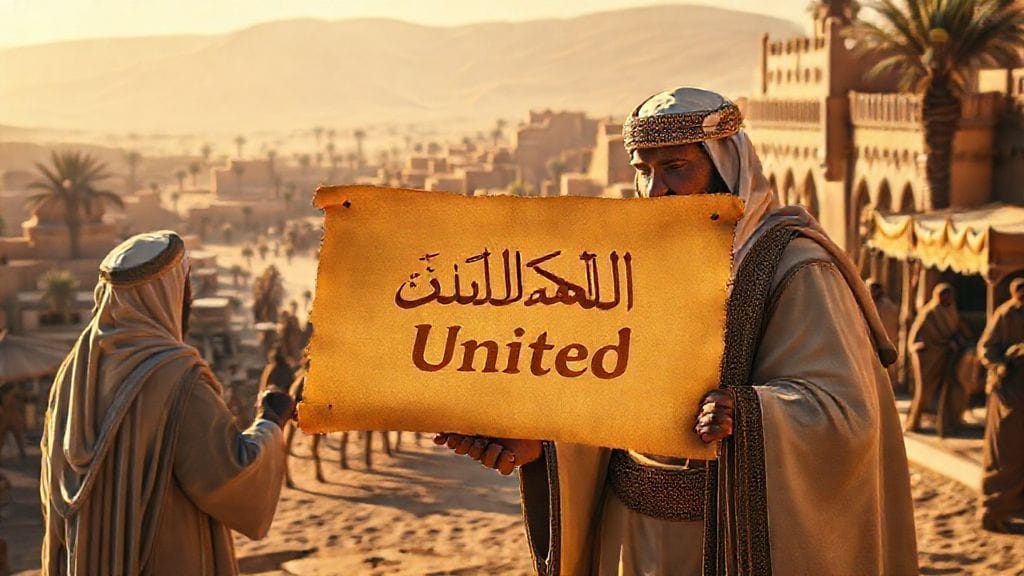
The scorching Arabian sun was setting over the dusty city of Yathrib, soon to be known as Medina. In the blistering heat of 622 CE, a profound transformation was quietly taking place—not on a battlefield, but in legal pages that sought to redefine the fabric of society. The air vibrated with anticipation and unease as disparate tribes, bound for generations by blood feuds and fragile alliances, were about to embark on an unprecedented journey toward unity. At the heart of this change was a single document, known today as the Constitution of Medina, a fragile yet daring charter that sought to mold a mosaic of clans and faiths into a cohesive community—the Ummah.
Muhammad’s migration (Hijra) had brought not just a man, but a message and a model for governance, social justice, and peace in a time of relentless tribal conflict. The Constitution was not merely a legal manuscript; it was an audacious attempt to forge order out of chaos, to replace enmity with cooperation. Imagine a city of rival tribes agreeing to mutual defense, shared rights, respect for religious difference—a revolutionary act in a world ruled by the sword and spectacle of vendettas.
The Constitution of Medina is more than a historical artifact; it is a testament to human resilience and political imagination in the face of adversity. Its establishment marked the inception of the first Islamic polity, laying foundations for centuries of governance and providing a blueprint for communal harmony that resonates even today.
Arabia Before the Constitution: Tribal Loyalties and Fractured Alliances
To understand the Constitution’s significance, one must grasp the seething complexity of Arabian society before its advent. The Arabian Peninsula in the early 7th century was a land of fierce tribalism, where loyalty to one’s kin and clan was the ultimate law. Blood feuds and cycles of revenge defined social relations, making peace an elusive, temporary state.
Yathrib, the city that would become Medina (‘the city of the Prophet’), was itself home to a tangle of Arab tribes such as the Aws and Khazraj, alongside established Jewish clans. These groups bore wounds of past conflicts, and their distrust was palpable. Political power was fragmented, religious practices varied, and alliances shifted like desert sands.
This fractured social mosaic was ripe for change, but also fraught with the risk that any attempt at reform would unravel violently. Into this crucible stepped Muhammad and his followers—outsiders in many ways, yet embodying a unifying vision.
Muhammad’s Migration: The Hijra and Its Significance
The Hijra—the migration of Muhammad and his early followers from Mecca to Yathrib—was both a flight from persecution and the beginning of a revolutionary experiment. For nearly thirteen years, Muhammad and his followers had faced opposition in Mecca, enduring hardship and exile. The call to Yathrib was a beacon of hope, a promise of sanctuary and the chance to build a community aligned with new religious and ethical ideals.
But migration alone would not solve centuries-old conflicts. Muhammad’s arrival needed backing by an innovative political framework to hold together a city divided by suspicion and rivalry. This was the crucible in which the Constitution took shape.
The Birth of the Ummah: A Radical Social Experiment
The term Ummah—denoting a community bound not by blood but by shared values and faith—was redefined in Medina. Muhammad introduced a concept of belonging that transcended tribal affiliation, envisioning a collective identity based on mutual responsibility and adherence to divine precepts.
This was a monumental shift. In a world where identity was inextricably linked to tribe and lineage, the Constitution of Medina sought to foster inclusion and collective security. The newly forged Ummah was a mosaic of Muslims, non-Muslims, Arabs, and Jews, united under a single political and social contract.
Drafting the Constitution: Actors, Intentions, and Challenges
Historians continue to debate the precise authorship and process behind the Constitution, but sources indicate that Muhammad, trusted tribal leaders, and representatives of various communities collaborated in its drafting. The document was crafted through negotiation, sensitive to existing power dynamics yet boldly prescriptive.
These actors faced monumental challenges: how to forge peace among historic enemies, how to ensure justice in a pluralistic society, and how to maintain security without suppressing identity or belief. The Constitution balanced pragmatism with idealism, embedding explicit clauses on shared defense but also respecting religious diversity.
The Role of Tribes: Negotiating Peace Among Rivals
One of the Constitution’s most remarkable achievements was its ability to bring rival Arab tribes—the Aws and the Khazraj—into a formal alliance, ending decades of internecine warfare that had devastated Yathrib. These tribes pledged to resolve their disputes peacefully and stood ready to defend one another against external threats.
The agreement tasked them with mutual consultation and shared responsibilities, a radical departure from unilateral tribal rule. Tribal leaders who once clashed at blade point now found themselves bound by mutual obligations codified in the document.
Principles of the Constitution: Unity, Justice, and Coexistence
At its core, the Constitution of Medina was founded on principles strikingly modern in their expression: unity of the community, equitable justice irrespective of tribe or religion, and coexistence within a pluralistic polity. It sought to guarantee the security of life and property, forbid betrayal, and promote consultation (shura) in decision-making.
These principles underscored the understanding that sustainable peace relied on trust and fairness—a notion that resonated strongly with the communities involved and sowed seeds for future governance models.
Religious Pluralism in Medina: Muslims, Jews, and Others
Remarkably, the Constitution recognized the rights and autonomy of Jewish tribes living in Medina, integrating them as full participants in the city’s defense and internal affairs, while allowing freedom of religion and worship. This pluralism was groundbreaking in Arabian society, where religion was often a marker of division.
The document stipulated protection for Jewish communities, acknowledging their distinct beliefs and granting them communal independence—a pact of coexistence rarely seen in the ancient world.
Political Innovations: Governance without a Kingdom
Unlike the monarchies and tribal chieftaincies typical of the region, the Constitution of Medina proposed a form of governance that was consultative rather than autocratic. Muhammad was recognized not as a king but as a political leader, religious guide, and arbiter.
Decision-making involved tribal representatives, and the document emphasized consensus and collective responsibility rather than unilateral command—a harbinger of proto-constitutional governance.
Security and Mutual Defense: Standing Together Against Threats
The Constitution assigned a collective responsibility to defend Medina from external aggression. All signatories pledged to stand united if the city were attacked, to contribute warriors, and to mutual aid.
This formulation was innovative in transforming erstwhile rivals into allies against outsiders, seeking to provide collective security in a volatile geopolitical environment shadowed by Meccan hostility.
Economic Provisions: Trade, Sharing, and Social Welfare
Although sparse on economic regulation, the Constitution set foundations for social welfare mechanisms, mutual assistance, and protection of trade caravans—central to Medina’s economic vitality.
It emphasized equitable treatment in economic disputes and prohibited exploitation, aiming to balance individual interests with communal well-being.
Resolving Conflicts: Justice and Arbitration Clauses
Building peace was inseparable from establishing mechanisms for dispute resolution. The Constitution provided for arbitration in conflicts and specified that the Prophet was the final judge in contentious issues.
This institutionalization of justice was a critical step away from vendettas toward legal order, setting precedents for the Islamic judicial system.
The Constitution as a Tool for Social Integration
More than a legal text, the Constitution was a social blueprint, enabling diverse populations to live in relative harmony. It prescribed rights and duties, fostered a sense of identity beyond tribe or faith, and established a framework for cooperative existence.
This social engineering was nothing short of revolutionary, given the entrenched divisions within the city.
Immediate Reactions: Allies, Opponents, and Skeptics
The new arrangement was not universally welcomed. Some tribes and individuals opposed relinquishing tribal autonomy, while Meccan adversaries viewed Medina’s unity as a threat. Nonetheless, many embraced the Constitution enthusiastically, finding in its clauses paths to peace and stability.
Over time, the document facilitated diplomatic breakthroughs and set Medina on a trajectory of growing influence.
The Ummah’s Evolution: From Medina to Expansion
The establishment of the Ummah under the Constitution paved the way for the rapid expansion of Islam’s political and spiritual reach in the following decades. Medina became the nucleus of a burgeoning Islamic state, with its founding document as a symbolic and practical touchstone.
The expansion brought new challenges but also validated the Constitution’s vision of community bound by faith and justice.
Legacy of the Constitution in Islamic Political Thought
The Constitution of Medina is often heralded as the first written constitution in the Islamic world and one of the earliest known examples of a pluralistic governance charter. It influenced Islamic jurisprudence and political theory, underpinning ideas of governance, social contract, and coexistence.
Its legacy endures as an exemplar of interfaith dialogue and political innovation.
Comparative Perspectives: Ancient and Modern Constitutions
Viewed alongside other early documents like the Magna Carta or the Roman Twelve Tables, the Constitution of Medina stands out for its emphasis on pluralism and community self-governance in a tribal society.
The document resonates today as an early precursor to constitutionalism and the rule of law, centuries before modern nation-states.
Symbolism and Memory: How Medina’s Document Lives On
The Constitution lives not only in historical text but in Muslim collective memory as a symbol of unity, justice, and mercy. It is invoked in contemporary debates about pluralism, rights, and the nature of political community in Muslim contexts worldwide.
Its enduring symbolism fosters reflection on the possibilities of governance that respects diversity and common good.
Conclusion
The Constitution of Medina stands as a timeless beacon amidst the deserts of history—a testament to the possibility of forging peace in the heart of conflict, unity amid diversity. In a turbulent era marked by feuds and fragmentation, a handful of men dared to draft not just laws but a new social vision: an Ummah bound by shared obligations rather than bloodlines, by justice rather than revenge.
This document’s humble parchment laid the cornerstone for a community that would change the world, seeding ideals of cooperation, mutual respect, and pluralism that remain profoundly relevant now. It reminds us that even in the harshest circumstances, human societies can craft laws and alliances that transcend differences—transforming enemies into neighbors, strangers into citizens.
The Constitution of Medina is not merely a relic of the past but a vibrant reminder of humanity’s capacity to imagine new possibilities for peaceful coexistence—a lesson echoing through the centuries, whispering still in the winds over Medina.
FAQs
Q1: What prompted the creation of the Constitution of Medina?
The Constitution was created in response to the need for peace and political stability in Medina, where various tribes and religious communities had long been embroiled in conflict. Muhammad sought to unify these groups under a common political framework to ensure security and cooperation following his migration from Mecca.
Q2: Who were the main parties involved in the Constitution?
The document involved the Muslim migrants and supporters (Muhajirun and Ansar), the Arab tribes of Aws and Khazraj, and the Jewish tribes of Medina, among others. All agreed to mutual obligations for defense, justice, and coexistence.
Q3: How did the Constitution address religious differences?
It affirmed religious pluralism by recognizing the autonomy of Jewish tribes and allowing freedom of religion, while binding all parties together in political and social rights and duties.
Q4: Was the Constitution of Medina the first constitution in history?
While other ancient legal codes existed, the Constitution of Medina is often considered the earliest written constitution in the Islamic world and one of the first known documents to formalize a multi-religious, multi-tribal political community.
Q5: What impact did the Constitution have on Islamic governance?
It laid foundational principles for Islamic political theory, including collective decision-making, justice, and communal responsibility, influencing subsequent Islamic states and legal traditions.
Q6: Why is the concept of the Ummah significant in this context?
The Ummah represented a community united by faith and mutual obligations instead of kinship or tribe, creating a new political and social identity that transcended existing divisions.
Q7: How is the Constitution of Medina remembered today?
It is celebrated as a symbol of early Islamic governance, interfaith coexistence, and constitutionalism, often cited in discussions about pluralism and political unity within Muslim societies.
Q8: Did the Constitution of Medina end all conflicts in the city?
While it significantly reduced violence by formalizing alliances and conflict resolution mechanisms, not all disputes ceased immediately. However, it provided a framework for manageable, peaceful coexistence.

