Table of Contents
- Dawn over the Desert: The Prelude to Battle
- Arabia in Turmoil: Setting the Stage for Conflict
- The Rise of Muhammad and the Medinan Community
- Tensions Escalate: The Road to Badr
- The Fateful March: Muslim Forces Gather
- The Meccan Caravan: A Prize Worth Fighting For
- The Battlefield at Badr: Geography and Strategy
- The Morning of March 17, 624: Forces in Position
- Clash of Faith and Steel: The Battle Begins
- The Turning Tide: Courage and Defiance on the Muslim Side
- The Aftermath: Casualties and Captives
- The Impact on the Quraysh: Shaken Power Dynamics
- Political Reverberations in Medina and Beyond
- The Battle of Badr in Islamic Tradition and Memory
- Lessons from Badr: Faith, Leadership, and Legacy
- The Global Historical Significance of Badr
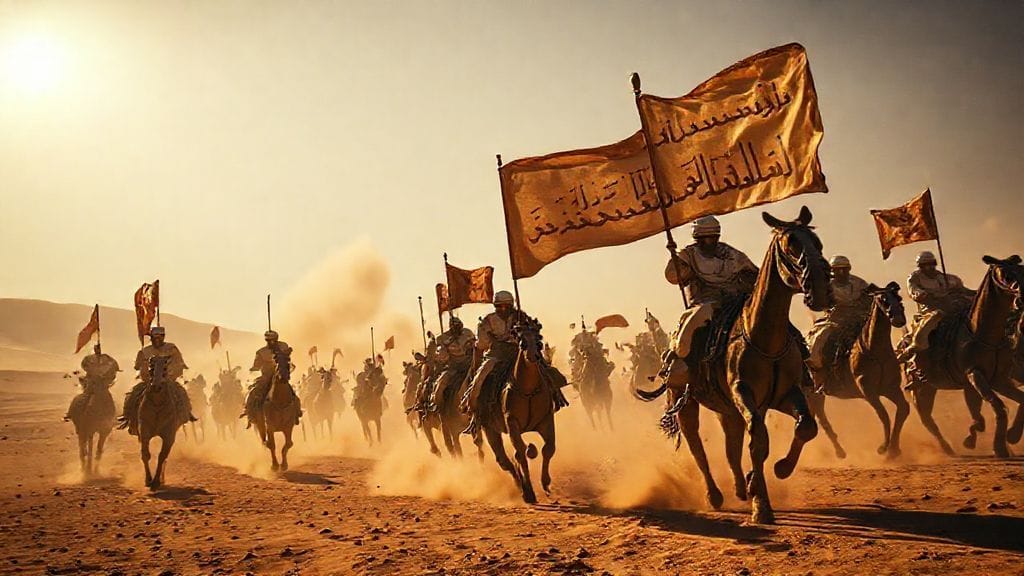
At the break of dawn, in the harsh and unyielding desert near Medina, a small band of weary fighters stood trembling yet resolute. The air was thick with anticipation, the kind that turns stomachs and quickens heartbeats. Against them stood a vastly superior force, the powerful Meccan Quraysh—warriors bolstered by years of wealth and privilege, confident in their dominance. But this was no ordinary battle. It was March 17, 624 CE, and this confrontation—later to be known as the Battle of Badr—would mark a turning point not only in Arabian history but in the spiritual and political fate of an emerging community.
The sun was just a faint promise on the horizon, yet the Islamic fighters here—no more than 300 men—were determined to face an enemy twice their size. What unfolded that day was not simply a battle over caravans or territorial control; it was the crucible in which the nascent Muslim community would forge its identity, resolve, and destiny. The sandy valley of Badr, with its wells and rocky outcrops, became the stage on which faith collided with power, hope with despair, and a fragile dream with the brutal realities of tribal Arabia.
But how did we arrive at this moment? Why did a plucky group of men and a few women, recently emigrated from horrible persecution, find themselves fighting the powerful Quraysh clan at Badr? And how did their improbable victory send shockwaves through Arabia, shaping the region’s future and echoing through history to this day?
Arabia in Turmoil: Setting the Stage for Conflict
The Arabian Peninsula in the early 7th century was a land roiled by tribal warfare, fractured loyalties, and a fierce code of honor. Mecca, a bustling city and religious center due to the Kaaba’s revered status, was dominated by the Quraysh tribe—wealthy merchants who controlled trade routes and religious rites. Yet beneath this veneer of prosperity, simmered tensions born from social inequality, economic rivalries, and inter-tribal vendettas.
Into this volatile landscape entered Muhammad ibn Abdullah, a merchant from Mecca who, beginning around 610 CE, preached a radical message of monotheism, justice, and social reform. His claim to prophethood and rejection of traditional polytheistic practices threatened the Quraysh’s religious and economic monopoly. As his followers grew, persecution intensified, forcing Muhammad and his community to migrate in 622 CE to the oasis town of Yathrib—later named Medina, "the city of the Prophet."
Medina itself was a complex tapestry of tribes, including the Aws and Khazraj, embroiled in their own internecine conflicts. Muhammad’s arrival, however, introduced a new vision: a unified community under shared faith and law, one governed by the principles revealed through him. But the Quraysh, still powerful and intent on quelling Muhammad’s influence, saw the Medinan community as a dangerous rival. And with trade caravans—the lifeblood of Mecca’s wealth—passing near Medina’s territory, tensions were inevitable.
The Rise of Muhammad and the Medinan Community
The Hijra—Muhammad and his followers’ migration from Mecca to Medina—is often marked as the beginning of the Islamic calendar, symbolic not only of a physical journey but of a profound transformation. In Medina, Muhammad’s role evolved from preacher to statesman, uniting disparate tribes through the Medina Charter, which established a form of collective security and governance.
This newfound political weight meant that Muhammad was no longer simply a religious leader but a military one. The Muslim community, now mustering about a thousand men, was tightening its grip on power in western Arabia. However, the scars of exile, economic hardship, and ongoing raids on Meccan caravans required constant vigilance.
The conflict between Medina and Mecca was as much about survival as ideology. The Quraysh’s economic lifeline depended on their caravans crossing the desert safely. The Medinans, pressed by poverty and seeking to weaken Meccan dominance, considered intercepting a major caravan led by Abu Sufyan, a prominent Quraysh leader.
Tensions Escalate: The Road to Badr
In the late winter of 624, intelligence reached Muhammad: a large Meccan caravan laden with goods was traveling from Syria to Mecca, led by Abu Sufyan. This caravan was a lucrative target—capturing it would bolster Medina economically and deal a psychological blow to the Quraysh. Although Abu Sufyan’s caravan initially took a less direct route to avoid confrontation, Muhammad and his followers were poised to intercept what they believed was an opportunity to assert their strength.
The journey to Badr was arduous—across barren desert, with limited resources—yet the Muslim ranks swelled to around 313 men, equipped with limited armor and weapons. In contrast, the Meccan force, alerted by warnings and quick to respond, marshaled approximately 1,000 well-armed warriors under the command of Abu Jahl, a staunch opponent of Muhammad.
Unbeknownst to both sides, the Valley of Badr would become the unlikely amphitheater of destiny.
The Fateful March: Muslim Forces Gather
As the Muslim contingent proceeded towards Badr, each step carried weight. The men quarreled less about hardships and more about the meaning of their mission. Stories passed from lip to lip—tales of faith, sacrifice, and divine promise. Some wore patched clothing; others carried the memories of torture and exile. Among them were notable figures: Ali ibn Abi Talib, the young cousin of Muhammad; Hamza ibn Abdul-Muttalib, a fierce warrior; and Uthman ibn Affan, a key supporter whose wealth had helped sustain the community.
Muhammad, aware that his forces were outnumbered, prayed repeatedly for guidance and strength. His leadership was unshaken, exuding a calm that contrasted with the palpable fear and hope in his men’s eyes.
The Meccan Caravan: A Prize Worth Fighting For
The caravan itself, a symbol of Meccan trade power, represented more than material wealth—it embodied the supremacy of the Quraysh and their religious order. Abu Sufyan, tasked with safeguarding the caravan, realized that confrontation was inevitable as Muhammad’s growing forces made their intentions clear.
Ultimately, Abu Sufyan altered his course to avoid direct clash, sending word back to Mecca for reinforcements. The Meccan elite prepared an armed escort, determined to crush the Medinan opposition at Badr.
The Battlefield at Badr: Geography and Strategy
Badr is a valley dotted with several wells, the only reliable water sources for miles around. Control over these wells was a strategic necessity, and Muhammad’s forces took the initiative to secure them, placing their men between the water and the advancing Meccans.
The desert terrain was harsh: rocky outcrops, open plains, and scarce cover shaped the tactical decisions. The Muslims’ smaller numbers made them vulnerable, yet the defensive advantage of water access and high moral grounds gave them a surprising edge.
The Morning of March 17, 624: Forces in Position
On the morning of March 17, 624—17 Ramadan on the Islamic calendar—both armies braced at Badr. A tense silence fell over the desert, disturbed only by murmured prayers, the clanking of armor, and the stirring wind.
Muhammad delivered final exhortations, reminding his followers of their divine mission and promising them a place in paradise should they fall in battle. The Quraysh warriors, confident yet apprehensive, awaited the signal. The air grew heavy, anticipation nearly unbearable.
Clash of Faith and Steel: The Battle Begins
The battle began with duels between champions—traditional among Arabian tribes—before descending into chaotic close-quarters combat. The Muslim archers, skilled in desert warfare, held the edge early. The sound of clashing swords, cries of the wounded, and the desert’s dusty breath witnessed a brutal contest that lasted hours.
Though outnumbered more than three to one, the Muslims displayed extraordinary discipline and valor. Muhammad’s presence on the battlefield, calm and commanding, inspired them to hold fast against the Quraysh’s aggressive onslaught.
The Turning Tide: Courage and Defiance on the Muslim Side
As the day progressed, morale on the Meccan side faltered. Leaders like Abu Jahl were wounded; several prominent Quraysh warriors fell. The tide turned irrevocably during a canyon assault, where Muslim forces exploited their knowledge of the terrain and high morale.
Stories of individual heroism abound: Hamza’s fierce combat, Ali’s relentless dueling, and Muhammad’s timely directives collectively sealed the Muslim victory.
The Aftermath: Casualties and Captives
The Meccan losses included over 70 dead and many captives, with the remainder fleeing in disarray. Muslim casualties were comparatively low—fewer than 15 killed.
This decisive victory stunned Arabian society. For the first time, Muhammad’s relatively nascent community had defeated a superior foe, signaling a profound shift in power dynamics.
The captive Meccans were treated with relative clemency; many were ransomed back, helping to forge early diplomatic ties.
The Impact on the Quraysh: Shaken Power Dynamics
The defeat humbled Mecca’s elites and shattered the myth of Quraysh invincibility. Economic disruption followed as caravans grew hesitant to traverse hostile territories. Internal dissent arose, and vows of retribution were made, planting the seeds for further conflict.
The Battle of Badr planted a seed of insecurity in Mecca, marking the beginning of their slow decline in dominance over Arabia.
Political Reverberations in Medina and Beyond
For the Muslims, Badr was a watershed moment. It validated Muhammad’s leadership, solidified tribal alliances in Medina, and attracted converts. Tribes previously ambivalent or hostile now reconsidered their stance.
The victory also bolstered the community’s self-confidence, emboldening further military campaigns. Yet it also heightened the stakes; enemies across Arabia understood that the Muslim cause was both formidable and unyielding.
The Battle of Badr in Islamic Tradition and Memory
In Islamic theology and historiography, Badr is venerated as a miraculous triumph, emblematic of faith rewarded by divine intervention. The Qur’an references Badr multiple times, framing it as a decisive test of believers and a manifestation of God’s favor.
The battle is commemorated annually in Muslim thought as a symbol of courage, justice, and the triumph of righteousness against overwhelming odds.
Lessons from Badr: Faith, Leadership, and Legacy
The Battle of Badr teaches lessons transcending centuries: the power of conviction, the importance of strategic alliances, and the role of leadership in moments of crisis. Muhammad’s balance of spiritual vision and practical command underscored the emergence of Islam not simply as religion but as a resilient socio-political force.
These themes resonate universally—showing how belief and perseverance can challenge and upend established powers.
The Global Historical Significance of Badr
Though rooted in the Arabian desert, Badr’s significance radiates far beyond. It heralded the rise of Islam, a religion and civilization that today count over a billion followers worldwide.
Its effects rippled through the Middle East, influencing social structures, interfaith dynamics, and geopolitical landscapes for centuries to come. Understanding Badr is thus essential not only to appreciating early Islamic history but to comprehending later historical shifts across continents.
Conclusion
The dust settled over the valley of Badr, but the reverberations of that day echoed across time and geography. A handful of determined men and women, bound by faith and vision, had defied overwhelming odds to carve a new chapter in human history. The Battle of Badr was more than just a clash of swords—it was a testament to the strength of belief, the potency of leadership, and the birth pangs of a community destined to transform the world.
From the sun-baked sands of Arabia emerged not only a military victory but a profound symbol of hope, resilience, and the relentless pursuit of justice. As we reflect on Badr, we are reminded that even against towering adversity, courage can prevail, and history can be rewritten by those who dare to dream.
FAQs
Q1: What caused the Battle of Badr?
The battle stemmed from escalating tensions between the Meccan Quraysh and the Medinan Muslims, primarily over economic control and religious authority. Muhammad’s followers sought to intercept a wealthy Meccan caravan, leading to armed confrontation.
Q2: Who were the main commanders in the Battle of Badr?
On the Muslim side, Prophet Muhammad was the supreme commander; key warriors included Ali ibn Abi Talib and Hamza ibn Abdul-Muttalib. The Quraysh were led by Abu Jahl and other prominent tribal leaders.
Q3: Why was the Battle of Badr significant for Islam?
It was the first major military victory for the Muslims, validating Muhammad’s leadership, boosting morale, and attracting new converts. It is seen as a turning point in the consolidation of Islam as a political and religious force.
Q4: How did the Qur’an view the Battle of Badr?
The Qur’an presents Badr as an act of divine intervention, framing the victory as a reward for the faithful while emphasizing themes of justice and sacrifice.
Q5: What were the immediate consequences of the battle?
The defeat weakened the Quraysh’s economic and political dominance, increased Medina’s regional influence, and set the stage for further conflicts between Mecca and the Muslim community.
Q6: How is the Battle of Badr remembered today?
It is commemorated throughout the Muslim world as a symbol of faith and triumph. The battle is often invoked in teachings and sermons as a moment of divine favor and steadfastness.
Q7: Did the battle impact Arabia’s tribal dynamics?
Yes; many tribes reconsidered alliances, some joined the Medinan Muslims, while others threatened Meccan trade routes, leading to a shifting balance of power in Arabia.
Q8: What lessons can modern readers draw from Badr?
Badr illustrates the power of unity, moral courage, and strategic leadership in overcoming adversity. It also shows how religious belief can inspire social and political transformation.

