Table of Contents
- The Dawn of a New Era: The Arab-Berber Advance into the Maghreb
- Origins of a Momentous Expansion: The Early Islamic Conquests
- The Maghreb Before the Arabs: A Mosaic of Peoples and Powers
- The Berbers: Indigenous Voices and Tentative Alliances
- The Confluence of Destinies: Arabs Meet Berbers on the Frontier
- The March Westward: Pushing Beyond Egypt into Ifriqiya
- The Strategic Significance of Kairouan’s Location
- The Founding of Kairouan: A City Born of Military and Religious Resolve
- Kairouan in 670: A Beacon Amidst Desert Sands
- The Role of Uqba ibn Nafi: Visionary Leader and Commander
- Interactions and Conflicts: Arab-Berber Dynamics During the Advance
- Spiritual and Political Ambitions Entwined: Islam’s Spread in the Maghreb
- The Early Urban Fabric of Kairouan: Architecture, Society, and Religion
- The Resistance and Accommodation of Local Populations
- Maghreb Under Islamic Rule: Administrative and Cultural Transitions
- The Establishment of Ifriqiya as a Province
- Impact on Trans-Saharan Trade and Mediterranean Networks
- Legacy of the Arab-Berber Advance: From Conquest to Civilization
- How Kairouan Became a Religious and Intellectual Hub
- Reflections Through Time: The Maghreb’s Transformation in Historical Memory
- Conclusion: The Foundation of a Region’s Identity
- FAQs: Unraveling the Complexities of the Arab-Berber Advance and Kairouan’s Birth
- External Resource
- Internal Link
The Dawn of a New Era: The Arab-Berber Advance into the Maghreb
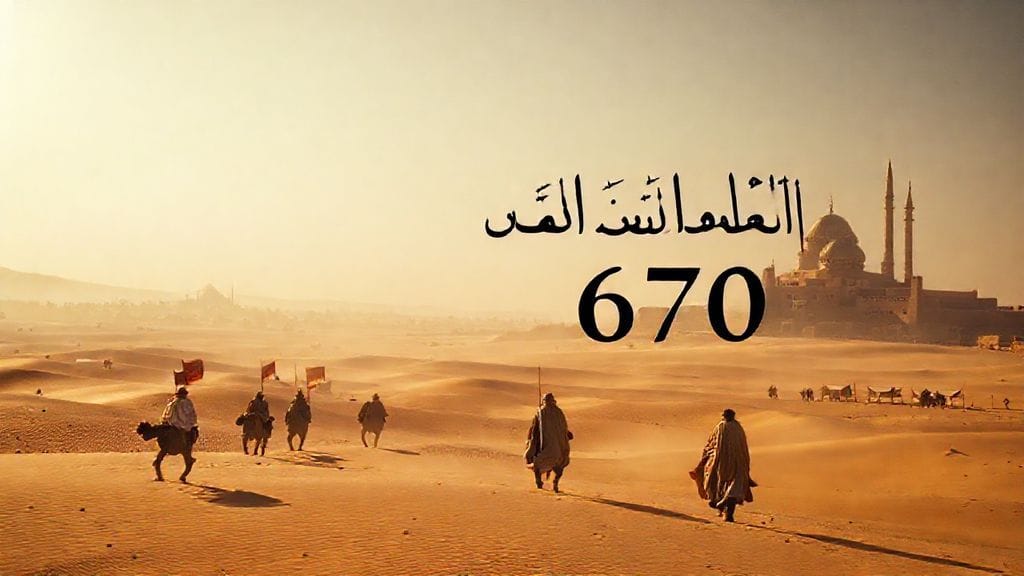
The sun hung low above the endless stretches of golden sand, casting long, fading shadows over the vast Maghreb plains. A restless wind whispered through the nomads’ tents as Arab cavalry, their horses’ hooves pounding like thunder, propelled forward into uncharted lands. It was the year 670 AD — a turning point when history tightened its grip on the ancient North African landscapes. The Arab-Berber advance was not merely a military maneuver; it was the birth of a new civilization carved from the sinews of desert and faith, ambition and resilience.
One city would emerge as the epicenter of this transformation: Kairouan. Scarcely a cluster of ruins and caravan stops before, its robust walls would become a sanctuary for Islam, a vibrant crossroads between Africa and the Mediterranean world. The founding of Kairouan etched an indelible mark on Ifriqiya — a name synonymous with the eastern Maghreb — heralding centuries of profound change.
But how did this conquest unfold? What forces collided and converged to shape the Maghreb’s destiny? The Arab-Berber advance into Ifriqiya was more than a tale of soldiers and battles; it was the weaving of cultural threads into a fabric that still shelters the region’s identity today.
Origins of a Momentous Expansion: The Early Islamic Conquests
To comprehend the Arab-Berber advance, one must first understand the unstoppable momentum of the early Islamic conquests that had already reshaped swathes of the Middle East and North Africa. Following the death of Prophet Muhammad in 632 AD, successive caliphs propelled the nascent Islamic state beyond the Arabian Peninsula. Fueled by religious fervor and political opportunity, Arab armies swept through Persia, the Levant, and Egypt, toppling the Byzantine and Sassanian bastions.
Egypt’s swift fall by 642 AD marked a gateway to the west — the Maghreb — where Byzantine power, though simmering, was comparatively fragile. The Muslim campaigns were no mere invasions; they were deliberate, strategic expansions intertwined with the desire to spread Islam and consolidate a sprawling empire.
The Maghreb Before the Arabs: A Mosaic of Peoples and Powers
Long before the arrival of Arab armies, the Maghreb was a rich tapestry of diverse peoples and cultures. Indigenous Berber tribes, or Amazigh as they call themselves, roamed the lands, their societies ranging from nomadic bands to agricultural communities. They had seen the rise and fall of Roman, Vandal, and Byzantine dominions, each leaving legacies of roads, cities, and religious communities.
The Byzantines retained control primarily of coastal cities and fortresses, relying on local Berber allies and client rulers to maintain their fragile grip. This patchwork of governance and identity would complicate the Arab advance, as allegiance shifts and resistance formed part of the region’s dynamic.
The Berbers: Indigenous Voices and Tentative Alliances
The Arab conquest could not have succeeded without the complex interaction with Berber tribes, whose knowledge of the terrain and local politics was crucial. Some Berbers embraced Islam for spiritual reasons or as a new political alignment; others resisted fiercely, wary of foreign domination.
The Berber response was never monolithic. Early alliances forged with Arab commanders like Uqba ibn Nafi often turned into uneasy partnerships. Over time, many Berbers converted to Islam and integrated into the expanding Islamic polity, while simultaneously preserving their distinct cultural identities. The narrative of conquest was thus interlaced with negotiation, collaboration, and conflict.
The Confluence of Destinies: Arabs Meet Berbers on the Frontier
It was in these borderlands of Ifriqiya where the paths of nomadic tribes, imperial armies, and ambitious commanders intersected. The Arab-Berber advance symbolized a meeting point between two worlds: the newly united Islamic state and the diverse, ancient Maghreb.
The campaign pushed steadily westward from Egypt, utilizing both military prowess and diplomatic skill to navigate Berber territories. The early wave of conquests in the 660s culminated in the establishment of Arab control over the fertile coastal plains and oasis towns, setting the stage for a permanent presence.
The March Westward: Pushing Beyond Egypt into Ifriqiya
Ifriqiya — a term derived from the Latin “Africa,” roughly corresponding to modern eastern Tunisia, eastern Algeria, and parts of western Libya — became the next logical frontier after Egypt. The region’s fertile lands and strategic coastal cities made it desirable for the expanding Umayyad Caliphate.
Arab forces encountered formidable logistical challenges: Sahara’s arid edges, shifting tribal alliances, and Byzantine resistance. However, under commanders like Uqba ibn Nafi, they pressed on, establishing footholds that would blossom into permanent settlements, including the critical founding of Kairouan.
The Strategic Significance of Kairouan’s Location
The choice of Kairouan’s site was no accident. Situated inland, away from volatile coastal zones, Kairouan lay at the crossroads of caravan routes connecting the Maghreb interior with the Mediterranean coastline and Saharan trade paths.
Its position allowed the Arabs not only a defensible stronghold but also a hub for administration, military logistics, and religious propagation. The city could serve as a base from which the Islamic frontiers pushed deeper into the African hinterlands — a beacon of faith and governance in a region both challenging and rife with opportunity.
The Founding of Kairouan: A City Born of Military and Religious Resolve
In 670 AD, Uqba ibn Nafi founded Kairouan, a moment that symbolized the solidification of Arab authority in Ifriqiya. The city was designed as a military encampment and religious center, featuring robust walls, mosques, and quarters that would house soldiers, administrators, and religious scholars alike.
Kairouan was poised to become far more than a garrison town. It embodied the Islamic principle of a community (ummah) built on faith, law, and learning. The Great Mosque of Kairouan, constructed soon after, became a symbol of this spiritual and political transformation.
Kairouan in 670: A Beacon Amidst Desert Sands
Within a few short years after its founding, Kairouan blossomed into a vibrant city filled with scholars, merchants, artisans, and pilgrims. It quickly assumed a key religious role, becoming one of the most important centers of Islamic learning in North Africa.
The early cityscape reflected a fusion of Arab urban planning and local influences. Courtyards, fountains, and minarets shaped the daily rhythms of its inhabitants. Kairouan’s presence was a statement: Islam was not merely a conqueror’s banner but a catalyst for urban and cultural renewal.
The Role of Uqba ibn Nafi: Visionary Leader and Commander
Uqba ibn Nafi remains an iconic figure of the Arab-Berber advance. His military acumen was matched by his religious conviction. According to chroniclers, he famously rode across the desert, proclaiming the greatness of Islam, before returning to found Kairouan.
His leadership was instrumental in both battlefield victories and in laying down the administrative and religious foundations that would define Ifriqiya for centuries. Uqba’s death later in battle did not diminish his legacy; rather, it immortalized the spirit of conquest and devotion he embodied.
Interactions and Conflicts: Arab-Berber Dynamics During the Advance
The advance was far from a smooth conquest. Persistent revolts and shifting allegiances marked the Arab-Berber relationships. The Kharijite revolt, for example, resonated among Berber groups dissatisfied with Umayyad rule, highlighting tensions between central authority and local autonomy.
These conflicts were reminders that conquest was an ongoing process of negotiation, integration, and occasional confrontation. The mutual influences between Arabs and Berbers during this period sowed the seeds for a unique Maghrebi Islamic culture.
Spiritual and Political Ambitions Entwined: Islam’s Spread in the Maghreb
The expansion into Ifriqiya fused military conquest with profound religious zeal. The spread of Islam was as much a spiritual mission as a political strategy to unite disparate peoples under one community.
Kairouan’s mosques, madrasas, and religious courts became central to the dissemination of Islamic law, theology, and culture. This spiritual nucleus helped to anchor the faith deeply into the social fabric of the Maghreb, influencing regional identities.
The Early Urban Fabric of Kairouan: Architecture, Society, and Religion
The architectural legacy of early Kairouan was not solely functional but symbolic. The Great Mosque, enormous for its time, incorporated Roman and Byzantine building techniques, marrying local craftsmanship with Islamic vision.
The city’s quarters reflected a diverse society of Muslims, converts, and indigenous peoples, creating a dynamic environment where commerce, worship, and governance intertwined. Kairouan became a place where worldly and divine ambitions met.
The Resistance and Accommodation of Local Populations
Some Berber tribes resisted Arab incursions fiercely; others found pragmatic ways to coexist and adapt. The process of Islamization and Arabization unfolded unevenly, influenced by trade, intermarriage, and the appeal of the new faith’s egalitarian ideals.
Over time, many Berber leaders embraced Islam, enabling their integration into the Umayyad framework while preserving distinct cultural traits that would enrich the region’s diversity.
Maghreb Under Islamic Rule: Administrative and Cultural Transitions
The creation of Ifriqiya as an Islamic province introduced new governance structures. Arab administrators oversaw taxation, legal matters, and military conscription while promoting Islamic justice and education.
This governance transition sparked significant cultural shifts, from language and religious practice to urban development. It was a challenging process that defined the Maghreb’s evolving identity between Arab-Islamic and indigenous traditions.
The Establishment of Ifriqiya as a Province
Ifriqiya became one of the key provinces of the Umayyad Caliphate, linking the Maghreb politically and economically to the broader Islamic world. Its governor wielded significant power, managing not only military affairs but also diplomacy with Byzantium across the Mediterranean.
This provincial status reinforced Kairouan’s importance as a regional capital and magnet for migration, scholarship, and trade.
Impact on Trans-Saharan Trade and Mediterranean Networks
The conquest of Ifriqiya opened new corridors for commerce. Kairouan became a linchpin in trans-Saharan trade routes, connecting sub-Saharan Africa’s gold and salt with Mediterranean markets.
This intersection of trading systems allowed for economic growth, cultural exchange, and the spread of ideas, helping to integrate the Maghreb more deeply into the vibrant currents of Afro-Eurasian civilization.
Legacy of the Arab-Berber Advance: From Conquest to Civilization
The Arab-Berber advance was not just an episode of military expansion but the genesis of a durable civilization blending Arab, Berber, and Islamic elements. Its effects sculpted political boundaries, religious landscapes, and cultural identities that endure.
Kairouan stands today as a testament to these historical processes — a city whose founding was a seed that grew into the flourishing heart of the Maghreb.
How Kairouan Became a Religious and Intellectual Hub
In centuries that followed, Kairouan emerged as one of Islam’s great intellectual centers alongside cities such as Damascus and Baghdad. Scholars of jurisprudence, theology, and sciences migrated there, enriching Islamic civilization.
This intellectual ferment would shape Islamic jurisprudence and Sufism, underscoring Kairouan’s pivotal role far beyond its geographic confines.
Reflections Through Time: The Maghreb’s Transformation in Historical Memory
Historic narratives celebrate the Arab-Berber advance and Kairouan’s foundation as transformative milestones. Yet, the story is also one of complexity—interwoven with conflict, adaptation, and resilience.
For the people of the Maghreb, these events symbolize identity, continuity, and cultural pride. Modern historians continue to explore these roots, shedding light on the nuanced realities beyond the heroic legends.
Conclusion: The Foundation of a Region’s Identity
The year 670 was more than a date on a timeline; it was the hinge upon which the Maghreb’s future swung. The Arab-Berber advance reshaped geography, faith, and society, imprinting a legacy that remains alive centuries later.
Kairouan’s founding was both an act of conquest and an expression of hope — a city destined to foster unity, faith, and learning in a land of vast challenges. This moment forged a Maghreb that was simultaneously local and part of a vibrant, interconnected Islamic world.
As we ponder this epoch, we see how history’s currents carry forward human dreams of belonging, power, and transformation—a story as compelling today as it was then.
FAQs
1. What motivated the Arab-Berber advance into the Maghreb in the 7th century?
The advance was motivated by Islamic expansionist zeal, the Umayyads’ political ambitions, and the strategic importance of the Maghreb’s fertile lands and trade routes. Religion and governance intertwined, driving Arab armies westward to consolidate new territories.
2. Who was Uqba ibn Nafi and why is he central to this narrative?
Uqba ibn Nafi was the Arab general who led the conquest of Ifriqiya and founded Kairouan. Renowned for his military skills and religious conviction, his leadership symbolized the fusion of military expansion and Islamic missionary activity.
3. How did the Berber populations react to the Arab conquests?
Berber responses varied widely: some resisted fiercely, others allied with Arabs, and many gradually embraced Islam, integrating into the new political and religious order. This complex relationship was crucial to the success and longevity of the conquest.
4. Why was the founding of Kairouan so significant?
Kairouan served as the military, administrative, and religious center of Islamic Ifriqiya. Its founding transformed the Maghreb, becoming a hub for Islamic learning, culture, and governance that radiated influence across the region for centuries.
5. What role did Kairouan play in connecting various trade networks?
Located strategically at crossroads between the Sahara and the Mediterranean, Kairouan became a vital link in trans-Saharan and Mediterranean trade, facilitating the flow of goods, people, and ideas, thus fueling economic and cultural growth.
6. How did the Arab-Berber advance influence Maghreb culture and identity?
The advance initiated a long process of Arabization and Islamization, blending indigenous Berber traditions with Arab-Islamic culture. This fusion created a distinctive Maghrebi identity reflected in language, religion, architecture, and social organization.
7. What archaeological remnants of early Kairouan remain today?
The Great Mosque of Kairouan, with its original foundations dating back to the 7th century, remains a prominent monument. Its architecture reflects early Islamic and local influences, preserved as a UNESCO World Heritage Site and an enduring symbol of the city’s founding.
8. How is the Arab-Berber advance remembered in modern North African historiography?
It is often celebrated as a foundational moment in the formation of Maghrebi Muslim societies, though modern scholarship also emphasizes the complexities of conquest, including resistance, accommodation, and cultural synthesis that shaped the region’s history.

