Table of Contents
- Dawn of Discord: The Prelude to Marj Rahit
- The Death of Yazid I and the Fracturing of the Caliphate
- The Rise of Abd al-Malik: A Leader Forged in Crisis
- The Rival Claimants and the Civil War’s Onset
- Gathering Storms on the Plains of Marj Rahit
- The Armies Assemble: The Qays and Kalb Tribes in Opposition
- The Battle Unfolds: Chaos and Carnage on Syrian Soil
- The Triumph of Abd al-Malik: Securing the Umayyad Hold over Syria
- The Tribe’s Shadows: How Tribal Loyalties Shaped the Conflict
- The Aftermath: Political Stabilization and Continued Strife
- Marj Rahit and the Umayyad Consolidation of Power
- Rebuilding an Empire: Challenges Post-Battle
- The Battle's Impact on Early Islamic Sectarianism
- Narratives and Memory: How Marj Rahit Resonated Through History
- The Legacy of Marj Rahit in Middle Eastern Political Culture
- Reflection: From Battlefield to Statecraft
- Conclusion
- FAQs
- External Resource
- Internal Link
Dawn of Discord: The Prelude to Marj Rahit
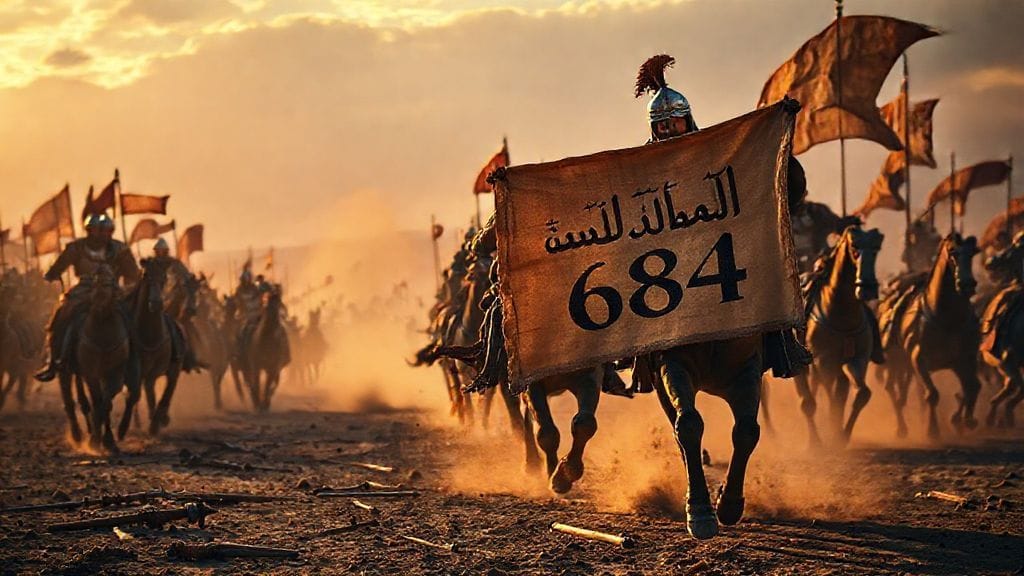
The golden light of the Levant sun had just begun to bathe the plains near Damascus when the rumblings of civil war echoed across Syria in the summer of 684 CE. It was here, in the vast, fertile meadows known as Marj Rahit, that the fate of the Umayyad dynasty would be fiercely contested. The air was tense; not just from the impending clash of swords and arrows, but from years of simmering resentment, broken alliances, and fractured loyalties. The caliphate, once a symbol of unity under one banner, now splintered into rival factions vying for supremacy.
Soldiers sharpened blades, horses pawed the earth, and war cries whispered through the olive groves. Clad in tribal colors emblematic of deep-seated allegiances, the opposing forces faced one another with a mix of dread and determination. This battle—the Battle of Marj Rahit—would come to define the future of Islamic governance, tribal politics, and the regional balance of power for decades to come.
The Death of Yazid I and the Fracturing of the Caliphate
The death of Yazid I in 683 had unleashed a wave of uncertainty that rippled throughout the Umayyad domains. Yazid, the son of Mu’awiya I and the second Umayyad caliph, had a reign marred by revolt and distrust from the start. His controversial succession had been met with opposition not only from rival factions but also from deeply entrenched tribal groups who resented the Umayyad monopoly on power.
Yazid's demise opened a power vacuum that no clear heir could immediately fill. His son, Mu’awiya II, took the caliphate but reigned for only a few months before succumbing to illness, leaving the Umayyad house without a strong, uncontested leader. This period marked the beginning of the Second Fitna—the second great Islamic civil war—characterized by shifting allegiances and multiple claimants to the caliphate.
As the authority of the Umayyads waned, alternative challengers arose. The most notable was Abd Allah ibn al-Zubayr, who declared himself caliph from Mecca, commanding respect across large swathes of the Arabian Peninsula and beyond. Meanwhile, within Syria, the heartland of Umayyad power, tribal loyalties became sharply pronounced, drawing battle lines that set the stage for Marj Rahit.
The Rise of Abd al-Malik: A Leader Forged in Crisis
Amidst the chaos, Abd al-Malik, a surviving member of the Umayyad dynasty, emerged as a determined contender capable of restoring the caliphate’s fractured unity. A man of intellect and political acumen, Abd al-Malik understood that beyond sheer force of arms, the survival of Umayyad rule hinged on the intricate balancing of tribal factions.
Born into the powerful Umayyad house, Abd al-Malik had been tested early. His family’s fall from grace following the death of his father and uncle forced him into exile and political obscurity. Yet, his resolve never waned. He spent these turbulent years cultivating alliances, especially among the influential Kalb tribe, whose support would prove crucial.
By 684, the stakes were clear: Abd al-Malik was the Umayyad hope to reclaim Syria and to prevent the fragmentation of the Muslim community irrevocably. His challenge was formidable—the Qays, powerful yet rival tribes, had allied themselves with Ibn al-Zubayr and other opposition figures, while the Kalb and their allies stood firmly behind him.
The Rival Claimants and the Civil War’s Onset
The early months of 684 were marked by tense political maneuvers and scattered skirmishes. Ibn al-Zubayr’s growing prestige threatened the Umayyad grasp on the caliphate, as did the ambitions of regional governors and tribal sheikhs who sought to carve their own realms of influence amid the turmoil.
The tribal rivalry between the Qays (northern Arab tribes) and Kalb (southern Arabs)—older than Islam but now exacerbated by political stakes—came to the forefront. For centuries, these tribes had vied for supremacy in the deserts and cities of Syria, and now their struggle was entwined in the larger Islamic civil war.
Ibn al-Zubayr’s alignment with the Qays invited a stark response from the Kalb and their allies, rallying around Abd al-Malik. The stage was set for a decisive confrontation: to consolidate the caliphate or to plunge it deeper into fractious anarchy.
Gathering Storms on the Plains of Marj Rahit
Marj Rahit, a sweeping plain just outside Damascus, held strategic and symbolic significance. It was here that forces loyal to Abd al-Malik met the Qaysi forces under an exultant sky in the late summer months of 684. For many combatants, this was more than a battle for political dominance; it was a vendetta remembering years of bloodshed and rivalry.
On the eve of battle, campfires flickered against the darkness, men murmured prayers and curses in equal measure, while leaders conferred on tactics. The weight of their cause bore heavily. It was not merely a conflict of armies, but of identities, legacies, and the future shape of Islamic leadership.
The Armies Assemble: The Qays and Kalb Tribes in Opposition
The Kalb tribesmen arrayed themselves in a disciplined formation, their banners a vibrant mosaic of yellows and blacks—colors symbolic of their heritage and allegiance to the Umayyads. With Abd al-Malik’s leadership, their morale ran high, reinforced by promises of restoring Umayyad legitimacy and punishing those who threatened the status quo.
In stark opposition, the Qays tribes stood defiantly, their red and crimson standards rippling in the breeze. Fueled by a profound sense of injustice and yearning for autonomy, the Qays forces were spurred on by charismatic sheikhs and hardened veterans of earlier battles. They sought to dismantle Umayyad superiority and disrupt the domination of southern tribes like the Kalb.
Each tribe's intimate knowledge of the terrain and tribal tactics promised a brutal and unpredictable encounter.
The Battle Unfolds: Chaos and Carnage on Syrian Soil
As dawn broke over Marj Rahit, the air thickened with dust and anticipation. The clash was cataclysmic. Horses screamed, swords clanged, and warriors of both sides fought with a desperation fueled by loyalty and survival.
Initial skirmishes gave way to fierce hand-to-hand combat. The Qays, experts in swift raids and cavalry charges, initially pushed hard. Yet the seasoned Kalb warriors, well-drilled and resolute, absorbed the attacks and countered with strategic precision.
The turning point came when Abd al-Malik’s forces rallied under a coordinated command, exploiting fractures in the Qays lines. The momentum shifted decisively, sending the Qays into disarray and retreat. Casualties were heavy on both sides; the battlefield was strewn with the fallen, a grim testament to the conflict's ferocity.
The Triumph of Abd al-Malik: Securing the Umayyad Hold over Syria
Victory at Marj Rahit was not just a military achievement; it signified the restoration of Umayyad authority over Syria, the very heartland of their caliphate. Abd al-Malik solidified his position as the uncontested caliph within Syria, enabling him to refocus efforts against other challengers like Ibn al-Zubayr.
But this triumph came with a cost. The tribal enmities that had fueled the battle deepened, sowing seeds of future discord. Still, for Abd al-Malik, Marj Rahit was a foundation stone, the necessary step toward rebuilding an empire fractured by war and dissent.
The Tribe’s Shadows: How Tribal Loyalties Shaped the Conflict
Understanding Marj Rahit requires an appreciation of the profound role tribal allegiances played in early Islamic politics. The Arab tribes were not mere military units; they were social systems defined by kinship, honor, and historical rivalries.
The Qays-Kalb feud embodied centuries of marginal conflicts now inflamed by the stakes of the caliphate. Abd al-Malik’s success hinged on aligning with the Kalb and their southern Arab network, a coalition that proved decisive in battle and in the political aftermath.
Yet, this tribalism also laid bare fractures that would resurface repeatedly in Umayyad politics, contributing to the eventual decline of the dynasty.
The Aftermath: Political Stabilization and Continued Strife
In the wake of Marj Rahit, Abd al-Malik faced the daunting task of transforming battlefield success into lasting governance. He moved swiftly to consolidate control over Syria, rebuild administrative structures, and suppress residual opposition.
However, the battle did not end the Second Fitna. The struggle for the broader caliphate continued, with Ibn al-Zubayr retaining significant influence in the Hijaz and Iraq simmering with unrest. The unity Abd al-Malik sought was fragile, contingent on balancing factional tensions that still simmered beneath the surface.
Marj Rahit marked a turning point but not a conclusion.
Marj Rahit and the Umayyad Consolidation of Power
The victory empowered Abd al-Malik to pursue ambitious reforms, including centralizing administration and standardizing the Islamic coinage system. These moves gradually transformed the Umayyad caliphate into a more structured empire, bridging tribal divisions with emerging institutions.
Securing Syria meant ensuring a reliable power base from which to project authority. The battle’s outcome allowed Abd al-Malik to refocus resources on retaking Iraq and confronting Ibn al-Zubayr directly—a campaign that would culminate years later in the reconquest of Mecca.
Thus, Marj Rahit was far more than a battle; it was the keystone in the Umayyad dynasty’s survival and resurgence.
Rebuilding an Empire: Challenges Post-Battle
Despite his victory, Abd al-Malik understood the precariousness of his position. The tribal fractures that had almost broken the Umayyad rule remained potent. He had to hedge his power carefully—offering grants and privileges to loyal tribes while suppressing dissent ruthlessly.
Moreover, the caliphate was vast and diverse, encompassing Arabs, Persians, Byzantines, and other peoples. Balancing these complex demands required political skill and sometimes harsh measures, from military campaigns to diplomatic maneuvers.
The post-Marj Rahit period was a relentless campaign to rebuild trust and authority, a task that Abd al-Malik carried with a mix of pragmatism and visionary governance.
The Battle's Impact on Early Islamic Sectarianism
Marj Rahit’s significance extends into the deeper fissures within the Islamic community. The civil war—of which this battle was a key episode—exacerbated sectarian divisions between Sunni, Shia, and Kharijite movements.
The Umayyad’s victory reinforced the Sunni narrative of caliphal legitimacy but also entrenched opposition narratives, especially among those who rallied around Ibn al-Zubayr or alternative religious interpretations.
Religious identity became increasingly politicized—shaping Islamic history's complex tapestry in the centuries that followed.
Narratives and Memory: How Marj Rahit Resonated Through History
The memory of Marj Rahit passed into chronicles and oral traditions as a symbol of tribal rivalry and political legitimacy. Early Muslim historians such as al-Tabari and Khalifa ibn Khayyat retold the battle as a decisive moment in the struggle for rightful rule.
For the Umayyads, it was celebrated as a battlefield testament to divine favor and rightful succession. For their enemies, the loss signaled resistance to perceived tyranny.
Even today, historians see in Marj Rahit a window into the tensions that shaped early Islamic governance and the enduring role of tribalism in Arab politics.
The Legacy of Marj Rahit in Middle Eastern Political Culture
Marj Rahit's legacy lingered far beyond 7th-century Syria. The tribal alignments, political strategies, and sectarian sanctifications forged there influenced the region’s political culture for centuries.
It highlighted how leadership in the Islamic world was inherently tied to negotiation with tribal powers—a theme that echoes in later caliphates and modern Middle Eastern states.
In many ways, Marj Rahit stands as a testament to the complex entanglement of blood, faith, and power in the early Muslim world.
Reflection: From Battlefield to Statecraft
The Battle of Marj Rahit was more than a clash of arms; it was a crucible in which the early Islamic polity was hammered into shape. The warriors’ cries and bloodshed paved the way for a caliphate that would endure and evolve.
Abd al-Malik emerged not solely as a warlord but as a statesman who recognized that victory on the field must be matched by governance that united the fractured communities of the vast Islamic empire.
His triumph at Marj Rahit invites us to reflect on the profound interplay between conflict and state-building, and the enduring human narratives beneath the surface of history.
Conclusion
The Battle of Marj Rahit in 684 was a defining moment of the early Islamic era, a fiery crucible where tribal enmities, political ambition, and the destiny of an empire collided with devastating intensity. Through this battle, Abd al-Malik secured the Umayyad rule over Syria, providing the foundation upon which he would rebuild and expand the caliphate.
But Marj Rahit also laid bare the persistent fractures of tribalism and sectarianism that complicated the Islamic world’s path to unity. The legacy of this battle is one of both triumph and tragedy—a vivid reminder of the tangled human struggles behind the sweep of history.
It challenges us to see beyond dates and names, revealing the lived realities of men and women swept up in the tides of power, faith, and identity. In this light, Marj Rahit remains a stirring chapter in understanding the origins of the Islamic polity and the enduring complexities of Middle Eastern political culture.
FAQs
1. What led to the Battle of Marj Rahit?
The immediate cause was the power vacuum following the deaths of Yazid I and his son Mu’awiya II, which fractured the Umayyad caliphate. Rival claimants and long-standing tribal rivalries, especially between the Qays and Kalb tribes, escalated into open conflict over control of Syria.
2. Who was Abd al-Malik and why was he important?
Abd al-Malik was an Umayyad prince who emerged as a strong leader during the Second Fitna. His victory at Marj Rahit secured the Umayyad hold on Syria, allowing him to eventually restore and consolidate Umayyad power across the caliphate.
3. How did tribal rivalries influence the battle?
Tribal loyalties played a critical role; the Kalb tribes supported Abd al-Malik and the Umayyads, while the Qays tribes allied with Abd Allah ibn al-Zubayr’s opposition. These rivalries, longstanding and complex, deeply influenced both alliances and strategies.
4. What were the broader consequences of the battle?
The victory allowed Abd al-Malik to stabilize Syria politically and militarily, setting the stage for the eventual defeat of Ibn al-Zubayr. It also entrenched tribal divisions and contributed to sectarian fragments in early Islamic society.
5. How is the Battle of Marj Rahit remembered historically?
It is remembered as a pivotal moment in Umayyad history, emblematic of the civil wars that shaped Islamic political development. Chroniclers highlight it as a decisive clash of tribal and political forces that determined the caliphate’s future.
6. Did this battle end the Second Fitna?
No, while a critical turning point, the Second Fitna continued for several more years, with ongoing conflicts in other regions until Abd al-Malik finally subdued all opposition.
7. What role did Marj Rahit play in Islamic sectarianism?
The battle and associated civil war exacerbated early sectarian divisions, particularly between supporters of different caliphal claims and religious ideologies, influencing Sunni-Shia dynamics.
8. Can the impact of Marj Rahit still be felt today?
Yes, its legacy survives in how tribal affiliations, sectarian identities, and state authority interact in Middle Eastern politics, reflecting early patterns established during this tumultuous period.

