Table of Contents
- The Dawn of a New Power: Setting the Stage for the Battle of Ongal
- The Byzantine Empire in the Late 7th Century: An Empire Under Strain
- The Rise of Khan Asparuh: From Exile to Destiny
- The Bulgars and the Lower Danube: A Quest for Homeland
- Ongal: The Fortified Marshlands and Natural Fortress
- The Clash at Ongal: The Bulgars Face the Byzantines
- Strategies and Tactics: How the Bulgars Outmaneuvered a Great Empire
- The Death of Emperor Constantine IV’s Hopes: Consequences of Defeat
- The Creation of the First Bulgarian State: A New Power in Europe
- Cultural Synthesis: The Bulgars and Thracians Under One Banner
- The Byzantine Response: Diplomacy, Treaties, and Reluctant Recognition
- The Political and Religious Impact: Christianity and Bulgarian Identity
- Economic Implications: Control of Danube Trade and Regional Stability
- The Broader Geopolitical Ripple: The Eastern European Chessboard After Ongal
- The Legacy of Khan Asparuh: Nationhood Carved in Battle
- Oral Traditions and Chronicles: How the Battle Shaped Bulgarian Memory
- Archaeological Footprints: Tracing the Camps and Fortifications at Ongal
- Reflections from Byzantine Chroniclers: Admiration and Anxiety
- Lessons in Warfare: Asymmetric Strategies Against a Superpower
- The Battle’s Reverberations Through Centuries: Myth, History, and Nationhood
- Conclusion: The Triumph that Forged a Nation
- FAQs: Unraveling the Myths and Facts of Ongal
- External Resource
- Internal Link
The Dawn of a New Power: Setting the Stage for the Battle of Ongal
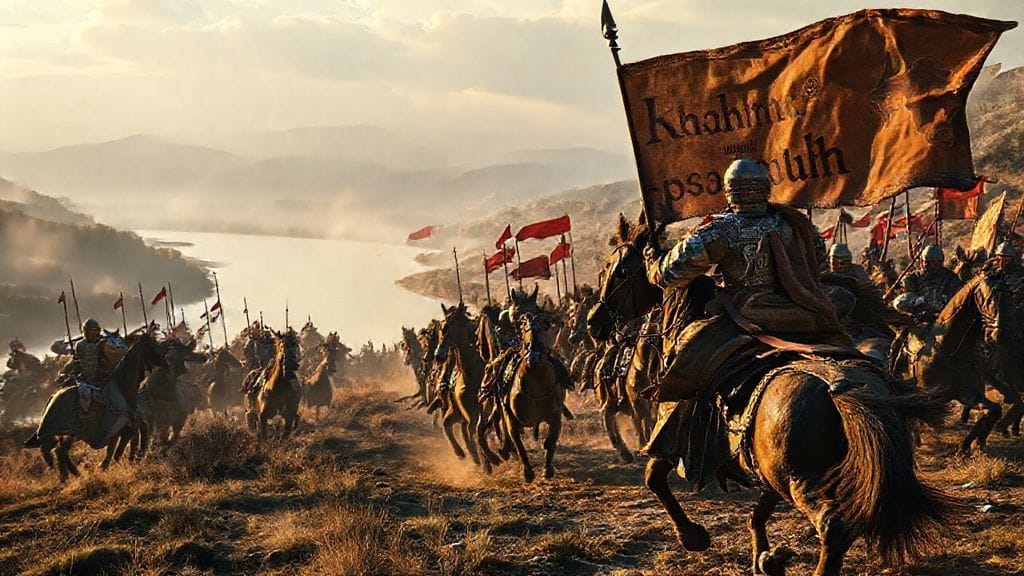
The sun dipped low behind the Danube’s murky waters, casting long shadows over the dense marshes of Ongal. On this mist-laden evening of 680, two worlds stood poised at the edge of transformation. From one side, the illustrious Byzantine Empire—the heir of Rome—commanded disciplined legions, seasoned in conquest and defense. From the other, a resilient confederation of Bulgars, led by a shrewd and determined leader, pressed against imperial ambitions with raw courage and unyielding resolve.
It was more than a battle; it was the prologue to a nation’s birth.
Within the tangled wetland fortifications of Ongal, Khan Asparuh rallied his people, a melting pot of tribes long displaced, turned exiles seeking not just survival but sovereignty. The Byzantines, under the reign of Emperor Constantine IV, saw these newcomers as a rogue contingent to be crushed. Yet, what unfolded in those tense hours would not only defy imperial expectations but alter the fate of Eastern Europe forever.
As warriors clashed and banners fluttered in the dusk, the ground beneath carried more than the weight of men. It bore the aspirations of a people and the dawning of what would become the First Bulgarian Empire—a formidable new political and cultural force emerging from the shadows of empires past.
The Byzantine Empire in the Late 7th Century: An Empire Under Strain
To appreciate the momentous nature of the Battle of Ongal, one must first understand the Byzantine Empire’s precarious position at the twilight of the 7th century. The Eastern Roman Empire, with its capital at Constantinople, was a beacon of continuity from the ancient world. Its armies wielded power stretching from the Eastern Mediterranean to parts of the Balkans, but this position was under serious threat.
The empire grappled with multiple external pressures: Persian wars had drained resources; the rise of Islamic Caliphates challenged eastern borders; and internally, religious disputes caused fractures among populations. Perhaps most crucially, the Balkan frontier—its gateway to Europe—was vulnerable, dotted with restless tribes and swelling migrations.
Among these newcomers were the Bulgars, Turkic-speaking nomads who had traversed the Eurasian steppes, displaced from their ancestral homes by other nomadic groups moving westward. Their arrival near the Danube was both a symptom and a catalyst of broader demographic and political shifts that rattled the Byzantine order.
Emperor Constantine IV, a ruler balancing military crises and administrative reform, could hardly afford another front. Yet the Bulgars, under an ambitious chieftain named Asparuh, seemed destined to make their claim felt.
The Rise of Khan Asparuh: From Exile to Destiny
Asparuh, a scion of the Dulo dynasty, carried the weight of his people’s survival on his shoulders. The Bulgars had once dwelled around the Pontic-Caspian steppes, but repeated pressures from the Khazar Khaganate forced a decisive migration westward. Unlike many nomads crushed or absorbed, Asparuh seized opportunity amidst chaos.
After the death of his father, Kubrat, who had united the Bulgar tribes, internal strife fragmented the confederation. Asparuh led a band of followers toward the fertile lands south of the Danube—a region then loosely controlled by Byzantium but rich with potential.
His vision was audacious: to carve a permanent homeland where his people could settle, govern, and thrive. Yet this bold plan invited confrontation. The Byzantine emperor regarded the Bulgar incursion not as migration but as invasion.
Asparuh’s leadership mixed strategic acumen with profound knowledge of steppe warfare and local geography. He understood that the marshy lower Danube could become an impregnable shield, leveraging natural obstacles against better-equipped Byzantine forces.
The Bulgars and the Lower Danube: A Quest for Homeland
The Lower Danube plains and marshes were no mere backwater. Situated at a crossroads of civilizations, this region was a prized stretch of land linking the Balkans to the Black Sea trade routes and beyond.
For the Bulgars, establishment there promised not only security but wealth and influence. The locals, including Slavic and Thracian tribes, had faced centuries of upheaval due to Roman and then Byzantine domination. Many found in the Bulgars neither conquerors nor oppressors but liberators or at least fellow travelers in a world of shifting allegiances.
This complex socio-ethnic web would soon underpin a distinctive Bulgarian cultural identity—a synthesis of nomadic Bulgar traditions and the agrarian, Orthodox-adopting Slavic majority.
But all this rested on the outcome at Ongal, where fortunes would be decided.
Ongal: The Fortified Marshlands and Natural Fortress
“Ongal” was more than a battlefield; it was a masterstroke of defensive geography. Located in the deltaic marshes east of the Danube’s mouth, it offered natural fortifications that were difficult for heavily armored armies to penetrate.
Asparuh’s forces hastily turned this terrain to their advantage. Relying on wooden fortresses, stakes in water, and watchful sentries, they crafted a ring of defense that exploited the Byzantines’ unfamiliarity with swamp warfare.
Historians suggest that the Bulgars also utilized guerrilla tactics and ambushes, harassing enemy supply lines and striking at vulnerable formations. The protracted fighting in such inhospitable conditions sapped the morale and cohesion of Byzantine forces, whose commanders struggled to coordinate a decisive assault.
The saga of Ongal is as much one of cunning environmental engagement as of martial valor.
The Clash at Ongal: The Bulgars Face the Byzantines
Early autumn 680 saw the two armies finally collide. Byzantine legions, confident in their numbers and training, marched into the marshes expecting a swift victory.
They were met instead with a masterfully orchestrated defense. Bulgar horsemen, swift and agile, struck unexpectedly and withdrew before the heavily armored infantry could respond effectively.
Chroniclers recount moments of near despair among Byzantine ranks as disease and supply shortages exacerbated by the oppressive environment took their toll. Meanwhile, Asparuh maintained morale among his diverse coalition, rallying warriors with speeches invoking survival and honor.
When the final confrontation came, the Bulgars exploited a narrow breach in the Byzantine line, turning it into a rout. The imperial army retreated in disarray, leaving behind not only battle losses but strategic confidence.
Strategies and Tactics: How the Bulgars Outmaneuvered a Great Empire
The Bulgars’ triumph at Ongal owed much to their asymmetric warfare approach. Unlike the Byzantines, beholden to rigid formations and siege tactics, Asparuh’s forces embodied mobility and adaptability.
They fused steppe cavalry skills—speed, feigned retreats, and archery—with defensive fortifications that dictated the terms of engagement. The terrain became a weapon, turning the enemy’s strengths into liabilities.
Moreover, Asparuh’s political acumen ensured cooperation with local Slavic tribes who knew the land intimately, gathering intelligence and providing auxiliary support.
This victory was a testament to how smaller, less conventionally powerful groups could outthink and outfight empires by mastering their environment and uniting diverse peoples under a shared cause.
The Death of Emperor Constantine IV’s Hopes: Consequences of Defeat
For the Byzantine emperor, Ongal was a bitter blow. Victory had seemed assured; yet defeat forced an uneasy recalibration.
Rather than pursue further costly campaigns, Constantine IV opted to recognize the Bulgar settlement with a treaty the following year—an unprecedented concession signaling a new balance of power.
Imperial prestige suffered, but more crucially, the battle raised new questions about the empire’s capacity to control its northern frontiers. It marked the beginning of a Balkan era crowded with emerging powers and shifting loyalties.
The Creation of the First Bulgarian State: A New Power in Europe
The aftermath of Ongal was not only military but foundational. Buoyed by victory and peace with Byzantium, Khan Asparuh declared sovereignty over his territories, effectively founding the First Bulgarian Empire—a polity that would endure for centuries.
This nascent state blended Bulgar military traditions with the Slavic majority’s social fabric, witnessing the birth of a unique Bulgarian culture and identity.
The empire soon expanded, consolidating territories and strengthening institutions, laying a cornerstone for Bulgaria’s significant role in medieval European history.
Cultural Synthesis: The Bulgars and Thracians Under One Banner
One of Ongal’s lasting legacies was the fusion of cultures. The nomadic Bulgars, hardened by steppe life, incorporated the agrarian Slavic and Thracian peoples into their ranks.
This synthesis influenced language, customs, and governance. Over time, the Bulgar elite adopted Slavic languages, and eventually, Christianity, weaving together disparate threads into a cohesive national tapestry.
This blending would underpin Bulgaria’s resilience and capacity to negotiate with neighboring empires culturally and politically.
The Byzantine Response: Diplomacy, Treaties, and Reluctant Recognition
Faced with a hardened neighbor, Byzantium adjusted its policies. The 681 treaty that recognized Bulgarian lands was as much a pragmatic acceptance as a diplomatic maneuver to secure relative peace.
Byzantine chroniclers reveal an ambivalence—admiration peppered with disdain for “barbarian” rulers but acknowledgment of political realities.
Trade agreements, marriages, and cultural exchanges followed, signaling a complex relationship built on coexistence rather than outright dominance.
The Political and Religious Impact: Christianity and Bulgarian Identity
Religion played a decisive role in the young empire’s evolution. While initially pagan, the Bulgars gradually embraced Orthodox Christianity, often under Byzantine influence but on their own terms.
This shift strengthened political legitimacy, integrated the kingdom into European Christendom, and facilitated the development of literacy, law, and statecraft.
The church became a pillar of Bulgarian national identity, bridging ethnic divides forged during the battles at Ongal and beyond.
Economic Implications: Control of Danube Trade and Regional Stability
Control over the Lower Danube had vital economic consequences. The Bulgars, by securing this lifeline, tapped into lucrative trade routes connecting Central Europe, Byzantium, and the Black Sea.
These revenues financed military expansions, cultural projects, and administrative reforms, enhancing the kingdom’s standing.
Moreover, stability along these routes attracted merchants and settlers, further enriching the region and forging economic interdependencies that lasted centuries.
The Broader Geopolitical Ripple: The Eastern European Chessboard After Ongal
Ongal’s outcome reverberated far beyond the Danube. Slavic tribes, neighboring nomads, and even the Khazars contemplated the emergence of a robust Bulgarian polity.
The balance of power shifted: Byzantium faced a formidable northern rival, the Slavs found a new political center, and other steppe peoples reevaluated alliances.
The battle planted seeds for centuries of contestation, diplomacy, and synthesis that would define Eastern Europe’s medieval landscape.
The Legacy of Khan Asparuh: Nationhood Carved in Battle
Khan Asparuh’s name remains etched in Bulgarian collective memory as the founder of a nation, the leader who turned exile into empire.
His strategy, vision, and timing crafted a legacy that endures in monuments, literature, and national identity.
Ongal was not just a battlefield; it was the crucible of Bulgarian statehood—a testament to leadership amid upheaval.
Oral Traditions and Chronicles: How the Battle Shaped Bulgarian Memory
For generations, oral histories preserved the tale of Ongal, celebrating bravery and divine favor. Medieval chronicles romanticized Asparuh’s leadership and the miraculous endurance of his people.
These narratives informed folklore, legitimized rulers, and inspired later nationalist movements.
The battle’s symbolic power transcended facts, becoming a cornerstone of Bulgarian culture and pride.
Archaeological Footprints: Tracing the Camps and Fortifications at Ongal
Modern archaeology has sought physical traces of Ongal’s battlefield and fortifications. While the marshy terrain complicates discoveries, surveys near the Danube delta suggest settlements and defensive structures consistent with historical accounts.
Artifacts such as weapons, pottery, and remnants of wooden palisades corroborate the described engagements.
These findings enrich understanding of 7th-century warfare and the daily lives of the people who shaped Bulgar statehood.
Reflections from Byzantine Chroniclers: Admiration and Anxiety
Byzantine historians, including Theophanes the Confessor, documented the Bulgar threat with a mix of respect and worry.
Their writings reveal an empire grappling with rising "barbarian" powers yet unable to quash them decisively.
This nuanced portrayal highlights the complexity of imperial attitudes—fear, fascination, and grudging acceptance woven together.
Lessons in Warfare: Asymmetric Strategies Against a Superpower
Ongal heralded a case study in asymmetric warfare long before the term existed. It demonstrated how smaller, adaptive forces exploiting terrain, speed, and local alliances could overturn traditional power hierarchies.
For modern military scholars, the battle illustrates enduring principles of flexibility, environmental mastery, and psychological warfare.
Asparuh’s victory underscores that military might alone is insufficient without strategic vision.
The Battle’s Reverberations Through Centuries: Myth, History, and Nationhood
Centuries after the marshes quieted, Ongal’s echoes shaped Bulgarian nationalism, historiography, and identity politics.
From Czarist chronicles to Soviet-era textbooks and modern commemorations, the battle inspired narratives of resilience and unity.
It remains a symbol not only of military success but of the enduring quest for self-determination.
Conclusion: The Triumph that Forged a Nation
The Battle of Ongal stands as a watershed, a moment when history pivoted and a people forged their destiny against overwhelming odds. From the misty swamps of the Lower Danube emerged the First Bulgarian Empire—a beacon of cultural fusion and political innovation.
Khan Asparuh’s triumph was not merely martial; it was emblematic of survival, adaptation, and vision. The Bulgars’ victory transformed regional geopolitics and set in motion centuries of dynamic interaction between East and West.
In a world where empires rise and fall, Ongal reminds us that even in the shadow of great powers, the human spirit can carve a lasting legacy.
FAQs
Q1: What caused the Bulgars to migrate toward the Danube region?
After the death of their leader Kubrat, Bulgar tribes faced internal divisions and pressure from the expanding Khazar Khaganate, prompting Asparuh to lead a group westward in search of new lands.
Q2: Why was the Byzantine Empire unable to defeat the Bulgars at Ongal?
The Byzantines were hindered by unfamiliar terrain, logistical difficulties, and the Bulgars’ adept use of marsh fortifications and mobile tactics, which negated the Byzantines’ traditional military advantages.
Q3: How did the Battle of Ongal influence Bulgarian state formation?
The victory allowed the Bulgars to establish control over the Lower Danube, leading to the creation of the First Bulgarian Empire—a foundation for political and cultural consolidation.
Q4: What role did local Slavic tribes play in the battle?
Many Slavic groups allied with the Bulgars, offering knowledge of the terrain, additional manpower, and forming the ethnic and cultural majority in the emergent state.
Q5: How did the Byzantines respond diplomatically after their defeat?
Emperor Constantine IV recognized the Bulgar state through a treaty in 681, marking a pragmatic acceptance and a shift towards coexistence and negotiated borders.
Q6: What was the religious significance of the battle and its aftermath?
While initially pagan, the Bulgars’ eventual conversion to Orthodox Christianity helped integrate them into the broader European Christian sphere, reinforcing political legitimacy.
Q7: Are there archaeological remains that confirm the battle’s location?
Archaeological surveys near the Danube delta have uncovered fortifications, weapons, and settlements linked to the time period, supporting historical records of the battle’s site.
Q8: How is Khan Asparuh remembered today?
He is celebrated as a national hero and founding father of Bulgaria, his leadership symbolizing the resilience and unity of the Bulgarian people.

