Table of Contents
- The Fateful Dawn on the Banks of the Great Zab
- The Twilight of the Umayyad Caliphate: Seeds of Revolt
- The Rise of the Abbasid Movement: Ideology and Insurgency
- The Political and Social Climate of 8th Century Iraq
- The Cast of Characters: From Caliph Marwan II to Abu al-‘Abbas
- The Strategic Importance of the Great Zab River Region
- The Build-Up to Battle: Maneuvers, Spies, and Strategies
- Clash at the Zab: The Battle Unfolds
- Turning Points and Tactical Masterstrokes in the Fighting
- The Aftermath of Defeat: Flight of the Umayyads
- The Execution and Fate of Marwan II
- The Collapse of a Dynasty and the Rise of a New Order
- The Dawn of the Abbasid Caliphate: Political and Cultural Transformations
- Economic Reverberations Across the Islamic World
- How the Battle Shifted the Center of Power to Baghdad
- Memory and Myth: The Battle’s Place in Islamic Historiography
- The Legacy of the Battle in Modern Middle Eastern Identity
- Lessons from Zab: Revolt, Legitimacy, and Dynastic Change
- Conclusion: The River that Changed History
- FAQs: Unraveling the Battle and Its Broader Impact
- External Resource
- Internal Link
The fateful dawn broke over the mist-laden valley beside the Great Zab River, where centuries of history would hinge upon a single, cataclysmic day. In the chilly morning light of 750 CE, armies clashed not just over terrain but over the soul and direction of the Muslim world. It was here, upon the rugged land of northern Iraq, that the Abbasid forces decisively shattered the Umayyad Caliphate's hold on power—a moment often eclipsed in memory yet fundamental to shaping the future of Islamic civilization.
The Twilight of the Umayyad Caliphate: Seeds of Revolt
By the mid-8th century, the Umayyad Caliphate, once an unstoppable juggernaut sweeping from Spain to India, faced pressures that threatened its very existence. Social dissatisfaction simmered beneath the imperial sheen of Damascus; discontent brewed among non-Arab Muslims who bore heavy taxes and limited political rights, and rival factions plotted under the surface. The grand narrative of expansion and conquest gave way to an era plagued with internal unrest and weakening legitimacy.
These internal fractures sowed the seeds for rebellion. The Abbasids, claiming descent from the Prophet Muhammad’s uncle, al-Abbas, capitalized on widespread anti-Umayyad sentiment. They promised justice, inclusion, and the abdication of Arab-centric dominance—a potent message for the marginalised mawali (non-Arab converts) and others disenfranchised by Umayyad rule.
The Rise of the Abbasid Movement: Ideology and Insurgency
The Abbasid revolutionary wave began in secret, spreading from Khurasan with a mix of religious zeal and political pragmatism. The movement melded Shi’a sympathizers, dissatisfied mawali, and Sunni reformists into a formidable coalition. They envisioned a caliphate that restored religious legitimacy and administrative reform, founded on a broader Islamic identity beyond purely Arab lineage.
This insurgency grew under the guidance of charismatic leaders like Abu Muslim al-Khurasani, whose military acumen and political savvy galvanized the rebellion into a powerful force. Their propaganda blended spiritual fervor with pragmatic calls for social justice—a magnetic combination that undermined Umayyad authority across the empire’s eastern provinces.
The Political and Social Climate of 8th Century Iraq
Iraq, the heartland of the Abbasid uprising, was a crucible of ethnic, tribal, and sectarian complexities. The region was vital not only geographically but culturally and economically, hosting flourishing cities like Kufa and Ctesiphon. Yet beneath this urban brilliance, tensions brewed, exacerbated by Umayyad policies that privileged Arab elites and alienated native Persians, Kurds, and other groups.
The formidable Tigris and Euphrates rivers were arteries of commerce and communication, but the rugged proximity of the northern frontier near the Zab River harbored tribal confederacies and militias whose loyalties were fluid and fiercely independent. This volatile mix made Iraq ripe for rebellion, a tinderbox awaiting a spark.
The Cast of Characters: From Caliph Marwan II to Abu al-‘Abbas
On the Umayyad throne stood Caliph Marwan II, a leader grappling with revolts on multiple fronts and the erosion of his dynasty’s prestige. Despite being a seasoned commander, Marwan faced deteriorating loyalty within his ranks, as desertions and defections weakened his grip.
Opposing him was Abdallah ibn Muhammad al-Saffah, later known as al-Saffah, “the Blood-Shedder,” the first Abbasid caliph, whose military commander Abu al-‘Abbas spearheaded the campaign at Zab. Abu al-‘Abbas embodied the new political order—ambitious, ruthless, and imbued with the revolutionary fervor characteristic of the Abbasid cause.
The Strategic Importance of the Great Zab River Region
The Great Zab River formed a natural frontier, a rugged and strategic terrain that funneled armies through narrow valleys and limited passage points. Control over this area meant dominance over critical routes linking northern Mesopotamia to the Iranian plateau.
For the Abbasids, securing the Great Zab meant slicing the Umayyad realm in two, severing lines of support and destabilizing Marwan’s last defensive stronghold. For the Umayyads, it was their bulwark against the advancing tide, a last line protecting the empire’s heartland.
The Build-Up to Battle: Maneuvers, Spies, and Strategies
The months leading up to the confrontation involved intricate maneuvering. The Umayyads sought to consolidate their forces, rally their allies, and block Abbasid advances, while the insurgents secured tribal allegiances and coordinated surprise strikes to sap Umayyad strength.
Spies and scouts roamed the borderlands; intelligence was exchanged under cover of darkness. Marwan’s forces, confident but stretched, prepared defensive positions, while Abu al-‘Abbas meticulously planned an engagement that would exploit the terrain and the morale of his adversaries.
Clash at the Zab: The Battle Unfolds
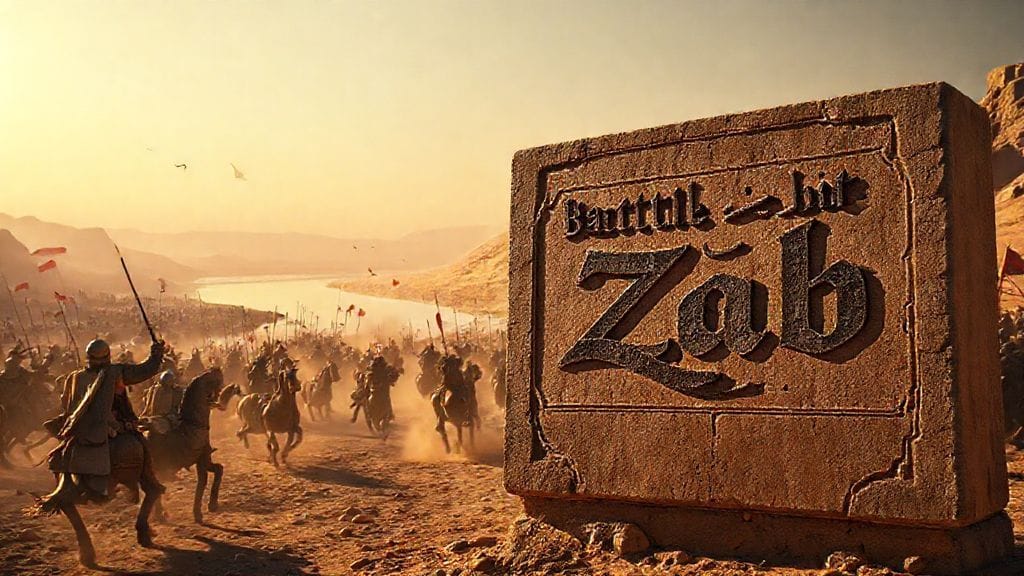
When the two armies met on the plains near the Great Zab River, it was more than a battle for territory—it was a clash of visions for the Islamic world’s future. According to chroniclers, the fight was fierce and protracted, with tide turning repeatedly. The Abbasids’ superior numbers, combined with better organization and morale, began to wear down the Umayyad lines.
The sun rose high over blood-soaked fields as cavalry charges and infantry clashes echoed across the valley. Momentum shifted decisively when Abbasid troops, familiar with the terrain, executed a critical flanking maneuver, routing Marwan’s forces and plunging the Umayyad army into disarray.
Turning Points and Tactical Masterstrokes in the Fighting
One cannot understate the importance of Abu al-‘Abbas’s leadership during the clash. His ability to inspire loyalty and coordinate flexible tactics proved decisive. The Abbasids exploited the Umayyad’s fatigue and fractured command, turning what might have been a prolonged engagement into a decisive rout.
Marwan’s attempt to regroup and retreat failed as Abbasid forces pursued relentlessly, sealing the Umayyads’ fate. The psychological impact of this crushing defeat shattered the myth of Umayyad invincibility—a blow from which the dynasty never recovered.
The Aftermath of Defeat: Flight of the Umayyads
In the chaos of defeat, Marwan II fled southward, pursued relentlessly. His retreat marked the unraveling of Umayyad control, as provincial governors defected or surrendered. The Abbasids immediately capitalized on their momentum, moving to seize Damascus and other key cities.
Despite pockets of resistance in remote regions, the Umayyad caliphate effectively ceased to exist as a political reality. The Umayyad family itself faced tragic purges and relentless pursuit—a grim testament to the ruthlessness that marked regime change in this era.
The Execution and Fate of Marwan II
Marwan II’s end was as dramatic as the dynasty he led. Captured or killed shortly after fleeing the Euphrates valley, his death symbolized not only the fall of a man but the eclipse of Umayyad authority. Historical sources vary on his exact fate, some recounting a violent death, others a capture and execution, but all agree it marked a definitive end.
This symbolic moment underscored the transfer of power and the Abbasids’ resolve to erase their predecessors’ legacy, solidifying their own claim to the caliphate.
The Collapse of a Dynasty and the Rise of a New Order
The Battle of Zab was the final nail in the coffin for Umayyad dominance. In the wake of their defeat, the Abbasids swiftly established their caliphate, instituting sweeping reforms and new administrative structures.
Their victory was not just military but ideological. By obliterating Umayyad institutions, abolishing their networks, and installing their own loyalists, the Abbasids inaugurated a new epoch—the so-called “Golden Age” of Islamic civilization.
The Dawn of the Abbasid Caliphate: Political and Cultural Transformations
With the capital moved to the newly founded Baghdad, a city that would soon eclipse Damascus in glory and influence, the Abbasid era saw an unprecedented flowering of arts, science, and philosophy. The caliphate adopted a more inclusive, cosmopolitan medieval identity, embracing Persian bureaucratic traditions and nurturing scholars of various faiths.
This cultural renaissance reshaped Islamic society, propelled advances in mathematics, medicine, and literature, and laid foundations that would echo across continents.
Economic Reverberations Across the Islamic World
The Abbasid takeover also transformed economic networks. With their power base shifted eastward, new trade routes flourished, connecting Asia with the Mediterranean. Baghdad’s position became a commercial hub, where goods, ideas, and cultures mingled in bustling markets.
The dynasty’s attention to infrastructure, irrigation, and urban development stimulated economic vitality and integration uncommon in the previous era.
How the Battle Shifted the Center of Power to Baghdad
Strategically and symbolically, the Battle of Zab helped pivot the Muslim world’s center of gravity from the Arab Southwest to the Persian-influenced East. Baghdad’s emergence as a capital leveraged the region’s resources and cultural wealth, swiftly diminishing the old Arab heartland’s dominance.
This eastward pivot would influence Islamic politics, culture, and religious life for centuries, broadening the scope and diversity of the Muslim community.
Memory and Myth: The Battle’s Place in Islamic Historiography
Throughout Muslim histories, the Battle of Zab is remembered with a mix of reverence and tragedy. While chroniclers written under Abbasid patronage celebrated it as a triumph of rightful justice and religious renewal, Umayyad sympathizers lamented it as a rupture and betrayal.
Its retellings are often symbolic, reflecting broader themes of divine favor, legitimacy, and the cyclical nature of power. This mythic dimension lends the battle a resonance beyond its military consequences.
The Legacy of the Battle in Modern Middle Eastern Identity
In modern times, the Battle of Zab remains a potent historical moment illustrating themes of revolution, legitimacy, and identity politics in the Middle East. It exemplifies how dynastic change can reshape societies, influence sectarian alignments, and define cultural trajectories that persist.
Contemporary political narratives occasionally invoke this epoch to signal renewal or critique authority, underscoring the battle’s lasting imprint on collective consciousness.
Lessons from Zab: Revolt, Legitimacy, and Dynastic Change
The story of Zab offers timeless lessons on the fragility of empires, the power of ideological legitimacy, and the dynamics of revolt. It reminds us that military victory alone is insufficient; true change demands broader societal acceptance and systemic transformation.
Marwan’s defeat and the Abbasids’ rise underscore the complexity of political transitions and the intricate tapestry of motivations—religious, social, ethnic—that fuel historical change.
Conclusion
The Battle of the Zab stands as a pivotal chapter in Islamic history—a violent crucible where the old order crumbled and a new era dawned. On the bloodstained plains by the Great Zab River, hopes and fears collided, setting forth waves of change felt for centuries.
This was more than a clash of swords and armies; it was a clash of visions, identities, and destinies. The Abbasid victory redefined the trajectory of an entire civilization, shaping not only the Islamic world but the broader course of global history. Standing beside the river today, one can almost hear the ghosts of armies past whispering stories of ambition, faith, and inexorable change.
FAQs
Q1: Why was the Battle of the Zab so significant in Islamic history?
It marked the definitive end of the Umayyad Caliphate and the establishment of the Abbasid Caliphate, a political and cultural transformation that profoundly shaped Islam’s future.
Q2: Who were the main leaders involved in the battle?
Caliph Marwan II led the Umayyads, while Abu al-‘Abbas (later Caliph al-Saffah) commanded the Abbasid forces.
Q3: What were the main causes behind the Abbasid revolt?
Growing dissatisfaction with Umayyad rule, especially among non-Arab Muslims, political legitimacy claims by the Abbasids, and social grievances fueled the revolt.
Q4: How did the location at the Great Zab River influence the battle?
The terrain was strategic for controlling northern Mesopotamia and cutting enemy supply lines, shaping the tactics and outcome of the conflict.
Q5: What were the consequences for the Umayyad dynasty post-battle?
The dynasty collapsed largely, with members killed, expelled, or fleeing. However, a surviving Umayyad branch would establish a separate emirate in Spain.
Q6: How did the Abbasid Caliphate differ from the Umayyads?
The Abbasids promoted a more inclusive, multi-ethnic empire centered in Baghdad, encouraging intellectual and cultural developments beyond Arab dominance.
Q7: Is the Battle of the Zab remembered in modern Middle Eastern culture?
Yes, it remains a symbol of dynastic change and political legitimacy, often referenced in histories and political discourse.
Q8: Did the battle affect religious sects within Islam?
Indirectly, yes. The Abbasid rise shifted the balance among Sunni and Shi’a political factions, influencing the religious landscape.

