Table of Contents
- The Dawn of a Tumultuous Year: Pavia under Siege, 774
- The Last Stand of the Lombards: A Kingdom on the Brink
- The Rise of the Lombard Kingdom: From Ancestry to Apex
- The Frankish Kingdom: Charlemagne’s Ambition Awakens
- The Geopolitical Chessboard: Italy and the Frankish Realm
- Rival Ideologies and the Clash of Kings
- The Prelude to Conquest: Diplomacy, Betrayal, and War Preparations
- The Siege of Pavia: The Crucible of the Lombard Fate
- Charlemagne's Strategies and the Art of Medieval Warfare
- The Fall of the Lombard King Desiderius: Captivity and Defeat
- The Transformation of Italy: From Lombard Rule to Frankish Dominion
- The Papacy and the Frankish Alliance: A Political Marriage
- Consequences for the Holy Roman Empire: The Seed of a New Europe
- Cultural Assimilation or Erasure? Lombards under Frankish Rule
- Legacy in Modern Memory: Italy’s Forgotten Kingdom
- The Aftermath on the Italian Peninsula: Social and Economic Shifts
- Symbols of Power: The Iron Crown of Lombardy’s Fate
- Chronicles and Sources: How History Recounts the Fall of Lombards
- The Frankish Conquest in the Lens of Modern Historiography
- Echoes of 774: The Lombard Conquest in Popular Culture
- Conclusion: The End of an Era and the Dawn of Empire
- FAQs
- External Resource
- Internal Link
1. The Dawn of a Tumultuous Year: Pavia under Siege, 774
The winter of 774 in Pavia was unlike any other. The city, encircled by the slow but relentless gaze of Frankish forces, stood as the last bastion of the Lombard kingdom. Frozen rivers glistened faintly under pallid sunlight, as if nature herself held her breath. The bells of Pavia’s churches tolled faintly, their echo lost between the stone walls and the cries of the anxious citizens. Within those ancient streets, a final chapter was being written — one filled with despair, awe, and the foreboding doom of a proud kingdom. It was here, beneath skies heavy with the weight of history, that the Lombard Kingdom’s fate would be sealed.
2. The Last Stand of the Lombards: A Kingdom on the Brink
For over two centuries, the Lombards had carved their realm into the heart of Italy, through war, diplomacy, and persistence. But time, tides of power, and the rise of new forces were turning the wheel against them. As the siege tightened, the spirits of the Lombard people wavered. The young King Desiderius, heir to a lineage marked by both glory and turmoil, stood firm — though shadows of doubt loomed even within his council chambers. Their kingdom, scarred by internal divisions and external threats, was on the verge of collapse.
3. The Rise of the Lombard Kingdom: From Ancestry to Apex
The story of the Lombards is a saga of migration, settlement, and conquest. Originating from the obscure forests of Scandinavia and northern Germany, the Lombards journeyed southwards, arriving in Italy in 568 under King Alboin. Their arrival signaled a dramatic shift in the Italian Peninsula’s mosaic of powers — displacing Byzantine control and entrenching a Germanic presence that would endure for centuries. From their capital at Pavia, the Lombards established a kingdom marked by religious diversity, intertwining Arian paganism, Catholicism, and indigenous customs. Their rule was both a patchwork and a paradox — at once barbarian and refined, fractured yet formidable.
4. The Frankish Kingdom: Charlemagne’s Ambition Awakens
Meanwhile, beyond the Alps, the Frankish realm was rising under the formidable leadership of Charlemagne. Crowned King of the Franks in 768, he inherited a realm forged by his father, Pepin the Short, but yearned for expansion and consolidation. Charlemagne was not a mere conqueror — he was a visionary monarch, intent on reviving a Roman-inspired empire under Christian rule. His campaigns across Europe were marked by both brutality and administrative genius, seeking to install order and obedience over fragmented territories.
By the early 770s, Charlemagne had turned his eyes toward Italy, a land rich in history, trade, and religious significance. The Lombards, despite their longevity, posed a challenge to his imperial aspirations.
5. The Geopolitical Chessboard: Italy and the Frankish Realm
Italy, fragmented and contested, was a prize coveted not only by Franks and Lombards but also the Byzantine Empire and the Papacy. The latter, emboldened by its spiritual authority, was caught between these powers, seeking security and influence. The Lombard kings had often been at odds with the popes, their expansionist moves encroaching on papal territories. Meanwhile, the Byzantines held on to pockets like Ravenna, but their influence was waning.
The Frankish incursion was thus not a mere military conquest; it was a complex political maneuver. Papal invitations for help against the Lombards had given Charlemagne legitimacy, and his crossing of the Alps was sanctioned under the guise of defending Christendom.
6. Rival Ideologies and the Clash of Kings
More than power and land, this clash embodied competing ideologies. The Lombards, many of whom retained Arian Christian beliefs, represented a traditional, somewhat isolated Germanic identity. Charlemagne, on the other hand, championed a unified Christian empire, aligned with Roman Catholic orthodoxy and the ideals of civilization as he understood them.
The conquest was thus presented in contemporary chronicles as a holy mission, with the Franks cast as liberators and the Lombards as obstinate foes of the Church. Yet beneath these narratives lay deeper tensions — between tribal loyalties and imperial ambitions, between old gods and new faiths.
7. The Prelude to Conquest: Diplomacy, Betrayal, and War Preparations
Before the first arrow was loosed, the preamble to war unfolded in shadowy councils and tense negotiations. Charlemagne initially attempted to engage Desiderius diplomatically, intent on securing a peaceful dominion if possible. But distrust, broken promises, and shifting alliances shattered any hopes for accord.
Notably, Desiderius had a tenuous relationship with the Papacy, which had shifted its favor toward Charlemagne after Pepin’s donation of lands to the Church decades earlier. This betrayal stabbed at the Lombard king’s legitimacy and morale. By 773, Charlemagne mustered an army that included not only Franks but also allied Italian forces, marking the final preparation for the campaign.
8. The Siege of Pavia: The Crucible of the Lombard Fate
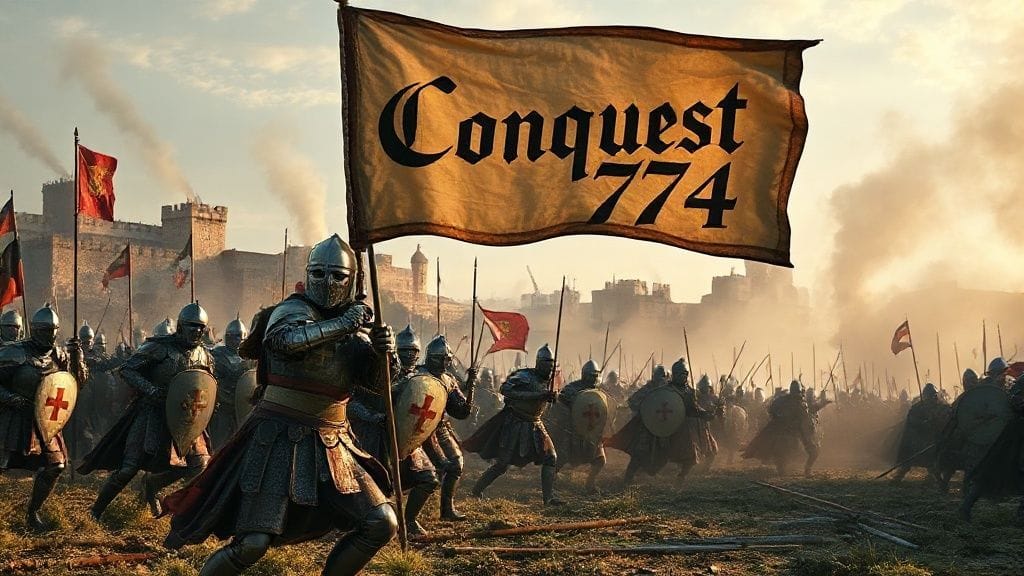
In autumn 773, Charlemagne’s forces laid siege to Pavia with meticulous determination. The city, long fortified and supplied, endured months of blockade, psychological warfare, and cutting off of relief. Chroniclers describe how the citizens faced famine, cold, and relentless assault — yet resisted fiercely, fueled by loyalty and desperation.
The siege was not a mere military episode; it was a dramatic theater of human endurance, fear, and hope. Some sources recount secret negotiations behind the walls, as factions within Pavia contemplated surrender while others urged continued defiance.
9. Charlemagne's Strategies and the Art of Medieval Warfare
Charlemagne’s siege tactics reflected a combination of Frankish martial prowess and political calculation. He understood that prolonging the siege risked draining resources and morale among his own troops. Thus, he employed a strategy of encirclement and gradual tightening, cutting off supplies with precise timing. Siege machines, engineers, and siege towers were brought to bear, while his cavalry patrolled the surrounding countryside, preventing any external aid.
Charlemagne’s leadership style combined patience with ruthless decisiveness. His ability to maintain discipline and unity among diverse troops was crucial in this campaign.
10. The Fall of the Lombard King Desiderius: Captivity and Defeat
After months of resistance, the inevitable happened in June 774. Pavia fell, and with it the Lombard kingdom’s independence. Desiderius was captured and taken prisoner along with his family. Charlemagne, known for both mercy and strategic cruelty, sent the former king into exile at a monastery — a fate symbolically reducing a warrior king to a monk.
The fall was more than a military victory; it was a personal tragedy for Desiderius and a collective trauma for his people. Yet it also marked a significant expansion of Frankish power.
11. The Transformation of Italy: From Lombard Rule to Frankish Dominion
With the capture of Pavia, Charlemagne formally absorbed the Lombard territories into his growing empire. He assumed the title “King of the Lombards,” not just adding lands but also asserting authority through tradition and symbolism. Italy now came under Frankish law, administration, and ecclesiastical influence.
Though the Lombard nobility was partially integrated, their autonomy was diminished. Frankish officials replaced Lombard ones, and new legal codes began to reshape governance.
12. The Papacy and the Frankish Alliance: A Political Marriage
One of the most profound consequences of the conquest was the strengthened alliance between the Frankish kings and the papacy. Charlemagne’s success enshrined the pope’s temporal power on the peninsula and relied heavily on papal endorsement.
This political marriage would culminate in 800, when Charlemagne was crowned Emperor by Pope Leo III — a foundational moment for the Holy Roman Empire. The 774 conquest thus laid groundwork for centuries of intertwined religious and secular power struggles.
13. Consequences for the Holy Roman Empire: The Seed of a New Europe
The annexation of Lombard Italy was a cornerstone in the construction of what would become the Holy Roman Empire. Charlemagne’s expanded realm bridged northern and southern Europe, creating a vast Christian empire that invoked the legacy of Rome.
This fusion of territories introduced complex challenges: governing diverse peoples, managing relationships with Byzantium, and balancing papal ambitions. However, it established the geopolitical contours of medieval Europe for centuries.
14. Cultural Assimilation or Erasure? Lombards under Frankish Rule
The Frankish conquest wasn’t merely political; it was cultural. Lombard traditions, laws, and language didn’t disappear overnight but faced gradual assimilation. Frankish influence brought new art styles, monastic reforms, and Latin literacy, while Lombard customs survived in local governance and folklore.
Historians debate whether this era constituted cultural erasure or syncretism. Some argue the Lombards were absorbed; others highlight persistent identities in northern Italy.
15. Legacy in Modern Memory: Italy’s Forgotten Kingdom
Today, the Lombard Kingdom’s history is overshadowed by Rome and later Renaissance Italy, yet its imprint lingers. The Iron Crown of Lombardy, used to coronate medieval kings, symbolizes a legacy of power and identity.
Italian historians and cultural narratives occasionally revisit the Lombards’ story as an early chapter in Italian statehood, reminding us how borders, peoples, and empires have always been fluid and contested.
16. The Aftermath on the Italian Peninsula: Social and Economic Shifts
The conquest induced economic and social shifts on the peninsula. Frankish governance imposed new taxation systems and land management, while monasteries flourished, bolstered by royal patronage. Urban centers like Milan and Pavia saw changes in trade and demographics.
Social stratification altered as Lombard aristocrats adapted or submitted to Frankish overlords, while peasants faced shifting obligations.
17. Symbols of Power: The Iron Crown of Lombardy’s Fate
One of the most evocative relics of this era is the Iron Crown of Lombardy, purportedly containing a band of iron made from a nail of Christ’s crucifixion. After 774, this crown came to symbolize both Lombard heritage and Frankish authority. Kings of Italy would don it as a sign of legitimacy.
Its survival through invasion and regime changes demonstrates the enduring power of symbols amid political upheaval.
18. Chronicles and Sources: How History Recounts the Fall of Lombards
Our knowledge of this conquest comes from varied sources: Frankish annals like the Royal Frankish Annals, Lombard chronicles, papal records, and later medieval historiographies. Each presents a perspective colored by bias, political agendas, and religious motives.
The intersection of these narratives helps construct a multifaceted understanding of 774 — revealing both triumph and tragedy.
19. The Frankish Conquest in the Lens of Modern Historiography
Modern historians approach the 774 conquest with nuanced analysis, questioning earlier depictions of Lombards as mere barbarians and Franks as civilizers. Archaeological discoveries and interdisciplinary studies have enriched appreciation of Lombard society’s complexity.
Contemporary scholarship explores themes of identity, power, and cultural interaction rather than simple conquest narratives.
20. Echoes of 774: The Lombard Conquest in Popular Culture
Though often eclipsed by grander medieval tales, the fall of the Lombard Kingdom has inspired literature, opera, and art in Italy and beyond. Romantic nationalism in the 19th century revived interest in the Lombards as foundational actors in Italian history.
Modern documentaries and historical novels occasionally resurrect the dramatic siege of Pavia as a gripping story of resilience and destiny.
21. Conclusion: The End of an Era and the Dawn of Empire
The conquest of the Lombard Kingdom by Charlemagne in 774 was not simply a battle won — it was a momentous turning point that reshaped the course of European history. It marked the end of Lombard rule, the rise of the Frankish empire, and the confluence of religion and monarchy that defined the Middle Ages.
In Pavia’s stone streets and Italy’s rolling landscapes resides a story of ambition, faith, and human resilience. This unique historical moment reminds us that empires rise and fall not only through armies, but through ideas, faith, and symbols — echoed far beyond their time.
Conclusion
To witness the fall of the Lombard Kingdom is to peer into a crucible where medieval Europe took shape. It is the story of kingdoms clashing not just with swords but with beliefs, of a city’s siege echoing the fragility of power, and of a king whose legacy would be both captive and crown. The conquest by the Franks was more than a military campaign; it was the fulcrum upon which the destiny of Italy and much of Western Europe turned. Through the lens of Pavia’s winter siege, the ancient world gave way to a new order—complex, ambitious, and profoundly human.
FAQs
Q1: Who were the Lombards, and how did they come to rule Italy?
The Lombards were a Germanic people who migrated into northern Italy in 568 under King Alboin. They established a kingdom centered in Pavia, ruling much of Italy for over two centuries by conquering Byzantine territories and integrating with local populations.
Q2: What motivated Charlemagne to conquer the Lombard Kingdom?
Several factors motivated Charlemagne: a desire to expand Frankish power, protect the Papacy (which was threatened by the Lombards), and fulfill his vision of a Christian empire. Papal alliances and political opportunities also encouraged the campaign.
Q3: How long did the siege of Pavia last, and what tactics were used?
The siege lasted approximately eight months (773-774), involving encirclement, cutting off supplies, and the use of siege technologies. Charlemagne’s patience and the combination of military might and diplomacy were decisive.
Q4: What happened to King Desiderius after the conquest?
King Desiderius was captured and sent into exile in a monastery. This symbolic removal from power reflected both mercy and the assertion of Frankish dominance.
Q5: How did the conquest of the Lombard Kingdom influence the Holy Roman Empire?
By adding Lombard lands and titles, Charlemagne laid the foundations for the Holy Roman Empire, connecting northern and southern Europe and formalizing the unity of Christian kingship under papal sanction.
Q6: Did Lombard culture survive after the conquest?
While Lombard political independence ended, many cultural elements persisted in law, language, and traditions. The interaction with Frankish rulers led to a blending rather than a complete erasure.
Q7: Why is the Iron Crown of Lombardy significant?
The Iron Crown symbolizes the authority of kings in Italy, connecting religious legitimacy (through its supposed holy relic) to temporal power. It was used for centuries in royal coronations.
Q8: How do modern historians view the Frankish conquest of the Lombards?
Modern historians see it as a complex event involving not only military conquest but also cultural interaction, political alliance, and religious transformation. It is a pivotal moment in medieval European history rather than a simple war of villains and heroes.

