Table of Contents
- The Tumultuous Mid-8th Century: Setting the Stage for Turmoil
- The Rise and Fall of An Lushan’s Rebellion: A Shattered Empire
- The Uighur Khaganate: Power and Ambition on the Central Asian Steppe
- Tang Dynasty in Crisis: Fragmented Authority and Desperate Alliances
- Initial Skirmishes: The Remnants of An Lushan’s Forces Resist
- The Uighur Decision: From Observer to Participant in Chinese Strife
- The Campaign of 756-757: Uighur Warriors Cross into North China
- Key Battles and Strategic Maneuvers: Turning the Tide Against the Rebels
- Diplomacy and Cultural Exchanges: The Tang-Uighur Alliance Beyond War
- The Role of the Uighur Khaganate’s Cavalry: A Decisive Military Edge
- Leadership in Action: From Tang Generals to Uighur Khagans
- Aftermath of the Campaign: The Reassertion of Tang Control
- Political Implications: Tang Dynasty’s Dependence on Nomadic Allies
- Economic and Social Consequences in North China Post-Rebellion
- The Legacy of the Uighur Involvement: Shaping Sino-Central Asian Relations
- Cultural Reverberations and Historical Memory of the Alliance
- Reflections on Interethnic Cooperation in a Time of Crisis
- The Shadow of An Lushan: How His Revolt Changed the Tang Forever
- The Uighur Khaganate’s Rising Influence: Prelude to Future Conflicts
- The Tang Dynasty’s Fragility Despite Military Victory
- Conclusion: A Moment When Empires Relied on Each Other to Survive
- FAQs on the Uighur Assistance to the Tang Dynasty
- External Resource: Wikipedia Link to An Lushan Rebellion
- Internal Link: Visit History Sphere → https://historysphere.com/
The mid-8th century was a time of cataclysmic upheaval in East Asia—a period when the very heart of the Tang Dynasty, the jewel of imperial China, seemed on the brink of collapse. The thunder of clashing armies echoed across the frostbitten plains and fertile valleys of northern China as factions struggled for dominance amidst the ruins of a devastating rebellion. In this maelstrom, an unlikely alliance emerged: the nomadic Uighur Khaganate, sovereign rulers of the steppes, intervened to aid a fractured empire against the stubborn remnants of a rebel warlord, the infamous An Lushan.
The Tumultuous Mid-8th Century: Setting the Stage for Turmoil
The year was 756 AD. The skies over the northern Chinese heartland were grim, heavy with the smoke of burning cities and the gnawing despair of thousands displaced by relentless warfare. For nearly two years, the Tang Dynasty had been grappling with the largest insurrection it had ever faced—the An Lushan Rebellion. This rebellion, sparked by a charismatic general turned warlord, threatened not only to topple the throne but to unravel centuries of imperial structure and cultural achievement.
An Lushan, a commander of mixed Sogdian and Göktürk descent, had initially served the Tang court with distinction. Yet, disillusioned with the corruption and factionalism festering within the empire, he declared himself emperor of a rival Yan dynasty in 755. His forces swept through the northern plains with formidable speed, capturing the eastern capital Luoyang and even threatening the imperial seat of Chang’an itself.
And yet by the winter of 756, An Lushan’s violent surge had slowed; his premature death the previous year left his rebellion fractured and vulnerable. It was in this desperate moment that the Tang court made a daring call—the empire would reach out beyond its borders to the powerful nomadic confederation known as the Uighur Khaganate.
The Rise and Fall of An Lushan’s Rebellion: A Shattered Empire
An Lushan’s rebellion, perhaps the most devastating civil war in Chinese history before the 20th century, resulted in the deaths of millions and the decimation of fertile lands. It permanently altered the political and social fabric of the Tang empire, leaving it weakened and dependent on outside forces for survival.
Initially, the rebellion was a spectacular success: An Lushan’s troops captured major cities and declared a new dynasty. But his army was a coalition of opportunists, mercenaries, and disgruntled soldiers, lacking the cohesive leadership that the Tang forces, despite their losses, still maintained. When An Lushan died in January 757, betrayed by his own generals and plagued by internal dissent, the rebellion’s momentum faltered.
Despite their setbacks, the so-called Yan forces left behind many embittered holdouts in the north—fierce pockets of resistance that refused to yield. The Tang court, fractured by palace intrigue and fearing a second collapse, urgently needed allies. They turned their gaze to the north and west.
The Uighur Khaganate: Power and Ambition on the Central Asian Steppe
Far beyond the Yellow River and the borders of the Chinese heartland stretched vast, rolling steppes populated by Turkic nomads. Among these, the Uighur Khaganate had risen to prominence under energetic leaders who had wrested control from the Göktürks. By the mid-8th century, the Uighurs ruled over an expansive tract spanning parts of modern Mongolia and Xinjiang.
This confederation of clans was unified not merely by kinship but by political astuteness and military prowess, especially its renowned cavalry. The Uighurs were also deeply enmeshed in the Silk Road’s web, their economy thriving on trade between East and West. Their strategic location and military strength positioned them as both formidable rivals and potential partners to the Tang empire.
Yet it was rare for steppe nomads to intervene so directly in Chinese internal conflicts. The decision to assist—and the subsequent military cooperation—would set a precedent with consequences echoing beyond the immediate crisis.
Tang Dynasty in Crisis: Fragmented Authority and Desperate Alliances
By late 756, the Tang imperial administration was a patchwork of rival factions and regional commanders elbowing for power. The central government, while maintaining nominal control, was grossly overwhelmed. The empire’s traditional military elites had suffered devastating losses, and troops plummeted in morale.
Emperor Suzong, who had ascended amidst the rebellion, recognized that internal resources were insufficient to suppress the surviving rebel forces. The court diplomats, advised by astute eunuchs and generals, set about negotiating with the Uighur Khaganate for military assistance—a move both bold and fraught with risk.
It is in this precarious political context that the Uighur cavalry began their march through the Mongolian steppes and into the politically fractious lands north of the Great Wall.
Initial Skirmishes: The Remnants of An Lushan’s Forces Resist
The rebel factions entrenched in northern China were tenacious. Their control extended over strategic fortifications and fertile territory, allowing them to sustain prolonged resistance against the Tang forces. Small engagements and raids slowed the imperial reconquest, frustrating commanders who hoped for swift resolution.
Against these backdrops of skirmishes and attrition, the Uighur intervention promised a fresh and decisive advantage. Their mastery of cavalry tactics—rapid, coordinated strikes on horseback—was unmatched. The question was whether their involvement would tip the scales or merely prolong the war.
The Uighur Decision: From Observer to Participant in Chinese Strife
The motivations behind the Uighur Khaganate’s aid to the Tang are manifold. On one hand, the alliance allowed the Uighurs to extend their influence into Chinese politics, securing lucrative trade advantages and demonstrating military might. On the other, there existed an ideological sympathizing with the Tang as a suzerain power whose downfall might destabilize the region and threaten nomadic interests.
Diplomatic missions exchanged gifts and tributes—silks, horses, and precious metals—cementing this mutualistic relationship.
The Campaign of 756-757: Uighur Warriors Cross into North China
By spring 757, Uighur horsemen maneuvered through the mountainous corridors into what is now northern Hebei and Shanxi provinces. The campaign was marked by swift advances and brutal engagements. The Uighurs adapted quickly to the terrain and to combined operations alongside Tang infantry and artillery units—a cooperation previously untested at this scale.
Though episodic resistance flared, the combined Tang-Uighur forces systematically dismantled rebel strongholds. Cities changed hands; rebel commanders surrendered or fled. The momentum was undeniably with the imperial coalition.
Key Battles and Strategic Maneuvers: Turning the Tide Against the Rebels
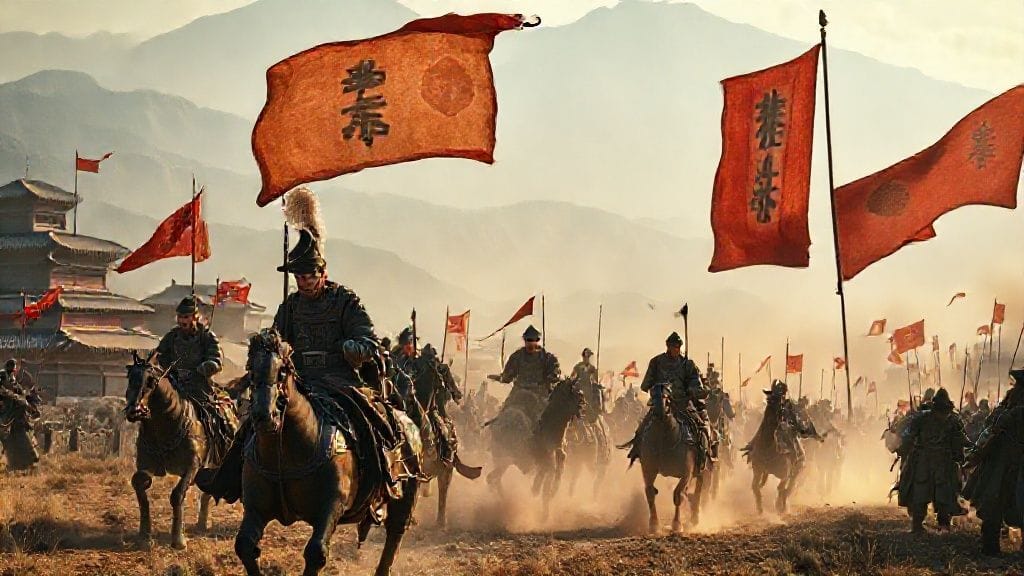
One notable engagement near the city of Fanyang highlighted the effective synergy between Tang and Uighur strategies. The Uighur horse archers encircled the rebel troops with lightning raids, cutting off supply lines, while Tang infantry executed siege operations.
The rebels, isolated and outmaneuvered, suffered catastrophic defeats. Their capacity for sustained resistance dwindled rapidly.
Diplomacy and Cultural Exchanges: The Tang-Uighur Alliance Beyond War
But the alliance was more than military pragmatism. Uighur envoys were welcomed at the Tang court, where they influenced fashion, language, and military organization. The Uighurs brought their Manichaean beliefs and distinct cultural practices, which mingled with Chinese customs, creating a swelling undercurrent of cross-cultural exchange that would resonate for centuries.
This moment forged a bond that transcended mere convenience.
The Role of the Uighur Khaganate’s Cavalry: A Decisive Military Edge
Historically, nomadic cavalry powers had often been a scourge to Chinese dynasties. Yet here, their mounted archers became a key asset. The Uighur cavalry’s mobility and combat flexibility exposed weaknesses in the rebel fortifications and inspired Tang commanders to innovate joint operational doctrines.
This engagement marked a turning point in battlefield tactics with profound implications.
Leadership in Action: From Tang Generals to Uighur Khagans
Commanders such as General Geshu Han exemplified Tang military resilience, while the Uighur Khagan Bayanchur Khan’s personal leadership galvanized his troops. Their coordination, combined with diplomatic tact, ensured the campaign’s success.
Aftermath of the Campaign: The Reassertion of Tang Control
By late 757, the remaining rebel enclaves had crumbled, and Emperor Suzong could breathe a cautious sigh of relief. The Tang court regained nominal control over northern China, although extensive reconstruction lay ahead.
Yet the victory was bittersweet—a reminder of imperial vulnerability.
Political Implications: Tang Dynasty’s Dependence on Nomadic Allies
This episode underscored a new paradigm: the Tang had become reliant on external powers, unsettling long-standing Sino-nomadic relationships. The Uighurs gained unprecedented influence within the empire’s political sphere, planting seeds for future alliances—and conflicts.
Economic and Social Consequences in North China Post-Rebellion
The wholesale destruction wrought by years of rebellion and warfare plunged northern China into economic ruin. Farmlands lay fallow; trade suffered; populations were displaced. The Tang government initiated reforms, but recovery was slow and uneven.
Moreover, the presence of foreign troops and administrators introduced novel social dynamics and tensions.
The Legacy of the Uighur Involvement: Shaping Sino-Central Asian Relations
The military collaboration between Tang and Uighurs during the An Lushan aftermath set a precedent for future interactions. It heralded increased diplomatic exchanges and trade but also heightened competition over strategic territories.
Cultural Reverberations and Historical Memory of the Alliance
Chinese annals recorded the Uighur intervention with a combination of admiration and wary respect. The episode was memorialized in poetry and official histories, emphasizing both the desperation of the Tang and the valor of the Uighur cavalry.
This memory adds a vivid chapter to the tapestry of Asian history.
Reflections on Interethnic Cooperation in a Time of Crisis
This alliance was not without tension—cultural misunderstandings and political rivalries simmered beneath the surface—but it illustrated how, in moments of existential threat, diverse peoples could unite against a common enemy.
The Shadow of An Lushan: How His Revolt Changed the Tang Forever
While An Lushan’s rebellion failed to end the dynasty, it irrevocably weakened it. The crisis exposed latent fractures in governance, military structure, and ethnic relations.
The Uighur Khaganate’s Rising Influence: Prelude to Future Conflicts
Emboldened by their military success and new access to Chinese markets, the Uighurs expanded their ambitions, playing increasingly pivotal roles in regional politics for decades to come
The Tang Dynasty’s Fragility Despite Military Victory
Despite victory, the Tang court remained fragile—internal rivalries, economic strains, and frontier threats loomed large. The events of 756-757 were a temporary reprieve, not a restoration.
Conclusion
The involvement of the Uighur Khaganate in crushing the remnants of An Lushan’s rebellion was a testament to the complexity and interconnectivity of medieval Eurasian politics. In that turbulent year of 756-757, a fractured Chinese empire reached across cultural and ethnic worlds to a formidable nomadic power for survival. This alliance, born of necessity, reshaped the contours of power in East and Central Asia.
It is incredible, isn’t it? The collapse of a great empire held at bay not by its own armies alone but by the thunderous hooves of foreign cavalry echoing across the northern steppes. This episode teaches us that history is seldom written by isolated peoples—it is a woven tapestry of alliances, betrayals, and shared destinies.
Even as we gaze back over a millennium, the ghosts of that alliance remind us that strength often lies in embracing the unfamiliar—finding common ground amid chaos, to carve out a fragile peace.
FAQs
Q1: Why did the Tang Dynasty seek assistance from the Uighur Khaganate?
A1: Facing a devastating internal rebellion with stretched resources, the Tang court needed the military strength of a skilled cavalry force that could traverse difficult terrain and outmaneuver rebel forces. The Uighurs’ geographical proximity and military reputation made them a natural choice.
Q2: What role did the Uighur cavalry play in the campaign?
A2: The Uighur cavalry provided mobility, speed, and archery skills that complemented Tang infantry tactics, allowing rapid encirclement and disruption of rebel positions, leading to decisive victories.
Q3: Were there any cultural exchanges resulting from this alliance?
A3: Yes. The alliance fostered exchange of religion, language, fashion, and military techniques, influencing court life in Chang’an and introducing Central Asian cultural elements into Chinese society.
Q4: How did this conflict affect the Tang Dynasty’s long-term stability?
A4: Although the rebellion was quelled, the reliance on external powers like the Uighurs revealed the dynasty’s weakened internal cohesion and foreshadowed future vulnerabilities.
Q5: Did the Uighurs gain any political advantages from aiding the Tang?
A5: Certainly. They secured trade privileges, increased influence in Chinese affairs, and positioned themselves as indispensable regional players, enhancing their prestige.
Q6: What was the fate of An Lushan’s legacy after the rebellion?
A6: While defeated, An Lushan’s revolt deeply scarred Chinese history, promptings reforms and a cautious attitude toward military governors, but also lingering tensions regarding ethnic minorities within the empire.
Q7: How is this event remembered in Chinese historical texts?
A7: The Uighur assistance is recorded with respect and acknowledged as a crucial factor in suppressing the rebellion, though often framed with caution about reliance on nomadic powers.
Q8: Could this alliance be seen as a precedent for later Sino-nomadic relations?
A8: Yes, it illustrated how Chinese dynasties both feared and depended on steppe nomads, influencing centuries of alternating conflict and cooperation.

