Table of Contents
- The Dawn of a Fateful Morning near Adrianople
- The Byzantine Empire at a Crossroads in 813
- Michael I Rangabe’s Struggles and the State of Byzantine Forces
- The Rising Threat of the Bulgarian Khan Krum
- Versinikia: Geography and Strategic Importance
- The Prelude to Battle: Movements, Tensions, and Decisions
- The Clash Unfolds: A Narrative of the Battle of Versinikia
- Leadership and Strategy: The Role of Byzantine Commanders
- The Bulgarian Army: Tactics and Morale under Khan Krum
- Turning Points: When Fate Tilted
- The Aftermath on the Battlefield: Losses and Retreat
- Political Repercussions in Constantinople
- The Fall of Michael I and Rise of Leo V the Armenian
- The Broader Context: Byzantine-Bulgarian Relations Renewed
- The Battle’s Place in the Long Struggle for the Balkans
- Cultural and Symbolic Meanings of the Defeat at Versinikia
- The Legacy of 813: How Versinikia Shaped Medieval Eastern Europe
- Reflections in Chronicles: Byzantine and Bulgarian Perspectives
- Lessons on Leadership and Resilience
- The Shadow of Versinikia over the Byzantine Military Reforms
- Conclusion: The Quiet Earthquake That Shook Constantinople’s Foundations
- FAQs on the Battle of Versinikia
- External Resource
- Internal Link
The Dawn of a Fateful Morning near Adrianople
The early summer sun had just begun to warm the windswept plains near the fortified city of Adrianople when the Byzantine and Bulgarian forces arrayed themselves for what would become a defining moment in Balkan history. The air was heavy with a tense stillness, as if the earth itself waited to exhale after decades of simmering conflict. Around June 22, 813, commanders and soldiers alike knew that the day’s battle could tip the balance of power in this volatile region. The battle at Versinikia was more than a clash of arms—it was a collision of empires, ideologies, and destinies.
At dawn, banners fluttered, swords gleamed pale in the light, and an uneasy calm preceded the deadly cacophony of steel and cries. The Bulgarians, led by the fierce Khan Krum, faced the armies of Byzantine Emperor Michael I Rangabe, whose recent struggles had weakened imperial strength and morale. This confrontation was not just a military engagement: it was the manifestation of a larger struggle for survival and dominance, a moment where history's tides turned irrevocably.
The Byzantine Empire at a Crossroads in 813
In the early 9th century, the Byzantine Empire was grappling with both internal upheaval and external threats. Following the reign of Emperor Nikephoros I, who had perished in a disastrous campaign against the Bulgarians two years prior, the empire found itself vulnerable. Michael I Rangabe, his successor, inherited a fragile political and military landscape.
The empire was still recovering from recent defeats, and dissent brewed within the military aristocracy and the imperial court. The constant pressures of defending vast frontiers stretched resources thin, while economic strains and religious conflicts, including unrest following Iconoclasm disputes, further eroded the cohesion that had once defined Byzantine strength.
Meanwhile, the Bulgarians, once a nomadic confederation turned settled empire, had transformed under the leadership of Khan Krum into a formidable Balkan power. Their ambitions and raids threatened the very heart of Byzantine domains, pressing the empire towards a confrontation that would define the geopolitical landscape for decades.
Michael I Rangabe’s Struggles and the State of Byzantine Forces
Michael I Rangabe was no stranger to challenges. Son-in-law of Nikephoros I, he ascended the throne amidst a climate of suspicion and instability. His reign was marked by military defeats and political division, revealing the fragility of imperial authority.
The Byzantine army, once the pride of the empire, was depleted and poorly coordinated. Issues of loyalty permeated the ranks; many generals and troops doubted Michael’s capacity to defend the empire effectively. The burden of protecting the Balkans lay heavily upon these soldiers, who found themselves facing an increasingly aggressive opponent in the Bulgarians.
Beyond the battlefield, court intrigues and factionalism further weakened Michael’s position. Many contemporaries criticized his cautious and indecisive leadership, which contrasted starkly with the dynamic and ruthless tactics employed by Khan Krum.
The Rising Threat of the Bulgarian Khan Krum
Khan Krum, a leader as brutal as he was visionary, had rapidly consolidated power within Bulgaria. Known for his relentless campaigns and innovative military strategies, Krum sought not just raiding and plunder but the expansion and solidification of Bulgarian dominance over the Balkans.
His reputation was icy—rumors told of his savage punishments, such as the macabre fashion in which he turned the skull of the slain Emperor Nikephoros I into a drinking cup. Indomitable and shrewd, Krum’s forces were highly motivated, binding their unity and morale to both nationalist fervor and personal loyalty.
Krum capitalized on Byzantine weaknesses, pressing deeper into their territory and forcing confrontations that would destabilize imperial control. Versinikia was to become the stage where his ambitions found both challenge and opportunity.
Versinikia: Geography and Strategic Importance
Situated near Adrianople (modern Edirne), the site of Versinikia held profound strategic value. Adrianople itself was a critical fortress city guarding the approaches to Constantinople from the northwest. Control of this area meant controlling one of the main invasion routes into Byzantine heartlands.
The plains around Versinikia offered terrain both an advantage and a challenge. Open enough for cavalry maneuvers—a Bulgarian specialty—yet interspersed with low hills and wooded patches favoring defensive tactics, the landscape demanded careful planning and nimble command decisions.
For both armies, controlling Versinikia meant more than tactical victory; it symbolized control over the gateway to the empire’s core, a symbolic and material prize worth betting lives upon.
The Prelude to Battle: Movements, Tensions, and Decisions
In the weeks prior to the confrontation, Byzantine generals faced difficult choices. Reports of Bulgarian raids increased in frequency, and intelligence revealed the approach of Krum’s main forces. Michael I assembled his troops, hoping to leverage the experience of his commanders and the discipline of his units.
However, the Byzantine leadership was fragmented. Some advocated for a cautious stance, waiting behind fortified lines, while others pushed for an aggressive offensive. These tensions hinted at the challenges poised to shape the battle’s outcome.
Meanwhile, Krum’s forces moved with resolute purpose. His scouts and allied troops secured positions, cutting off Byzantine reinforcements and supplies. His army’s cohesion and morale contrasted with the hesitations simmering under the Byzantine command.
The Clash Unfolds: A Narrative of the Battle of Versinikia
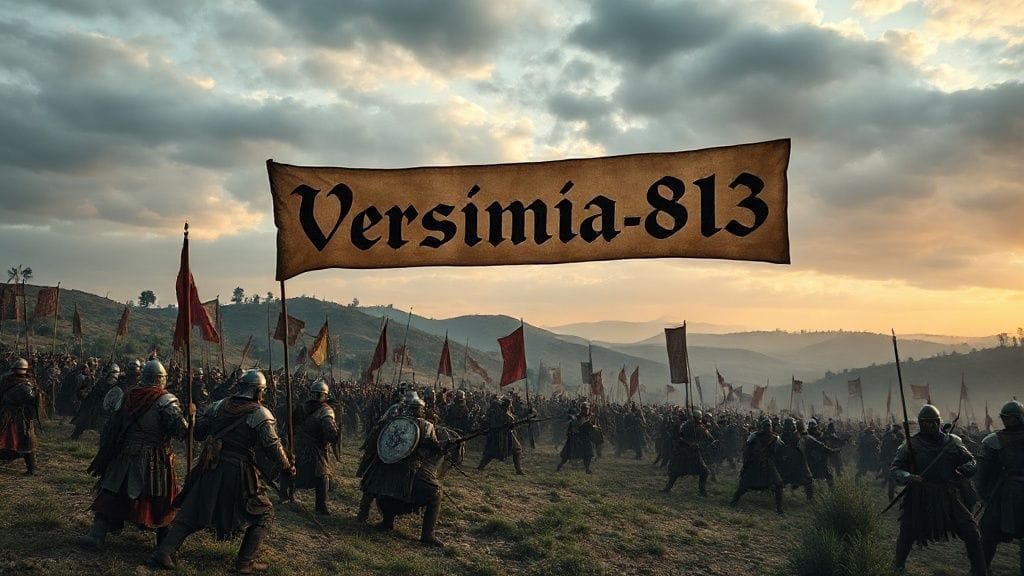
As the sun climbed higher on June 22, 813, the two armies confronted each other across the rolling fields near Versinikia. The Byzantine forces, arrayed in their traditional formations, stood to defend their emperor’s honor and their homeland, while the Bulgarians prepared to unleash their fierce cavalry charges.
The battle began violently, with skirmishes breaking out along the flanks. Byzantine archers showered arrows, seeking to thin the Bulgarian lines before the cavalry could engage. Yet, the Bulgarians responded with swift maneuvers, utilizing their knowledge of the terrain to engage Byzantine units piecemeal.
The turning point came as a crucial Byzantine division wavered and retreated unexpectedly. Whether due to confusion, betrayal, or strategic miscalculation, this collapse opened a breach. Khan Krum exploited this gap ruthlessly, his forces sweeping through and breaking the Byzantine lines.
The battle quickly descended into chaos for the Byzantines, as retreat turned into rout. Despite valiant fighting by loyal units, the army disintegrated under the relentless Bulgarian assault.
Leadership and Strategy: The Role of Byzantine Commanders
The Byzantine command suffered from indecision and discord. Michael I himself lost credibility on the field and in the eyes of his generals. His inability to maintain cohesiveness among his forces was a fatal blow.
Generals such as Leo the Armenian, who served under Michael, would later emerge as key figures in Byzantine politics, but at Versinikia their influence was limited by the crumbling chain of command.
Furthermore, Byzantine reliance on traditional heavy infantry and rigid formations was ill-suited against the swift and flexible Bulgarian tactics. The command failures encapsulate the systemic problems that plagued Byzantium during Michael’s reign.
The Bulgarian Army: Tactics and Morale under Khan Krum
Krum’s army was a masterclass in medieval warfare adaptability. Their mounted archers and light cavalry executed rapid maneuvers, encircling enemy units and disrupting formations. The brutality of their charges broke not only bones but spirits.
Morale played a vital role: Bulgarian warriors fought with a zeal fueled by nationalism and Krum's personal charisma. Their recent successes had galvanized pride and purpose, making them a force that seemed invincible on June 22.
Unlike the Byzantines, they acted with unity and decisiveness, qualities that often determine victory in battle.
Turning Points: When Fate Tilted
The moment that sealed the Byzantine fate occurred amidst confusion on the right flank, where a critical segment of the infantry inexplicably abandoned their posts. Contemporary chroniclers debated whether this was cowardice, betrayal, or miscommunication.
This failure fractured the Byzantine battle line, allowing the Bulgarians to pour through and encircle the remaining troops. Attempts at regrouping failed as morale collapsed, and commanders ordered a general retreat.
This moment underscored how fragile Byzantine defenses had become under pressure.
The Aftermath on the Battlefield: Losses and Retreat
The cost was heavy. Byzantine casualties were severe, though precise numbers remain debated by historians. Many soldiers were killed or captured, and substantial equipment was lost.
The retreat was chaotic, with many units dissolving into the woods and hills surrounding the plain. Survivors struggled to reach Adrianople and Constantinople to report the disaster.
Khan Krum, recognizing his moment of victory, pressed not for immediate conquest but to consolidate gains, preparing for future campaigns into Byzantine territories.
Political Repercussions in Constantinople
News of the crushing defeat at Versinikia reached Constantinople like a thunderclap. Emperor Michael’s political capital evaporated overnight. The imperial court, desperate to save the empire, turned against him swiftly.
In a dramatic twist, Michael I abdicated the throne shortly after the battle, entering a monastery and leaving the troubled empire in the hands of Leo the Armenian. This political turnover highlighted the fragility of Byzantine leadership amid military calamity.
Versinikia was not just a battlefield defeat; it triggered a seismic change in Byzantine governance.
The Fall of Michael I and Rise of Leo V the Armenian
Leo V’s ascension marked a new chapter in Byzantine history. Known for his military experience and decisive temperament, Leo V inherited an empire reeling from defeat but determined to resist the Bulgarian advance.
His reign would be defined by efforts to reinforce the military, fortify borders, and reassert imperial authority. Versinikia stood as a painful reminder of what could happen when leadership faltered.
Leo’s later reinstatement of Iconoclasm added another dimension to the empire’s struggles, reflecting the intertwining of religious and political conflicts.
The Broader Context: Byzantine-Bulgarian Relations Renewed
Versinikia did not end the Byzantine-Bulgarian rivalry but intensified it. The battle rekindled decades-long conflict over control of the Balkans, portending new wars and shifting alliances.
Bulgaria’s position was emboldened, laying the groundwork for future incursions and territorial consolidation. Meanwhile, Byzantium faced the arduous task of reorganizing its defenses against a potent and aggressive neighbor.
These dynamics would shape Southeast European history for generations.
The Battle’s Place in the Long Struggle for the Balkans
The battle at Versinikia represents a critical point within the centuries-long contest between Byzantium and Bulgaria for dominance over the Balkan Peninsula.
It demonstrated the changing nature of medieval warfare, the limitations of traditional imperial armies, and the rising influence of regional powers like Bulgaria.
This engagement influenced subsequent military tactics, diplomatic efforts, and cultural encounters in the region.
Cultural and Symbolic Meanings of the Defeat at Versinikia
Beyond military and political consequences, Versinikia held deep symbolic meaning. For Byzantines, it was a stinging humiliation that challenged the myth of imperial invincibility.
For Bulgarians, it was a testament to rising national pride and military prowess.
Historians have noted how such battles echo beyond their immediate outcomes, shaping collective memories and identities.
The Legacy of 813: How Versinikia Shaped Medieval Eastern Europe
The ripple effects of the battle extended into the fabric of medieval Eastern European history. It marked a shift in power balance, influencing trade routes, cultural exchanges, and the geopolitics of the region.
The resilience and reforms instigated by Byzantium after this defeat contributed to the empire’s eventual resurgence.
Meanwhile, Bulgaria solidified its role as a key player in medieval affairs.
Reflections in Chronicles: Byzantine and Bulgarian Perspectives
Contemporary Byzantine chroniclers often depicted the defeat with a mixture of despair and moralizing, viewing it as punishment for internal sins or poor leadership.
Bulgarian sources celebrated Krum’s triumph as divine favor and rightful justice against Byzantine overreach.
Examining these accounts reveals how history is recorded through lenses colored by politics, culture, and ideology.
Lessons on Leadership and Resilience
The Battle of Versinikia teaches enduring lessons about the importance of unity, decisive leadership, and adaptability in warfare.
Michael I’s failure contrasted starkly with Krum’s dynamic command, underscoring how individual decisions can sway great events.
The Byzantine response post-defeat demonstrates that resilience can transform even the darkest moments into pathways for renewal.
The Shadow of Versinikia over the Byzantine Military Reforms
In the wake of defeat, the Byzantine military undertook significant reforms to address its weaknesses exposed by Versinikia. These changes included tactical innovations, restructuring of command, and enhancements to training.
These reforms, though born from crisis, helped lay the foundation for later Byzantine military successes.
Thus, the battle served as a catalyst for institutional evolution.
Conclusion: The Quiet Earthquake That Shook Constantinople’s Foundations
The Battle of Versinikia was more than a military loss—it was a profound shift that shook the Byzantine Empire to its core. In the heat of battle, amid the shattered lines and broken hopes, the fate of an empire hung precariously.
While the dust settled on the plains near Adrianople, the echoes of this defeat rippled through court chambers, monasteries, and homes across the empire. It forced Byzantium to confront its vulnerabilities and adapt or perish.
The day the Byzantines fell at Versinikia stands as a testament to the tumultuous interplay of human ambition, leadership, and the inexorable forces of history.
FAQs on the Battle of Versinikia
Q1: What caused the Byzantine defeat at Versinikia?
A1: The defeat was primarily due to poor leadership, fragmented command, and tactical missteps. A critical Byzantine division’s unexpected retreat fractured the lines, allowing Bulgarian forces under Khan Krum to exploit the gap and rout the army.
Q2: Who was Khan Krum, and why was he significant?
A2: Khan Krum was the Bulgarian ruler known for his military brilliance and ruthless tactics. His leadership unified Bulgaria and expanded its power, making him a formidable opponent to Byzantium.
Q3: What were the immediate political consequences for Byzantium?
A3: The defeat undermined Emperor Michael I’s authority, leading to his abdication. Leo V the Armenian succeeded him, marking a new regime focused on military reform and renewed conflict with Bulgaria.
Q4: How did the battle affect Byzantine-Bulgarian relations?
A4: It intensified the rivalry and conflict over the Balkans. Bulgaria gained confidence and territory while Byzantium sought to rebuild, setting the stage for future wars.
Q5: Were there any long-term military reforms after Versinikia?
A5: Yes. The Byzantine military introduced changes to improve command structures, tactics, and training to prevent such defeats in the future.
Q6: How is the battle remembered in historical sources?
A6: Byzantine sources often view it with regret and as a symbol of failed leadership, while Bulgarian chronicles celebrate it as a moment of national triumph.
Q7: Why was Versinikia strategically important?
A7: It controlled access to Adrianople and the route toward Constantinople, making it a vital gateway for defense or invasion.
Q8: Did this battle end the Byzantine Empire’s control over the Balkans?
A8: No. While it was a significant setback, Byzantium eventually reasserted itself through political and military efforts, though the struggle with Bulgaria continued for decades.

