Table of Contents
- A Storm Brewing on the Danube: The Early 9th Century Balkans
- Khan Krum’s Ascent: Bulgaria’s Fierce Sovereign
- Byzantium at a Crossroads: Emperor Michael I Rangabe’s Fragile Reign
- The Crushing Blow of 811: The Battle of Pliska and Basil I’s Precarious Survival
- The Aftermath of Defeat: Chaos and Retribution under Khan Krum
- Omurtag Emerges: The Architect of Bulgarian Stability
- The Politics of Peace: Strategizing Between Pliska and Constantinople
- Diplomacy under Fire: Negotiations and Truces in the Shadow of War
- The 814–816 Peace Treaty: Terms and Implications
- The Bulgarian Capital at Peace: Economic and Cultural Flourishing in Pliska
- Constantinople’s Calculus: Accepting Bulgaria’s Rise
- Beyond Borders: How the Peace Shifted Balkan Power Dynamics
- The Role of Religion and Identity in Bulgarian-Byzantine Relations
- Omurtag’s Public Works: Walls, Palaces, and Historical Inscriptions
- The Legacy of the 814–816 Peace: Bridging Conflict and Coexistence
- Echoes Through Time: How This Peace Influenced Medieval Eastern Europe
- Conclusion: Lessons from the Peace that Shaped a Region
- FAQs: Untangling the Threads of Bulgarian-Byzantine Diplomacy
- External Resource: The Wikipedia Portal on Khan Krum and Omurtag
- Internal Link: Visit History Sphere for Further Exploration
A Storm Brewing on the Danube: The Early 9th Century Balkans
The dawn of the 9th century found the vast and volatile Balkans trembling under the weight of shifting empires, relentless ambition, and centuries-old enmities. Rugged mountains and winding rivers marked the landscape as much as competing armies and uneasy alliances. It was a place where the Byzantine Empire, heir to Rome’s eastern legacy, grappled continually with the newly ascendant Bulgarian state—an entity forged in the crucible of warrior kings and tribal coalition.
The Danube River, wide and imperious, served as both boundary and battlefield. To Byzantium, the Bulgars needed to be stopped; to the Bulgars, Byzantium was a treasure—rich cities for plunder, and a gateway to enduring legitimacy and power. It was against this dramatic backdrop that two towering figures emerged: Khan Krum of Bulgaria and Emperor Michael I Rangabe of Byzantium.
Khan Krum’s Ascent: Bulgaria’s Fierce Sovereign
Khan Krum ascended to the Bulgarian throne in 803, a leader as ruthless as he was tactically adept. His reign was marked by both brutal warfare and shrewd statecraft. Contemporary Byzantine chroniclers, often hostile, depicted him as a terrifying figure—legendary not only for battlefield ferocity but for acts that blurred the line between justice and terror. Anecdotes describe him immobilizing defeated Byzantine generals’ skulls into drinking cups, a macabre symbol of ultimate conquest.
But Krum was more than a warlord. He consolidated power, shaped law codes, and strengthened the Bulgarian state’s structure—a transformation from a loosely organized tribal confederation to a centralized kingdom able to challenge Byzantium’s might.
Byzantium at a Crossroads: Emperor Michael I Rangabe’s Fragile Reign
Meanwhile, the Byzantine Empire was in turmoil. Michael I Rangabe came to power after the abdication of Nikephoros I, but his hold on the throne was precarious. His empire was riddled with internal factionalism and external pressures—a far cry from the glory days of Leo the Isaurian or Irene of Athens. Rangabe’s nature was more priestly and cautious, lacking the ruthless decisiveness the Byzantine state desperately needed against Bulgaria’s relentless rise.
Under him, Byzantium sought to fend off Bulgar advance but underestimated the resolve and prowess of Krum.
The Crushing Blow of 811: The Battle of Pliska and Basil I’s Precarious Survival
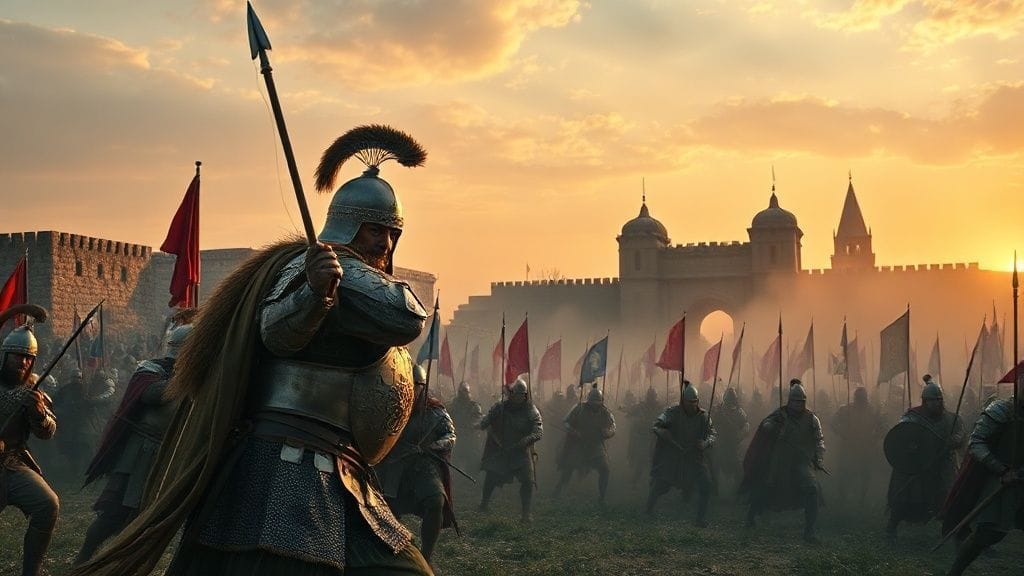
The watershed moment that cemented Khan Krum’s fearsome reputation was the Battle of Pliska in 811. The Byzantine forces, marshalled in strength but lacking coordination, marched deep into Bulgarian territory. Krum, anticipating their movements, orchestrated an ambush. The battle ended disastrously for Byzantium: Emperor Nikephoros I was killed, and thousands of Byzantine soldiers perished.
This victory stunned Constantinople and threw the empire into chaos. Notably, the gruesome story of Krum fashioning his predecessor’s skull into a drinking horn became a sordid symbol of the battle’s psychological impact. The Bulgarian capital of Pliska, a wooden fortress city nestled amid rolling plains, had successfully repelled the Byzantine juggernaut.
The Aftermath of Defeat: Chaos and Retribution under Khan Krum
Following the victory, Krum pressed his advantage, raiding deeper into Byzantine lands and threatening even to besiege Constantinople. Yet his death in 814 curtailed further incursions, leaving his successor Omurtag to stabilize a realm freshly emboldened but facing the practical necessities of governance and diplomacy.
His death was a pivot point—transitioning Bulgaria from expansionist fervor to pragmatic consolidation, a rare moment in medieval warfare where victorious states sought peace, security, and internal growth.
Omurtag Emerges: The Architect of Bulgarian Stability
Omurtag, Krum’s son, inherited a complex legacy. He was tasked with not only maintaining Bulgaria’s newly secured borders but also defining the kingdom’s future in relation to its oldest and most powerful rival.
Unlike his father’s ferocity and expansionism, Omurtag favored stability and order. His reign focused on fortifying the kingdom’s internal structure—building roads, palaces, and defensive walls. His famous inscriptions, such as the Tarnovo Inscription, testify to a ruler proud of peace and order, deeply aware of the delicate balance between military might and diplomatic finesse.
The Politics of Peace: Strategizing Between Pliska and Constantinople
As Omurtag ascended, Byzantium, recovering from earlier disasters and enmeshed in its own political upheavals, approached the idea of peace. Both sides found pragmatic incentives to negotiate: Byzantium needed to secure its northern borders to direct focus eastward against the Arab threat, while Bulgaria sought recognition and legitimacy.
The riverside meeting between Pliska and Constantinople was tense with history yet charged with hope. Negotiations stretched over two years (814–816), encompassing envoys, envoys’ exchanges, and carefully crafted treaties designed to secure mutual coexistence.
Diplomacy under Fire: Negotiations and Truces in the Shadow of War
Reports from Byzantine chroniclers suggest the talks were marred by deep mistrust, cultural misunderstandings, and the ghosts of horrific past battles. But under Omurtag’s firm hand, the Bulgars argued for terms that would secure borders and ensure regular tribute payments without actual submission.
This was a novel diplomatic formula in the era—neither conquest nor subjugation, but an uneasy truce forged from exhaustion and respect. Omurtag’s willingness to engage in structured peace, rather than endless skirmishes, signaled Bulgaria’s maturation into a more complex polity.
The 814–816 Peace Treaty: Terms and Implications
The 814–816 treaty heralded a new era. Byzantium recognized the Bulgarian state’s permanence and agreed to a set of border delimitations. Both empires consented to halt raids and plunder, establishing formal embassies and diplomatic channels.
One stipulation involved Byzantine payments to Bulgaria, compensatory in nature, which acknowledged the military and political weight Bulgaria now wielded.
Though often overlooked in the grander sweep of medieval history, this treaty was remarkable: a formal contract between two rival empires, setting a precedent for future medieval diplomacy eastward.
The Bulgarian Capital at Peace: Economic and Cultural Flourishing in Pliska
With war suspended, Pliska thrived. Archaeological digs reveal extensive palatial constructions, sophisticated fortifications, and an increasingly urban culture blossoming from the ashes of turmoil.
Peace brought caravan routes, trade, artisans, and religious plurality. Omurtag’s public works—palaces interlaced with pagan and Christian symbolism—illuminate a kingdom balancing tradition with adaptation.
Scholars believe this period laid foundations for Bulgaria’s eventual Christianization and further integration into European cultural and economic systems.
Constantinople’s Calculus: Accepting Bulgaria’s Rise
For Constantinople, the settlement was bittersweet. It was an admission that the haughty, Roman-centered empire could no longer claim monopoly over the Balkans. Bulgaria was no longer a mere outlaw neighbor but a key player.
By allowing Omurtag to hold firm, Byzantium effectively secured a northward buffer, freeing imperial forces to address threats on other fronts, especially from Arab caliphates and internal revolts.
Yet this acceptance would fuel tensions in the century to come as Bulgaria’s kings sought not only peace but parity with the Byzantines.
Beyond Borders: How the Peace Shifted Balkan Power Dynamics
The treaty reshaped not only Bulgarian-Byzantine relations but the entire geopolitical chessboard of the Balkans. Smaller Slavic and Avar tribes found themselves caught between two empires, often forced into vassalage or alliances.
This balance of power would ripple through centuries, influencing Carolingian ambitions in the west, the rise of Kievan Rus, and later Ottoman expansions.
The peace of 814–816 represented a rare moment of calculated restraint amid a turbulent power grab.
The Role of Religion and Identity in Bulgarian-Byzantine Relations
Even as swords rested, the religious question simmered. Bulgaria was still pagan or semi-pagan under Omurtag, while Byzantium was staunchly Orthodox Christian.
This religious divide shaped perceptions, propaganda, and future conflicts. Yet it also set the stage for Bulgaria’s eventual conversion to Christianity under Boris I in the late 9th century, a move that would forever entwine Bulgarian identity with the Byzantine cultural sphere.
Omurtag’s Public Works: Walls, Palaces, and Historical Inscriptions
Omurtag’s reign is immortalized in stone and mortar. The surviving inscriptions, such as the Pliska Ring and the Karnul Gate inscription, detail his building campaigns and his worldview—a ruler deeply invested in peace, order, and legacy.
These constructions were more than symbols; they were tangible assertions of sovereignty and civilization designed to rival Byzantium itself.
Recent archaeological discoveries have shed light on the sophistication of Omurtag’s urban planning, blending nomadic heritage with settled governance.
The Legacy of the 814–816 Peace: Bridging Conflict and Coexistence
The treaty brokered by Omurtag marks a historical fulcrum—not merely a cessation of hostilities but a true reconciliation that permitted Bulgaria’s emergence as a European kingdom.
Its lessons resonate through history: the value of diplomacy as a tool for survival, the complexity of borderland identities, and the multifaceted nature of peace—never absolute, always precarious.
Centuries later, historians would look back at this era and realize it was a moment when war-weary enemies glimpsed a shared future.
Echoes Through Time: How This Peace Influenced Medieval Eastern Europe
The ripple effects of Bulgaria’s peace with Byzantium extended beyond the immediate. It influenced Slavic political development, Byzantine diplomacy, and even the contours of medieval Christian Orthodoxy.
This era foreshadowed the delicate balancing acts of Balkan rulers, who would forever negotiate the fine line between sovereignty and subservience, war and peace.
In retrospect, the 814–816 peace was an early chapter in the long saga of Eastern European statecraft—one where empires learned that coexistence, however uneasy, could be more enduring than conquest.
Conclusion
The narrative of Khan Krum pressing Byzantium, culminating in the peace brokered by his son Omurtag, is a compelling tale of ambition, war, resilience, and ultimately, reconciliation. It reveals how two formidable powers—driven by centuries of enmity—could emerge from the crucible of conflict not as eternal enemies resigned to endless warfare, but as wary partners willing to embrace peace.
Omurtag’s reign and the treaty of 814–816 did not merely pause fighting; they paved the way for Bulgaria’s transformation from a fierce, martial federation into a sophisticated medieval kingdom. They showed that might alone could not sustain a realm without diplomacy, governance, and cultural development in equal measure.
As history often teaches, peace forged after bloodshed is never simple or guaranteed—it demands vision, courage, and above all, a willingness to imagine a world beyond conquest. For the Bulgars and Byzantines alike, this peace shaped their destinies and rippled into the tapestry of European history.
FAQs
Q1: What led to the conflict between Khan Krum’s Bulgaria and Byzantium?
A1: The conflict stemmed from territorial ambitions, religious tensions, and control over strategic Balkan routes. Bulgaria sought recognition and expansion, while Byzantium aimed to preserve its northern borders.
Q2: Why was the Battle of Pliska in 811 significant?
A2: It was a major defeat for Byzantium, resulting in the death of Emperor Nikephoros I and showcasing Khan Krum’s military prowess, which shifted regional power balances.
Q3: How did Omurtag differ from his father, Khan Krum?
A3: Omurtag prioritized peace, stability, and internal development, in contrast to Krum’s aggressive military expansionism. Omurtag’s reign was marked by infrastructure projects and diplomatic negotiation.
Q4: What were the key terms of the 814–816 peace treaty?
A4: The treaty established set borders, cessation of raids, formal diplomatic relations, and Byzantine payments to Bulgaria—symbolizing recognition of Bulgarian sovereignty.
Q5: How did religion factor into Bulgarian-Byzantine relations during this period?
A5: Bulgaria remained pagan or semi-pagan while Byzantium was Orthodox Christian. This religious difference was a source of tension but also a backdrop for Bulgaria’s later Christianization.
Q6: What cultural impacts did the peace have on Bulgaria?
A6: Peace allowed Bulgaria to develop urban centers like Pliska, build significant public works, and set the stage for cultural assimilation and religious transformation.
Q7: How did the peace influence future Balkan politics?
A7: It created a precedent for coexistence and formal diplomacy between rival powers, shaping the complex balance of power in the region for centuries.
Q8: Why is this episode important in medieval history?
A8: It highlights the emergence of Bulgaria as a key medieval power and illustrates how war and diplomacy intertwine to shape the fate of empires.