Table of Contents
- The Danube Frontier: A Crossroads of Empires
- The Rise of the East Frankish Kingdom in the 9th Century
- Moravia Emerges: The Birth of a Slavic Power
- Clash on the Danube: The Early Conflicts Between East Franks and Moravians
- Political and Religious Stakes at the Borderland
- The Strategic Importance of the Danube Frontier
- The Military Forces: Frankish Armies and Moravian Warriors
- The Role of the Great Moravian Duke Mojmir I
- Carloman’s Campaigns: East Frankish Attempts to Secure the Frontier
- The Battle Tactics and Warfare of the Era
- The Impact of Charlemagne’s Legacy on East Frankish Military Doctrine
- Diplomacy, Alliances, and Betrayals Along the Danube
- The Christianization Efforts and Their Role in Contest for Influence
- The Siege of Civitas and Other Key Engagements
- How Geography Shaped the Conflict
- The Aftermath: Shifting Borders and Political Realignments
- Consequences for Central European Identity Formation
- The Danube Frontier's Role in Shaping Medieval European Power
- The Cultural Exchange Amidst Conflict
- Lessons from the East Frankish-Moravian Struggles for Modern History
- Legacy of the 9th Century Conflicts in Moravian and Germanic Narratives
- Conclusion: A Frontier Etched in Blood and Diplomacy
- FAQs: Deepening Understanding of the East Frankish-Moravian Border Wars
- External Resource
- Internal Link
The Danube Frontier: A Crossroads of Empires
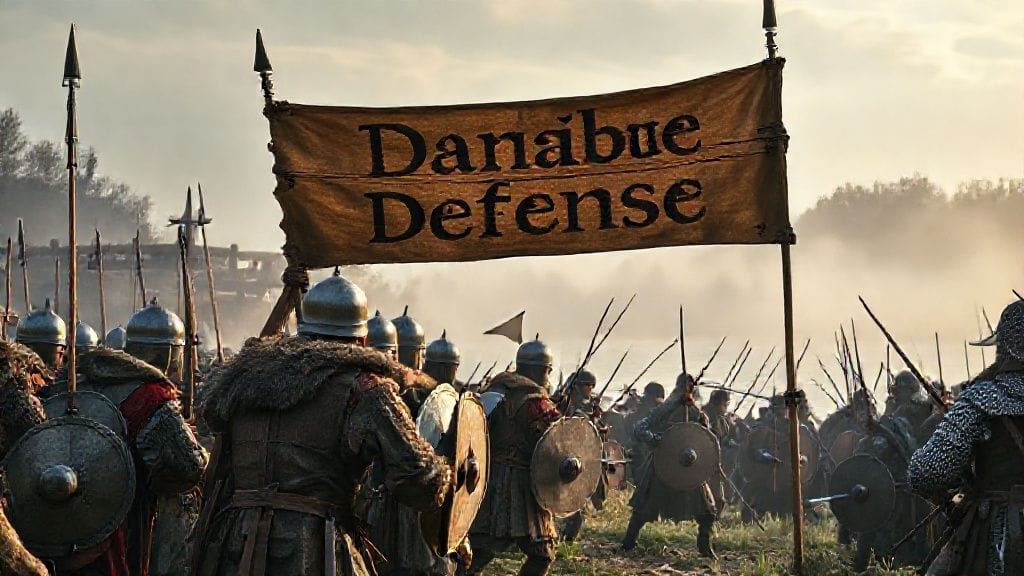
The banks of the Danube River in the 9th century stood as a dynamic, volatile frontier where empires, clans, and cultures collided. As dawn broke over the mist-wreathed waters in early autumn, the chill in the air palpable, thousands of warriors prepared for yet another confrontation — between the seasoned East Frankish forces and the resilient Moravian tribes. This was not simply a clash of swords; it was a contest for identity, survival, and dominance in a rapidly changing Europe.
The Danube Frontier, stretching across today’s central Europe, was more than a geographical marker — it was the thin, often bleeding line between the burgeoning East Frankish Kingdom and the nascent Slavic confederation known as Great Moravia. Every skirmish, siege, and treaty here would reverberate beyond the muddy banks of the river, influencing the future of kingdoms, the spread of religions, and the political map of Europe.
The Rise of the East Frankish Kingdom in the 9th Century
By the early 800s, the Carolingian Empire had fractured, giving rise to distinct entities. The eastern part, often called the East Frankish Kingdom, was a conglomeration of Germanic duchies united under the heirs of Charlemagne’s dynasty. Their rulers aspired to preserve their father's legacy — political unity, Christian dominance, and military prowess. But the eastern border was thinly stretched and vulnerable.
The East Franks inherited not just lands but also the ambition to secure their borders against mounting threats. One critical exposure was the vast, forested and marshy expanse along the Danube. It was here that the Franks encountered the Moravians — Slavic tribes slowly coalescing into a centralized polity under charismatic and ambitious leaders.
Moravia Emerges: The Birth of a Slavic Power
Great Moravia, forged around the middle of the 9th century, was more than a tribal confederation. Led initially by Mojmir I, its formation symbolized the rise of Slavic political identity, a kingdom intent on asserting itself against both the East Franks and the Avars.
Moravia’s geographical position along vital trade routes and fertile lands turned it into a prize worth fighting for. By consolidating smaller tribes and deploying a sophisticated administration, the Moravians set the stage for tensions with the East Franks, who viewed them as both a strategic threat and a competitor for regional dominance.
Clash on the Danube: The Early Conflicts Between East Franks and Moravians
The 830s and 840s ushered in the first large-scale conflicts. The East Frankish rulers, notably Louis the German and later Carloman, saw the Moravian expansion not just as territorial encroachment but as a direct challenge to their sphere.
The initial battles were brutal and unpredictable, fought with the clanging of chainmail and the thunder of horses charging through dense woodlands. Moravian raiders penetrated Frankish lands, while Frankish armies periodically sought punitive campaigns across the border. The Danube River was both a barrier and a highway, where control meant strategic advantage.
Political and Religious Stakes at the Borderland
This was not merely a contest of arms; it was a collision of political ambitions and religious ideologies. The Franks, fervent promoters of Latin Christianity, saw in Moravia both a mission field and a threat to ecclesiastical hegemony. The Slavs practiced a mixture of pagan rites, and their gradual conversion would prove essential in consolidating power.
East Frankish ecclesiastical authorities worked closely with the imperial court to install bishops and missions, using religion as a tool of influence and soft power. The Moravians, aware of this, carefully balanced accommodation and resistance, eventually inviting Byzantine missionaries to counterbalance Frankish ecclesiastical pressure.
The Strategic Importance of the Danube Frontier
Why was this river frontier so fiercely contested? The Danube was a vital artery through Europe, facilitating trade, movement of armies, and cultural exchange. Controlling its crossings, fortresses, and surrounding lands meant commanding wealth and influence.
Moreover, the Danube formed a natural defensive line for the East Franks, protecting their heartlands from incursions by Slavs, Avars, and Bulgars. It was also the launching ground for outward expansion or diplomatic outreach. Losing this frontier would risk unraveling the kingdom’s stability.
The Military Forces: Frankish Armies and Moravian Warriors
The East Frankish armies were heirs to Carolingian military reform. Heavily armored, led by mounted knights and disciplined infantry, they represented the apex of western European military organization. Yet far from uniform, these forces often relied on levies from local duchies and alliances with smaller Slav chieftains.
Moravian forces, on the other hand, combined guerrilla tactics with organized troop deployments. Their intimate knowledge of the terrain, speed, and adaptability often offset their relative lack of heavy cavalry. For the Moravians, every conflict was a test of resilience, resourcefulness, and legitimacy.
The Role of the Great Moravian Duke Mojmir I
Mojmir I’s leadership was pivotal during these confrontations. Ascending to power in the early 830s, he displayed remarkable statesmanship, balancing external pressures with internal consolidation. His successful campaigns expanded Moravia’s influence into neighboring territories, directly provoking East Frankish ire.
Mojmir was also instrumental in fostering Christian conversion efforts among his people, a strategic move to legitimize his rule and protect his realm from ecclesiastical subjugation. His reign remains a symbol of early Slavic sovereignty and defiance.
Carloman’s Campaigns: East Frankish Attempts to Secure the Frontier
In response to Moravian assertiveness, Carloman, son of Louis the German, launched multiple military campaigns in the 860s. His goal: to crush the Moravian threat, reassert East Frankish dominance, and secure the critical Danube line.
These campaigns were arduous, hampered by logistics, terrain, and Moravian resistance. Although initially successful in some raids and sieges, Carloman ultimately faced a tenacious opposition that prevented outright conquest. Yet his efforts forced political recalibrations and outlined the limits of Frankish expansion.
The Battle Tactics and Warfare of the Era
The warfare on the Danube frontier was emblematic of 9th-century conflict — a mixture of siege warfare, raids, pitched battles, and psychological warfare. Fortifications dotted the landscape, from wooden palisades to stone castles, serving as both bastions and refuges.
Frankish armies relied on heavily armored cavalry charges and coordinated infantry formations, while the Moravians favored ambushes, night attacks, and swift retaliations. The dense forests and river crossings made maneuvering difficult, favoring local knowledge over brute force.
The Impact of Charlemagne’s Legacy on East Frankish Military Doctrine
The shadow of Charlemagne loomed large. His successful campaigns and reforms had provided a blueprint for military discipline, feudal levies, and Christianized warfare. East Frankish commanders aspired to his standard yet grappled with changing political realities.
The Moravian threat tested the durability of Carolingian military doctrine. It demanded adaptation, including more flexible troop deployments and diplomatic engagement alongside forceful military actions.
Diplomacy, Alliances, and Betrayals Along the Danube
Behind the clangor of swords was an intricate dance of diplomacy. Both East Franks and Moravians courted neighboring tribes, forged temporary alliances, and at times resorted to deceptive truces and betrayals.
The Bulgars, Slavs, and local chieftains played critical roles as either allies or spoilers. This ever-shifting puzzle rendered the Danube frontier a complex theater where political survival often depended as much on negotiation as on warfare.
The Christianization Efforts and Their Role in Contest for Influence
Religious conversion was both a genuine spiritual movement and a strategic tool. The East Franks deployed missionaries and built churches to anchor Moravian loyalty. Meanwhile, the Byzantine Empire’s influence grew through its own missionaries, particularly Cyril and Methodius, who arrived in Moravia later in the century.
Christianization helped Moravia claim legitimacy and stave off East Frankish domination — a cultural confrontation that mirrored the military struggle.
The Siege of Civitas and Other Key Engagements
One of the defining moments was the siege of Civitas (the exact location debated by historians), a stronghold contested feverishly by both sides. The siege epitomized the deadly attrition warfare that characterized the frontier — months of isolation, failed assaults, and brutal reprisals.
Other engagements followed, smaller in scale but equally significant for morale and control. Each encounter shaped the ebb and flow of power.
How Geography Shaped the Conflict
The terrain molded the conflict itself. Hills and forests favored Moravian defensive tactics, while the East Franks' heavier cavalry struggled in marshy crossings.
The Danube, with its unpredictable flooding and wide stretches, was both a lifeline and an obstacle. Control over its river ports and bridges dictated supply lines and troop movements, turning the natural environment into a decisive actor in warfare.
The Aftermath: Shifting Borders and Political Realignments
By the late 9th century, the conflict had settled into a cautious stalemate. Borders fluctuated, but neither side achieved a decisive victory.
Moravia maintained its identity and some territorial gains but remained under pressure. The East Frankish domain fortified its borderlands, learning to coexist with a powerful Slavic neighbor. This uneasy peace laid the groundwork for future alliances and conflicts alike.
Consequences for Central European Identity Formation
These struggles deeply influenced the genesis of Central European identities. Moravia’s assertiveness inspired later Slavic states, while the East Franks’ persistence gave rise to what would become the Holy Roman Empire.
Cultural exchange, warfare, and religious contest shaped languages, laws, and loyalties, setting patterns that echoed through the medieval centuries.
The Danube Frontier's Role in Shaping Medieval European Power
This contested zone was more than a regional border; it was a crucible in which medieval European power was forged. Control over the Danube remained a strategic imperative for centuries, influencing imperial policies.
The lessons learned here about military strategy, diplomacy, and cultural integration would resonate beyond the 9th century, informing the medieval worldview.
The Cultural Exchange Amidst Conflict
Despite war, the Danube region became a melting pot — where Frankish art, Slavic customs, and Christian doctrine intertwined.
Missionaries, soldiers, traders, and refugees carried ideas and technologies across the divide. Such exchanges fostered a shared cultural landscape interwoven with tension and mutual influence.
Lessons from the East Frankish-Moravian Struggles for Modern History
The East Frankish-Moravian frontier conflict is a study in resilience, adaptation, and the limits of military power. It illustrates that borders are fragile constructs, balanced between force and diplomacy.
This era reminds us how early medieval Europe was a patchwork of emerging identities, each vying for space and recognition — a drama still relevant when studying nationhood and cultural diversity today.
Legacy of the 9th Century Conflicts in Moravian and Germanic Narratives
The memory of these conflicts permeated subsequent centuries. Moravian chronicles depict the wars as heroic defenses of Slavic soil. Germanic annals often frame them as episodes in the empire’s expansion struggles.
These narratives helped shape national myths and historiographies, feeding into later political ideologies and cultural self-understanding in Central Europe.
Conclusion
The East Frankish defense against the Moravians along the Danube frontier in the 9th century was far more than a series of battles; it was a defining crucible for emerging medieval Europe. Within this turbulent stretch of river and forest, whose waters ran thick with ambition and blood, the destinies of peoples were forged.
Here, strategy met spirit, ambition collided with tradition, and contrasting cultures intertwined in a fierce dance of war and diplomacy. The Danube was never just a river — it was a living border, shifting with the tides of history, where warriors battled not only for territory but for identity and legacy.
The echoes of those struggles resonate still, reminding us that borders, cultures, and political orders are fragile yet enduring, ever shaped by the complex interplay of human will, geography, and time.
FAQs
Q1: Why was the Danube frontier so significant in the 9th century?
A1: The Danube served as a vital trade route and natural border between empires. Controlling it meant access to economic resources, military advantage, and political influence in Central Europe.
Q2: Who were the main leaders on both sides during these conflicts?
A2: Moravian Duke Mojmir I was a key figure for the Slavs, while East Frankish rulers like Louis the German and his son Carloman took charge of Frankish campaigns.
Q3: How did religion influence the East Frankish-Moravian conflicts?
A3: Christianity was both a cause and consequence of power struggles; the Franks sought to Christianize Moravia to extend their influence, while Moravians used religion to solidify their sovereignty.
Q4: What were the military differences between East Frankish and Moravian forces?
A4: East Franks fielded heavily armored cavalry and disciplined infantry, while Moravians relied more on guerrilla tactics, mobility, and ingeniously using local terrain.
Q5: Did the East Frankish Kingdom succeed in subduing Moravia?
A5: Not completely. While they launched several campaigns, the Moravians maintained independence and the conflict settled into a tense but stable frontier.
Q6: How did these conflicts shape Central Europe's future?
A6: They influenced the political borders, cultural identities, and religious affiliations that laid the foundations for medieval Central European states.
Q7: What role did diplomacy play alongside warfare?
A7: Diplomacy was essential, involving alliances, treaties, and sometimes betrayals that complemented military action in controlling the region.
Q8: Are there lasting legacies of this conflict visible today?
A8: Absolutely. The East Frankish-Moravian interactions contributed to the cultural and political identities of Germanic and Slavic peoples, with echoes in modern Central European history and nationalism.

