Table of Contents
- Introduction
- Before Germ Theory: Miasma and Misconceptions
- Who Was Louis Pasteur?
- The Spark of Curiosity: Fermentation Studies
- Early Experiments with Microorganisms
- Pasteur’s 1864 Sorbonne Lecture
- Shattering the Spontaneous Generation Myth
- Reactions from the Scientific Community
- Implications for Medicine and Hygiene
- Pasteur’s Later Achievements
- How Germ Theory Transformed Public Health
- Legacy in Vaccination and Immunology
- Cultural and Global Impact
- Conclusion
- External Resource
- Internal Link
1. Introduction
On April 7, 1864, the elegant lecture halls of the Sorbonne in Paris were filled with anticipation. A chemist by training, Louis Pasteur stepped forward not to unveil a new element or compound, but to confront centuries of medical dogma. His words, backed by meticulous experiments, struck at the heart of medicine’s greatest mystery: What causes disease? The answer? Tiny, invisible microorganisms—an idea radical enough to change the world.
2. Before Germ Theory: Miasma and Misconceptions
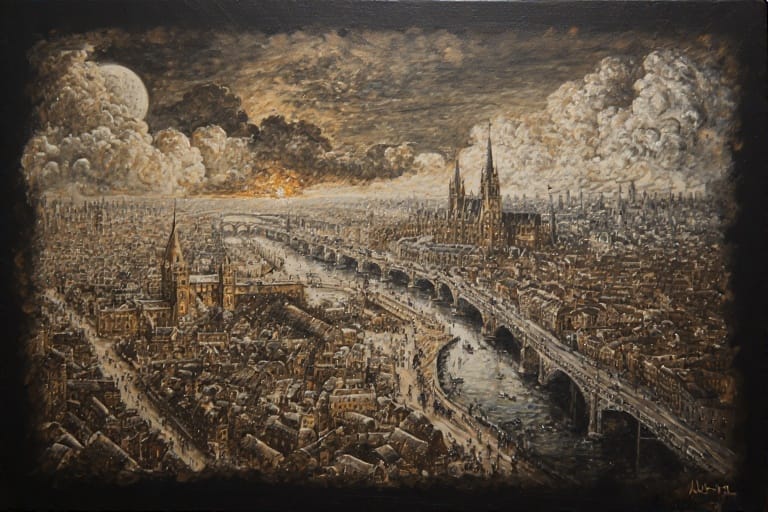
Prior to Pasteur’s work, the dominant belief across Europe was the miasma theory—that disease spread through “bad air.” This idea dated back to Hippocrates and was visually reinforced by foul-smelling, decaying environments. While public health campaigns often targeted cleanliness, they didn’t understand why it mattered.
Doctors didn’t wash hands between surgeries. Hospitals were rife with infections. The death toll from simple procedures was staggering, and no one knew what was really happening beneath the microscope—or even if a microscope could help.
3. Who Was Louis Pasteur?
Born in 1822 in Dole, France, Louis Pasteur wasn’t a physician—he was a chemist and physicist, deeply curious about the processes behind fermentation. His early interest in crystals and molecular asymmetry evolved into groundbreaking work on microbes, initially for practical purposes like improving wine quality and silk production.
But his attention soon turned toward a deeper question: could microbes do more than spoil wine or sicken silkworms? Could they be the culprits behind human disease?
4. The Spark of Curiosity: Fermentation Studies
While studying fermentation in the 1850s, Pasteur discovered that specific microorganisms caused the process in wine and beer. Spoilage wasn’t random—it came from contamination. This was radical. Many scientists still believed in spontaneous generation—the idea that life could arise from non-life, like maggots from meat.
Pasteur showed that without contamination, no fermentation occurred. Boiled liquids, sealed off from air, remained sterile. This observation would become the template for one of the most important shifts in human health history.
5. Early Experiments with Microorganisms
Pasteur’s famous swan-neck flask experiment was as elegant as it was definitive. He poured nutrient broth into flasks, bent their necks so that air could enter but dust and microbes could not, then boiled them. The broth remained clear and sterile for months—no microbial life appeared.
In contrast, similar broth exposed to open air quickly teemed with microbial growth. The conclusion? Microorganisms didn’t come from nothing. They came from other microorganisms. Disease, too, might originate in similar fashion—not from evil spirits or bad air, but from invisible invaders.
6. Pasteur’s 1864 Sorbonne Lecture
In his now-famous 1864 lecture at the Sorbonne, Pasteur methodically dismantled the theory of spontaneous generation and laid out the case for germ theory. He showed, step by step, how contamination led to disease—not mystical forces, but measurable, observable biology.
He ended his lecture with the powerful line:
“La génération spontanée est une chimère” — Spontaneous generation is a chimera.
In that moment, centuries of misguided thinking began to unravel.
7. Shattering the Spontaneous Generation Myth
Pasteur’s findings weren’t just theoretical—they had real-world implications. If disease was spread by microbes, it meant it could be prevented, too. The realization that sterilization, cleanliness, and sanitation could save lives was revolutionary.
But many scientists resisted. Germs were too small to be believed. The concept challenged deeply rooted norms in medicine, religion, and culture. Yet Pasteur had the most powerful ally in science: evidence.
8. Reactions from the Scientific Community
Not everyone was quick to accept Pasteur’s conclusions. Some medical professionals felt threatened. Others clung to old traditions. But as more and more experiments backed up Pasteur’s claims—and as surgeons like Joseph Lister began applying antiseptic methods in operating rooms—the tide began to turn.
Skepticism slowly gave way to admiration. In time, the medical community would regard Pasteur not just as correct, but as a pioneer.
9. Implications for Medicine and Hygiene
The confirmation of germ theory led to one of the most dramatic declines in mortality in human history. Hospitals began sterilizing instruments. Doctors washed their hands. Cities improved water systems and waste disposal.
Suddenly, diseases like puerperal fever, cholera, and tuberculosis could be traced, understood, and in some cases, prevented. It was a public health revolution fueled by microscopic insights.
10. Pasteur’s Later Achievements
Pasteur didn’t stop at theory. He helped develop pasteurization (named after him), which made milk and other foods safer. He also created the first vaccines for rabies and anthrax. His institute, the Institut Pasteur, remains a leading research center to this day.
His achievements earned him widespread acclaim—even as a non-physician, he was hailed as a savior of medicine.
11. How Germ Theory Transformed Public Health
From small clinics to sprawling cities, the impact was immediate and profound. Sewer systems, waste treatment plants, and vaccine programs were no longer luxuries but necessities. Governments began investing in epidemiology and public sanitation.
Infectious diseases, once viewed as inevitable, could be studied and stopped. Mortality rates dropped. Life expectancy rose. The theory didn’t just change minds—it saved millions of lives.
12. Legacy in Vaccination and Immunology
The confirmation of germ theory laid the groundwork for modern immunology. From Edward Jenner’s early work on smallpox to COVID-19 mRNA vaccines, the underlying logic is Pasteur’s: fight microscopic invaders by understanding them.
It also set the stage for the discovery of antibiotics, ushering in a new era of medicine that would shape the 20th century and beyond.
13. Cultural and Global Impact
Beyond medicine, germ theory influenced philosophy, ethics, and global policy. It challenged fatalism and encouraged scientific intervention. It also raised new questions about bioethics, contagion, and global collaboration.
The 20th and 21st centuries owe their public health advancements to this foundational idea. Every sterile needle, every vaccine, every disinfected hospital room traces its lineage back to Pasteur’s lab.
14. Conclusion
The confirmation of germ theory on April 7, 1864, was more than just a scientific milestone. It was a shift in how humanity sees itself—no longer at the mercy of unseen evils, but capable of fighting back with knowledge.
Pasteur’s legacy isn’t just his experiments or lectures. It’s every life saved, every child vaccinated, every hospital infection prevented. In the war against disease, Pasteur was a general armed with glass flasks and an unshakable belief in truth.
15. External Resource
 Wikipedia – Germ Theory of Disease