Table of Contents
- The Silence Before the Storm: Central Asia on the Eve of Battle
- Khurasan’s Fragile Throne: The Ghaznavid Empire at Zenith
- Rising Shadows: The Seljuk Confederation Emerges
- Clash of Titans: The Prelude to Dandanaqan
- The Battle Unfolds: Terrain, Strategy, and Struggle
- Turning Tides: The Seljuk Tactics that Changed the Game
- The Fall of Ghaznavid Supremacy: Aftermath at Merv and Khurasan
- The Human Faces behind the Clash: Leaders and Warriors
- The Soul of Khurasan: Cultural and Political Reverberations
- Seljuk Ascendancy: From Fractured Tribes to Empire Builders
- The Khurasani Frontier: Political Realignments and Power Shifts
- Archives and Chronicles: How History Remembered Dandanaqan
- Echoes Beyond Borders: The Impact on the Islamic World
- The Battle’s Lingering Legacy in Modern Central Asia
- Closing Reflections: Triumph, Tragedy, and Transformation
The Silence Before the Storm: Central Asia on the Eve of Battle
It was the year 1040, and the vast expanse of Central Asia lay shrouded in a tense calm, a fragile stillness that masked the approaching tempest. The desert sands around Merv — or Mary, as known today — whispered ancient secrets, but beneath this haunting silence, armies prepared to rewrite the destiny of empires. The air was dry and shimmering under the relentless sun, punctuated only by the distant murmurs of cavalry and the faint clangor of armor. For decades, the region had been a tapestry of contested sovereignties and shifting allegiances, ruled dominantly by the Ghaznavids, cultivated by the zealous Sultan Mas’ud I. They had extended their Islamic empire into Khurasan and beyond, their power seeming unassailable.
Yet, looming on the horizon was a force born from the steppes — the Seljuks — a confederation of Turkic tribes whose rise was as meteoric as it was unexpected. Their warriors rode swift and sure, dressed in humble garb but driven by ambitions grander than any tribal feud. The impending conflict was not merely a battle for land but for the soul of Central Asia, a pivotal moment where the old order would face its reckoning.
Khurasan’s Fragile Throne: The Ghaznavid Empire at Zenith
To fully grasp the magnitude of what was to unfold, one must understand the Ghaznavid dynasty’s impressive yet precarious hold on power. Sultan Mahmud of Ghazni had forged an empire spanning from the Iranian plateau to the borders of the Indian subcontinent, with Khurasan standing as a prized jewel rich in cultural heritage and economic wealth. After Mahmud’s death in 1030, his son Mas’ud I inherited an empire burdened by internal tensions, extravagant military demands, and growing challenges on multiple fronts.
Khurasan, in particular, was a land of contrasts — both a crucible of Persian culture and a tinderbox of tribal unrest. The Ghaznavid administration was stretched thin, relying heavily on a standing army and Persian bureaucrats to maintain control. Yet beneath this structured facade simmered deep unease: nomadic incursions grew more frequent, loyalty among local chieftains wavered, and the sultan’s grasp was slipping. Ghaznavid soldiers, though heavily armored and well-trained, were increasingly wary of the roaming Turkic horsemen to the north — a foe they underestimated.
Rising Shadows: The Seljuk Confederation Emerges
The Seljuks had humble origins, named after Seljuk Beg, a Turkoman chieftain whose descendants would irrevocably shape the Islamic world. These tribes were once scattered, fractured, and marginalised. But by the early 11th century, under the charismatic leadership of Tughril Beg and his brother Chaghri Beg, they began coalescing into a political and military force of staggering effectiveness.
Unlike the settled Ghaznavid administration, the Seljuks thrived in mobility and unconventional warfare. Their warriors were horse archers, masters of feigned retreats and lightning strikes. Their society was clan-based but united by a shared commitment to Sunnite Islam, offering ideological cohesion alongside tribal loyalty. To their advantage, the Ghaznavids viewed the Seljuks as mere nomads — a dangerous underestimation that would quickly be exposed in the coming days.
Clash of Titans: The Prelude to Dandanaqan
Tensions between the Ghaznavids and Seljuks escalated rapidly after the Seljuks seized Merv and began encroaching deeper into Khurasan. Sultan Mas’ud, alarmed by this loss, marshaled his forces for a decisive confrontation, intent on crushing this threat before it could fracture his empire.
The location chosen for the battle — Dandanaqan — lay near a vital water source, a natural choke point. Here, sprawling deserts met the fertile plains, setting the stage for a confrontation where control of resources would be as vital as military might. The Ghaznavid army, reportedly numbering between 25,000 to 50,000 according to chroniclers, was larger and better equipped, but lacked the agility for desert warfare. In contrast, the Seljuks, with a smaller but highly mobile force, knew how to leverage the land to their advantage.
Tughril Beg and Mas’ud exchanged diplomatic overtures, but mutual distrust made peace impossible. The battle was inevitable.
The Battle Unfolds: Terrain, Strategy, and Struggle
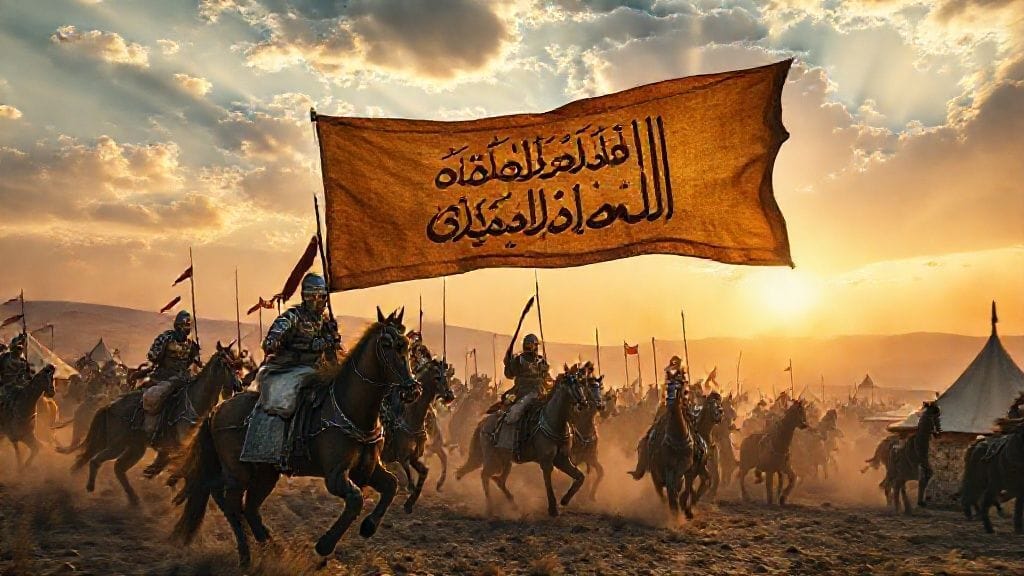
On the sun-scorched morning of May 23, 1040, armies clashed near Dandanaqan. The Ghaznavid cavalry charged in heavy armor, aiming to overwhelm their opponent with mass. But the Seljuks, dispersed in smaller, nimble units, engaged in hit-and-run tactics. Using the desert as their ally, they harassed supply lines, cut communications, and slowly drained the morale of the Ghaznavids.
Historical accounts, such as those by the chronicler al-Biruni, detail how the Seljuks exploited guerrilla warfare techniques — an approach alien to the rigid Ghaznavid command structure. By maintaining constant pressure while avoiding direct clashes, they weakened the enemy without risking full engagement.
The heat, thirst, and exhaustion rendered Ghaznavid troops vulnerable. As midday approached, Seljuk warriors launched a coordinated assault, breaking through the disorganized Ghaznavid lines. The once formidable army began a chaotic retreat, turning the battlefield into a scene of devastation.
Turning Tides: The Seljuk Tactics that Changed the Game
What set the Seljuk victory apart was not simply bravery but innovation — a cold calculation that married tribal traditions with astute military leadership. Tughril Beg’s command turned the desert’s harshness into a weapon, transforming it into a labyrinth for the heavier Ghaznavid horsemen.
The Seljuk use of feigned retreat, a classic nomadic tactic, lured Ghaznavid troops into ambushes where arrow volleys and sudden cavalry charges inflicted maximum damage. The Seljuks’ intimate knowledge of the terrain contrasted sharply with the Ghaznavids’ overreliance on brute force.
This battle, often overlooked in grand historical narratives, was a turning point not just militarily but culturally — revealing how mobile warfare would dominate the Islamic world for decades. It foreshadowed the rise of Turkic powers shaping politics, religion, and art for centuries.
The Fall of Ghaznavid Supremacy: Aftermath at Merv and Khurasan
The consequences of Dandanaqan were swift and profound. Sultan Mas’ud was forced to retreat westward, his grip over Khurasan shattered. The Ghaznavid hold over major cities weakened rapidly, with Merv — a magnificent center of learning and commerce — slipping away from their hands.
This loss marked the beginning of Ghaznavid decline. Khurasan, once a jewel in their imperial crown, now lay under Seljuk control. Mas’ud’s reign ended tragically; he was later captured and killed by his own troops — a grim testament to his faltering authority.
For the Seljuks, Dandanaqan was a spectacular springboard. They transitioned from a tribal confederation to rulers of an empire, with Tughril Beg declaring himself Sultan. The conquest of Khurasan allowed the Seljuks to project power into Persia, Iraq, and eventually the Levant.
The Human Faces behind the Clash: Leaders and Warriors
Behind the strategically narrated events were men shaped by ambition, faith, and fear. Sultan Mas’ud I, despite his failures, was a consummate ruler burdened by the weight of a faltering empire and his father’s towering legacy. His vision of a Persianate Islamic empire struggled against the harsh realities of tribal forces and desert politics.
Tughril Beg, on the other hand, personified the shifting currents of the era. Born in the steppes, his leadership was rooted in personal charisma, military prowess, and religious legitimacy. He united scattered tribes under the banner of Sunni Islam, promising a renaissance of order and faith.
The warriors who fought at Dandanaqan bore the scars of centuries of desert conflict. Seljuk horse archers rode with a mixture of tribal fervor and disciplined duty, while Ghaznavid soldiers confronted defeat with desperation.
The Soul of Khurasan: Cultural and Political Reverberations
Khurasan was more than a prize for armies — it was a crucible of Persian culture, science, and mysticism. The battle’s outcome shifted the custodianship of this rich legacy. Under Seljuk rule, Khurasan became a pivotal region reinforcing Sunni orthodoxy, but also fostering Persian literature, architecture, and intellectual exchange.
Merv’s fall symbolized not only a political defeat but a cultural transition. The city’s libraries and madrasas, though diminished temporarily, would later flourish under Seljuk patronage. The infusion of Turkic and Persian cultures during this period enriched Islamic civilization, setting foundations for future dynasties like the Khwarezmians and the Timurids.
Seljuk Ascendancy: From Fractured Tribes to Empire Builders
Dandanaqan marked the birth certificate of the Seljuk empire. Tughril Beg's subsequent campaigns capitalized on the momentum, including the crucial capture of Isfahan in 1050, which became the new imperial seat. The Seljuks deftly blended nomadic traditions with Persian statecraft, employing Iranian bureaucrats and fostering urban growth.
This fusion created one of the most successful and enduring Islamic empires of the medieval period. Their patronage of scholars like Al-Ghazali and promotion of Sunni Islam laid the groundwork for a revival that counterbalanced the Shi’a Fatimid Caliphate’s influence in Egypt.
The Khurasani Frontier: Political Realignments and Power Shifts
The Seljuk victory reverberated across the Islamic world. Khurasan’s change of hands destabilized neighboring powers, triggering realignments in the Abbasid Caliphate and Buyid dynasty. Many local rulers pledged allegiance to the Seljuks, recognizing their rising power and the religious legitimacy Tughril Beg claimed by supporting the Sunni Abbasid caliphs.
This shift also affected trade routes connecting the East to the West, with Seljuk control opening safer channels for commerce and pilgrimage. The empire’s expansion eventually influenced Crusader states, Mongol invasions, and the shaping of Islamic geopolitics for centuries.
Archives and Chronicles: How History Remembered Dandanaqan
Medieval chroniclers, though often writing under Seljuk patronage, recorded Dandanaqan as a divinely sanctioned triumph, emphasizing the unity and religious zeal of the Turkic tribes. Historians like Ibn al-Athir highlighted the battle’s strategic brilliance, but also lamented the end of Ghaznavid dominance.
Modern historians revisit these sources with nuanced perspectives, reconstructing the human costs and regional complexities. The battle lies at the crossroads of myth and reality, its narratives colored by evolving political agendas and religious interpretations.
Echoes Beyond Borders: The Impact on the Islamic World
Dandanaqan echoed far beyond Central Asia. The battle reaffirmed nomadic cavalry warfare's viability and heralded a shift in Islamic military doctrine. It catalyzed the Seljuks’ role as defenders of Sunni Islam, confronting Shi’a rivals and later Crusaders in the Levant. The new powers fostered a political stability that promoted cultural and scientific flowering — the splendor of Persian miniatures, madrasas, and architectural marvels like the Great Mosque of Isfahan have roots tracing back to this era.
The Battle’s Lingering Legacy in Modern Central Asia
In the modern historical memory of Turkmenistan, Iran, and Afghanistan, the Battle of Dandanaqan is a symbol of Turkic resilience and the dynamic blend of cultures shaping Central Asia. Archaeological surveys near Merv uncover layers of destruction and renewal, bearing testimony to this turbulent yet transformative epoch.
Scholars continue to see it as a key moment where Central Asia’s shifting sands birthed new identities — from nomadic warriors to imperial architects — influencing ethnic and national narratives in the region to this day.
Closing Reflections: Triumph, Tragedy, and Transformation
The Seljuk victory at Dandanaqan in 1040 was more than a military success; it was a seismic shift in the medieval world’s tectonic plates. It signaled the decline of an older Persianate order and the rise of Turkic power infused with Persianian cultural sophistication. It taught the world about adaptability, leadership, and the profound interplay between faith and politics.
Yet, behind the dust and blood lay stories of men caught in the currents of history — a defeated sultan whose empire crumbled, nomads who dared to dream, and civilizations forced to reinvent themselves. This battle reminds us how human destiny is often written in the folds of the desert, swift and unforgiving but fertile with possibility.
Conclusion
The Battle of Dandanaqan remains a cornerstone in the annals of medieval Islamic history, an episode where shifting alliances, cultural exchanges, and military innovation converged to reshape Central Asia. The Seljuk triumph underscored a transformation not only of power but of identity — from fractured tribes hunting survival to architects of an empire that championed Sunni Islam and Persian culture.
The echoes of that dusty battlefield still reverberate today, inviting us to reflect on the fragile nature of empires and the indomitable spirit of those who dare to challenge the established order. Dandanaqan was a moment when history pivoted, charting a new course for a region whose influence would ripple across continents and centuries.
FAQs
Q1: What were the main causes of the Battle of Dandanaqan?
The battle was precipitated by the Seljuk expansion into Khurasan, a key province under Ghaznavid rule. Ghaznavid Sultan Mas’ud I sought to halt Seljuk incursions threatening his empire’s stability and control over vital trade and cultural centers.
Q2: Who were the main leaders involved in the battle?
The battle featured Sultan Mas’ud I of the Ghaznavids and Tughril Beg, leader of the Seljuk Turks. Their contrasting leadership styles and military strategies were pivotal in determining the battle's outcome.
Q3: How did the Seljuks manage to defeat a larger Ghaznavid army?
The Seljuks used superior knowledge of the terrain, mobility, guerrilla tactics, and hit-and-run attacks. Their use of feigned retreats and dispersal wore down the heavier Ghaznavid forces, culminating in a decisive victory.
Q4: What were the consequences of the Seljuk victory at Dandanaqan?
The victory led to the decline of Ghaznavid power in Khurasan, Seljuk control over vast territories, and the establishment of the Seljuk Empire, which shaped Islamic political and cultural landscapes for centuries.
Q5: How did Dandanaqan influence Islamic culture and politics?
The Seljuks promoted Sunni Islam and Persian culture, fostering a renaissance in Islamic scholarship, art, and architecture. Their rule realigned political powers and provided stability against Shi’a rivals and Crusaders.
Q6: What is the historical significance of Merv in this context?
Merv, once a thriving cultural and economic hub in Khurasan, was a strategic city whose capture by the Seljuks symbolized their dominance and marked a cultural shift in the region.
Q7: Are there lasting legacies of the Battle of Dandanaqan in modern times?
Yes, the battle is remembered as a foundational moment in Central Asian history, influencing ethnic identities, regional power structures, and serving as a symbol of the Turkic and Persian cultural synthesis.

