Table of Contents
- A Winter’s Dawn in Westminster: The Birth of a New Kingdom
- The Tumultuous Road to the English Throne
- The Battle of Hastings: Fate Sealed on Senlac Hill
- William the Conqueror’s March to London
- The Political Landscape of England Before the Coronation
- Westminster Abbey: A Sacred Stage for a Seismic Change
- December 25, 1066: The Crowning Moment
- The Iron Crown of England: Ceremony and Symbolism
- The Role of the Church in Cementing Norman Power
- Reactions Among the English Nobility and Populace
- The Coronation as a Statement of Divine Right
- Immediate Aftermath: Consolidation and Rebellion
- William’s Use of Ceremony to Legitimize Rule
- The Fusion of Norman and Anglo-Saxon Traditions
- Legacy of the 1066 Coronation in English History
- The Impact on English Law and Governance
- Architectural Influence: Westminster’s Enduring Role
- Long-Term Cultural and Linguistic Consequences
- William’s Image Through the Eyes of Chroniclers
- The Coronation in Popular Memory and Modern Identity
- Conclusion: The Crown that Changed England Forever
- Frequently Asked Questions
- External Resource
- Internal Link
1. A Winter’s Dawn in Westminster: The Birth of a New Kingdom
On the morning of December 25, 1066, a dense London fog mingled with the biting chill of winter, blanketing the city in a cloak of pale, ghostly light. The ancient stone walls of Westminster Abbey, heavy with centuries of sacred rites, rose solemn and foreboding against the grey sky. Inside, a hush fell over the gathered crowd, punctuated only by the murmurs of monks and nobles clad in their finest, awaiting the arrival of a man who—in less than a year—had transformed the very destiny of England. William, the Duke of Normandy, was about to be crowned King of England. The air brimmed with a complex blend of anticipation, trepidation, and awe as the crown was poised to pass into new hands, ushering in an era that would redefine the island nation and its people forever.
It was more than a coronation; it was a vivid assertion that a new order had dawned—an order born in conquest, yet consecrated in the very heart of England’s spiritual life. This was not merely a political upheaval, but a ritual transformation, wrapped in symbols that echoed the weight of divine sanction and worldly power. The events of that day would ripple through centuries, embedding themselves in the foundations of English identity.
2. The Tumultuous Road to the English Throne
Before the crowning moment, England’s throne was a prize steeped in complexity and chaos. The death of King Edward the Confessor in January 1066 left the kingdom precariously poised. Edward, who had no direct heir, had, in his final days, reportedly hinted that William, his distant cousin and powerful Duke of Normandy, should succeed him. Yet Harold Godwinson, the most powerful noble in England and Earl of Wessex, seized the throne instead, crowned hastily by the English clergy. This act set the stage for a violent confrontation between rival claims, each buttressed by oaths, betrayals, and political intrigue.
William, bred in the chivalric courts of Normandy and shaped by years of warfare, viewed Harold’s assumption of power as a betrayal—a breach of feudal and divine order. His claim was bolstered by his familial ties to Edward and purported oaths extracted from Harold himself during a previous visit to Normandy. The stage was set not just for a contest of kings, but for a clash of civilizations.
The year 1066 became a crucible in which these competing ambitions and identities would be forged and tested. Each party marshaled forces, sought alliances, and prepared for a struggle that would spill blood upon English soil and change the nation forever.
3. The Battle of Hastings: Fate Sealed on Senlac Hill
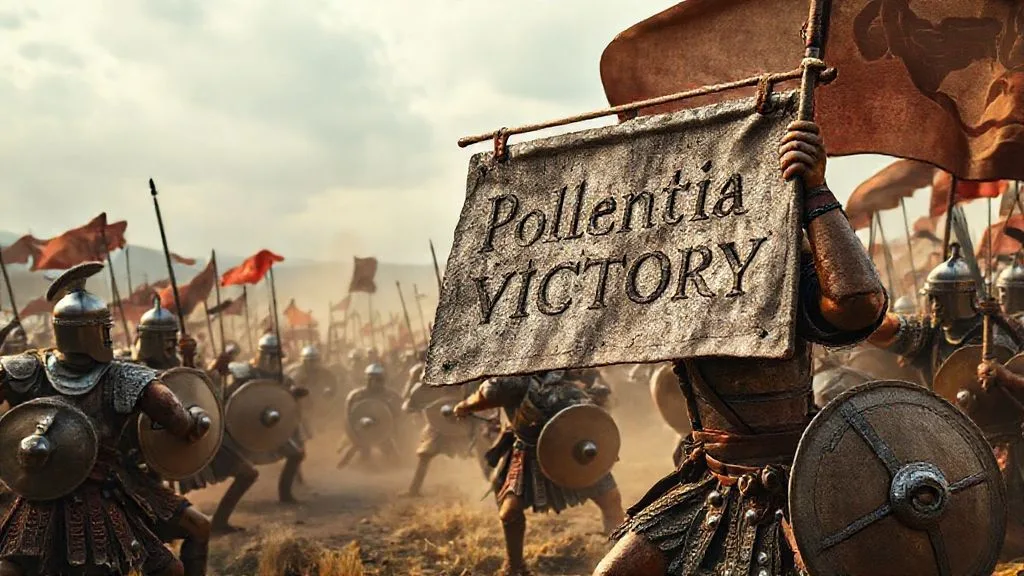
On October 14, 1066, the rolling greens of Senlac Hill near Hastings bore witness to a bloody and decisive confrontation. Harold’s Anglo-Saxon army, weary from marching north to repel a Norwegian invasion, now stood against William’s disciplined and diverse forces—Normans, Bretons, Flemings, and others, united under the banner of conquest.
The battle raged for hours, a brutal symphony of swordclashes, arrows, and cries. At day’s end, Harold lay dead—his fate immortalized in legend and tapestry. William emerged victorious, but the cost was high: waves of exhausted survivors, scattered nobles, and scorched earth. Hastings was not only a battlefield; it was the fulcrum of a changing epoch.
Yet, this victory was only the beginning. The path to the crown still required careful navigation of political, military, and spiritual challenges. William’s relatively small force could not yet claim the English throne without consolidating power, winning allegiances, and securing the approval of both nobles and Church.
4. William the Conqueror’s March to London
Following Hastings, William moved cautiously toward London, the seat of English power. His army—swelled by reinforcements from Normandy—faced not only martial opposition but a population divided between loyalty to the fallen English crown and grudging acceptance of the Norman invader.
The journey to London underscored the tenuousness of William’s claim. Key towns resisted, and uprisings flickered like embers. William’s response combined force and diplomacy—a strategic web of castles sprang up across the landscape, symbols of English submission and Norman permanence. His foresight in blending military strength with political strategy proved instrumental.
London itself was a fortress of resistance, its powerful earls uncertain whether to submit or risk the wrath of the conqueror. The question lingered: would a foreign duke impose himself atop the highest throne in England?
5. The Political Landscape of England Before the Coronation
England in the autumn of 1066 was a kingdom fragmented by loyalties and ambition. The traditional Anglo-Saxon aristocracy, deeply rooted in centuries of customs and laws, had governed a realm rich in identity and regional variance. Harold Godwinson’s death left a vacuum filled not only by William but by potential pretenders, including Harald Hardrada of Norway, who had perished shortly before Hastings at Stamford Bridge.
At court and among the nobility, uncertainty reigned. Some saw William as a legitimate successor, others as a ruthless foreigner threatening their very way of life. The Church, wielding spiritual authority, also played a pivotal role, and the allegiance of its leaders could tip the scales of power.
William needed to craft a narrative not only of conquest but of rightful kingship. His coronation would serve as a potent act of political theater designed to assert his unassailable position.
6. Westminster Abbey: A Sacred Stage for a Seismic Change
Westminster Abbey, consecrated in 1065 just months before the death of Edward the Confessor, was a jewel of early English Gothic architecture. Its soaring nave, cloistered chapels, and rich iconography created a space of divine majesty and solemnity.
Choosing Westminster as the site of his coronation was a masterstroke in William’s strategy. It placed his ascension within a continuum of sacred monarchy, linking him symbolically to the lineage of English kings whose reigns had been blessed beneath its vaulted ceilings. The Abbey’s spiritual sanctity lent a veneer of God’s approval to William’s conquest.
As the congregation gathered that frosty Christmas, the Abbey was more than a building—it was a powerful emblem of tradition and legitimacy, and the chosen arena where a conqueror would become king.
7. December 25, 1066: The Crowning Moment
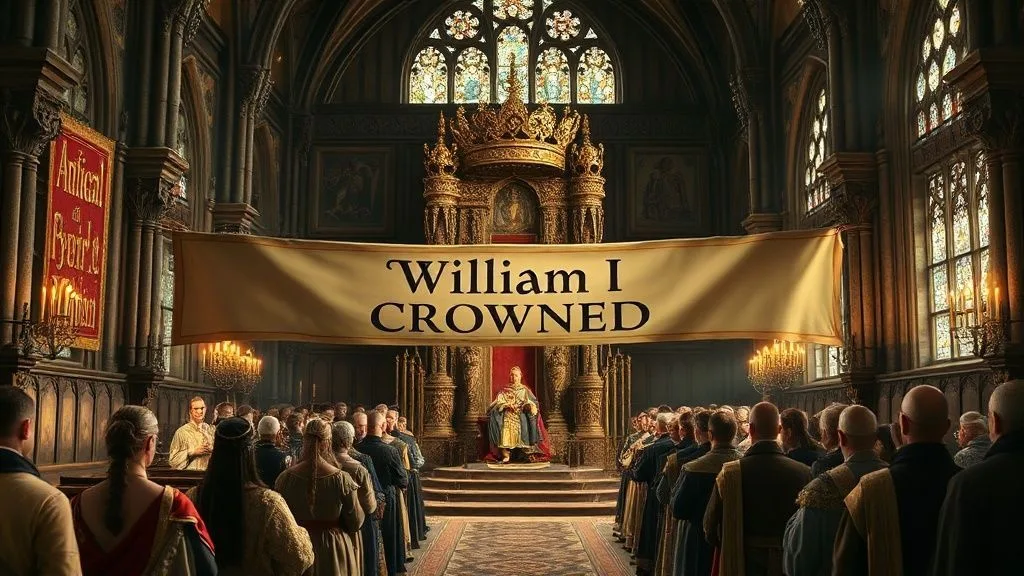
The ceremony itself unfolded with ritual precision. William, clad in royal robes, entered the Abbey amid the chants of monks and the murmurs of nobility. The Archbishop of York, Ealdred—himself a figure navigating loyalties between Normans and English—placed the crown upon William’s head.
This moment was charged with symbolism. The crown, forged from iron and gold, represented both temporal rule and divine sanction. The placing of it upon William’s head was an act that transcended mere victory in battle; it declared that God had chosen this man to rule England.
Witnesses described a congregation torn between acceptance and shock. The English throne had been seized by a duke who was both conqueror and anointed king—his authority now cemented by sacred rite.
8. The Iron Crown of England: Ceremony and Symbolism
The crown William received that day was more than a circlet of precious metals; it embodied the burden and glory of monarchy. In medieval Europe, coronation was an intricate ceremony laden with religious and political meaning.
William’s coronation rituals—anointing with holy oil, swearing oaths to protect the realm and church, receiving the sceptre and orb—were designed to present him as both a temporal ruler and God’s chosen sovereign. The iron crown, often a potent symbol of strength and unyielding rule, resonated deeply in a society where divine right was the ultimate source of legitimacy.
This ceremony broadcast a clear message: William’s kingship was ordained, and to challenge it was to defy both man and God.
9. The Role of the Church in Cementing Norman Power
The Church’s involvement in the coronation was crucial. The Normans understood the spiritual authority of the clergy and leveraged it to their advantage. Archbishop Ealdred’s participation bridged English ecclesiastical tradition and the new Norman governance.
The coronation emphasized the Church's endorsement, helping to quell doubts among the English populace. It demonstrated that William was not merely a foreign invader but a legitimate monarch within the Christian order.
This alliance between crown and altar would become a cornerstone of Norman rule, with the Church playing both spiritual and political roles in the consolidation of power.
10. Reactions Among the English Nobility and Populace
The immediate response among England’s elite and common people was mixed and often hostile. Some nobles chose pragmatism over loyalty, seeking to preserve their lands and titles under the new regime. Others rallied to resist, sparking revolts in the north and west.
For the average Englishman, William’s coronation signaled uncertainty: new masters, unfamiliar customs, and an alien language began to reshape daily life. Fear, resignation, but also adaptation marked this turbulent period.
The Norman conquest was thus not a single event but a protracted transformation, with the coronation as a pivotal, yet not final, expression of this upheaval.
11. The Coronation as a Statement of Divine Right
At its heart, William’s coronation proclaimed a fundamental medieval principle—that a king’s power was granted by God. By securing the ritual, William elevated himself above mere martial conquest to a divinely endorsed monarch.
This spiritual legitimization was vital for the stability of his reign. In an era where rebellion could be framed as righteous opposition to tyranny, claiming divine right insulated William from challenges, positioning dissenters as heretics or traitors.
The ceremony thus functioned as a political doctrine embodied in ritual spectacle.
12. Immediate Aftermath: Consolidation and Rebellion
Despite the grandeur of the coronation, William’s grip on England was far from secure. Over the following months and years, pockets of resistance simmered.
William responded by fortifying castles, redistributing land to loyal Norman barons, and instituting the feudal system to enforce obedience. The brutal suppression of uprisings—such as the Harrying of the North—demonstrated the costly price of Norman rule.
The coronation was merely the threshold; real power was won and maintained on battlefields, in courts, and within the hearts of reluctant subjects.
13. William’s Use of Ceremony to Legitimize Rule
William recognized early that spectacle and ceremony were not just symbolic but strategic tools. Beyond his coronation, he commissioned public displays of power, charters, oaths, and liturgies that underscored his rightful sovereignty.
These acts cultivated an aura of invincible authority and cultivated acceptance over time. They fused the medieval expectations of rulership with his personal narrative as a conqueror-king.
In this sense, his coronation was the cornerstone of a carefully constructed monarchy that would endure the ages.
14. The Fusion of Norman and Anglo-Saxon Traditions
William’s accession marked not only conquest but also cultural synthesis. Norman customs, language, and governance blended with Anglo-Saxon law and tradition.
While initially a rupture, this fusion gradually forged a new English identity. The court, legal systems, and aristocracy evolved, absorbing elements from both heritages.
The coronation symbolized this transition—a Norman duke crowned within an English institution, ruling over a hybrid kingdom.
15. Legacy of the 1066 Coronation in English History
The December 1066 coronation was a defining moment in English history. It did not merely mark a new ruler but inaugurated the Norman dynasty, reshaping England’s political and social fabric.
The event set patterns of governance and royal imagery that would echo for centuries. It was the seed from which the English monarchy’s enduring traditions—rituals, symbolism, and divine claims—would grow.
The day carved a line between old and new, conquest and legitimacy, chaos and order.
16. The Impact on English Law and Governance
William’s reign brought profound changes to England’s institutional landscape. The introduction of Norman feudal law altered land tenure and power dynamics, affecting centuries of governance.
The Domesday Book, commissioned later in 1085, epitomized this new order, cataloging resources and reinforcing royal authority.
The coronation was not an end but a beginning, the formal inauguration of these systemic transformations.
17. Architectural Influence: Westminster’s Enduring Role
The choice of Westminster Abbey as the coronation venue immortalized the site as the spiritual heart of English monarchy.
Following William, virtually every English monarch would be crowned here, weaving together England’s royal lineage with the Abbey’s stone and stained glass.
The architectural grandeur of Westminster became inseparable from the identity and legitimacy of England’s rulers.
18. Long-Term Cultural and Linguistic Consequences
Norman rule introduced the French language to the English court and aristocracy, profoundly influencing the English tongue.
This mingling gave rise to Middle English, embedding Norman vocabulary into Anglo-Saxon roots—a linguistic legacy that shapes English to this day.
The coronation was a symbolic entry point for these broad cultural shifts.
19. William’s Image Through the Eyes of Chroniclers
Contemporaneous chronicles, from Norman monks to English bards, painted William’s image in varied hues—from heroic savior to ruthless usurper.
The Bayeux Tapestry, a visual epic, immortalized the conquest and led readers’ views of William’s ascent.
The 1066 coronation remained a touchstone in these narratives, encapsulating William’s complex legacy.
20. The Coronation in Popular Memory and Modern Identity
Through centuries, the memory of William’s coronation evolved into legend and identity.
It symbolizes the birth of the English monarchy as we understand it today—a blend of conquest, law, and ritual.
Modern Britain still recognizes December 25, 1066, as a pivotal juncture in its history, a day when a foreign duke became the king of England and changed the nation forever.
Conclusion
December 25, 1066, remains more than a date etched in medieval annals—it embodies a world in transformation, where martial might met sacred ritual, and the destiny of a kingdom was forever altered. William’s coronation at Westminster was a spectacle of power, a declaration of divine right, and a political masterstroke. It forged a new England by binding Norman ambition with English tradition under the iron crown.
This day was a beginning—a dawn of an age where monarchy would be both earthly and heavenly, a symbol for the unity and evolution of a nation. The echoes of that frosty Christmas reverberate still, reminding us how history turns on moments of daring, faith, and ceremony.
FAQs
Q1: Why was William crowned on December 25, 1066?
A1: December 25, Christmas Day, was a deeply symbolic date for coronations, emphasizing divine approval and sanctity. Crowning William on this holy day framed his kingship as God’s ordained will, enhancing legitimacy.
Q2: What role did the Church play in William’s coronation?
A2: The Church was essential, with Archbishop Ealdred officiating to provide spiritual legitimacy. The Church’s blessing signaled religious endorsement crucial for medieval rulership.
Q3: How did the English react to William’s coronation?
A3: Reactions were mixed; many nobles resisted or awaited outcomes, while the common populace experienced fear and uncertainty. The coronation did not end resistance but was a step toward consolidation.
Q4: What significance did Westminster Abbey hold for the ceremony?
A4: Westminster Abbey was the epicenter of English kingship and spirituality. Its recent consecration and historical prestige made it an ideal setting to link William’s rule to English tradition.
Q5: How did the coronation influence English law and governance?
A5: It marked the start of Norman reforms, introducing feudal structures and record-keeping like the Domesday Book, establishing tighter royal control and reshaping governance.
Q6: What was the symbolic meaning of the crown placed on William’s head?
A6: The crown represented divine sovereignty and earthly authority. It was a tangible symbol that William’s right to rule was sanctified by God.
Q7: How did William’s reign impact English culture?
A7: It ushered in Norman influences, especially in language and aristocracy, blending French and Anglo-Saxon elements that evolved into England’s medieval culture.
Q8: Why is William’s coronation still relevant today?
A8: It marks the foundation of the English monarchy's continuous tradition, laying groundwork for national identity, legal frameworks, and royal symbolism that persist.