Table of Contents
- The Sunset Over the Orontes: Antioch on the Eve of 1098
- The Siege of Antioch: A City Under Siege and the Clash of Faiths
- The Crusaders’ Resolve: Hunger, Despair, and Miracles at the Wall
- The Fall of Antioch: Triumph and Turmoil within the Ancient City
- Beneath the Fallen Walls: The Creation of a Crusader State
- Bohemond of Taranto: The Architect of a New Principality
- Governance and Society in the Principality of Antioch: Clash of Civilizations
- The Role of Religion: Latin Christianity Over an Orthodox and Muslim Landscape
- Military Challenges: Defense Against Muslim Counterattacks
- Economic Foundations: Trade, Tribute, and the Crossroads of Civilizations
- The Impact on the Byzantine Empire: Alliance, Rivalry, and Distrust
- The Local Populations: Armenians, Syriacs, Greeks, and Muslims under Latin Rule
- The Principality’s Place in the Crusader States: Relations with Edessa, Tripoli, and Jerusalem
- Bohemond’s Diplomacy and Campaigns: Consolidating Power Amidst Rivalries
- The Legacy of the Principality: From Birth to Decline
- The Cultural Exchange and Architectural Imprints in Antioch
- The Personal Stories: Heroism, Betrayals, and the Human Face of Conquest
- Historiographical Perspectives: How Chroniclers Remembered 1098
- The Symbolism of Antioch: A Prize of Faith, Power, and Identity
- Conclusion: The Enduring Echoes of the Principality’s Proclamation
- FAQs: Untangling the Myths and Realities of Antioch’s Crusader Era
- External Resource
- Internal Link
1. The Sunset Over the Orontes: Antioch on the Eve of 1098
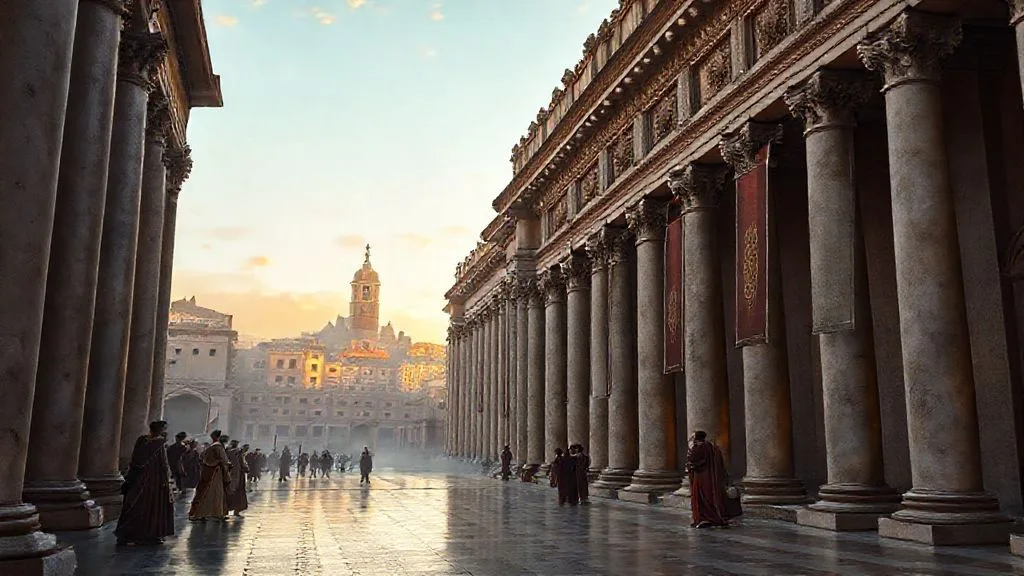
The sun dipped low over the fertile valley of the Orontes River, casting long shadows across the ancient city of Antioch. Once a jewel of Hellenistic brilliance and Roman grandeur, it now stood as a fortress cloaked in anticipation and dread. The city’s walls, towering and worn by time, stood between hope and despair, between the future and the past. For months, the air hung thick with tension—not merely from the sword pointed at its gates but from the collision of civilizations, faiths, and ambitions that had converged at this very point.
Antioch was more than a city. It was a symbol, a prize forged in the hands of empires ancient and new. In 1098, it was about to become the heart of a bold new chapter, written in the language of conquest, faith, and survival. This was the moment when the Crusaders, weary and desperate, finally tasted victory — but victory that would open the doors to challenges as great as their triumph.
2. The Siege of Antioch: A City Under Siege and the Clash of Faiths
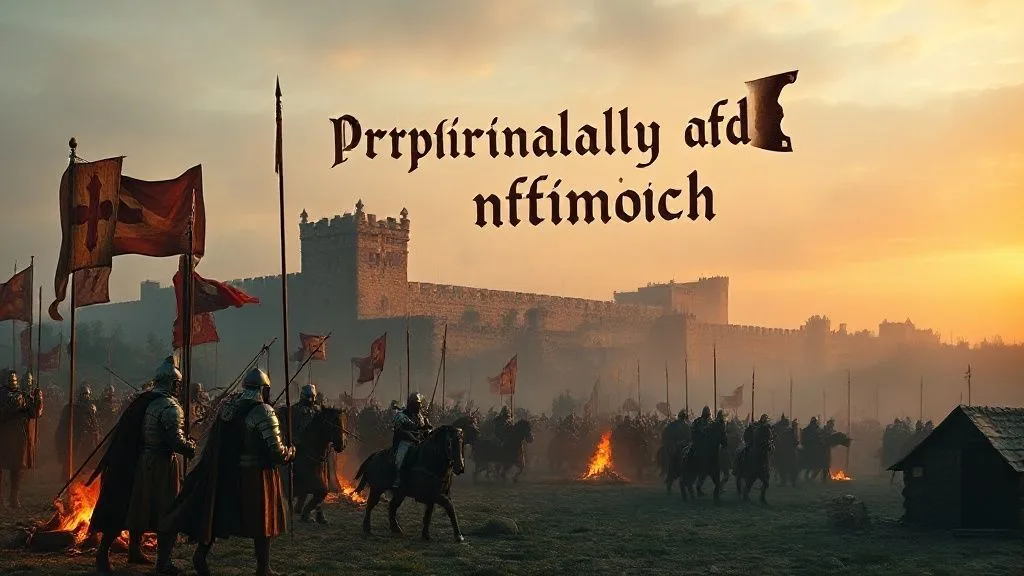
The Siege of Antioch, which began in October 1097, was not simply a military operation. It was a test of endurance, faith, and sheer human will. The Crusaders, a coalition of knights, foot soldiers, and pilgrims hailing from across Western Europe, had journeyed thousands of miles to reclaim the Holy Land. Yet Antioch, with its labyrinthine streets and formidable defenses, was a challenge unlike any before.
Inside the city, the Muslim defenders, aware of both the symbolic and strategic importance of Antioch, fiercely resisted. For the local population—comprised of Greeks, Armenians, Syrians, and Muslims alike—the siege brought fear and uncertainty, caught between the sword and the cross. The city had been a beacon of cultural blending for centuries; now it was about to witness the raw collision of militant Christianity and Islamic power.
Byzantium watched nervously. For the Byzantine Empire, Antioch was a critical bastion in the East, vital to their strategies and prestige. The arrival of the Crusaders posed not only an opportunity but a threat—foreign warriors claiming lands within the Empire’s sphere forever complicated an already fragile political landscape.
3. The Crusaders’ Resolve: Hunger, Despair, and Miracles at the Wall
The weeks dragged on. Inside the Crusader camp, supplies ran low, sickness spread, and morale waned. Hunger gnawed at their bones. Despair threatened to break the spirit of even the mightiest knights. Yet, amidst this physical and psychological torment, tales of miracles began to surface—stories of visions and divine intervention that infused hope into the desperate hearts of the besiegers.
One such story involved the discovery of the Holy Lance, the spear said to have pierced Christ’s side, found by a monk named Peter Bartholomew deep within the city’s caves. This relic galvanized the Crusaders, uniting them with renewed purpose and inspiring a wave of fervent belief that the siege would end in divine favor.
However, the fragile alliance between the Crusader leaders tested the limits of unity. Rivalries simmered, vows clashed, and the pressure of survival brought both heroism and fracture. It was a crucible in which destinies were forged.
4. The Fall of Antioch: Triumph and Turmoil within the Ancient City
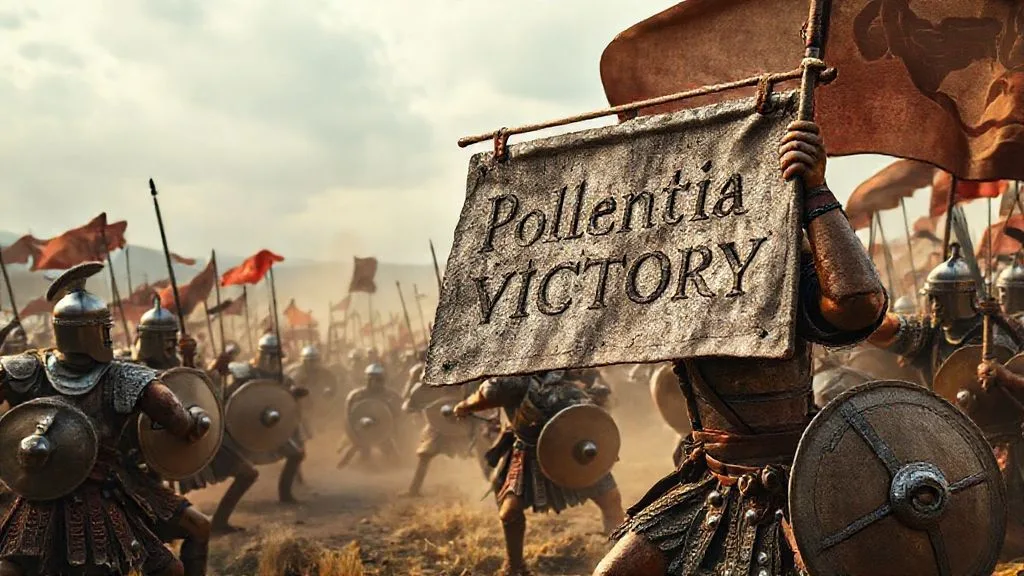
On June 3, 1098, after eight grueling months, the walls finally fell. Through subterfuge and force, Bohemond of Taranto, a Norman prince with ambition as fierce as his sword, secured a gate and let the Crusaders storm in. The city erupted in chaotic violence—triumph tinged with horror.
The streets ran red as the Crusaders took control. Despite orders to maintain order, the bitterness endured from siege dehumanized many, and massacres of the Muslim and even some Christian inhabitants ensued. The euphoria of victory was tempered by the grim realities of conquest.
But this victory was just the beginning. Control over Antioch meant walking a tightrope between military necessity, religious zeal, and political legitimacy. For the Crusaders, Antioch would not merely be a prize—it would become home.
5. Beneath the Fallen Walls: The Creation of a Crusader State
The fall of Antioch presented a crucial question—what next? Unlike the temporary armies of pilgrims they originally were, the Crusaders faced the need to transition into rulers, governors, and diplomats.
The creation of the Principality of Antioch was born from this necessity. Unlike the Kingdom of Jerusalem, whose rulers were principally of royal blood and papal recognition, Antioch’s new leadership grew out of military dominance and opportunistic claims.
The fledgling Principality had to navigate a complex reality: administer a city marked by diverse populations, defend an exposed frontier, and forge alliances in a region dominated by powerful Muslim states and wary Byzantine emperors.
6. Bohemond of Taranto: The Architect of a New Principality
Bohemond, son of the great Robert Guiscard, was no ordinary knight. His sharp mind and haughty ambition rendered him a force to reckon with. After the take of Antioch, he proclaimed himself Prince, establishing a hereditary rule that would endure decades.
His decision, however, alienated Byzantium, which considered Antioch as reclaimed territory by right. Bohemond’s defiance sowed seeds of contention that would plague the Principality and Byzantine relations for years.
Yet, Bohemond proved a capable leader, blending Norman military prowess with political cunning. His rule laid the institutional foundations, including feudal structures, military orders, and alliances that would define Antioch’s trajectory.
7. Governance and Society in the Principality of Antioch: Clash of Civilizations
The Principality was a mosaic. A Latin Christian ruling class dominated, but underneath lay Orthodox Christians, Armenians, Syriac Christians, Muslims, and other communities. Balancing these groups—some hostile, others cooperative—required adaptability.
Feudalism was introduced in a land that traditionally knew different socio-political orders. Castles and fortifications reinforced the military-centric administration, while town charters sought to foster trade and relative civic stability.
It was not an easy balance to maintain. Resistance, collaboration, and everyday negotiations shaped a society in flux, giving birth to cultural hybridization as well as conflict.
8. The Role of Religion: Latin Christianity Over an Orthodox and Muslim Landscape
Religion permeated every aspect of life in Antioch. The Crusaders brought with them Latin Christianity, often intolerant of the Eastern Orthodox Church and wary of Islam.
Church construction, the introduction of Latin clergy, and attempts to replace or overshadow Orthodox traditions left a complicated religious landscape. The Holy Sepulchre and local churches became battlegrounds of faith and influence.
Yet, coexistence remained a necessity. Trade and daily interaction demanded a pragmatic tolerance, even if theological divisions left scars.
9. Military Challenges: Defense Against Muslim Counterattacks
The Principality’s location, perched at a crossroads of hostile powers, ensured constant military vigilance. The nearby Seljuk Turks and other Muslim forces sought to reclaim lost territories, leading to repeated raids and sieges.
Maintaining strong fortifications, fostering alliances with local Armenian lords, and recruiting knights from Europe became pillars of Antioch’s defense strategy.
Its military history was marked by heroic battles and devastating losses, reflecting the precariousness of Latin power in the Levant.
10. Economic Foundations: Trade, Tribute, and the Crossroads of Civilizations
Antioch’s strategic position between the Mediterranean and the interior lands made it a bustling hub for commerce. The Principality tapped into established trade routes, dealing in spices, silk, grain, and textiles.
Tribute from nearby Muslim states at times supplemented military expenses, reflecting a complex balance of coercion and commerce.
The city’s economy was essential not only for survival but also for maintaining political prestige and offering incentives to new settlers from Europe.
11. The Impact on the Byzantine Empire: Alliance, Rivalry, and Distrust
The Byzantine Empire’s eyes never left Antioch’s fate. Though the Crusaders nominally fought to reclaim lands for Christianity and sometimes in alliance with Byzantium, the proclamation of the Principality fractured their relationship.
Byzantium viewed Bohemond’s seizure as a betrayal. Subsequent diplomatic tensions and military confrontations underscored deep divisions.
This fracturing of Christian unity had lasting consequences for East-West relations in the Middle Ages.
12. The Local Populations: Armenians, Syriacs, Greeks, and Muslims under Latin Rule
For the diverse peoples who had called Antioch home for centuries, Latin rule meant change, uncertainty, and sometimes oppression.
Armenian princes often found common cause or uneasy alliances with the Crusaders. Syriac and Greek Orthodox communities sought to preserve their traditions amid Latin dominance.
Muslim populations, although diminished by war and massacre, continued to assert presence, sometimes through negotiation, sometimes through resistance. Daily life became a negotiation between fear, accommodation, and cultural resilience.
13. The Principality’s Place in the Crusader States: Relations with Edessa, Tripoli, and Jerusalem
Antioch was one among several Crusader States birthed from the First Crusade. Unique in its Norman leadership and assertive independence, it played a critical role alongside Edessa, Tripoli, and Jerusalem.
Cooperation was essential for survival but rivalries for influence and resources often hindered unified crusading efforts.
The Principality’s stance shifting between alliance and autonomy shaped the politics of the Latin East.
14. Bohemond’s Diplomacy and Campaigns: Consolidating Power Amidst Rivalries
Bohemond’s diplomatic skill was as critical as his military ability. He negotiated with Muslim emirs, forged alliances with Armenian rulers, and courted or confronted Byzantine emperors.
His campaigns beyond Antioch, including an attempt to expand into Cilicia and later endeavors in Europe, demonstrated his ambition stretched beyond the city walls.
His death in 1111 marked the end of an era but left a template for his successors.
15. The Legacy of the Principality: From Birth to Decline
The Principality of Antioch endured nearly two centuries, witnessing the rise and fall of Crusader power in the Levant.
Its legacy is complex: a crucible of cultural exchange, religious fervor, and political ambition, but also a site of violence and displacement.
Its eventual fall in 1268 to the Mamluks marked the closing chapter of Crusader dominance, yet its history remains a poignant testament to a time when faith and power collided on ancient streets.
16. The Cultural Exchange and Architectural Imprints in Antioch
Despite the turmoil, the Principality fostered unexpected cultural diffusion. Latin, Byzantine, Armenian, and Islamic artistic styles mingled, visible in churches, fortresses, and urban layouts.
This blend attests to a human desire to create, even amid conflict, leaving a material legacy for future archaeologists and historians.
17. The Personal Stories: Heroism, Betrayals, and the Human Face of Conquest
Beyond grand politics and military maneuvers lay the stories of individual courage, tragedy, and ambition.
Knights who fought until their last breath, local families torn apart, clergy navigating impossible choices—all these human threads weave a rich tapestry that brings 1098 to life.
18. Historiographical Perspectives: How Chroniclers Remembered 1098
Medieval chroniclers such as William of Tyre and Fulcher of Chartres shaped our understanding of the Principality’s birth.
Their accounts, tinged with religious zeal and political bias, must be read critically to glimpse the multifaceted reality behind the legend.
19. The Symbolism of Antioch: A Prize of Faith, Power, and Identity
Antioch symbolized the Crusades’ contradictions: sacred endeavor and violent conquest, unity and division.
Proclaimed in 1098, the Principality embodied the moment when the medieval world grappled with its fractured identities and global ambitions.
20. Conclusion: The Enduring Echoes of the Principality’s Proclamation
The proclamation of the Principality of Antioch in 1098 was far more than a territorial claim. It was a moment that crystallized the hopes, fears, and complexities of the First Crusade and the broader medieval world.
Amidst desperation, faith was wielded as a weapon and a shield. Leadership was as much about political savvy as divine mandate. And the people who lived through these upheavals—whether knights or peasants, nobles or merchants, Christian or Muslim—etched a chapter of history marked by courage and contradiction.
Today, as we trace the ancient stones of Antioch and sift through the chronicles of the age, the story remains an evocative reminder of a world transformed by ideals and iron.
FAQs
Q1: Why was Antioch such a significant prize for the Crusaders?
Antioch was a key strategic city controlling routes between the Mediterranean and the interior Levant. It was also symbolically important, linked to early Christian heritage, making its capture both a military and religious triumph.
Q2: Who was Bohemond of Taranto, and why did he proclaim himself Prince?
Bohemond was a Norman nobleman known for his leadership during the siege. His proclamation was driven by ambition and military control, though it conflicted with Byzantine claims over Antioch.
Q3: How did the Principality of Antioch manage its religiously diverse population?
While Latin Christianity was dominant, the Principality tolerated various Christian sects and Muslims to different degrees, fostering pragmatic coexistence amid religious tensions.
Q4: What was the relationship between the Principality and the Byzantine Empire?
It was fraught with distrust and conflict. Byzantium saw the Principality as occupied Byzantine territory, while Antioch pursued independent policies, leading to hostilities.
Q5: How did the siege and capture of Antioch affect the Crusade’s broader objectives?
Capturing Antioch provided a critical foothold in the region, enabling further advances toward Jerusalem and establishing one of the main Crusader States.
Q6: What ultimately led to the decline of the Principality?
Continuous pressure from Muslim powers, internal divisions, and shifting alliances weakened the Principality, culminating in its conquest by the Mamluks in 1268.
Q7: How do modern historians view the events of 1098?
They recognize both the bravery and brutality involved, often emphasizing the complexity of cultural interactions and challenging simplistic crusade narratives.