Table of Contents
- A Silent Pact in Abernethy: The Scottish Kings Bow
- The Winds of Change: Scotland Before 1072
- The Rise and Reach of William the Conqueror
- Scotland on the Edge: The Question of Sovereignty
- Malcolm III: The King Torn Between Conquest and Tradition
- The Journey to Abernethy: Setting the Stage for Fealty
- The Day of Submission: Ceremony, Symbolism, and Power
- The Oath of Fealty: Meaning and Ambiguity
- Reactions Across the Highlands and Lowlands
- The Role of the Scottish Nobility: Allies or Victims?
- Between Submission and Resistance: The Intermittent Nature of Fealty
- Political Chess: How England Consolidated Influence
- The Cultural Rift: Identity in the Shadow of Norman England
- Abernethy’s Legacy on Scottish Kingship
- Long-Term Effects on Anglo-Scottish Relations
- Fealty and Heraldry: Symbols of Control and Defiance
- The Impact on Scottish Law and Governance
- Chronicles and Legends: How Medieval Writers Remembered Abernethy
- Archaeological Insights: Unearthing the Past of Abernethy
- Scotland’s Path after 1072: From Fealty to Fierce Independence
- The Fealty Debate in Historiography: Submission or Strategy?
- Personalities Behind the Ceremony: William, Malcolm, and Their Courtiers
- Reflections on Power, Identity, and Legacy
- Abernethy in Popular Memory and Modern Scotland
1. A Silent Pact in Abernethy: The Scottish Kings Bow
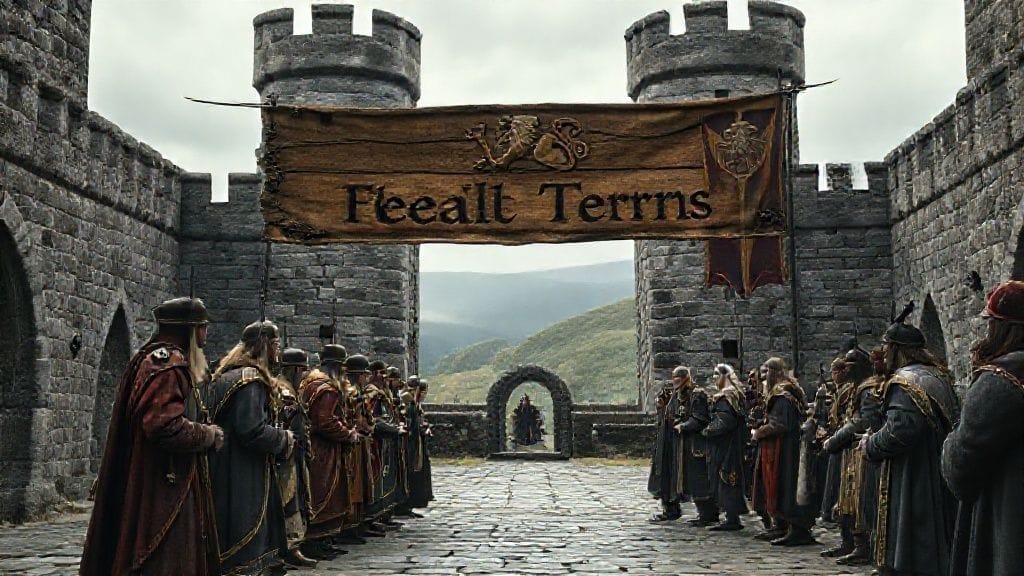
In the cool, misty dawn of a spring day in 1072, in the small royal burgh of Abernethy, Scotland, a moment of quiet yet immense significance unfolded beneath the gray skies. Scottish kings—most notably Malcolm III—stood before William the Conqueror’s envoys, hands clasped not in defiance but in hesitant submission. The event was no grand battlefield climax marked by clashing swords or roaring armies; instead, it was a silent pact, a delicate negotiation made manifest through the ritual of fealty—an oath to acknowledge overlordship.
This moment, though seemingly subdued, echoed through the centuries as a pivotal turning point. It was a hinge upon which the future of two nations, their identities and destinies, would be delicately balanced. Yet, the true nature of this fealty—its causes, terms, and implications—remains shrouded in complexity, debate, and intermittent allegiance that would shape the uneasy dance between Scotland and England for generations.
2. The Winds of Change: Scotland Before 1072
To understand Abernethy’s significance, one must first step back into the turbulent world of 11th-century Britain—a mosaic of shifting alliances, contested borders, and emerging dynasties. Scotland at this juncture was a land of clans and kingdoms still consolidating power amid external pressures and internal rivalries.
The ruling House of Alpin, represented by Malcolm III (Máel Coluim mac Donnchada), had recently weathered the storms wrought by Viking raids and the relentless push of England’s ambitious monarchs. The death of Macbeth in 1057—whose Shakespearean fame belies his turbulent reign—ushered Malcolm into a kingdom still fraught with instability.
Meanwhile, across the border, England had undergone its own transformation. The Norman Conquest of 1066 heralded a seismic shift in power, etiquette, and governance—a Norman William the Conqueror now military ruler and king, eager to cement his authority not only over England but over its neighbors.
3. The Rise and Reach of William the Conqueror
William the Conqueror was no ordinary king. His victory at Hastings was not simply a matter of claim but a deliberate reordering of the Anglo-Saxon world. His reign was characterized by a meticulous reassertion of control—land redistributed among loyal Norman barons, castles rising like sentinels of power, and a legal framework constructed around feudal obligations.
But William understood that true dominion required more than force; it necessitated the submission of neighboring rulers who might pose threats or foment rebellion. Scotland, to the north, represented both a challenge and an opportunity. Control or at least influence over the Scots was essential to securing the borders of his nascent realm.
The relationship between William and Malcolm III was a dance of mutual recognition and guarded hostility. William’s ambitions extended northward, but the Scots cherished their sovereignty fiercely—a tension that found expression in the events leading to Abernethy.
4. Scotland on the Edge: The Question of Sovereignty
For Malcolm III, reigning over Scotland meant balancing on a razor’s edge. His kingdom was defined by its people’s stubborn attachment to independence and the complex multiplicity of Gaelic, Norse, and Anglo-Saxon influences that shaped its identity.
His own claim to the throne was forged amidst bloody power struggles and claims to legitimacy—his rule a continuation, yet a modification, of Scotland’s ancient royal traditions. But increasingly, he faced the challenge of dealing with a powerful neighbor who no longer contented himself with mere border skirmishes.
Within this charged atmosphere, the notion of fealty was fraught with ambiguity. Was the Scottish king’s promise of loyalty a capitulation, a strategic gambit, or something else entirely? The answer was to emerge slowly from the events of Abernethy.
5. Malcolm III: The King Torn Between Conquest and Tradition
Malcolm III, often portrayed historically as a strong warrior king, was also a shrewd politician and a man deeply attached to his land and people. His marriage to Margaret of Wessex, herself of Anglo-Saxon royal blood, introduced new dynamics into Scotland’s relations with England.
Between resisting Norman encroachment and adapting to new power structures, Malcolm’s reign was a series of compromises and confrontations. After multiple raids into northern England, retributive campaigns and intermittent peace efforts, he found himself facing the reality of William’s growing might.
It was this precarious situation that brought Malcolm to Abernethy in the spring of 1072.
6. The Journey to Abernethy: Setting the Stage for Fealty
Abernethy itself was no random venue. Located strategically at the confluence of rivers and key transport routes, it was an ancient royal center, evoking Scotland’s regal past even as it served as the backdrop for this delicate encounter.
When envoys from William arrived to demand Malcolm's oath of fealty, the Scottish court was confronted with a critical choice: resist and risk devastating war, submit with conditions, or seek to redefine the terms of their relationship.
The journey to Abernethy was both literal and symbolic—a gathering of political will and fraught negotiations played out against the harsh Scottish landscape.
7. The Day of Submission: Ceremony, Symbolism, and Power
Accounts, though sparse and often filtered through English chroniclers, describe a formal ceremony where Malcolm III acknowledged William’s overlordship through an oath. The ritual—kneeling, hand-clasping, pledge of loyalty—held deep medieval significance.
Yet, beneath the surface of this solemn day lay tensions and ambiguities. Was this act a genuine submission or a pragmatic gesture aimed at preserving Scottish autonomy under the shadow of a greater power?
The ceremonial trappings symbolized more than political submission; they underscored the transformation of monarchy itself—one now enmeshed in a feudal web extending from the Norman heartlands.
8. The Oath of Fealty: Meaning and Ambiguity
Fealty in the medieval world was a complex contract—part personal loyalty, part political tool. The Scottish acceptance of the terms at Abernethy was intermittent and conditional, echoing throughout subsequent decades in a pattern of uneasy cooperation and sporadic conflict.
The oath’s wording, its scope, and the nature of expectations remain debated by historians. Did Malcolm recognize himself as a vassal of William in all things, or only in limited respects? Was the pledge a survival tactic, allowing time to consolidate power at home?
This ambiguity would define Scotland’s status during William’s reign and after.
9. Reactions Across the Highlands and Lowlands
News of the fealty oath rippled through the diverse realms of Scotland, eliciting a myriad of responses. While some nobles saw strategic advantage in aligning with the rising Norman power, others bristled at what they perceived as betrayal.
The Highland clans, with their fierce independence, were unlikely to submit easily. The Lowlands, more connected to Anglo-Norman culture through trade and marriage, were often more receptive or resigned to the practicality of such oaths.
This fracture within Scotland’s own polity would influence the kingdom’s ability to respond effectively to English influence.
10. The Role of the Scottish Nobility: Allies or Victims?
Scottish nobles found themselves in the eye of the political storm. For some, aligning with William’s demands opened pathways to wealth and influence. For others, it meant constrained sovereignty and the erosion of traditional rights.
William deftly leveraged these divisions, granting lands and titles to those who supported his aims, while punishing dissenters. Thus, Abernethy can be seen not only as a moment of kingship submission but also as the beginning of broader structural shifts within Scottish aristocracy.
11. Between Submission and Resistance: The Intermittent Nature of Fealty
Unlike a clear-cut conquest, the fealty accepted at Abernethy was far from constant or absolute. Subsequent years revealed a pattern of alternating submission and defiance, punctuated by raids, marriages, and treaties.
Malcolm himself would continue to exert independent policies, and after William’s death, this precarious balance would dissolve into renewed Scottish assertion of sovereignty.
This intermittent fealty framed the nature of Anglo-Scottish relations for much of the next century.
12. Political Chess: How England Consolidated Influence
William’s strategy in Scotland was as much about diplomacy and patience as about power projection. By demanding fealty, he inserted a foothold into Scottish affairs, signaling to other northern lords the supremacy of Norman England.
This political chess game also intersected with William’s internal concerns—fighting rebellion in Normandy, subduing Wales, governing England—making Scotland's submission a crucial buffer and symbol.
Yet, this control was never absolute, reflecting the limits of medieval overlordship.
13. The Cultural Rift: Identity in the Shadow of Norman England
Abernethy marked not only a political event but also a cultural crossroads. Scotland’s rich Gaelic traditions clashed with the Norman feudal system imposed by England.
The fealty terms brought with them demands for legal reforms, land tenure systems, and foreign customs, challenging Scotland’s distinct identity. However, Scottish culture proved resilient, absorbing influences without losing its core.
The tension between adaptation and resistance played out in law, language, and social practices.
14. Abernethy’s Legacy on Scottish Kingship
The ceremony at Abernethy altered the very concept of Scottish kingship. No longer an entirely separate sovereign, the Scottish monarch had to navigate complex international relationships under pressure from the emerging English crown.
Yet, this did not spell submission in the modern sense but introduced new dynamics of power, obligation, and diplomacy that would shape the monarchy’s evolution.
15. Long-Term Effects on Anglo-Scottish Relations
The fealty accepted intermittently in 1072 was a precursor to centuries of entangled destinies between England and Scotland—marked by wars, alliances, executions, and unions. The symbolic submission underscored unresolved tensions that remained a defining theme of British history.
From the Wars of Scottish Independence to the eventual Act of Union, the shadow of Abernethy’s pact lingered, shaping policies and perceptions.
16. Fealty and Heraldry: Symbols of Control and Defiance
Beyond solemn oaths, material culture reflected the changing relationship between Scotland and England. Heraldic symbols, seals, and banners became tools of asserting loyalty or defiance.
These visual tokens communicated allegiance to the wider medieval world and influenced diplomatic interactions.
17. The Impact on Scottish Law and Governance
The fealty agreement introduced Norman concepts of feudal law and governance structures that gradually permeated Scotland. The redistribution of lands, introduction of feudal courts, and the role of sheriffs reflected this transformation.
Yet these changes occurred unevenly, often modified by Scottish circumstances and resistance.
18. Chronicles and Legends: How Medieval Writers Remembered Abernethy
Medieval chroniclers painted the Abernethy event through their own lenses—English writers emphasizing conquest and submission, Scottish sources focusing on strategic accommodation.
Legends and myths grew around Malcolm III and William, reflecting medieval perceptions of kingship, honor, and power.
19. Archaeological Insights: Unearthing the Past of Abernethy
Modern archaeology at Abernethy reveals traces of royal presence, religious centers, and fortifications. These findings help reconstruct the material context of the 1072 event, illuminating facets of medieval Scottish political life.
20. Scotland’s Path after 1072: From Fealty to Fierce Independence
Following the intermittent fealty, Scottish kings increasingly asserted independence. The reigns of Malcolm’s successors, particularly David I, saw further Norman influence domestically but maintained a distinct Scottish sovereignty.
Abernethy’s moment did not end Scotland’s autonomy but highlighted the complex negotiations that would define it.
21. The Fealty Debate in Historiography: Submission or Strategy?
Historians have debated whether Malcolm's act was true submission or a calculated political maneuver. Some see it as subjugation under Norman pressure, others as a diplomatic strategy to buy time and strengthen Scotland internally.
This debate reflects broader questions about medieval sovereignty and power relations.
22. Personalities Behind the Ceremony: William, Malcolm, and Their Courtiers
Understanding Abernethy also means centering the human players: the determined William, a king of iron will; Malcolm, a warrior and statesman balancing competing demands; and the envoys, nobles, and clerics shaping events behind the scenes.
Their personalities and ambitions shaped what became more than a simple oath.
23. Reflections on Power, Identity, and Legacy
Abernethy stands as a testament to the complexity of medieval power—negotiated, symbolic, and imperfect. It challenges modern ideas of conquest and submission, revealing a world where identity, loyalty, and sovereignty intertwined fluidly.
24. Abernethy in Popular Memory and Modern Scotland
Today, Abernethy’s quiet ceremony has inspired reflections on Scottish history, nationalism, and identity. It is remembered not simply as submission but as a chapter in Scotland’s long-standing assertion of its unique place in the British Isles.
Conclusion
The 1072 fealty at Abernethy is far more than a footnote in history. It was a fulcrum on which the fragile balance of power between Scotland and Norman England tilted. It showcased how medieval kingship was bound not only to the sword but to oaths, ceremonies, and subtle negotiations of loyalty.
For Malcolm III and William the Conqueror, Abernethy was a moment of pragmatic confrontation—less the fall of one king, more the intertwining of two destinies. The fealty given intermittently speaks to a Scotland that neither surrendered wholly nor remained isolated but forged its path amid the pressures and possibilities of its time.
That event ripples through history as a vivid reminder of how power is wielded not just by force but by the spoken word, the clasped hand, and the tangled web of human ambition.
FAQs
Q1: Why did Malcolm III agree to accept the terms of fealty in 1072?
A1: Facing the military might of William the Conqueror and internal pressures within Scotland, Malcolm III likely saw fealty as a strategic move to preserve his throne and avoid open war, buying time to consolidate power and negotiate terms favorable to Scottish interests.
Q2: Did this fealty mean Scotland became a vassal state of England?
A2: The fealty was intermittent and ambiguous. While it symbolized a form of acknowledgment of William’s overlordship, Scotland maintained considerable independence, and the oath did not translate into complete subjection.
Q3: What role did the Scottish nobility play in this event?
A3: The nobility was divided; some sought alliance with Norman power to improve their status, while others resisted, leading to internal tensions that complicated Scotland’s political cohesion.
Q4: How reliable are the contemporary accounts of the Abernethy fealty?
A4: Most accounts come from English chroniclers, often biased in favor of Norman perspectives. Scottish sources are scarcer, and interpretations rely on reading between lines and archaeological evidence.
Q5: What long-term impact did Abernethy have on Anglo-Scottish relations?
A5: It set a precedent for fluctuating submission and resistance, framing centuries of complex political engagement, warfare, and eventual union between the two kingdoms.
Q6: How did the fealty affect Scottish culture and law?
A6: It introduced Norman legal and feudal customs that influenced Scottish governance but also met with adaptation and resistance, preserving Scottish distinctiveness.
Q7: Was Malcolm III’s wife, Margaret, influential in this relationship?
A7: Margaret, of English royal lineage, likely promoted closer ties and Christian reforms, impacting court culture and possibly softening relations with Norman England.
Q8: Is Abernethy commemorated in modern Scotland?
A8: While not widely celebrated, Abernethy is recognized by historians and cultural institutions as a significant event illustrating Scotland’s medieval political landscape and its enduring quest for sovereignty.

