Table of Contents
- The Aftermath of the First Crusade: Setting the Stage for Negotiation
- Bohemond of Taranto: The Ambitious Norman Prince
- Byzantium’s Strategic Position After the Crusades
- The Birth of Tensions: Conflicting Claims and Broken Promises
- Journey to Devol: The Gathering of Power and Purpose
- The Treaty in Focus: Devol’s Terms and Political Nuances
- Bohemond’s Calculated Submission: A Tactical Pause
- The Role of Alexios I Komnenos: Vision and Realpolitik
- The Geopolitical Chessboard: Norman Lords and Byzantine Emperors
- Reaction in the Latin East and Western Europe
- The Balkans: A Region Caught Between Powers
- The Aftermath of the Treaty: Enforcement and Defiance
- The Treaty’s Impact on Norman-Byzantine Relations
- Intrigues at the Court of Constantinople
- The Legacy of the Treaty: Fragmented Alliances and Future Conflicts
- The Treaty of Devol in Historical Memory and Scholarship
- Conclusion: A Fragile Accord Amidst the Turmoil of Crusades
- FAQs: Unraveling the Treaty of Devol
- External Resource
- Internal Link
The Aftermath of the First Crusade: Setting the Stage for Negotiation
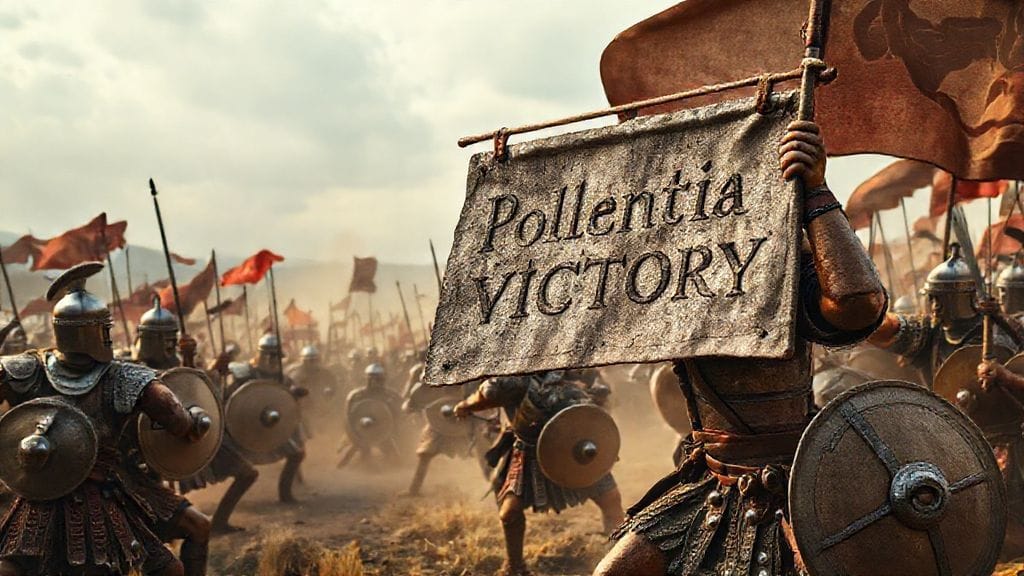
In the early decades of the 12th century, the eastern Mediterranean was a cage of shifting allegiances, military outposts, and fragile accords. The roar of crusader armies receded, leaving behind a volatile mosaic of Norman knights, Byzantine officials, Muslim rulers, and restless local populations. Yet amid this tumult, one of the era’s most pivotal yet overlooked episodes unfolded in 1108 in the shadowy Balkans — the Treaty of Devol.
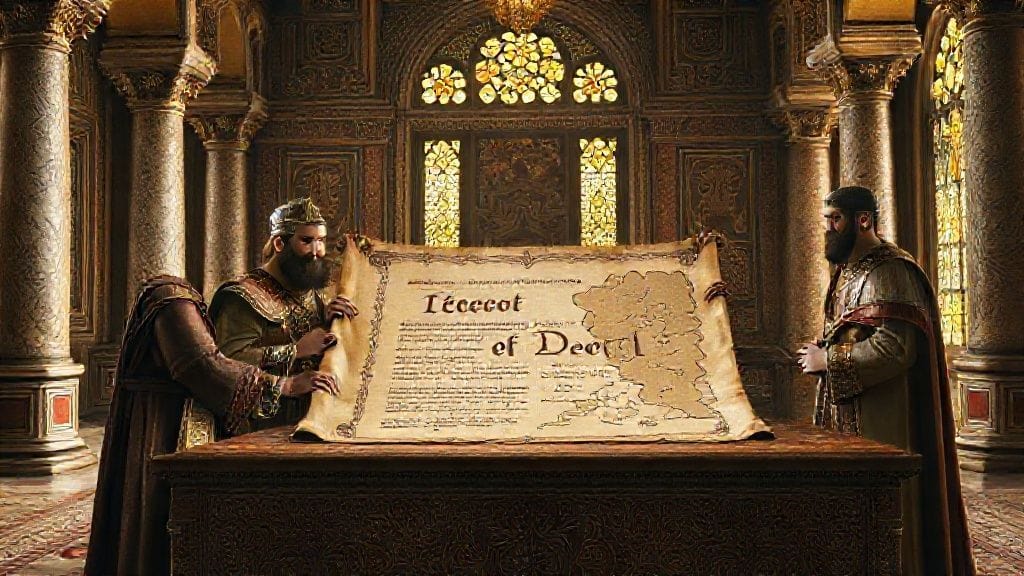
Imagine the cold, rugged landscape near the town of Devol—modern-day Kastoria, perched on the western fringes of the Byzantine Empire. Here, against the backdrop of rocky hills and ancient fortresses, two formidable powers—Norman high commander Bohemond of Taranto and Byzantine Emperor Alexios I Komnenos—faced off not with swords but with parchment. The Treaty of Devol would not only redefine the relations between Norman adventurers and Byzantium but would also offer a glimpse into the fragile dance of diplomacy overshadowed by conquest.
Bohemond of Taranto: The Ambitious Norman Prince
Bohemond of Taranto is a figure carved by ambition and战争 (war)—a warrior-prince born into the fierce Norman tradition of conquest and opportunism. The son of Robert Guiscard, the legendary Norman duke who carved southern Italy and parts of the Balkans from Byzantine and Muslim hands, Bohemond inherited both his father’s martial prowess and his insatiable hunger for dominion.
His pivotal role in the First Crusade, particularly at the siege of Antioch, marked him as one of the era’s most formidable military leaders. But Bohemond was not just a fighter; he was a shrewd politician, a schemer who sought to secure a principality for himself in the Levant, independent of Byzantine influence. His claims in the Balkans had long antagonized Constantinople, and his ventures into Byzantine territories were driven by the dual motives of power and prestige.
Byzantium’s Strategic Position After the Crusades
The Byzantine Empire, under the reign of Emperor Alexios I Komnenos, was in the middle of a painstaking restoration of imperial power and prestige. The empire had been battered by internal strife, external invasions, and the scarring of the First Crusade, which had passed through Byzantine lands with both cooperation and conflict in equal measure.
Alexios, a master tactician and seasoned ruler, understood better than most the perils of Norman ambitions. His agendas were clear: protect the empire’s borders, restore the economic vitality of Constantinople, and maintain Byzantine overlordship over the fractious Balkan territories and the Latin crusader states sprouting in the Levant.
Yet, the sheer complexity of alliances and claims meant that peaceful coexistence was fragile at best.
The Birth of Tensions: Conflicting Claims and Broken Promises
Tensions escalated in the years following the First Crusade as Bohemond asserted his rights to lands captured during the crusade, especially the areas around Antioch and parts of the Balkans. His refusal to recognize Byzantine suzerainty sparked a series of skirmishes and political provocations.
Alexios, ever pragmatic, sought to reassert control without an all-out war that could drain imperial resources. Negotiation became a tool of war in its own right, aiming to bring Bohemond under Byzantine vassalage, thus neutralizing a potent rival through diplomatic means.
The Treaty of Devol was the result of these turbulent negotiations—a document forged in tension, uncertainty, and mutual calculus.
Journey to Devol: The Gathering of Power and Purpose
In 1107, following a failed military campaign in the Balkans, Bohemond was compelled to negotiate with the Byzantine Empire. The campaign’s collapse exposed his limits and forced the Norman prince into an uneasy truce.
The site chosen for talks was Devol—a strategic frontier fortress city, symbolizing Byzantine resilience and Norman incursion. The gathering saw representatives of both rulers, dense with suspicion yet cautiously hopeful. The negotiations would pivot on sovereignty, hierarchy, and mutual recognition—issues that defined so many medieval treaties.
It was a journey not only across physical space but also through the delicate terrain of honor, obligation, and realpolitik.
The Treaty in Focus: Devol’s Terms and Political Nuances
Signed in 1108, the Treaty of Devol was a complex document that sought to codify the relationship between Bohemond’s holdings and the Byzantine Empire. Key provisions included:
- Bohemond’s recognition of Alexios I as his suzerain, effectively rendering the Principality of Antioch a vassal state of Byzantium.
- Bohemond’s pledge to pay tribute to the emperor and to provide military assistance upon request.
- The requirement that Antioch’s succession be subject to imperial approval, limiting the autonomy of Norman princes.
- The return of some contested territories to Byzantine control.
On paper, the treaty appeared a diplomatic triumph for Alexios. Yet, beneath these clauses lay an intricate balance of power and symbolic subservience, with Bohemond’s acquiescence more tactical than heartfelt.
Bohemond’s Calculated Submission: A Tactical Pause
Bohemond's acceptance of terms was not a concession born of defeat as much as a strategic withdrawal. Under immense pressure after military setbacks, he recognized the benefit of peace to consolidate his gains rather than lose everything to force.
Accounts from chroniclers like Anna Komnene, daughter of Alexios and author of the Alexiad, suggest that Bohemond’s submission was tinged with bitterness and that he viewed the treaty as a temporary setback.
The prince returned to the west with plans to regroup and reclaim his authority, highlighting the transient nature of medieval agreements amid the endless tides of war.
The Role of Alexios I Komnenos: Vision and Realpolitik
Alexios I emerges throughout this saga as a ruler of extraordinary vision and patience. His ability to blend military pressure with diplomatic nuance allowed Byzantium to stave off total dissolution.
The Treaty of Devol was not simply a capitulation by an opponent but a carefully engineered instrument to dilute Norman power and reinforce imperial primacy.
His diplomatic finesse extended beyond this treaty, weaving Byzantine interests into the broader fabric of crusader states, Armenian principalities, and Muslim neighbors.
The Geopolitical Chessboard: Norman Lords and Byzantine Emperors
The Treaty of Devol casts light onto a larger geopolitical struggle—one that went far beyond two rulers. It involved competing claims over lands, peoples, and legacies. The Norman presence in the Balkans and the Levant was both a threat and an opportunity for the Byzantines.
Meanwhile, Bohemond’s kin and fellow Norman lords watched closely, calculating their own ambitions. The treaty, in many ways, was a momentary truce in a persistent contest for supremacy in a borderland world of competing empires and identities.
Reaction in the Latin East and Western Europe
News of the treaty rippled through the courts of Western Europe and the emerging Latin kingdoms in the East. Many regarded Byzantine claims over Antioch as a betrayal of crusader ideals or a shrewd assertion of traditional authority.
Papal officials, knights, and nobles saw the treaty's nuances differently, influenced by their own agendas and the growing complexity of East-West relations. The fragile alliance networks that had supported the First Crusade began to fray with increasing disputes over sovereignty and loyalty.
The Balkans: A Region Caught Between Powers
The Balkans, where Devol itself was located, were a volatile frontier region. Slavic principalities, Norman incursions, Byzantine officials, and local chieftains jostled for power.
The treaty’s negotiation and signing near Devol were symbolic—a reminder of contested borders and the Byzantine effort to hold onto Balkan influence despite mounting challenges from various factions and external invaders.
The Aftermath of the Treaty: Enforcement and Defiance
Despite the treaty’s formal enactment, enforcement proved elusive. Bohemond returned to Norman-controlled territories in Italy and the Levant, where resistance to Byzantine overlordship simmered.
Subsequent military conflicts and political maneuvers revealed the treaty’s limitations. The latent tensions it sought to suppress erupted in new confrontations, underscoring the difficulty of imposing imperial authority over fiercely independent Norman lords.
The Treaty’s Impact on Norman-Byzantine Relations
In the decades following the Treaty of Devol, Norman-Byzantine relations remained fraught. While the treaty marked a high point in diplomatic attempts at peaceful resolution, it failed to provide lasting stability.
Norman ambitions in the Mediterranean endured, and Byzantine efforts to reassert control met with mixed success. The treaty became a reference point for future claims, disputes, and conflicts, embodying both hope for order and the reality of fragmentation.
Intrigues at the Court of Constantinople
Meanwhile, the Byzantine court itself was a hive of political intrigue. The Komnenos dynasty navigated not only external threats but also internal rivalries.
The treaty enhanced Alexios I’s prestige but also exposed fault lines within the aristocracy and bureaucracy, as questions about loyalty and imperial priorities rippled through corridors of power.
The Legacy of the Treaty: Fragmented Alliances and Future Conflicts
The Treaty of Devol is a testament to the complex dynamics of medieval diplomacy—one where kings and princes balanced force with negotiation, idealism with practicality.
Though it failed to secure peace long term, its terms influenced the legal and political vocabularies of future agreements between eastern and western powers.
This fragile accord foreshadowed recurrent themes in Crusader-Byzantine relations: contested sovereignty, cultural misunderstandings, and the relentless drive for power.
The Treaty of Devol in Historical Memory and Scholarship
Historians have long debated the treaty’s significance. While some see it as a diplomatic masterstroke of Alexios I, others highlight Bohemond’s tactical acumen.
The Alexiad remains a primary source, offering a Byzantine perspective rich in detail yet deeply partial.
Modern scholarship situates the Treaty of Devol within broader studies on the crusades, Byzantine diplomacy, and Norman expansion, recognizing it as a critical moment that shaped Mediterranean power politics.
Conclusion: A Fragile Accord Amidst the Turmoil of Crusades
The Treaty of Devol, signed amidst the upheavals of the early 12th century, is more than a dusty clause in medieval archives. It reflects the human complexities of power—the blend of ambition, pragmatism, and the persistent hope for peace even when war seems inevitable.
Bohemond and Alexios, locked in their struggle for supremacy, used this document as a temporary shield in a world defined by swords and shifting loyalties.
It reminds us that history’s great actors are seldom conquerors or victims alone—they are strategists, negotiators, and sometimes reluctant partners in shaping the destiny of empires.
FAQs: Unraveling the Treaty of Devol
Q1: What led to the Treaty of Devol between Bohemond and Byzantium?
A1: The treaty was born from military confrontations and political disputes following the First Crusade, particularly after Bohemond's failed campaign against the Byzantines in the Balkans. The need for negotiation arose as both sides sought to avoid prolonged conflict.
Q2: Who was Bohemond of Taranto, and what were his ambitions?
A2: Bohemond was a Norman prince and a key leader during the First Crusade. He aimed to establish a principality independent of Byzantine control, notably in Antioch and parts of the Balkans.
Q3: What were the main terms of the Treaty of Devol?
A3: The treaty required Bohemond to recognize Byzantine suzerainty, pay tribute, provide military support, and submit Antioch's succession to imperial approval, while returning some territories to Byzantium.
Q4: Did the Treaty of Devol bring lasting peace?
A4: No. While it temporarily halted hostilities, the treaty’s enforcement was weak, and conflicts resumed, reflecting the volatile relations between Normans and Byzantines.
Q5: How did Alexios I Komnenos benefit from the treaty?
A5: The treaty reinforced Byzantine claims over contested territories and introduced a legal framework aiming to curtail Norman independence, enhancing imperial prestige.
Q6: How has the treaty been viewed by historians?
A6: Scholars consider the treaty a significant example of medieval diplomacy, highlighting Alexios’s skill and Bohemond’s tactical flexibility. It reflects broader themes in Crusader-Byzantine relations.
Q7: What role did the Balkans play in the treaty negotiations?
A7: The Balkans were a contested frontier region and the location of the treaty signing. Control over this area was a key point of conflict between Normans and Byzantines.
Q8: Where can I learn more about the Treaty of Devol?
A8: Comprehensive information can be found in Byzantine chronicles like the Alexiad and modern historical analyses of the Crusades and Byzantine diplomacy.