Table of Contents
- The Fateful Dawn at Harran: A Prelude to Catastrophe
- The Crusader States in 1104: Fragile Outposts in a Hostile Land
- The Geography of Harran: Crossroads of Empires
- Christian Ambitions and Muslim Resistance: The Clash of Visions
- Baldwin II’s Gamble: Rallying the Crusader Forces
- The Muslim Coalition: Unified Under Sultans and Emirs
- The Siege That Wasn't: The Battle Unfolds
- The Surprise Flanks and the Collapse of Crusader Lines
- The Captivity of Baldwin II: A Kingdom in Peril
- The Shockwave Through Edessa: An Ally in Shambles
- The Aftermath in Harran: Immediate Turmoil and Retrenchment
- The Political Ripples Through the Crusader States
- Muslim Morale Reinvigorated: A Turn in the Holy Land’s Balance
- The Role of the Byzantine Empire: Watching from Afar
- The Strategic Lessons of Harran: Overreach and Miscalculation
- Edessa’s Vulnerability Post-Harran: Prelude to Fall
- Chronicles and Eyewitnesses: The Battle Through Contemporary Eyes
- The Long Shadow of the Defeat: How Harran Shaped the Second Crusade
- Cultural Memory and Historical Narratives: Harran in Crusader Lore
- Concluding Reflections: Failure, Survival, and the Fragility of Conquest
- FAQs on the Crusader Defeat at Harran
- External Resource
- Internal Link
The promise of conquest hung over the scorched plains near Harran like a thick, oppressive fog. On the morning of May 7, 1104, the air was taut with anticipation and dread as two armies prepared to clash under the blazing Mesopotamian sun—Christian knights, hardened by bitter campaigns and fueled by religious zeal, versus a united Muslim coalition steadfast in defense of their lands. What transpired that day was more than a mere defeat—it was a pivotal moment that bruised the rising Crusader states and foreshadowed turbulent years to come.
The Fateful Dawn at Harran: A Prelude to Catastrophe
Harran, a city ancient beyond reckoning, nestled at a vital crossroads between the Upper Mesopotamian plains and the deserts beyond, had once flourished as a cultural and commercial hub. By 1104, it had become a strategic prize in the fierce struggle between the nascent Crusader states and the established Muslim powers of the region. The Crusaders, led by Baldwin II of Edessa, saw an opportunity to fortify their precarious foothold. Yet, they underestimated the resolve and coordination of their opponents.
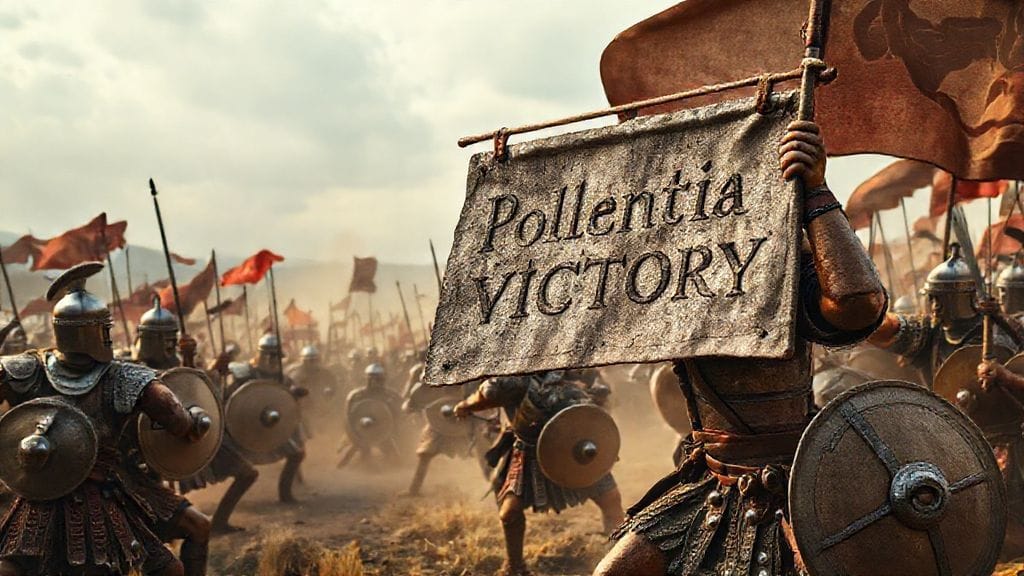
As the sun crept upward, dust swirled across the plain and the ebb of armies converged. The crusaders’ banners fluttered amidst clanging armor and prayers whispered in earnest. This was no ordinary campaign; the stakes were immeasurable. But fate did not favor Baldwin and his knights that day.
The Crusader States in 1104: Fragile Outposts in a Hostile Land
The early 12th century bore witness to the birth of the Crusader states — Edessa, Antioch, Jerusalem, and Tripoli — carved from lands with complex, ancient histories and fiercely defended by local powers. Of these, Edessa was the easternmost, a lone outpost surrounded by Muslim emirates and at constant risk. Baldwin II, brother-in-law to Baldwin I of Jerusalem, ruled Edessa and sought to expand and secure his borders.
But the Crusader states were fragile, thinly manned, and deeply reliant on reinforcements and supplies from Europe. Their survival depended on control of key cities and safe passage through hostile lands. Harran represented a potential expansion that could solidify Edessa’s southern borders against cuts and raids.
The Geography of Harran: Crossroads of Empires
The city’s location was strategic in ways both geographical and symbolic. Sited near the confluence of vital caravan routes, it connected Anatolia with Mesopotamia and the Levantine coasts. Whichever power held Harran exercised influence over much of northern Mesopotamia.
Its arid climate and difficult terrain favored defenders familiar with the land, and Muslim coalitions had long used this advantage against invading armies. Moreover, its proximity to Edessa meant that any loss at Harran threatened not just territory but the very lifeline of the Crusader domains.
Christian Ambitions and Muslim Resistance: The Clash of Visions
The Crusaders viewed the Muslim-held cities as both religious adversaries and political obstacles. For Baldwin and his knights, Harran was a jewel warranting conquest — a step towards a secure, Christian-controlled Mesopotamia. The broader Muslim world, meanwhile, ranging from local emirs to powerful sultans, saw the Crusader presence as a dangerous incursion to be repelled.
Though fragmented by rivalries, Muslim leaders found common cause in facing the invaders. This unity, though sometimes temporary, represented a formidable opposition to the seemingly unstoppable Crusader momentum.
Baldwin II’s Gamble: Rallying the Crusader Forces
Undeterred by earlier setbacks and under pressure to strengthen Edessa, Baldwin II gathered a force of knights, infantry, and allied locals. His confidence stemmed from prior successes and the belief in the Crusaders’ military prowess.
The plan was audacious: strike swiftly at Harran, capture it, and use it as a springboard for further campaigns. Yet Baldwin’s intelligence underestimated the scale and preparedness of the Muslim defenses.
The Muslim Coalition: Unified Under Sultans and Emirs
Opposing Baldwin was an alliance between the Artuqid Emir Sökmen of Mardin and the Seljuk general Jikirmish of Mosul. Their combined forces, though sometimes disparate in command, coordinated effectively for this battle.
They recognized the gravity of the Crusader threat and marshaled cavalry, archers, and infantry in a calculated defense. Their knowledge of the terrain and capacity for rapid maneuvering proved decisive.
The Siege That Wasn't: The Battle Unfolds
Rather than a prolonged siege, the Battle of Harran quickly transformed into a brutal field engagement. Crusader forces, eager and perhaps overconfident, pressed forward into open combat.
The Muslim cavalry launched feigned retreats and flanking maneuvers, drawing the Crusader knights into traps and disarray. The tightly knit formations of the Latin knights began to falter amid arrow volleys and sudden charges.
The Surprise Flanks and the Collapse of Crusader Lines
Caught between disciplined Muslim cavalry and the harsh environment, the Crusader force was unable to maintain cohesion. The flanks crumbled under relentless pressure, and their heavy armor—often a boon—became a liability on the rough terrain.
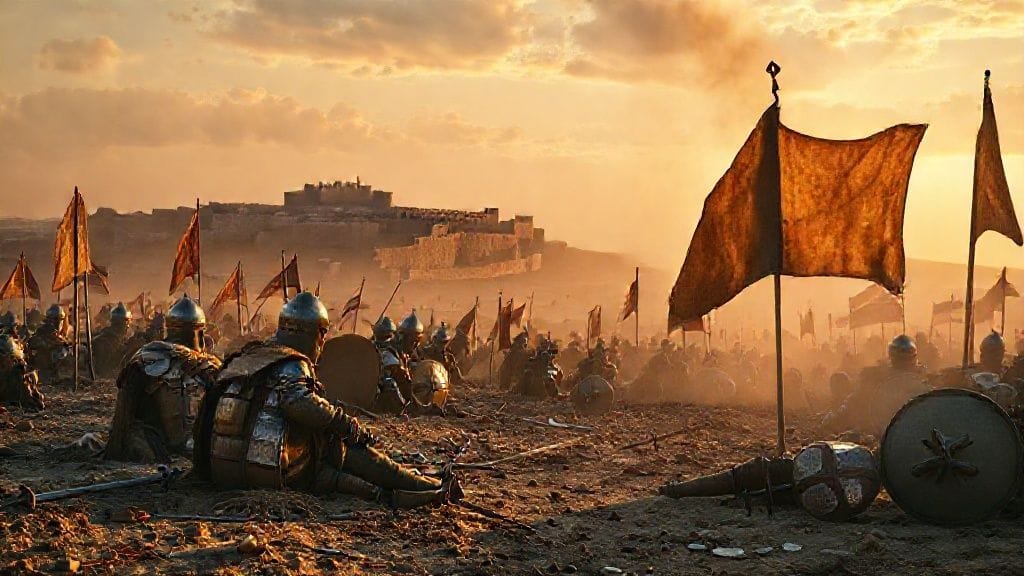
Panic spread, the battle turned into a rout, and many Crusader knights fell or were captured. Baldwin II himself was taken prisoner, swinging the momentum irreversibly.
The Captivity of Baldwin II: A Kingdom in Peril
The capture of Baldwin II was a blow beyond the battlefield. Edessa found itself bereft of stable leadership at a critical juncture. The ransom demanded for his release placed both financial and political strain on the Crusader states.
It was a personal and political catastrophe, shaking the confidence of their European backers and emboldening Muslim forces.
The Shockwave Through Edessa: An Ally in Shambles
With Baldwin imprisoned, Edessa’s governance faltered. Neighboring Muslim states capitalized on this vulnerability, pressing attacks and reclaiming lost territory. The failure at Harran weakened morale and accelerated the decline of Edessa as a stronghold.
Sadly, this cascading effect foreshadowed the city’s eventual fall in 1144, a loss that shocked Christendom and ignited calls for renewed crusading efforts.
The Aftermath in Harran: Immediate Turmoil and Retrenchment
Though victorious, Muslim leaders did not fully capitalize on their triumph to retake all Crusader-held lands immediately. Internal rivalries and the complex political landscape limited cohesive follow-through.
Still, the victory restored confidence and marked a shift in momentum that would shape decades of conflict.
The Political Ripples Through the Crusader States
The defeat triggered a re-evaluation of strategies within the Crusader leadership. Reinforcements had to be delayed, defensive priorities took precedence, and diplomatic relations with Byzantium and other powers became more urgent.
The blip at Harran signaled the precariousness of Crusader ambition in a region where allies were few and enemies many.
Muslim Morale Reinvigorated: A Turn in the Holy Land’s Balance
For Muslim rulers and peoples, Harran was heralded as proof that resistance could succeed. Chronicles from the time highlighted the battle as a divine vindication and rallied further resolve.
This psychological victory had long-term consequences, encouraging greater cooperation among diverse Muslim factions, at least temporarily.
The Role of the Byzantine Empire: Watching from Afar
Though geographically proximate, Constantinople’s response was cautious. The empire had its own struggles and generally viewed Crusader conquests with suspicion as well as tactical interest.
Nevertheless, Byzantine diplomacy and occasional military support played an undercurrent role in the complex chessboard of the region, especially in the post-Harran recalibrations.
The Strategic Lessons of Harran: Overreach and Miscalculation
Historians looking back see Harran as a textbook case of logistical overreach, intelligence failures, and misjudging the enemy's capacity. The battle exposed cracks in Crusader command and highlighted the vital importance of alliances and reconnaissance.
It's a cautionary story embedded in many military treatises and crusading chronicles thereafter.
Edessa’s Vulnerability Post-Harran: Prelude to Fall
The weakening of Edessa foreshadowed its eventual downfall. Harran was more than a lost battle; it was the moment when Edessa’s fate became increasingly precarious.
The city’s fall 40 years later unleashed effects that reverberated across Europe, fueling wider crusading mobilizations.
Chronicles and Eyewitnesses: The Battle Through Contemporary Eyes
Medieval chroniclers like Ibn al-Qalanisi and William of Tyre provide dual narratives—one of humiliation and loss, the other of triumph and divine favor. Their accounts reveal the human cost and the emotional weight carried by victors and vanquished alike.
Despite biases, these writings give voice to the knights, soldiers, and commanders whose lives intertwined that day.
The Long Shadow of the Defeat: How Harran Shaped the Second Crusade
The seeds of the Second Crusade were sown partly in wounds like Harran’s. The loss sharpened Christian resolve and underscored the need for greater coordination and support from Europe.
It marked the end of easy conquests and the beginning of a more arduous, protracted conflict landscape.
Cultural Memory and Historical Narratives: Harran in Crusader Lore
Though less famous than battles at Antioch or Jerusalem, Harran lives on in the lore of Crusader histories as a stark reminder of vulnerability and sacrifice.
It remains a symbol of how swiftly fortunes can shift in the crucible of medieval warfare.
Concluding Reflections: Failure, Survival, and the Fragility of Conquest
The Crusader defeat at Harran reminds us that history is not a steady march of triumphs, but a complex interplay of ambition, human error, and resilience. It reveals how impermanent empire building can be, how despite courage and faith, the tides of fortune may change in a day.
Yet out of defeat arose lessons—about unity, preparation, and respect for the adversary—that shaped the turbulent centuries of the Crusader epoch.
Conclusion
The Battle of Harran, fought on that scorching day in 1104, stands as a poignant episode of medieval history—where faith met hardship, valor bowed to strategy, and destiny turned on the blade’s edge. Beyond the military defeat, it was a profound human moment, marked by courage and loss, leadership and failure, and the relentless unfolding of history’s great tapestry.
Its echoes remind us that every conquest bears the seeds of its undoing, and every defeat carves space for renewal. The Crusader states would endure, crumble, and transform—but Harran’s lesson remains vivid: in the crucible of history, no victory is ever assured.
FAQs on the Crusader Defeat at Harran
Q1: What were the main causes of the Crusader defeat at Harran?
The defeat stemmed from Crusader overconfidence, underestimation of Muslim alliance strength, poor battlefield intelligence, and tactical errors, especially vulnerability to flanking maneuvers.
Q2: Who was Baldwin II, and what was his role in the battle?
Baldwin II was the Count of Edessa and commander of the Crusader forces at Harran. He led the campaign but was captured during the battle, profoundly destabilizing Edessa.
Q3: How did the defeat at Harran affect the Crusader states?
It weakened Edessa politically and militarily, delayed Crusader expansion, lowered morale, and shifted the balance in favor of Muslim powers for years.
Q4: What role did the Muslim coalition play?
A coalition of Muslim rulers including Sökmen of Mardin and Jikirmish of Mosul unified to counter the Crusaders effectively, coordinating military tactics that led to victory.
Q5: Why was Harran strategically important?
Harran controlled vital trade and communication routes in northern Mesopotamia and served as a gateway for further campaigns into Muslim-held territory.
Q6: Did the Byzantine Empire participate in the battle?
No direct Byzantine participation is recorded, though the Empire monitored affairs closely and influenced regional politics through alliances and diplomacy.
Q7: How is the Battle of Harran remembered in historical narratives?
Often overshadowed by larger Crusader conquests, Harran is remembered as a sobering defeat that underscored the limits of Crusader power and the complexity of regional politics.
Q8: What were the long-term consequences for Edessa?
The defeat made Edessa vulnerable, contributing to its eventual fall in 1144—a loss that significantly shifted Crusader and Muslim dynamics.