Table of Contents
- The Fateful Night of December 29, 1170: A Cathedral Stained with Blood
- The Rise of Thomas Becket: From Chancellor to Archbishop
- The Turbulent Relationship between Becket and King Henry II
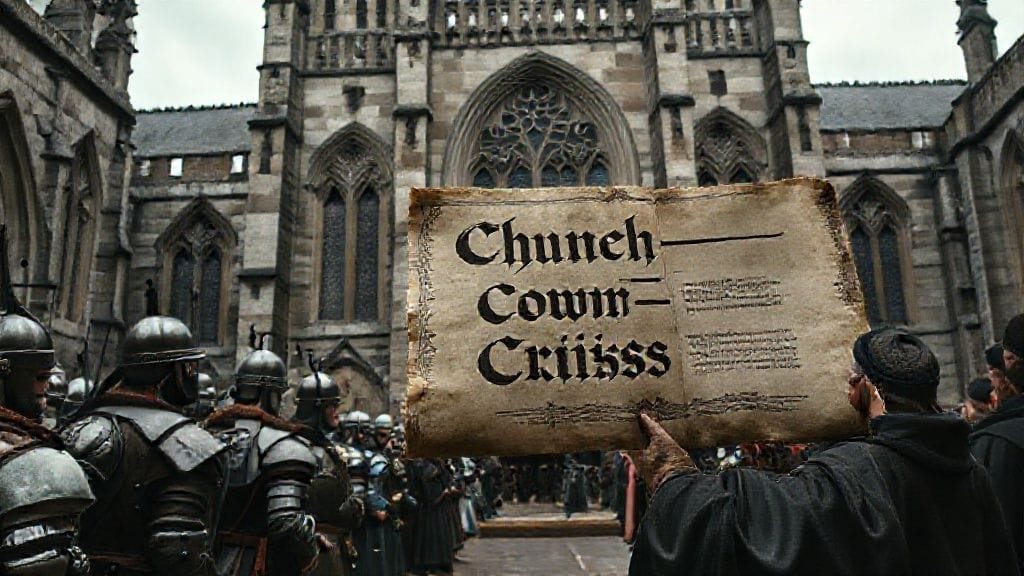
- The Clash of Church and Crown: Power and Principle Collide
- The Lead-up to Tragedy: Tensions Escalate in Canterbury
- The Four Knights’ Journey: Obedience, Ambiguity, and Duty
- The Murder Inside Canterbury Cathedral: A Moment Frozen in Time
- Immediate Fallout: Shockwaves through England and Christendom
- Henry II’s Anguish and the Political Storm that Followed
- The Cult of Saint Thomas: Miracles and Pilgrimages
- The Broader Conflict: Church’s Struggle for Autonomy
- Consequences for the English Monarchy: Authority Under Scrutiny
- Becket’s Legacy in Legal and Religious History
- The Murder’s Influence on Medieval Politics and Diplomacy
- Memory and Myth: How the Becket Murder Entered the Collective Imagination
- Modern Commemorations and Historical Interpretations
- Conclusion: The Enduring Human Drama of Faith and Power
- FAQs: Untangling the Threads of Becket’s Murder and Its Aftermath
- External Resource
- Internal Link
On a cold winter day in Canterbury, as snow whispered across the quiet streets of the medieval city, the sanctity of the cathedral—a place hallowed for worship and refuge—was shattered by an act of brutal violence. It was December 29, 1170, a day on which the clang of swords would forever echo in the annals of English history. Inside Canterbury Cathedral, four knights, bearing the weight of royal command and personal conviction, confronted their former friend, Thomas Becket, Archbishop of Canterbury. What followed was a murder that sparked a monumental crisis, rupturing the fragile balance between crown and church, and altering the spiritual and political landscape of medieval Europe.
This is the story of a man caught between loyalties, an epic conflict of institutions, and a violent turning point that still resonates more than eight centuries later.
1. The Fateful Night of December 29, 1170: A Cathedral Stained with Blood
The cold stone walls of Canterbury Cathedral, usually a sanctuary of solemn chants and flickering candlelight, bore witness on that winter evening to an eruption of violence that stunned a nation. Thomas Becket, once the trusted advisor and Chancellor of King Henry II, now his mortal enemy, faced four armed knights who accused him of treason against the crown. The knights, spurred by ambiguous words from their king, brutally slew the archbishop at the altar, amid the gasps and prayers of stunned clerics.
This moment, grotesque and sacred all at once, was more than an assassination—it was a symbol of the struggle for England's soul.
2. The Rise of Thomas Becket: From Chancellor to Archbishop
Born around 1119 in London to a modest Norman merchant family, Thomas Becket’s early life was marked by ambition and intellect. Taking holy orders seemed initially incidental to his pursuit of royal favor and administrative power. His rapid ascent began with his appointment as Chancellor to Henry FitzEmpress, the future King Henry II, in 1155. In this intimate role, Becket managed the royal household and treasury, displaying fierce loyalty and efficiency.
Yet, in 1162, Henry surprised everyone by nominating Becket as Archbishop of Canterbury—a move meant to secure control over the church. The choice would backfire spectacularly.
3. The Turbulent Relationship between Becket and King Henry II
Once an ally, Becket became Henry’s fiercest opponent upon taking up the archbishopric. Drawing from deep convictions and the church’s canonical law, Becket began to resist royal encroachments on ecclesiastical privileges. The most contentious issue lay in the "criminous clerks": clerics accused of crimes facing secular courts. Henry sought to exert crown authority, but Becket defied him, insisting on clerical immunity.
Their friendship fracturing, the confrontation between Becket and the king became personal and political—a battle for the soul of England itself.
4. The Clash of Church and Crown: Power and Principle Collide
In the medieval world, authority derived its power from both divinity and earthly control. The Crown claimed the right to govern all subjects, but the Church defended its spiritual and judicial independence fiercely. The ecclesiastical reforms, earlier defined by the Gregorian Reform and the Investiture Controversy, were the backdrop for Becket’s stand. He saw himself as a guardian of church rights against an increasingly centralized monarchy.
These tensions erupted spectacularly in the 1160s, culminating in open hostility that polarized factions within England's courts and clergy alike.
5. The Lead-up to Tragedy: Tensions Escalate in Canterbury
By 1170, Becket’s defiance had placed him in a precarious position. After years of exile in France following a violent rift, his return inflamed a divided kingdom. He excommunicated bishops loyal to the king and refused to yield jurisdiction over clergy accused of secular crimes. The atmosphere in Canterbury grew charged with fear and anticipation. The palace and cathedral became epicenters of conflict, framed by whispers of violent reprisal.
Henry’s impatience and fiery temper had led to a fateful outburst—his infamous words that have echoed through history: “Will no one rid me of this turbulent priest?”
6. The Four Knights’ Journey: Obedience, Ambiguity, and Duty
Interpreting the king’s words as a royal command, four knights—Reginald FitzUrse, Hugh de Morville, William de Tracy, and Richard le Breton—made their way to Canterbury. Their mission was clear yet morally ambiguous. Were they executing an order or seeking to stave off political chaos? The answer lies in the shadows of medieval court intrigue, personal loyalty, and the complex honor codes of the age.
Their journey was a grim procession toward an act that would change history.
7. The Murder Inside Canterbury Cathedral: A Moment Frozen in Time
On the evening of December 29, the knights confronted Becket in the cathedral’s sanctuary. Witnesses later described the chaos: Becket’s initial refusal to submit, the clashing of swords, the desperate cries. The knights struck down the archbishop at the foot of the altar, a place consecrated for worship, turning holy ground into a scene of sacrilege.
This violent climax shocked contemporaries into disbelief—how could sacred space be violated with such brutality?
8. Immediate Fallout: Shockwaves through England and Christendom
News of the murder spread quickly, unleashing a storm of horror, grief, and outrage. The sanctity of the church had been violated, and a martyr born. Religious leaders, nobles, and commoners alike mourned, while political alliances quaked. Across Europe, the event was seized upon as evidence of William the Conqueror’s England in crisis, torn between secular ambition and spiritual authority.
For Henry II, this was the beginning of one of the greatest crises of his reign.
9. Henry II’s Anguish and the Political Storm that Followed
Henry’s reaction was a complex mix of fury, regret, and damage control. Publicly condemning the murder to preserve his reign’s legitimacy, he embarked on a ritual of penance that included a humiliating public scourging by monks at Canterbury. Yet, the king remained determined to assert authority, navigating a delicate balance to placate the Church while maintaining royal prerogatives.
This episode clearly exposed the limits of medieval kingship when confronted with moral and religious outrage.
10. The Cult of Saint Thomas: Miracles and Pilgrimages
Almost immediately, Becket was venerated as a martyr and saint. Reports of miraculous healings and divine signs around his tomb surged, drawing pilgrims from across Europe. His shrine in Canterbury became a radiant center of devotion, with wealth and influence flowing into the city.
Geoffrey Chaucer immortalized these pilgrimages in The Canterbury Tales, ensuring Becket’s memory endured not only in stone but in literature and popular culture.
11. The Broader Conflict: Church’s Struggle for Autonomy
Becket’s murder highlighted the perennial struggle across medieval Europe: the tension between secular rulers and the church’s autonomy. It reopened debates about investiture, clerical immunity, and ultimate jurisdiction, fueling conflicts such as the later confrontation between Pope Innocent III and kings of England and France.
This event hence stands as a crucial episode in the shaping of Western political and religious thought.
12. Consequences for the English Monarchy: Authority Under Scrutiny
The aftermath forced Henry II to tread more carefully in church matters. While his reign continued to embody royal ambition and administrative reform, the shadow of Becket’s death remained. Subsequent monarchs handled church relations with greater diplomacy, aware that the king’s power was not absolute.
This nuanced shift would influence English governance with echoes into the future, contributing ultimately to constitutional developments.
13. Becket’s Legacy in Legal and Religious History
Thomas Becket became a symbol of ecclesiastical resistance to state power. His martyrdom inspired canon law writers and lawyers by underscoring the principle that certain authorities were sacrosanct. The balance of powers discourse, foundational to Western political philosophy, drew on the dramatic lessons of his life and death.
His legacy continues within debates on church-state relations to this day.
14. The Murder’s Influence on Medieval Politics and Diplomacy
Beyond England, the murder recalibrated political diplomacy. Popes wielded Becket’s martyrdom as leverage against kings, asserting papal supremacy. The incident reinforced the church’s transnational authority amid rising monarchies. European courts observed Henry’s penance as a cautionary tale about the limits of royal absolutism.
Thus, the event shaped policies well beyond Canterbury’s walls.
15. Memory and Myth: How the Becket Murder Entered the Collective Imagination
From medieval chronicles to plays by T.S. Eliot and films by Peter Glenville, Thomas Becket’s murder became a story woven into the fabric of Western cultural memory. The narrative of betrayal, faith, and kingship appeals across eras, inspiring reflection on loyalty, conscience, and power.
The interplay of history and myth ensures that the event transcends historical facts alone.
16. Modern Commemorations and Historical Interpretations
Today, Canterbury Cathedral honors Becket’s memory with plaques, relics, and guided tours inviting reflection on this dark chapter. Historians continue to debate Henry’s complicity and the knights’ motives, while archaeologists uncover layers of medieval Canterbury’s complex history.
The story remains alive, inviting ongoing interpretation and understanding.
Conclusion
The murder of Thomas Becket on December 29, 1170, was far more than a political assassination. It was the explosive culmination of a profound clash between earthly power and spiritual conviction. Through blood and sorrow, England—and indeed all of Christendom—was forced to confront fundamental questions about where ultimate authority lay and the costs of challenging power.
Becket’s life and death illuminate the ceaseless human struggle to reconcile loyalty with conscience, ambition with principle. Their echoes remind us that history is shaped not merely by kings and knights, but by ideas that transcend time, by moments when faith demands courage, and by the tragic sacrifices made in their name.
FAQs
Q1: Why did Thomas Becket and King Henry II fall out so badly?
Their falling out stemmed from conflicting visions of authority. Henry wanted control over the church’s legal jurisdiction, especially regarding clerics accused of crimes, while Becket, after becoming archbishop, fiercely defended church autonomy and resisted royal encroachments.
Q2: Did King Henry II order Becket’s murder directly?
No direct order was recorded, but Henry’s frustrated outburst—“Will no one rid me of this turbulent priest?”—was widely seen as a trigger. The four knights believed they were fulfilling the king’s wishes, though Henry later condemned the killing.
Q3: How was Becket’s murder received by the people and the church?
It caused shock and horror, transforming Becket into a martyr. Pilgrims flocked to Canterbury and the church used his martyrdom to assert its authority against the crown.
Q4: What were the long-term effects on the English monarchy?
The incident forced kings to negotiate carefully with the church, tempering royal claims to power over ecclesiastical matters and contributing to the gradual political balancing that led to constitutional developments.
Q5: How did Becket become a saint?
Becket was canonized by Pope Alexander III in 1173, shortly after his death, due to reports of miracles at his tomb and his status as a martyr who died defending the church.
Q6: Does the Becket murder still influence modern church-state relations?
Symbolically, yes. Becket’s story remains a reference point in debates about the limits of secular authority and the independence of religious institutions.
Q7: Are there any famous literary or artistic works inspired by Becket’s story?
Absolutely—Geoffrey Chaucer’s Canterbury Tales depicts pilgrims visiting his shrine. Modern dramas like T.S. Eliot’s Murder in the Cathedral explore the psychological and spiritual dimensions of the murder.
Q8: How is the event commemorated today?
Canterbury Cathedral remains a pilgrimage site, with exhibitions and memorials dedicated to Becket’s life and martyrdom, serving both as a historical site and a place of reflection on faith and power.

