Table of Contents
- The Fateful Morning at Alnwick: Capture of William the Lion
- The Political Climate of 12th Century Britain
- Scotland’s Ambitions and England’s Dominance
- William the Lion: The Man Behind the Crown
- The Battle That Changed Everything: The Capture at Alnwick
- Falaise, Normandy: Setting the Stage for the Treaty
- The Treaty of Falaise: A Humble Submission
- Clause by Clause: Understanding the Treaty’s Terms
- The Immediate Aftermath in Scotland
- England’s Triumph and the Expansion of Angevin Power
- The Reaction of the Scottish Nobility
- Religious Consequences: The Bishoprics and the Church’s Role
- Economic Implications: Trade, Taxes, and Tribute
- The Treaty’s Effect on Anglo-Scottish Relations
- The Long Road to Independence: Subsequent Rebellions and Diplomacy
- The Treaty’s Legacy in Scottish National Identity
- King William’s Later Reign: Redemption and Resistance
- Normandy’s Role in Medieval Power Dynamics
- Global Context: Europe’s Feudal Web in the Late 12th Century
- The Treaty’s Place in the History of Medieval Diplomacy
- Memory and Myth: How the Treaty Was Remembered and Reinterpreted
- Conclusion: Submission, Sovereignty, and the Struggle for Scotland’s Soul
- FAQs About the Treaty of Falaise
- External Resource
- Internal Link
The Fateful Morning at Alnwick: Capture of William the Lion
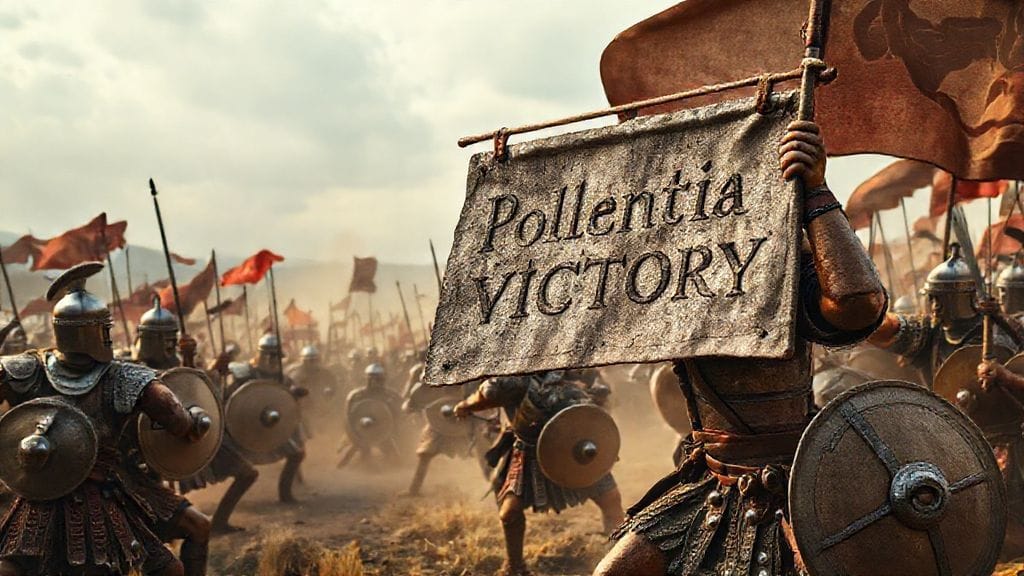
The chilly morning air of July 1174 hung heavy with tension over the wild landscapes of Northumberland. Anglo-Norman soldiers, under the steady command of Ranulf de Glanville, moved cautiously, eyes sharp for any sign of the Scottish king who had ventured deep into English territory. That day marked an unexpected turn. King William I of Scotland, known by his fierce epithet "William the Lion," was captured during a routine scouting mission near the fortress town of Alnwick. The pride of the Scottish crown was suddenly shackled, his fate intertwined with the ambitions of Henry II of England.
This moment was not merely the capture of a monarch; it was the fulcrum upon which the future of Scotland would tilt precariously. The repercussions of this event would echo through decades, shaping the political contours of Britain and imprinting themselves indelibly on Scottish national memory.
The Political Climate of 12th Century Britain
To understand the gravity of William’s capture, one must first traverse the intricate web of power that defined Britain in the 12th century. The Plantagenet dynasty, led by Henry II—one of the most formidable rulers of medieval Europe—held sway over an ever-expanding dominion stretching from Normandy in France to the British Isles.
Scotland, under William's rule, was a realm striving to assert its sovereignty amid looming English dominance. At stake were borders, influence, and the very definition of independence. The complex feudal entanglements, marriages, and vassalages created a volatile political landscape, where allegiances shifted like sand.
Scotland sought to capitalize on England’s engagements on the continent, and William, emboldened by alliances and his own ambitions, harbored visions of reclaiming Northumbrian lands—territory steeped in history and cultural significance.
Scotland’s Ambitions and England’s Dominance
The 12th century saw Scotland balancing precariously between submission and defiance. While not a direct vassal to England, Scottish kings often found themselves negotiating their autonomy in the shadow of England’s military and political might.
William the Lion had inherited a kingdom eager to expand north and south. His attempts to recover lands once under the ancient Scottish realm fueled tensions with Henry II, whose Angevin empire was a patchwork of fiercely held territories.
England, under Henry’s keen leadership, was not to be underestimated. His administrative reforms, legal innovations, and ruthless suppression of dissent made him an adversary capable of decisive action.
William the Lion: The Man Behind the Crown
William I ascended to the throne in 1165 as a king eager to reclaim glory for his nation. Standing tall and commanding, with a reputation for tenacity, he was both admired and feared. His nickname, "the Lion," symbolized strength and royal majesty but also a wildness that could heedlessly court disaster.
William's early reign was marked by a mixture of diplomacy and conflict, as he sought to solidify his hold on Scottish lands while establishing Scotland as a power distinct from England. His marriage alliances, court reforms, and military campaigns portray a ruler as complex as his times.
Yet beneath his regal aura, William harbored vulnerabilities—his kingdom’s military resources and internal cohesiveness were often insufficient for the ambitions he nurtured.
The Battle That Changed Everything: The Capture at Alnwick
July 1174 was a month swelling with possibility and peril. William launched an offensive into Northumberland, aiming to exploit perceived English weaknesses. However, what should have been a rapid raid turned fatal.
An ambush at Alnwick caught William off guard. The king’s escort was overwhelmed; the Scottish forces scattered. The king himself was taken prisoner, a dramatic and humiliating coup that shifted the balance of power almost overnight.
His capture initiated a political crisis. Henry II now held the Scottish crown’s fate in his hands and wielded the chance to enforce submission.
Falaise, Normandy: Setting the Stage for the Treaty
Transported to Falaise, William found himself far from his rugged homeland, confined within the stone walls of a Norman stronghold. Falaise, a town nestled in the rolling hills of Normandy, bore the scars of countless medieval struggles—a fitting backdrop for a treaty that would bind Scottish independence.
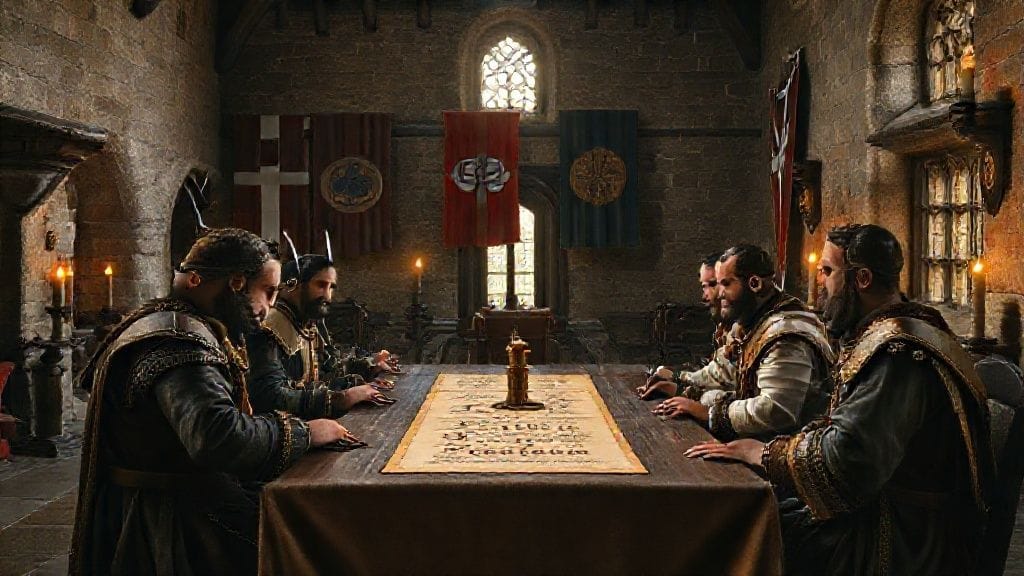
Normandy was Henry II’s ancestral seat, and here the prisoner and the king forged the terms that would reshape the future. Amid medieval legalisms and political grandstanding, the Treaty of Falaise was drafted—less a document of peace than an instrument of submission.
The Treaty of Falaise: A Humble Submission
Signed in December 1174, the Treaty of Falaise forced William to recognize the English monarch as his overlord. In terms unequivocal and harsh, Scotland acknowledged Henry II’s authority, surrendering castles and key fortresses to English control.
At its heart, the treaty was a declaration of political dependency: William swore homage and fealty, aligning Scotland’s fate under the shadow of the English crown. The treaty’s imbalances reflected both England’s power and Scotland’s recent vulnerability.
But it was more than legal formalities; it was a symbolic blow to Scottish sovereignty, an intrusion that shaped national consciousness for centuries.
Clause by Clause: Understanding the Treaty’s Terms
The Treaty of Falaise was a dense legal contract, but several key clauses stand out:
- William’s homage to Henry II, acknowledging him as his liege lord.
- The surrender of major Scottish castles—Edinburgh, Stirling, Roxburgh, and Berwick—into English hands.
- The recognition that Scotland's bishops owed allegiance to the English archbishopric.
- Obligations for Scottish nobles to pay homage individually to the English crown.
This codification ensured English military and political leverage deep within Scotland, effectively reducing the Scottish king’s autonomy and influence.
The Immediate Aftermath in Scotland
News of the treaty struck hard in Scotland. Nobles and commoners alike grappled with the humiliation of submission. The English garrisons stationed in Scottish castles were a constant reminder of lost sovereignty.
William spent months rallying support, seeking to strengthen his fragile kingdom internally to resist further English incursions. The treaty sowed seeds of dissent, igniting desires for resistance that would bloom in future decades.
England’s Triumph and the Expansion of Angevin Power
For Henry II, the Treaty of Falaise was a strategic triumph. It extended Angevin hegemony into Scotland without the need for prolonged war. The king’s ability to enforce vassalage from a fellow monarch enhanced his prestige.
This victory also sent a message across Europe: England remained a dominant force, capable of subduing even proud northern neighbors. The capture and submission of William the Lion cemented Henry’s position not only in Britain but on the continental chessboard.
The Reaction of the Scottish Nobility
The Scottish lords were torn. Some accepted the treaty pragmatically, choosing allegiance in hopes of stable governance. Others viewed it as betrayal.
Tensions grew between those who favored accommodation and those who clamored for dissidence, setting the stage for future fractures and quarrels within the Scottish elite.
Religious Consequences: The Bishoprics and the Church’s Role
The treaty’s religious clauses, requiring Scottish bishoprics to pay homage to English archbishops, sought to tighten English control over ecclesiastical affairs.
Church leaders in Scotland, traditionally a source of national identity and autonomy, found themselves under pressure. The alignment risked diluting Scotland’s religious independence and the distinctive character of its medieval church.
Economic Implications: Trade, Taxes, and Tribute
Beyond politics and religion, the treaty had tangible economic impacts. English garrisons demanded supplies and levied taxes on Scottish subjects. Trade routes were disrupted or controlled, funneling economic benefits toward England.
The transfer of castles also gave English authorities control over important commercial hubs and border markets, tightening their grip on cross-border exchanges.
The Treaty’s Effect on Anglo-Scottish Relations
While the Treaty of Falaise formalized overlordship, it planted the seeds of long-term conflict. The Scottish crown’s subjugation was never fully accepted, and the treaty laid bare deep fault lines in relations.
It fostered a legacy of mistrust, impetuous wariness, and intermittent rebellion that defined Anglo-Scottish interactions for more than a century.
The Long Road to Independence: Subsequent Rebellions and Diplomacy
William himself sought ways to overturn the treaty. Negotiations, appeals to the papacy, and sporadic military campaigns aimed to reinstate Scottish sovereignty.
By 1189, financial pressures on Henry II’s successor forced the English crown to accept the Quitclaim of Canterbury, which nullified the Treaty of Falaise and restored Scottish independence—though hostilities and rivalries would persist.
The Treaty’s Legacy in Scottish National Identity
In the collective memory of Scotland, the Treaty of Falaise became a symbol of humiliation and resistance. It underscored the struggle to define a distinct Scottish nation against powerful neighbors.
Stories of William the Lion’s capture and forced submission resonate in Scottish folklore and history, inspiring future generations to valorize sovereignty and fortitude.
King William’s Later Reign: Redemption and Resistance
Despite his capture and the humiliating treaty, William the Lion remained a resilient figure. His later reign was marked by efforts to reclaim lost ground, strengthen governance, and foster unity.
Though constrained by the treaty’s terms, his symbolic kingship and persistence bolstered Scottish morale and set precedents for subsequent kings.
Normandy’s Role in Medieval Power Dynamics
Falaise, as a Norman stronghold, was integral to the wider geopolitics of the period. The town’s strategic position linked England and continental holdings, bridging military and administrative oversight.
The treaty’s signing in this locale reinforced the interconnectedness of the Anglo-Norman empire and the layered nature of medieval rule.
Global Context: Europe’s Feudal Web in the Late 12th Century
The Treaty of Falaise came in an era when Europe was a morass of intertwined feudal allegiances, dynastic struggles, and religious power plays.
The Angevin empire spanned multiple territories, and the assertion of dominance over vassals like Scotland reflected wider patterns of centralization and consolidation of medieval authority.
The Treaty’s Place in the History of Medieval Diplomacy
The Treaty of Falaise stands as a vivid example of medieval diplomatic practice: the use of homage, fealty, and legal contracts to resolve conflicts and assert sovereignty without prolonged warfare.
It reveals how capture in battle could swiftly translate into political subjugation, reshaping realms with ink and ceremony as much as with sword and siege.
Memory and Myth: How the Treaty Was Remembered and Reinterpreted
Throughout centuries, the Treaty of Falaise was retold not merely as a historical fact but as a moral lesson and rallying point. Scottish historiography often frames it as a warning against submission and a prompt for national defense.
In literature and legend, William the Lion’s capture and eventual resistance have been romanticized, contributing to the enduring mythology that underpins Scottish identity and pride.
Conclusion: Submission, Sovereignty, and the Struggle for Scotland’s Soul
The Treaty of Falaise was more than a mere document; it was a moment where Scotland’s assertion of independence was forcibly challenged and reshaped. It symbolized the complex relations between neighbor kingdoms, where kinship, conflict, and power intermingled.
Though humiliating, the treaty could not erase the resilient spirit of Scotland—a spirit that would continue to fight, negotiate, and redefine its place in the British Isles.
The lion, though temporarily subdued, would roar again in the centuries ahead, emblematic of a nation’s enduring quest for sovereignty and self-determination.
FAQs About the Treaty of Falaise
Q1: What were the main causes leading to the Treaty of Falaise?
A1: The treaty resulted primarily from King William I’s failed military campaigns in Northern England, culminating in his capture at Alnwick. His ambitions to reclaim parts of Northumberland clashed with Henry II’s efforts to maintain dominance, setting the stage for enforced submission.
Q2: Who was Henry II, and why was he able to impose such terms on Scotland?
A2: Henry II was the King of England and ruler of a vast Angevin empire with territories in France. His military strength, administrative reforms, and political acumen made him a dominant figure, capable of compelling lesser rulers like William to acknowledge his overlordship.
Q3: How did the Scottish nobility react to the Treaty of Falaise?
A3: The reaction was mixed; some nobles accepted the treaty pragmatically to preserve peace and order, while others viewed it as a betrayal of Scotland’s sovereignty, sowing internal divisions and future dissent.
Q4: What were the economic consequences of the treaty for Scotland?
A4: The treaty allowed English forces to control key fortresses and trade routes, disrupting Scottish commerce and imposing additional taxes and tributes, which strained the Scottish economy.
Q5: Did the Treaty of Falaise permanently subjugate Scotland?
A5: No. While it significantly reduced Scottish sovereignty temporarily, the treaty was nullified in 1189 by the Quitclaim of Canterbury, restoring Scottish independence.
Q6: How did the church feature in the treaty?
A6: The treaty required Scottish bishops to swear allegiance to English archbishops, an attempt to extend English religious influence and control over the Scottish church.
Q7: Why was the treaty signed at Falaise in Normandy?
A7: Falaise was an important seat of Norman power and part of Henry II’s continental holdings. Holding William prisoner there underlined English dominance and provided a secure location for negotiating the treaty.
Q8: How is the Treaty of Falaise remembered in Scotland today?
A8: It is seen as a pivotal event highlighting Scotland’s struggle for independence. The treaty symbolizes a low point in Scottish autonomy but also serves as a reminder of resilience and the enduring desire for sovereignty.