Table of Contents
- The Dawn of a Fateful Day: July 19, 1195 at Alarcos
- The Iberian Peninsula at a Crossroads: Political Landscape Before the Battle
- Rise of the Almohads: New Power in the Maghreb and Al-Andalus
- Castile’s Ambitions and the Quest for Southern Dominance
- The Key Figures: Abu Yusuf Yaqub al-Mansur and Alfonso VIII
- Marching to Alarcos: Prelude to a Clash of Civilizations
- The Battlefield: Geography, Forces, and Armaments
- The Battle Unfolds: Strategies and Tactical Moves
- The Turning Point: How the Almohads Seized Victory
- The Aftermath: Human Cost and Immediate Political Shifts
- The Impact on the Reconquista: A Momentary Halt
- Chronicles and Voices: Eyewitness Accounts and Legends
- The Role of Religion and Ideology in the Battle
- Military Innovations and Lessons from Alarcos
- The Battle in the Broader Context of Medieval Iberia
- The Legacy of Alarcos in Iberian History and Memory
- Influence on Christian-Muslim Relations and Cultural Exchange
- From Defeat to Recovery: Castile's Long Road After Alarcos
- Abu Yusuf Yaqub al-Mansur’s Reign Post-Alarcos
- Alarcos in Art, Literature, and Modern Scholarship
- The Battle's Place in the Ongoing Clash Between Islam and Christianity
- Conclusion: Reflections on a Defining Moment in Medieval Spain
- FAQs
- External Resource
- Internal Link
1. The Dawn of a Fateful Day: July 19, 1195 at Alarcos
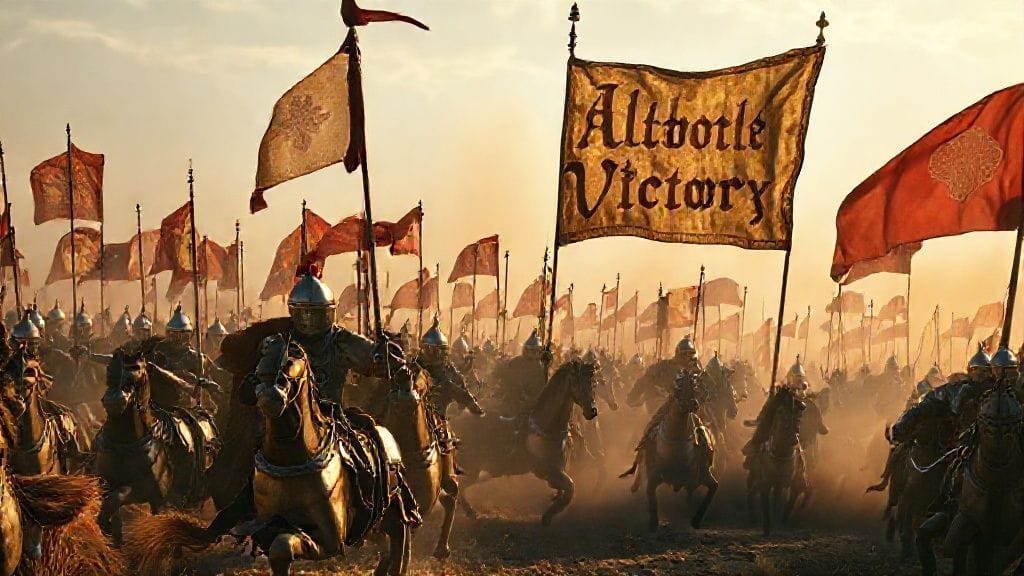
The summer sun rose high over the plains near Alarcos, casting long shadows over the tens of thousands of soldiers gathered for what would be one of the most decisive battles of medieval Iberia. A humid breeze carried the acrid scent of sweat, metal, and anticipation. On July 19, 1195, two great forces—the Christian Kingdom of Castile and the Muslim Almohad Caliphate—stood mere miles apart, ready to engage in a momentous struggle that would shape the fate of the Iberian Peninsula for decades to come.
The air was thick with tension as battle cries, the clang of armor, and the rhythmic thunder of hooves echoed through the valley. Castilian knights, proud and determined under the banner of King Alfonso VIII, squared their shoulders against an enemy they had long viewed as the immutable “other.” Meanwhile, the Almohad warriors surged forward with a fierce, unrelenting energy instilled by their leader Abu Yusuf Yaqub al-Mansur, the caliph whose iron will had forged a new era in Al-Andalus.
This was no mere contest of armies—it was a crucible where faith, power, and destiny collided in a blaze of swords and blood. The battle lines were drawn not only on the earth beneath their feet but across the spiritual and political landscapes of a continent divided. The outcome would reverberate far beyond the grassy plains of Alarcos, forever altering the trajectory of the Reconquista and the interplay between Christianity and Islam in medieval Europe.
Yet, as the dust settled that day, the victory would not only crown the Almohads but expose the fragile fault lines within the Christian kingdoms—and sow seeds of change that echoed into the future. But this was only the beginning of a saga—one woven into the very fabric of Iberian history.
2. The Iberian Peninsula at a Crossroads: Political Landscape Before the Battle
To grasp the significance of the Battle of Alarcos, one must understand the fractured and volatile political map of the Iberian Peninsula in the late 12th century. The continent’s southwestern corner had long been a theater of conflict between Christian kingdoms—Castile, León, Aragon, Navarre—and the Muslim-ruled territories of Al-Andalus.
Since the early 8th century, Muslim forces had extended their dominion into most of Iberia, but by the 12th century the tide had notably shifted. The Christian Reconquista—decades and centuries-long processes of reclaiming land—was well underway, driven both by religious zeal and political expedience. Castile, under the leadership of Alfonso VIII, had emerged as a rising power with designs on pushing the frontier southward into Muslim-held Andalusian territories.
However, the Muslim side was no monolith either. The decline of the Almoravid dynasty opened the door for the Almohads, a reformist and militant Islamic movement originating from North Africa, to seize control. Their arrival ushered in a new era of religious rigor and military discipline, provoking alarm and resistance from the Christian north.
The Iberian Peninsula in 1195 was a tapestry of alliances, betrayals, and shifting loyalties. Castile’s internal struggles, including noble dissent and strained relations with neighboring kingdoms, complicated its military ambitions. Meanwhile, the Almohads sought to consolidate power and resist Christian incursions with unmatched vigor. It was a powder keg awaiting ignition.
3. Rise of the Almohads: New Power in the Maghreb and Al-Andalus
The Almohad movement began in the early 12th century with Ibn Tumart, a charismatic religious reformer who denounced what he deemed the lax, ill-disciplined practices of previous Muslim rulers in North Africa and Iberia. He preached strict adherence to monotheism and Islamic orthodoxy, quickly gathering followers known as the Almohads—from “al-Muwahhidun,” meaning “those who affirm the unity of God.”
By the mid-12th century, the Almohads had overthrown the Almoravid dynasty, asserting dominance over large swaths of North Africa. Their march into Iberia did not merely signify a change of rulers, but a profound shift in ideology and power structures.
Their fervor and military organization revitalized Al-Andalus but also hardened the religious borders. Abu Yusuf Yaqub al-Mansur, who ascended as caliph in 1184, was a formidable leader—both devout and strategic—who united Berber tribes and Andalusian forces, preparing to assert control over the peninsula and confront Christian advances.
With new energy and military reforms, the Almohads embarked on campaigns to repel the northern kingdoms' encroachment—and Alarcos would become their defining moment.
4. Castile’s Ambitions and the Quest for Southern Dominance
On the other side stood Alfonso VIII of Castile, a ruler as determined as he was introspective. His throne was often precarious, threatened by insubordinate nobles and fractious relations with neighboring Christian kingdoms, yet he dreamed of expanding his realm and fulfilling the crusading ideals of uniting the peninsula under Christian rule.
Alfonso had invested years in creating a formidable military force, drawing on knights, mercenaries, and alliances with the Church. The crusading spirit was very much alive in his policies, fostering a sense of divine mission in reclaiming the “land of the cross” from the Muslims.
The fertile lands of southern Iberia represented wealth, prestige, and security. But the Almohads, entrenched and revitalized, posed a sharp and immediate threat. While Castile sought swift conquest, the reality was a complex chessboard of power where missteps could prove fatal.
5. The Key Figures: Abu Yusuf Yaqub al-Mansur and Alfonso VIII
Central to the drama were two men whose visions would collide on Alarcos’ battlefield: Abu Yusuf Yaqub al-Mansur, the Almohad caliph whose authority combined religious zeal and tactical brilliance, and Alfonso VIII, the Castilian king caught between ambition and adversity.
Al-Mansur was renowned for his commanding presence, intellect, and devotion. He skillfully integrated Berber warriors, Andalusian soldiers, and even Christian mercenaries into a disciplined army. His leadership style was autocratic but inspiring—a ruler who embodied the Almohad creed and military prowess.
Alfonso VIII, meanwhile, was a complex character. Though often portrayed as stubborn, he was also a pragmatic leader burdened by internal dissent. Chroniclers praised his steadfastness and sense of justice, yet acknowledged his mistakes at Alarcos. His decision to engage the Almohads in open battle reflected his desire to assert dominance but underestimated the enemy’s strength and tactics.
Their confrontation would symbolize not just a military clash but a contest of ideologies and leadership in a divided Iberia.
6. Marching to Alarcos: Prelude to a Clash of Civilizations
As July unfolded in 1195, both armies mobilized with grim determination. Alfonso’s forces moved southward, aiming to surprise and cripple the Almohads before they could fully consolidate their power in Al-Andalus.
The area around Alarcos was strategically chosen for battle—a plain near the Guadiana River, offering open terrain favorable to Castile’s heavily armored knights. Yet, the Almohads were no strangers to the land, and their scouts informed al-Mansur of Castile’s movements.
Deliberate and calculated, the two armies converged. Tensions ripened, spirits soared and wavered. Noble commanders reviewed their strategies; soldiers tightened grips on sword hilts; prayers and invocations rose toward the skies, each side hoping divine favor would crown their cause.
The atmosphere was electric but foreboding. For both kingdoms, Alarcos represented more than just territory—it was about honor, faith, and survival.
7. The Battlefield: Geography, Forces, and Armaments
The terrain where the battle unfolded was both a blessing and a curse. The field near Alarcos was relatively flat but dotted with scrub and small elevations. The Guadiana River snaked nearby, potentially serving as an escape route—or a deadly trap.
Castile fielded approximately 15,000 to 20,000 soldiers, dominated by heavily armored knights—the shock troops of medieval warfare. Their armor gleamed in the sun; their lances and swords promised destruction. Infantry and archers supplemented their numbers, though the Christian emphasis lay unmistakably in cavalry.
The Almohad army matched or exceeded this number, combining disciplined infantry with agile cavalry units and a mix of archers skilled in rapid maneuvers. Their troops were hardened by experience against Christian forces and steeped in ideological fervor.
The arsenal on both sides reflected the era’s military technology—mail and plate armor, kite shields, horse barding for knights, composite bows for mounted archers, and swords honed for close combat.
But equipment alone would not decide the battle; it was leadership, terrain mastery, and morale that would tip the scales.
8. The Battle Unfolds: Strategies and Tactical Moves
At dawn on July 19, the armies assembled within sight of each other, the silence thick with anticipation. Alfonso VIII ordered a formation with the heavy cavalry on the wings, intending to outflank the Almohads, while his infantry anchored the center.
The Almohads, under al-Mansur’s direct command, employed a defensive stance with concealed reserves ready to exploit weaknesses. Their strategy relied on patience, feigned retreats, and counterattacks—a tactic perfected over decades of border skirmishes.
As Christian knights surged forward with devastating charges, initial momentum seemed in Castile’s favor. Horse and men thundered into the enemy lines, battering some of the Almohad front. Yet, the Almohad formations absorbed the blows, regrouped, and unleashed targeted cavalry counterstrikes.
A miscalculation by Alfonso led to his forces becoming overextended and disorganized. The key moment came when Almohad reserves struck the Castilian flanks, sowing panic and breaking the cohesion of the Christian army.
The battlefield erupted into chaotic close quarters combat. The ferocity and discipline of the Almohads overwhelmed many Castilian forces, turning a near victory into a catastrophic defeat.
9. The Turning Point: How the Almohads Seized Victory
The battle’s hinge swung on al-Mansur’s timely exploitation of Castile’s errors. Unlike previous Christian victories gained through frontal assaults, the Almohads shifted the tempo, countering impetuosity with measured strikes.
One particularly decisive moment involved the Almohad cavalry enveloping exhausted Castilian knights, fracturing their ranks. Amidst the chaos, Alfonso VIII narrowly escaped capture, though many nobles and soldiers fell.
The death toll was staggering—estimates suggest that up to a third of Castile’s forces were killed or captured. The battle turned from a confident offensive into a desperate rout. The Almohads’ sanguine discipline contrasted sharply with the disarray of the Christian forces.
Alarcos was more than a tactical victory; it was a psychological blow to Castile and a testament to the Almohads’ resurgence.
10. The Aftermath: Human Cost and Immediate Political Shifts
The human cost of the Battle of Alarcos rippled through Iberia. Thousands lay dead or wounded; noble houses mourned lost heirs; families grieved shattered futures.
Politically, the victory strengthened the Almohad grip on southern Iberia and reverberated across Christian kingdoms. Alfonso VIII’s authority was shaken, and his court plunged into turmoil and recriminations.
Many Christian lords reconsidered their strategies; some advocated for peace or alliance-building, while others redoubled calls for renewed crusading efforts. Meanwhile, the Almohads reveled in their triumph, emboldened to push their influence further north.
Yet, as with all moments of triumph, shadows loomed—overextension, governance challenges, and the inevitability of renewed conflict.
11. The Impact on the Reconquista: A Momentary Halt
The Reconquista, then an ongoing project pushing Christian frontier lines southward, faced a significant setback at Alarcos. The battle essentially halted Castilian expansion for nearly two decades, allowing the Almohads time to consolidate and govern.
Christian morale was dented, and calls for papal support intensified. The defeat resonated beyond military concerns—it questioned the momentum and sustainability of the Christian reclamation of land.
But history teaches us that moments of defeat can sow the seeds of innovation and resolve. The Christian kingdoms, while humbled, would eventually rally, learning from Alarcos to mount future campaigns.
12. Chronicles and Voices: Eyewitness Accounts and Legends
Medieval chroniclers provide invaluable, albeit sometimes biased, perspectives on Alarcos. The Christian Annals speak of valiant knights meeting death with glory, framing the loss in tragic but noble terms.
Muslim historians, enthralled by the victory, elevated al-Mansur to near-mythical status. Poems, songs, and tales celebrated the battle as divine justice and the triumph of faith.
One particularly poignant anecdote tells of a Castilian knight who, grievously wounded but refusing to surrender, fought until his last breath—embodying the era’s brutal yet chivalrous codes.
These narratives shape how we remember Alarcos, blending fact with legend to humanize the epic struggle.
13. The Role of Religion and Ideology in the Battle
The Battle of Alarcos was not only a contest of arms but a crusade of conviction. Castile’s campaign was imbued with Christian zeal, framed as a holy war to reclaim “liberated” territory.
The Almohads, by contrast, wielded a puritanical Islamic ideology, defending the sanctity of their lands and beliefs against foreign intrusion.
Both sides saw themselves as instruments of divine will. Religious rhetoric fueled recruitment, valor, and justification for the immense bloodshed.
Yet, beneath the ideology were realpolitik and survival—each side’s faith intertwining with territorial ambition, cultural identity, and political survival.
14. Military Innovations and Lessons from Alarcos
Alarcos offered lessons in medieval warfare—on leadership, terrain use, and combined arms. The Almohads demonstrated effective use of cavalry reserves, psychological tactics like feigned retreats, and integration of diverse troop types.
Castile’s vulnerability lay in impulsive charges and failure to maintain cohesion once initial momentum faltered—a classical pitfall in medieval battlefields.
The battle would influence future Iberian campaigns, encouraging cautious tactics and coalition-building among Christian kingdoms.
It underscored the need for intelligence, discipline, and adaptability in the brutal crucible of medieval war.
15. The Battle in the Broader Context of Medieval Iberia
Alarcos was more than a localized conflict; it reflected broader Mediterranean and European dynamics. The Iberian Peninsula was a crossroads of cultures, religions, and empires—Christian Europe to the north, Islamic Maghreb and Middle East to the south.
Trade, diplomacy, and warfare interwove with cultural and intellectual exchanges—despite hostilities, the peninsula remained a vibrant melting pot.
The battle exemplified these tensions and synergies, a flashpoint that drew global attention and shaped medieval geopolitics.
16. The Legacy of Alarcos in Iberian History and Memory
For centuries, Alarcos symbolized the fragility of conquest and the complexity of Christian-Muslim relations. Castile’s defeat became a sobering reminder that victory was never assured.
Monuments, local folklore, and historic writings kept the memory alive. In Spain today, the site is recognized as a testament to the rich and turbulent past—a battlefield steeped in lessons and legacies.
The battle also reminds us of how history is not merely chronicles of winners but stories of humanity’s resilience amidst adversity.
17. Influence on Christian-Muslim Relations and Cultural Exchange
Despite conflict, Alarcos took place within a milieu of coexistence, sometimes called “convivencia,” where Christians, Muslims, and Jews interacted culturally and economically.
The battle reinforced divisions but also spurred interactions—administrative practices, architecture, and intellectual achievements crossed boundaries.
The ebb and flow of dominion in Iberia encouraged dialogues in art, science, and philosophy, even when swords clashed.
18. From Defeat to Recovery: Castile's Long Road After Alarcos
Though crushed at Alarcos, Alfonso VIII refused to surrender his vision. Over the subsequent two decades, Castile rebuilt its forces, sought alliances, and redefined its military strategies.
The final redemption came in 1212 at the Battle of Las Navas de Tolosa, where a coalition of Christian forces routed the Almohads decisively, tipping the Reconquista’s balance irreversibly.
Alarcos was the dark prelude to this triumph—a crucible forging resilience and unity amid catastrophe.
19. Abu Yusuf Yaqub al-Mansur’s Reign Post-Alarcos
The victory at Alarcos bolstered al-Mansur’s prestige and consolidated Almohad authority. His reign became marked by administrative reforms, architectural patronage, and sustained military vigilance.
Yet, his ambitions eventually faced challenges, including renewed Christian coalitions and internal fractures.
Al-Mansur’s leadership at Alarcos remains a landmark in Islamic military history, reflecting the complexity of maintaining empire amid religious and cultural upheaval.
20. Alarcos in Art, Literature, and Modern Scholarship
Over centuries, the Battle of Alarcos inspired poets, historians, and artists. Medieval chronicles framed it as tragedy and triumph, while modern historians analyze its strategic and cultural significance with critical nuance.
Artistic depictions vary—from romanticized medieval tapestries to sober archaeological investigations—revealing the persistent fascination with this pivotal event.
Contemporary scholarship continues to unravel Alarcos’ mysteries, reassessing sources and situating it in broader Mediterranean history.
21. The Battle's Place in the Ongoing Clash Between Islam and Christianity
Alarcos encapsulates the enduring, complex clash—far beyond a mere military encounter—between Islamic and Christian civilizations in medieval Europe.
It highlights how religion, culture, and politics interlace in conflict and coexistence, reflecting a world where identities constantly negotiate boundaries.
The battle stands as a symbol of both division and interconnectedness in the rich tapestry of Mediterranean history—a world forever shaped by confrontation and exchange.
22. Conclusion: Reflections on a Defining Moment in Medieval Spain
The Battle of Alarcos was more than a battlefield defeat or victory—it was a powerful narrative of aspiration, faith, and the frailty of human plans. It exposed the volatile balances between ambition and reality, unity and fracturing, hope and despair.
As the dust settled over that sun-drenched plain in 1195, the reverberations shaped centuries of history—altering borders, identities, and destinies. The men who fought, fell, and survived carried with them stories that echo still, inviting us to reflect on how history is always a human drama, full of courage, tragedy, and the persistent quest for meaning.
Alarcos remains a testament to the grandeur and complexity of medieval Iberia—a moment when worlds clashed, and though one side triumphed on the field, the story was far from over.
FAQs
Q1: What were the main causes leading to the Battle of Alarcos?
A1: The battle was triggered by Castile’s ambitions to expand southward at the expense of Almohad-controlled territories, and the Almohads' determination to resist Christian encroachment and consolidate their power in Al-Andalus.
Q2: Who were the key leaders in the Battle of Alarcos?
A2: The principal figures were Abu Yusuf Yaqub al-Mansur, the Almohad caliph and military commander, and Alfonso VIII, the King of Castile.
Q3: How did the geography influence the battle’s outcome?
A3: The plains around Alarcos favored sturdy cavalry charges but also exposed Castile’s forces when they became overextended; the Almohads exploited the terrain and used tactical reserves to turn the tide.
Q4: What was the immediate aftermath of Castile’s defeat at Alarcos?
A4: Castile suffered heavy casualties, political instability, and a temporary halt in its southern expansion, while the Almohads gained a significant strategic advantage.
Q5: In what way did the battle affect the wider Reconquista?
A5: The Battle of Alarcos delayed Christian advances in Iberia by nearly 20 years, compelling the Christian kingdoms to regroup, strengthen alliances, and reevaluate military tactics.
Q6: How is the battle remembered in modern Spain?
A6: Alarcos is remembered as a major medieval defeat that shaped Spanish history, commemorated in local history and studied as a symbol of the complex Christian-Muslim interactions during the Reconquista.
Q7: Did religion play a central role in the motivations of both sides?
A7: Yes, both sides framed the conflict as a religiously sanctioned struggle—Castile as a Christian crusade and the Almohads defending Islamic orthodoxy and territory.
Q8: How did the Almohad victory at Alarcos influence the caliphate’s future?
A8: The victory strengthened al-Mansur’s rule and Almohad control over Iberia, though internal challenges and later Christian resurgence would eventually curtail their dominance.

