Table of Contents
- The Dawn of Disaster: Setting the Stage for Myriokephalon
- The Byzantine Empire’s Quest for Glory and Security
- The Siege of Iconium and the Resolve of the Seljuks
- Emperor Manuel I Komnenos: The Visionary Ruler
- The Politics of Anatolia: Land of Contest and Conflict
- The Byzantine Army Mobilizes: Ambitions and Apparatus
- The Seljuk Sultanate of Rum: Guardians of the Eastern Frontier
- The March Through Phrygia: Navigating Treacherous Terrain
- The Ambush at the Pass: The Trap at Myriokephalon
- Chaos Unleashed: The Breakdown of Byzantine Order
- The Aftermath of the Battle: Casualties, Captives, and Costs
- The Loss of Imperial Prestige: Psychological Fallout
- Strategic Consequences: The End of Byzantine Expansion in Anatolia
- Seljuk Resurgence: Reclaiming Control and Influence
- The Battle’s Place in Medieval Military History
- How the Defeat Changed Byzantine-Seljuk Relations Forever
- The Long Shadow: Myriokephalon in Byzantine Memory
- From Triumph to Tragedy: Manuel I’s Later Years
- Anatolia After Myriokephalon: Shifting Powers and New Threats
- Lessons From Myriokephalon: Leadership, Terrain, and Strategy
- Modern Interpretations and Archaeological Insights
- The Battle’s Cultural Legacy in Turkish and Greek Histories
- Reflections on Medieval Warfare and Empire Building
- Conclusion: Myriokephalon’s Enduring Story
- FAQs on the Battle of Myriokephalon
- External Resource
- Internal Link
The clear morning sun barely pierced through the dense fog lingering over the narrow mountain passes of Phrygia on September 17, 1176. The air was thick with tension as the immense Byzantine army, led by Emperor Manuel I Komnenos, pushed forward through the rugged Anatolian landscape. Each step forward was heavy with anticipation — for beyond the rocky hills lay the Seljuk Turks, masters of the terrain, waiting to strike a decisive blow. The stage was set for one of the Byzantine Empire's most harrowing defeats. At the Battle of Myriokephalon, medieval ambitions, cultural pride, and military might clashed in a tragic encounter that would alter the balance of power in Anatolia for decades to come.
The Dawn of Disaster: Setting the Stage for Myriokephalon
The mid-12th century saw the Byzantine Empire at a crossroads. Once a dominant Mediterranean power, the empire under Manuel I Komnenos was eager to restore its former glory and secure its eastern borders against the ever-encroaching Seljuk Turks. However, despite previous successes, the geopolitical realities of Anatolia remained fraught with danger. Myriokephalon was more than a battle — it was the culmination of a collision course between two determined empires, each with very different visions for the future of the region.
The Byzantine Empire’s Quest for Glory and Security
For generations, Byzantine rulers had grappled with the challenge of defending vast frontiers against nomadic and Islamic powers expanding from the east. Manuel I Komnenos, ascending the throne in 1143, embodied the empire's revivalist zeal. His reign was marked by ambitious military campaigns designed to stabilize and reassert Byzantine dominance in Anatolia. The Seljuk Sultanate of Rum, however, stood in the way. This Turkic power benefited from the fractured political landscape following the Great Seljuk collapse and had solidified control over much of central Anatolia.
Manuel’s vision was clear: a decisive campaign to crush the Seljuks and reclaim the rich lands lost decades prior. It was a venture teetering between hope and hubris — a military gamble that sought to bind together a fraying empire through conquest and spectacle.
The Siege of Iconium and the Resolve of the Seljuks
Prior to Myriokephalon, Manuel had launched campaigns reaching as far as Iconium (modern Konya), the Seljuk capital. His forces had come close to success, but the city’s formidable defenses and the Seljuks’ adept diplomacy, coupled with local knowledge of the harsh Anatolian landscape, prevented a decisive Byzantine victory. The Seljuks under Sultan Kilij Arslan II displayed resilience and tactical cunning, refusing to yield their grip on Anatolia.
Emperor Manuel I Komnenos: The Visionary Ruler
To understand Myriokephalon, one must understand its key figure. Manuel I was a man of charisma and ambition, blending Western medieval chivalric ideals with Byzantine imperial tradition. Fluent in Latin and Greek, a patron of the arts and an ever-strategist, his reign was marked by an active foreign policy that stretched the empire’s resources to their limits.
His determination to undo the damage inflicted by the catastrophic Battle of Manzikert in 1071 — where the Byzantines had already suffered at the hands of Turkish forces — was both a driving force and a potential blind spot. Though learned and experienced, Manuel perhaps underestimated the perils of the Anatolian wilderness and the prowess of Seljuk guerrilla tactics.
The Politics of Anatolia: Land of Contest and Conflict
Anatolia in the 12th century was a mosaic of cultures, languages, and loyalties. Byzantine settlers, Seljuk Turks, Armenian principalities, and various nomadic groups intermingled in a region that had been contested for centuries. The once-mighty Byzantine provincial system had fragmented; local warlords and semi-independent rulers dotted the map, complicating any central administration's efforts to project power there.
The Seljuks, meanwhile, ruled from the city of Iconium, capitalizing on trade routes spanning Asia and Europe. Their strategic depth and knowledge of mountain passes gave them a distinct advantage in any defensive engagement.
The Byzantine Army Mobilizes: Ambitions and Apparatus
Manuel’s forces were formidable on paper — a coalition of heavily armored cataphracts, infantry, archers, and mercenary contingents. Yet assembling such a multinational force was no small matter. Logistics posed a tremendous challenge: feeding thousands of men, accompanying horses, and equipment over harsh terrain risked draining the expedition’s momentum before battle even began.
Manuel envisioned a swift campaign that would force the Turks into open battle and reclaim key fortresses. The plan was bold, relying heavily on Byzantine discipline and superior arms, but was it enough for the mountainous passes of Anatolia?
The Seljuk Sultanate of Rum: Guardians of the Eastern Frontier
Kilij Arslan II, the Seljuk Sultan, was no mere bystander. Understanding the limitations of his smaller forces compared to the Byzantine host, he orchestrated a masterful defensive strategy. Utilizing spies and local informants, the Seljuks anticipated the Byzantine route and prepared ambushes in the narrow mountain defiles.
The Seljuks were experts in hit-and-run tactics, archery, and psychological warfare. The rugged Anatolian terrain was their ally, turning the will of the invading force against itself.
The March Through Phrygia: Navigating Treacherous Terrain
The Byzantine army’s approach to the Myriokephalon pass was fraught with uncertainty. Endless columns stretched across the rocky landscape, moving into an environment where narrow roads and precipitous cliffs heightened the risk of disaster.
Despite scouts and experienced guides, the army’s cumbersome size and thirst for glory blinded it to the mounting peril. A fatal miscalculation: marching a large force into a confined space where mobility was restricted and Seljuk archers could rain down deadly volleys.
The Ambush at the Pass: The Trap at Myriokephalon
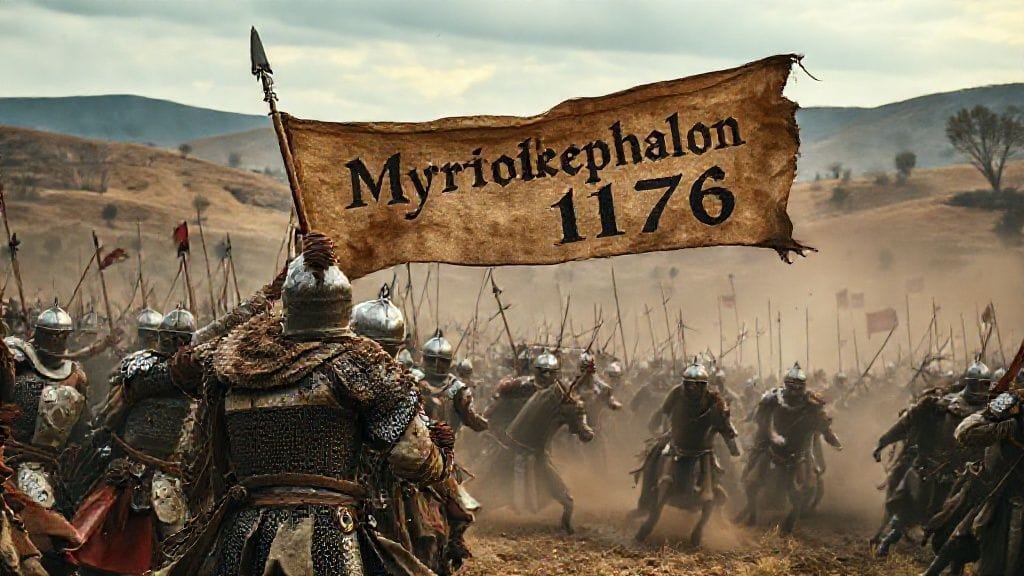
The ambush at Myriokephalon unfolded with dramatic swiftness. On that fateful day, Seljuk horse archers and lightly armed troops emerged from concealed positions on the heights above the pass. Byzantine forces, squeezed and disoriented, struggled to form coherent battle lines.
The narrow defile became a death trap. Rocks tumbled from above, thick dust clouds obscured vision, and the scent of smoke filled the air. The Byzantine heavy cavalry, the pride of the empire, found themselves hamstrung and vulnerable. Panic spread as units became isolated and commanders lost control.
Chaos Unleashed: The Breakdown of Byzantine Order
In the chaos that engulfed the Byzantine ranks, the army’s cohesion crumbled. Frightened soldiers abandoned formation, weapons were lost, and communication proved impossible amid the tumult. Emperor Manuel, personally involved in directing his troops, narrowly escaped the worst of the carnage.
The battle was not merely a military defeat but a psychological shattering — a clash where the emperor’s dreams of dominance met the cruel reality of Anatolia’s unforgiving landscape and adversaries.
The Aftermath of the Battle: Casualties, Captives, and Costs
Though the exact numbers are debated by historians, losses were severe. Byzantine casualties ranged from several thousands dead to many more wounded or captured. Several key military leaders were lost or incapacitated, and the campaign was effectively over.
The loss left the Byzantine army demoralized and forced a humiliating retreat. Seljuk forces, invigorated by the victory, regained control over much of central Anatolia and tightened their grip on the region.
The Loss of Imperial Prestige: Psychological Fallout
Myriokephalon crushed much of the remaining myth of Byzantine invincibility. For an empire that prided itself on superior arms and intricate military organization, the defeat was a bitter humiliation.
Reports from contemporary chroniclers convey despair and bewilderment. The failure undermined Manuel's authority at home and weakened Byzantine diplomatic leverage abroad. It became a cautionary tale illustrating that even the mightiest empires could falter on the jagged mountain roads.
Strategic Consequences: The End of Byzantine Expansion in Anatolia
Perhaps the most enduring consequence was the permanent halt to Byzantine ambitions eastward. Whereas the empire had hoped to reclaim lost territories and perhaps even challenge Seljuk control decisively, Myriokephalon forced a defensive posture.
From this moment onward, Anatolia became a frontier of coexistence and tension rather than conquest. The empire’s capacities diminished, and its borders in the east remained fluid and vulnerable.
Seljuk Resurgence: Reclaiming Control and Influence
The Seljuks capitalized on their victory to bolster their internal stability and external reputation. Kilij Arslan II strengthened alliances and fortified key positions, ensuring that the Sultanate of Rum remained a formidable regional power.
The victory also had symbolic value, asserting Turkish authority at a time when the dynamics between Islamic and Christian powers were shifting across the Near East.
The Battle’s Place in Medieval Military History
Myriokephalon is often overshadowed by the more famous Battle of Manzikert, yet it remains crucial for understanding medieval warfare, empire-building, and cultural contact. It exemplifies how terrain, surprise, and strategy can neutralize superior numbers and firepower.
The battle also raises interesting questions regarding leadership, intelligence failures, and the limits of imperial power in hostile environments.
How the Defeat Changed Byzantine-Seljuk Relations Forever
After Myriokephalon, the Seljuks and Byzantines entered a prolonged period of uneasy peace punctuated by raids, diplomacy, and shifting alliances. The empire, wary of further losses, focused more on fortification and internal reform rather than imperial expansion.
Diplomatic exchanges ensued, yet deep mistrust remained. The battle left a legacy of rivalry that would echo into the Crusader period and beyond.
The Long Shadow: Myriokephalon in Byzantine Memory
Despite the setback, the Byzantine Empire endured for centuries, but Myriokephalon was remembered as a dark milestone. Historians in the empire’s later years reflected on the battle as a sign of declining fortunes, while Turkish historians commemorated it as a great triumph.
Over time, the battle became part of intertwined cultural memories, revealing the complexities of historical narrative and identity in Anatolia.
From Triumph to Tragedy: Manuel I’s Later Years
Emperor Manuel survived the disaster but faced its consequences until his death in 1180. His remaining reign was marked by efforts to stabilize the empire and manage external threats, but the loss at Myriokephalon loomed large.
Some chroniclers hint at a personal toll on the emperor — a mix of regret and resilience that shaped the final years of his rule.
Anatolia After Myriokephalon: Shifting Powers and New Threats
The Byzantine retreat opened new opportunities for other regional powers, including rising Turkish beyliks and the encroaching Mongols decades later. The battle marked a pivot into an era where Anatolia became a complex tapestry of competing rulers.
This shifting political tapestry set the stage for the eventual rise of the Ottoman Empire centuries later.
Lessons From Myriokephalon: Leadership, Terrain, and Strategy
Military historians and strategists continue to study Myriokephalon for its lessons on the dangers of underestimating terrain and enemy adaptability. Effective intelligence, local alliances, and tactical flexibility emerge as key factors determining outcomes in warfare.
The battle also highlights how imperial ambitions often collide with harsh realities on the ground.
Modern Interpretations and Archaeological Insights
In recent decades, archaeological surveys and renewed historical scholarship have refined our understanding of the battle’s location and tactics. Though the site retains much mystery, findings suggest the Byzantine army was caught deep in the pass without adequate preparation for ambush.
Modern historians debate the long-term implications, yet all agree on Myriokephalon’s critical role in the medieval eastern Mediterranean dynamic.
The Battle’s Cultural Legacy in Turkish and Greek Histories
Myriokephalon continues to evoke strong feelings in the national narratives of both Turkey and Greece. For Turks, it is a symbol of resistance and triumph; for Greeks, a poignant episode in the saga of Byzantine decline.
Art, literature, and folklore have preserved echoes of this battle, demonstrating how history becomes living memory.
Reflections on Medieval Warfare and Empire Building
The clash at Myriokephalon encapsulates the complexities of medieval conflict — where empires with grand designs must contend with the limits imposed by geography, logistics, and human will.
It serves as a narrative of ambition and hubris, courage and demise, reminding us that history is often a tapestry of both glory and tragedy.
Conclusion
The Battle of Myriokephalon stands as a testament to the fragility of empires and the unpredictable forces of history. Emperor Manuel’s grand vision was shattered on the rocky slopes of Phrygia, where geography, cunning, and the indomitable spirit of the Seljuks combined to rewrite Anatolia’s future. This decisive moment closed a chapter of Byzantine expansion and opened an era of lasting transformation in the region — one marked by resilience, adaptation, and the shifting tides of power.
More than a mere military encounter, Myriokephalon offers a deeply human story of ambition, miscalculation, and the enduring challenge of empire. It invites us to reflect on the timeless interplay of strategy and fate, reminding us of the weight carried by those who dare to shape history.
FAQs
Q1: What caused the Battle of Myriokephalon?
The battle arose from Byzantine Emperor Manuel I Komnenos's attempt to reclaim lost Anatolian territories from the Seljuk Sultanate of Rum. A desire to restore Byzantine dominance and secure eastern borders led to a military campaign into Phrygia, culminating in the ambush at Myriokephalon.
Q2: Who were the main leaders involved?
The Byzantine forces were led by Emperor Manuel I Komnenos, known for his military ambition and diplomatic skills. The Seljuks were commanded by Sultan Kilij Arslan II, who expertly used terrain and guerrilla tactics to defend his realm.
Q3: What was the strategic importance of Anatolia at the time?
Anatolia was a vital land bridge between Europe and Asia, rich in resources and key trade routes. Control of this region meant economic wealth and a buffer zone against eastern invaders, crucial for both Byzantine and Seljuk interests.
Q4: How significant was the defeat for the Byzantine Empire?
Myriokephalon was a catastrophic psychological and strategic defeat that ended Byzantine hopes for eastern expansion. It weakened imperial prestige and shifted Byzantine policy toward defense rather than reconquest of Anatolia.
Q5: How did the battle influence Byzantine-Seljuk relations?
Post-battle, relations settled into cautious coexistence with intermittent conflicts and diplomacy. The Seljuks solidified their hold, while Byzantines built fortifications and adjusted strategies, reflecting a new balance of power.
Q6: What lessons does Myriokephalon teach about medieval warfare?
The battle underscores the importance of terrain, intelligence, and adaptability. Even superior forces can be crushed by misjudging geography and underestimating an agile, local enemy.
Q7: Has the battle site been identified and studied archaeologically?
Scholars have approximated the site near the modern province of Afyonkarahisar in Turkey, though precise locations remain debated. Recent surveys have helped clarify troop movements and battle conditions.
Q8: How is Myriokephalon remembered today?
It is commemorated differently in Turkish and Greek historical narratives, symbolizing victory and loss respectively. It remains a poignant chapter in the shared history of Anatolia and a subject of ongoing historical interest.