Table of Contents
- The Stormy Seas of the 12th Century: Setting the Stage for Conflict
- The Isles in the Crossroads: A Land of Power and Ambition
- The Rise of Somerled: From Gaelic Chieftain to Kingmaker
- Norwegian Sovereignty over the Hebrides: A Maritime Empire's Reach
- Scotland’s Growing Aspirations: The Crown’s Eye on the Western Isles
- The Spark of Rivalry: Early Clashes and Strategic Manoeuvres
- Somerled’s Realm Emerges: A Challenge to Norwegian Authority
- Naval Warfare and Island Skirmishes: Controlling the Waters
- The 1156 Revolt: Somerled’s Bold Rebellion
- Norwegian Response: King Inge’s Campaigns and Political Maneuvers
- Somerled’s Political Alliances and Scottish Recognition
- The Battle for Hearts and Loyalty: Influence over Island Clans
- The Treaty of 1158? Contesting the Isles through Diplomacy and War
- The Death of Somerled: The Turning Point of the Contest
- Aftermath and the Fragmentation of Power in the Isles
- Long-Term Effects: The Hebrides’ Place in Scottish and Norwegian History
- Cultural Entanglements: Norse-Gaelic Identity in the Islands
- The Legacy of the Contest: Echoes in Modern Scotland and Norway
- Maritime Strategies and Island Politics: Lessons from the 12th Century
- Remembering Somerled: Myth, Memory, and National Identity
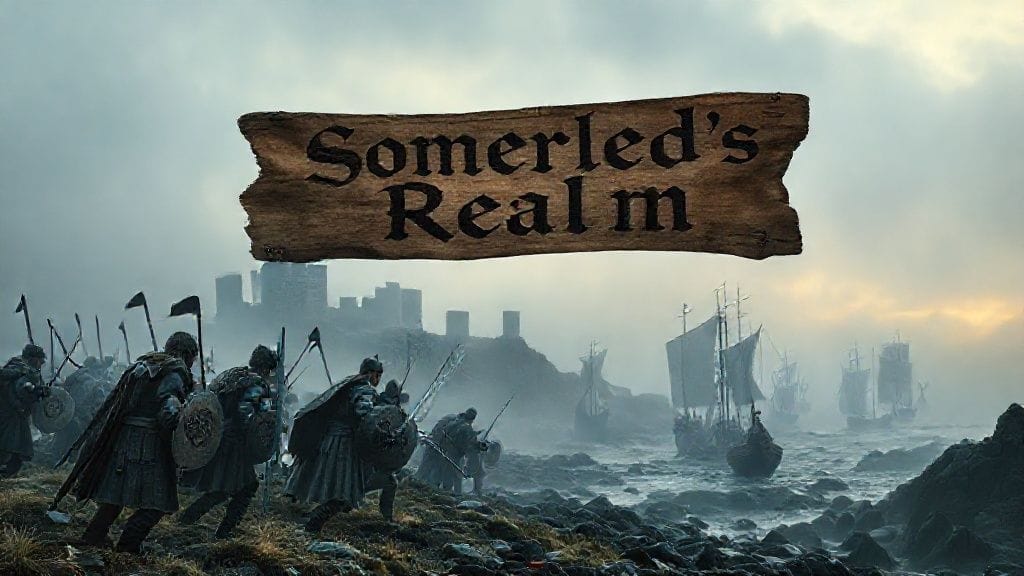
As the mist curled over the restless sea, the low hum of oars cutting through the waters of the Hebrides foreshadowed a clash that would echo through the centuries. In the mid-12th century, a fierce contest unfolded between two maritime powers: the Norwegian crown, with its deep-rooted control over the western seaboard isles, and the emerging Scottish kingdom whose ambitions stirred anew under the leadership of one man—Somerled. What began as mere whispers of rebellion soon spiraled into a pivotal contest of crowns, clans, and kingdoms, reverberating far beyond the rocky shores of the islands themselves.
It was in this tempest of wind, water, and human will that Somerled carved his name into history—not merely as a warrior, but as a kingmaker and challenger whose realm would reshape the balance of power between Norway and Scotland. This is the story of a forgotten war, fought on rugged islands, under stormy skies, where identities clashed as fiercely as swords.
1. The Stormy Seas of the 12th Century: Setting the Stage for Conflict
During the 1100s, the North Atlantic pulse was one of restless kingdoms and shifting sovereignties. The Scottish crown, still consolidating its dominion over the mainland, eyed the far-reaching archipelagos along its western frontier with growing interest. Meanwhile, Norway’s maritime empire stretched across seas, its king asserting control over the Hebrides and other isles through a mix of force and tribute.
The Hebrides, scattered across the Atlantic like jewels thrown upon a plate, were more than mere stepping stones or fishing grounds—they were critical hubs of power, wealth, and identity. Control over these islands meant influence over trade routes, naval strength, and even cultural sway.
The Norwegians had ruled for nearly two centuries by this time, leaving their mark through settlements, place names, laws, and culture. But their rule was not uncontested, and internal tensions between island clans simmered beneath the surface, awaiting the arrival of a leader bold enough to seize opportunity.
2. The Isles in the Crossroads: A Land of Power and Ambition
The Hebrides were a world apart, yet intertwined with both Norway and Scotland by complex webs of allegiance, kinship, and influence. To the Norse ear, the islands were Norðreyjar, the "Northern Isles," encompassing not just the Hebrides but extending their maritime ambitions beyond mere landholdings.
Yet the Gaelic inhabitants resisted mere foreign dominion. The islands harbored ancient clan loyalties and a hardened warrior society where allegiance was often flexible, dictated by both blood and opportunity. This hybridity forged a Norse-Gaelic culture rich in traditions, but ripe for conflict as competing powers sought to impose their authority.
At the heart of this turbulent borderland was a man born of mixed heritage—Somerled—whose vision would rewrite the rules of engagement over these strategic isles.
3. The Rise of Somerled: From Gaelic Chieftain to Kingmaker
Somerled’s origins are shrouded in some legendary ambiguity, mixing Norse and Gaelic bloodlines. Tradition holds him as a descendant of both Gaelic lords and Norse settlers, embodying the cultural intersection of the Isles. What made Somerled extraordinary was not merely his lineage but his ambition and military acumen.
By the 1140s and 1150s, Somerled had established himself as a dominant chieftain in Argyll and the surrounding western seaboard. His rise coincided with growing dissatisfaction among island clans toward Norwegian overlordship, amplified by rivalries within the Norse ruling elite who found it difficult to maintain cohesion in such far-flung territories.
Somerled’s charisma and tactical skill won him the support of diverse groups, building a coalition that transcended tribal divisions—a necessary feat to confront the Norwegian challenge.
4. Norwegian Sovereignty over the Hebrides: A Maritime Empire's Reach
Norway’s control over the Hebrides was a masterstroke of maritime imperialism dating back to the Viking Age. Kings in Trondheim and Oslo claimed overlordship, exacting tribute, and appointing jarls to oversee the islands as royal proxies.
This overlordship was, in practice, a patchwork of negotiated loyalties, violent suppression, and pragmatic conciliation. The Norwegian king’s influence fluctuated with the strength of his fleet and political will. The islands’ remote location made direct control difficult, and local rulers often operated with great autonomy.
King Inge Haraldsson, reigning in the mid-12th century, faced the challenge of preserving this empire amid internal Norwegian power struggles and external threats—least among them, the rise of Somerled.
5. Scotland’s Growing Aspirations: The Crown’s Eye on the Western Isles
The Scottish kingdom under David I and his successors was not a static realm but an ambitious state seeking territorial expansion and consolidation. Particularly, the western seaboard’s patchwork of islands and coastal lands beckoned as vital for trade, defense, and symbolic power.
The Scottish crown's interest was not merely strategic: it was also cultural and political. Integration of the islands promised to unify Gaelic-speaking populations and externalize the Scottish identity into the maritime north.
Yet, gaining control meant confronting both Norway’s established power and the entrenched local lords who valued autonomy—no easy task in the fragmented geopolitics of the era.
6. The Spark of Rivalry: Early Clashes and Strategic Manoeuvres
It is impossible to pinpoint a single instant when conflict ignited, but the early 1150s witnessed increased tension as Somerled began openly resisting Norwegian authority. His intentions were laid bare through a series of raids, shifting allegiances, and territorial claims.
Somerled’s attacks were not mere banditry but calculated military manoeuvres aimed at wresting control of critical island strongholds. His coalition included vocal Gaelic chiefs who resented Norwegian dominance—an alliance that threatened to unravel centuries of Norse-imposed order.
The Norwegian response was cautious but firm, sending envoys and naval expeditions to quell unrest, but the vast distances and the seas’ fury often worked against them.
7. Somerled’s Realm Emerges: A Challenge to Norwegian Authority
By the mid-1150s, Somerled had effectively carved out a quasi-independent domain within the western isles, centered in Argyll and extending over considerable parts of the Hebrides. His kingship was as much symbolic as practical, asserting sovereignty through marriage alliances, military strength, and political alliances.
Somerled’s assertion of power posed a direct challenge to King Inge and Norway’s claim, threatening not just the isles but the idea of Norwegian maritime supremacy.
His realm was a hybrid polity, combining Norse and Gaelic traditions, including patronage of both languages, law, and warrior culture. This blending fostered loyalty but also signaled a new order—one of mixed identity and complex power relations.
8. Naval Warfare and Island Skirmishes: Controlling the Waters
Control of the Hebrides depended fundamentally on mastery of the sea. The islands’ geography—a labyrinth of rocky coasts, inlets, and narrow channels—favored naval agility over brute force.
Somerled was a master of naval warfare, commanding swift galleys capable of surprise attacks and rapid redeployments. His fleet harried Norwegian strongholds and Scottish coastal forces alike, making the waters a contested battleground.
Similarly, the Norwegians maintained patrols and attempted to blockade rebel-held ports, but the vast expanse and unpredictable weather favored Somerled’s intimate knowledge of the seas.
These skirmishes were not simply military; they represented control of livelihoods, trade routes, and the fragile balance of power.
9. The 1156 Revolt: Somerled’s Bold Rebellion
The defining moment came in 1156, when Somerled launched a large-scale uprising against Norwegian overlordship, consolidating his spheres of influence with decisive force. Chronicles recount how he expelled certain Norwegian-appointed jarls, seized key fortresses, and exacted vows of fealty from island chieftains.
This revolt was more than a local skirmish; it marked formal rejection of Norwegian rule and the assertion of an independent kingship.
Somerled’s forces showcased a remarkable blend of military discipline, strategic planning, and popular support—elements that increasingly undermined Norwegian control and rattled the Scottish crown.
10. Norwegian Response: King Inge’s Campaigns and Political Maneuvers
King Inge Haraldsson could not ignore this rising insurrection. He dispatched fleets and emissaries, seeking both to intimidate and negotiate, but the war of attrition in the isles proved costly and complicated.
The Norwegian court also engaged in diplomatic efforts to isolate Somerled, forging alliances with rival clans and leveraging internal dissent in the Isles.
Yet, the vast distances and fragmented loyalties meant that even a king’s order struggled to be enforced. Somerled’s growing dominion remained a thorn in the Norwegian side.
11. Somerled’s Political Alliances and Scottish Recognition
Somerled’s genius was not only military but political. Through marriage and alliance-building, he tied his family to powerful Gaelic and Scottish dynasties. His union with Ragnhild, daughter of Olaf Godredsson (King of Mann and the Isles), strengthened his claims and extended influence.
Furthermore, the Scottish crown, wary of Norwegian ambitions and impressed by Somerled’s growing power, began to see him as a useful counterweight. There are records suggesting that Somerled received tacit or overt acknowledgement as ruler of his realm by the Scottish king, a move that complicated the tripartite relationship.
This triangulation of power between Norwegian kings, Somerled’s Norse-Gaelic realm, and Scotland set the stage for ongoing tensions and alliances.
12. The Battle for Hearts and Loyalty: Influence over Island Clans
Control of the Isles was ultimately about loyalty. Somerled’s success lay in his appeal to local clans who saw in him a leader who understood their culture and interests better than distant Norwegian overseers.
His diplomacy rested on kinship ties, land grants, and respect for local customs. Unlike the Norse rulers who ruled mainly through officials and tribute, Somerled embedded himself within the social fabric of the islands.
This "soft power" was crucial: island lords’ allegiance was fluid, often shifting with circumstances. Somerled’s ability to bind them to his cause shifted the political landscape in a decisive way.
13. The Treaty of 1158? Contesting the Isles through Diplomacy and War
Historical records hint at negotiations or informal treaties around 1158, though no definitive text survives. These may have represented temporary compromises, recognizing Somerled’s control over parts of the Hebrides in exchange for nominal allegiance to Norway or Scotland.
Yet the peace was tenuous. Military actions continued sporadically as both crowns vied for advantage, and local clans weighed their options.
This blurred phase illustrates the ambiguous nature of medieval sovereignty, where borders were fluid and personal relationships often outweighed formal treaties.
14. The Death of Somerled: The Turning Point of the Contest
In 1164, Somerled met his end in battle, fighting against the forces of Godred Olafsson on the Isle of Mull in what would be known as the Battle of Renfrew.
His death marked a critical turning point. Without Somerled’s leadership, the unity of his realm fractured, giving Norway and Scotland openings to reassert control.
However, his descendants continued to wield influence, and his legacy survived in the political map of the region for centuries.
15. Aftermath and the Fragmentation of Power in the Isles
Following Somerled’s death, the Isles entered a period of political fragmentation. His realm was divided among his heirs, leading to internecine struggles that eroded centralized authority.
Norwegian kings attempted to reimpose direct control, while Scottish monarchs increased administrative and military efforts to assert influence.
The Isles’ identity as a Norse-Gaelic melting pot was hardened during this time, and local lords maneuvered between the competing crowns.
16. Long-Term Effects: The Hebrides’ Place in Scottish and Norwegian History
The contest over the Hebrides during the 1150s and 1160s foreshadowed broader shifts in medieval British and Scandinavian geopolitics. Norway’s gradual decline in the region contrasted with Scotland’s steady expansion.
By the 13th century, Scottish control over the Hebrides became formalized, especially after the Treaty of Perth in 1266, but the foundations had been laid during Somerled’s era.
This period also deepened cultural synthesis, producing a legacy of Norse-Gaelic art, language, and identity.
17. Cultural Entanglements: Norse-Gaelic Identity in the Islands
The Hebrides were a crucible of Norse and Gaelic culture. Linguistic fusion, legal customs, and religious practices blended elements from both traditions.
Somerled’s reign epitomized this fusion, embracing the complexity of identities rather than suppressing them.
The echoes of this syncretic culture survive in place names, folklore, and clan histories, revealing the enduring impact of this contested era.
18. The Legacy of the Contest: Echoes in Modern Scotland and Norway
Today, Somerled is remembered in Scottish tradition as a heroic figure—sometimes even as a forefather of the Lordship of the Isles. In Norway, his rebellion signifies a challenge to Viking-era dominion and the limits of distant kingship.
This medieval contest shaped not only the political contours of the North Atlantic but also the cultural narratives of identity, sovereignty, and resistance.
It reminds us how islands, often seen as peripheral, can be central players in the grand drama of history.
19. Maritime Strategies and Island Politics: Lessons from the 12th Century
The Scottish–Norwegian contest over the Isles illustrates the critical role of naval power, flexible alliances, and cultural savvy in medieval statecraft.
Somerled’s example teaches the importance of integrating military might with political legitimacy and cultural identity to sustain power in disputed borderlands.
The Hebrides’ geopolitical puzzle also highlights challenges that modern island and coastal regions continue to face: balancing autonomy, external influence, and internal cohesion.
20. Remembering Somerled: Myth, Memory, and National Identity
Legends surrounding Somerled have woven him into the tapestry of Scottish national identity. Poets, historians, and storytellers have portrayed him as a figure of resistance and unity.
His name carries the weight of sovereignty struggles but also speaks to themes of cultural hybridity and the complexities of medieval politics.
Understanding Somerled’s realm is to glimpse a moment where identities clashed, cultures merged, and history slipped from the grip of empires into the hands of a man who dared to challenge the tides.
Conclusion
The mid-12th century contest over the Hebrides was much more than a mere border dispute between distant kings. It was a collision of empires, cultures, and visions of power—played out on rugged islands where loyalty hung as precariously as the cliffs above the stormy sea. Somerled’s rise, rebellion, and legacy illuminated the human story behind the shifting lines on medieval maps.
Through his charisma, military leadership, and political skill, Somerled reshaped a contested frontier into a realm balancing Norse and Gaelic identities. His challenge to Norway’s maritime empire and Scotland’s growing ambitions rewritten the fate of the Isles, whose echoes still resonate in the cultural memory of Scotland and beyond.
His is a tale of ambition and identity, resistance and adaptation, reminding us that history’s frontier lands—like the Hebrides—are often places where the future is forged in the heat of contest and coalition.
FAQs
Q1: Who was Somerled and why is he significant?
A1: Somerled was a 12th-century Norse-Gaelic chieftain who rose to challenge Norwegian control over the Hebrides and carved out an autonomous realm in western Scotland. He is significant for reshaping the political landscape and blending Norse and Gaelic cultures.
Q2: What was the nature of Norwegian control over the Hebrides?
A2: Norway’s control was based on maritime overlordship, involving tribute from the islands, appointments of local leaders, and naval patrols. However, this authority was often weak on the ground due to distances and local resistance.
Q3: How did Scotland’s ambitions influence events in the Isles?
A3: The Scottish crown sought to expand its influence westward to secure trade routes, unify Gaelic populations, and counter Norwegian power, sometimes supporting local leaders like Somerled to destabilize Norwegian rule.
Q4: What role did naval warfare play in the contest over the Isles?
A4: Given the insular geography, controlling the seas was essential. Somerled’s naval skill allowed him to contest Norwegian fleets, conduct raids, and maintain supply lines, turning the waters into a strategic battleground.
Q5: How did Somerled’s death affect the political landscape?
A5: His death in 1164 led to fragmentation of his realm among heirs, weakening centralized power and allowing Norway and Scotland to regain influence, though his descendants continued to be important regional figures.
Q6: What lasting cultural impact did the contest have on the Hebrides?
A6: It fostered a Norse-Gaelic cultural synthesis, blending languages, legal customs, and traditions—a legacy evident in place names, folklore, and clan identities that persisted for centuries.
Q7: Was there a formal treaty ending the conflict?
A7: While records suggest possible negotiations around 1158, no definitive treaty survives, and tensions remained fluid, with ongoing military and diplomatic contests.
Q8: Why is this conflict important for understanding medieval Scotland and Norway?
A8: It highlights the complexities of medieval sovereignty, the limits of distant empires, and the importance of local leadership and cultural hybridity in shaping political realities beyond mainland power centers.

