Table of Contents
- The Dawn of a New Empire: Trebizond in 1204
- The Fall of Constantinople: Chaos and Opportunity
- Megas Komnenos: The Man Behind the Empire
- Strategic Geography: Trebizond’s Natural Defenses and Advantages
- The Byzantine World in Turmoil: Political Fragmentation and Rival Claims
- The Founding Proclamation: Ceremony and Symbolism in Trebizond
- Allies and Adversaries: Navigating Friendships and Foes
- The Empire’s Early Governance: Administration and Military Organization
- The Role of the Black Sea: Trade, Wealth, and Naval Power
- Cultural Flourishing amid Conflict: Art, Religion, and Identity
- Diplomatic Dance: Relations with the Latins, Georgians, and Seljuks
- The Threat of the Seljuk Sultanate: Military Pressures on the Borders
- The Legacy of the Komnenoi Dynasty: Claiming Byzantine Heritage
- Surviving in Isolation: The Empire’s Longevity Against Odds
- Stories from the Court: Anecdotes of Intrigue and Loyalty
- Economic Foundations: Agriculture, Commerce, and Taxation
- The Empire’s Endurance: How Trebizond Outlasted Rivals
- The Empire of Trebizond in the Wider Medieval World
- Trebizond’s Place in Modern Historical Memory
- Conclusion: The Empire’s Enduring Spirit in History
- FAQs: Illuminating the Empire of Trebizond
- External Resource
- Internal Link
1. The Dawn of a New Empire: Trebizond in 1204
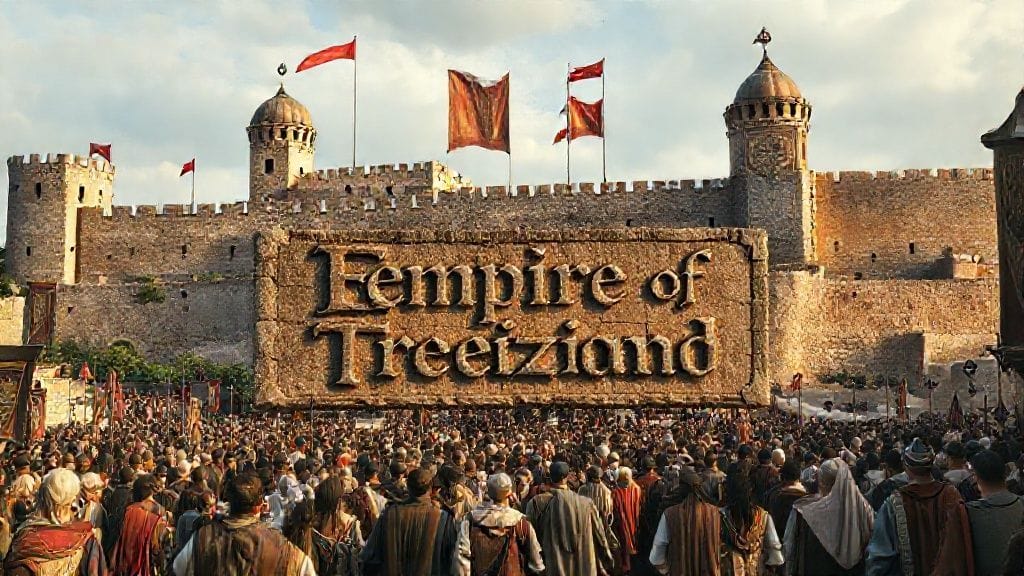
The morning sun cast its golden hues over the cliffs of the Black Sea, illuminating the walls of a city that would forever etch its name in the annals of history. Trebizond—an ancient emporium perched on the rugged coast of Pontus—was about to witness a proclamation that reverberated far beyond its stone battlements. It was the birth of an empire in the month of April, 1204, amidst the ashes of Byzantium’s greatest calamity. Yet, far from despair, a spark of defiance and continuity glowed brightly here, founded not just on power, but on legacy, geography, and hope.
As the banners with the golden phoenix rose above the city, welcoming the reign of the Komnenoi dynasty once again, few could have predicted that this outpost on the Black Sea would become a beacon of Byzantine resilience for over two centuries. This was no mere fragment of a shattered empire—it was a bold declaration of survival, heritage, and sovereignty.
2. The Fall of Constantinople: Chaos and Opportunity
To appreciate the gravity of Trebizond’s proclamation, one must first understand the seismic shock that tore through the Byzantine world: the sack of Constantinople during the Fourth Crusade in April 1204. Once the jewel of Christendom, the Byzantine capital fell to Western European crusaders whose original mission to reclaim the Holy Land veered disastrously off course.
The shock was profound. An empire that had ruled the eastern Mediterranean for centuries was effectively dismantled overnight, fracturing into competing successor states such as the Latin Empire in Constantinople, the Despotate of Epirus, and the Empire of Nicaea. In this chaotic whirlwind, Trebizond seized its moment.
While the Latin crusaders took control of Constantinople, the Komnenoi family, related by blood to the Byzantine imperial line, escaped the carnage. Alexios and David Komnenos, nephews of the former Emperor Andronikos I, fled eastward, seeking refuge and opportunity in the mountainous region of Pontus. It was here that the seeds of a new imperial vision took root.
3. Megas Komnenos: The Man Behind the Empire
At the heart of Trebizond’s rise stood Alexios I Megas Komnenos, the pivotal figure whose ambition and lineage fueled the proclamation. Born into Byzantine nobility yet shaped by exile and adversity, Alexios was not merely a refugee but a man determined to restore his family’s prestige.
His claim was far from frivolous: the Komnenos dynasty had governed Byzantium during one of its most vibrant periods in the 11th and 12th centuries, celebrated for military prowess, administrative reform, and cultural achievement. As political power fragmented after 1204, Alexios styled himself "basileus," or emperor, a bold assertion meant not only to rally local support but to challenge the legitimacy of the Latin occupiers.
David Komnenos, his brother and co-founder, also played an essential role, holding fortresses and securing the hinterlands. Together, these two brothers forged their empire’s foundations, blending diplomacy, military strength, and strategic alliances.
4. Strategic Geography: Trebizond’s Natural Defenses and Advantages
Trebizond’s survival and growth were as much a product of its geography as of its rulers’ willpower. Nestled between the Pontic Mountains and the Black Sea, the city benefited from natural barriers that impeded invading armies. Steep cliffs and dense forests provided a formidable defense, while the harbor linked it to vital maritime trade routes.
This harsh yet sheltering landscape made it difficult for enemies—from Latin crusaders to Seljuk Turks—to launch sustained assaults. Moreover, the region’s agricultural productivity and resource diversity contributed to the city’s economic self-sufficiency.
Trebizond was also a crossroads, bridging Asia Minor with the Caucasus and the Near East. This position allowed it to serve as a crucial node for East-West trade and cultural exchange—an economic lifeline during tumultuous times.
5. The Byzantine World in Turmoil: Political Fragmentation and Rival Claims
The proclamation of the Empire of Trebizond did not occur in a vacuum but within a mosaic of rival states each claiming the Byzantine legacy. The Latin Empire, imposed by Western crusaders, held Constantinople but faced continuous threats and internal dissent. Meanwhile, the Empire of Nicaea in western Anatolia, under the Laskarid dynasty, saw itself as the rightful Byzantine heir, concentrating on the eventual recapture of Constantinople.
The Despotate of Epirus, in western Greece and Albania, also claimed an imperial mantle, intertwining alliances through marriage and war. Against this fragmented backdrop, Trebizond’s assertion of sovereignty was a resolute statement of distinct identity and ambition.
The competition among these successor states was as much ideological as territorial. Each wielded Byzantine heritage as a potent symbol—whether to legitimize rule, attract followers, or reject foreign domination.
6. The Founding Proclamation: Ceremony and Symbolism in Trebizond
The moment of proclamation was laden with ceremony befitting an empire reborn. On a spring day in 1204, amidst the Byzantine religious rites and imperial pomp, Alexios I Megas Komnenos declared the establishment of the Empire of Trebizond. Symbolism was everywhere: the imperial purple robes, the cross held high, the chanting clergy invoking divine sanction.
This was not simply a political statement but a stake in the spiritual and cultural heart of Byzantium. The new empire claimed continuous descent from the Roman Empire, asserting orthodoxy and tradition against Latin intrusions.
The city’s courtiers and commoners alike rallied behind the proclamation. It represented hope for preserving Byzantine civilization—even as its heartland lay in ruins.
7. Allies and Adversaries: Navigating Friendships and Foes
In a region roiled by shifting alliances, Trebizond’s survival depended on careful diplomatic maneuvering. The empire sought ties with the Kingdom of Georgia to the northeast, securing a weatherproof alliance based on mutual interests and common enemies such as the Seljuks and Khwarezmians.
Trebizond had to walk a diplomatic tightrope balancing hostility towards the Latin Empire while sometimes engaging in pragmatic truces. The Seljuk Turks, formidable neighbors to the south and east, posed a continuous threat requiring vigilant military preparedness and occasional negotiations.
The empire also maintained maritime contacts with Genoese and Venetian traders, who sought to expand their commercial networks despite political unrest.
These relationships shaped Trebizond’s trajectory, sometimes opening possibilities, sometimes confronting existential risks.
8. The Empire’s Early Governance: Administration and Military Organization
Building on Byzantine bureaucratic traditions, Trebizond’s rulers crafted an administration capable of governing diverse peoples and territories. The Komnenoi reinstated imperial offices with familiar titles, balancing aristocratic privilege with pragmatic appointment of capable officials.
Military organization prioritized both land-based troops and a naval force critical to securing the Black Sea coast and dominating trade routes. Fortifications were maintained and reinforced to resist sieges.
Despite its small size compared to the grand Byzantine Empire of old, Trebizond established a robust system that allowed it to act independently, enforce laws, and mobilize for defense.
9. The Role of the Black Sea: Trade, Wealth, and Naval Power
Central to Trebizond’s survival was its control over parts of the southern Black Sea coast, enabling control of one of medieval Eurasia’s most vibrant trade corridors. Merchandise ranging from silk, spices, and grains to slaves and precious metals passed through its ports, fueling the treasury.
The empire’s navy, though modest, was a crucial instrument for securing commerce and deterring piracy or foreign naval incursions. Ships linked Trebizond to Genoa, Venice, and later to emerging regional powers.
Trade brought prosperity but also foreign influence, allowing a mélange of cultures and ideas to flourish amidst the city’s bustling markets. The Black Sea was truly the artery through which Trebizond kept its pulse alive.
10. Cultural Flourishing amid Conflict: Art, Religion, and Identity
Even as Trebizond endured political and military threats, its cultural vibrancy soon attracted admiration. The Komnenoi court patronized the arts, commissioning churches that blended classical Byzantine aesthetics with local influences.
Monasteries and scriptoria copied ancient texts and generated theological debate, reaffirming Eastern Orthodox spirituality as a cornerstone of imperial identity.
Music, literature, and iconography sustained a unique character—neither fully Byzantine nor entirely isolated—reflecting a civilization determined to perpetuate itself against all odds.
11. Diplomatic Dance: Relations with the Latins, Georgians, and Seljuks
Trebizond walked a diplomatic ballet on a precarious stage. Hostile to the Latin Empire’s domination, the Komnenoi nevertheless found it necessary at times to negotiate peace or trade agreements to avoid devastating wars.
The Georgian alliance bolstered the northern frontier, guardian against Turkish incursions, forming a rare example of Orthodox Christian unity in a fractious world.
With the Seljuks, the relationship shimmered between warfare and uneasy peace. Control over fertile plains and trade routes often sparked skirmishes, but pragmatic ceasefires allowed breathing room.
These multifaceted relations defined Trebizond’s foreign policy throughout its existence.
12. The Threat of the Seljuk Sultanate: Military Pressures on the Borders
The Seljuk Turks represented a formidable and unrelenting menace to Trebizond’s eastern flank. Their expanding Sultanate sought to dominate Anatolia’s interior and the Black Sea coast for economic and military gains.
While the mountainous terrain offered some protection, incursions and raids persisted. Defensive campaigns drained imperial resources but underscored the strategic importance of alliances and internal stability.
Occasionally, conflicts reached pitched battles, and Trebizond’s survival hinged on military valor and clever leadership amid overwhelming odds.
13. The Legacy of the Komnenoi Dynasty: Claiming Byzantine Heritage
The Komnenoi were not mere opportunists; their legitimacy stemmed from a deep-rooted dynastic pride. The empire invoked the grand Byzantine tradition—its ceremonies, titles, art, and religion—to fortify its claim as the true heir of Rome’s eastern empire.
This symbolic continuity mattered deeply both to subjects and to rival states. While reduced in territory and power, the Komnenoi’s proclamation was a cultural triumph as much as a political act.
They preserved Byzantine memory in a world that seemed intent on erasing it.
14. Surviving in Isolation: The Empire’s Longevity Against Odds
What makes Trebizond’s empire remarkable is its longevity. Despite constant pressure, limited territory, and the caprices of fate, it endured for over 250 years until 1461.
Isolation became a strange blessing. Removed from the heart of Anatolian conflicts, able to maneuver diplomatically, and deeply rooted in local society, Trebizond maintained its independence longer than many anticipated.
Its survival testifies to the resilience of small states asserting identity and sovereignty amid geopolitical storms.
15. Stories from the Court: Anecdotes of Intrigue and Loyalty
From whispers in gilded halls to public speeches in the agora, the Empire of Trebizond’s court teemed with stories: conspiracies against ambitious princes, fierce loyalty of generals defending mountain passes, and the personal dramas of Komnenoi rulers torn between family and empire.
One chronicler recounts the tale of Empress Theodora, whose shrewd diplomacy staved off a dangerous coup, blending wit and will to safeguard her son’s throne. Another tells of naval commanders bravely repelling Turkish pirates threatening the city’s lifeline.
These episodes humanize a remote empire, making it vivid and relatable.
16. Economic Foundations: Agriculture, Commerce, and Taxation
Trebizond’s economy relied on fertile valleys around the city and access to vital trade routes. Agriculture—particularly grain, wine, and timber—kept the population fed and markets supplied.
The empire’s taxing structure evolved to balance demands of court, military, and urban growth. Trade tariffs, port fees, and agricultural levies filled imperial coffers while encouraging merchant activity.
Despite external threats, economic dynamism helped sustain the empire’s social order and political ambitions.
17. The Empire’s Endurance: How Trebizond Outlasted Rivals
While other Byzantine successor states fell or were absorbed, Trebizond’s adaptive strategies, geographic advantages, and shrewd diplomacy allowed it to outlive formidable neighbors. Even as the Ottoman menace rose, the empire held on by forging unusual alliances and capitalizing on its Black Sea connections.
This endurance makes Trebizond a fascinating study in medieval survival and statecraft.
18. The Empire of Trebizond in the Wider Medieval World
Beyond its regional significance, Trebizond played a role in the complex web of medieval Eurasian politics. It served as a gateway between Europe and Asia, a bastion of Orthodox Christianity near Islamic realms, and a player in the commercial networks that knit together distant cultures.
Its legacy influenced later notions of empire, identity, and resistance against imperial conquest.
19. Trebizond’s Place in Modern Historical Memory
For centuries overshadowed by the grandeur of Constantinople, the Empire of Trebizond has gradually reemerged in historical consciousness. Scholars and cultural historians revisit its archives and ruins, illuminating a unique chapter of Byzantine post-imperial resilience.
Today, within Turkey’s modern borders, Trebizond’s legacy survives in architecture, folklore, and ongoing archaeological inquiry, bridging past and present.
20. Conclusion: The Empire’s Enduring Spirit in History
The proclamation of the Empire of Trebizond was more than an act of political expediency—it was an assertion of identity, hope, and continuity in a fractured world. Born from the calamity of Constantinople’s fall, it demonstrated that even in adversity, human societies strive to preserve culture, sovereignty, and dignity.
Trebizond stands as a compelling testament to resilience: a medieval empire that defied extinction, blending ancient legacies with new realities. Its story invites us to reflect on how history remembers not only empires of grand scale but also those that survive through determination and heart.
FAQs: Illuminating the Empire of Trebizond
Q1: What led to the proclamation of the Empire of Trebizond in 1204?
A1: The empire was proclaimed following the Fourth Crusade’s sack of Constantinople, which fractured Byzantine political authority. Members of the Komnenos dynasty, escaping the chaos, established an independent realm in Pontus, asserting continuity with Byzantine imperial heritage.
Q2: Who was Alexios I Megas Komnenos?
A2: Alexios I was the founding emperor of Trebizond, a member of the Komnenos family, determined to revive Byzantine rule in exile. His leadership was central to the empire’s establishment and early consolidation.
Q3: How did geography help Trebizond survive?
A3: Trebizond’s position between the Pontic Mountains and the Black Sea provided natural defenses and control over vital trade routes, enabling it to resist sieges and maintain economic vitality.
Q4: How did the empire sustain itself economically?
A4: Through agriculture in fertile surrounding lands, control of Black Sea trade, taxation of merchants and towns, and diplomatic relations with trading powers like Genoa and Venice, Trebizond built a resilient economy.
Q5: What were Trebizond's relations with neighboring powers?
A5: Trebizond navigated complex relations, allying with Orthodox Christian Georgia, engaging diplomatically with the Latin Empire (despite hostility), and confronting the Seljuk Sultanate militarily while negotiating peace at times.
Q6: Why did the Empire of Trebizond last longer than other Byzantine successor states?
A6: Its survival was due to geographic isolation, flexible diplomacy, strong military defenses, and the ability to manage internal and external pressures effectively over centuries.
Q7: What cultural contributions did Trebizond make?
A7: The empire fostered Byzantine art, architecture, Orthodox religious scholarship, and preserved Greek traditions, blending local influences to create a unique cultural identity.
Q8: How is the Empire of Trebizond remembered today?
A8: Though less famous than Constantinople, Trebizond’s legacy endures in historical research, archaeology, and local traditions, symbolizing resilience and continuity after empire's fall.

