Table of Contents
- The Dawn of Doom: Setting the Stage for the Battle of Mohi
- The Mongol Storm Approaches Europe
- Medieval Hungary on the Eve of Invasion
- King Béla IV: A Monarch in Peril
- The Mongol War Machine: Strategy and Tactics
- April 11, 1241: The Clash at the Sajó River Begins
- The Encirclement: Mongol Maneuvers and Hungarian Responses
- The Thunder of Arrows and the Roar of Cavalry
- The Breaking of Hungarian Lines and the Death Knell of Resistance
- Survivors and Sorrow: The Human Toll of the Battle
- After the Smoke Clears: The Immediate Aftermath
- Hungary in Ashes: Pillage, Death, and Flight
- Europe’s Shockwave: The Mongol Threat Reverberates
- Béla’s Long Shadow: Rebuilding a Fractured Kingdom
- Mongol Withdrawal: Why Did the Horde Pull Back?
- The Battle's Enduring Legacy: Shaping European Fortifications and Policies
- Echoes Through Time: Remembering Mohi in Hungarian Memory
- Lessons in Strategy and Survival: The Military Paradigm Shift
- The Historians’ Debate: Was the Defeat Inevitable?
- Conclusion: The Battle of Mohi as a Mirror of Medieval Europe’s Fragility
- FAQs: Unraveling the Myths and Realities of Mohi
- External Resource
- Internal Link
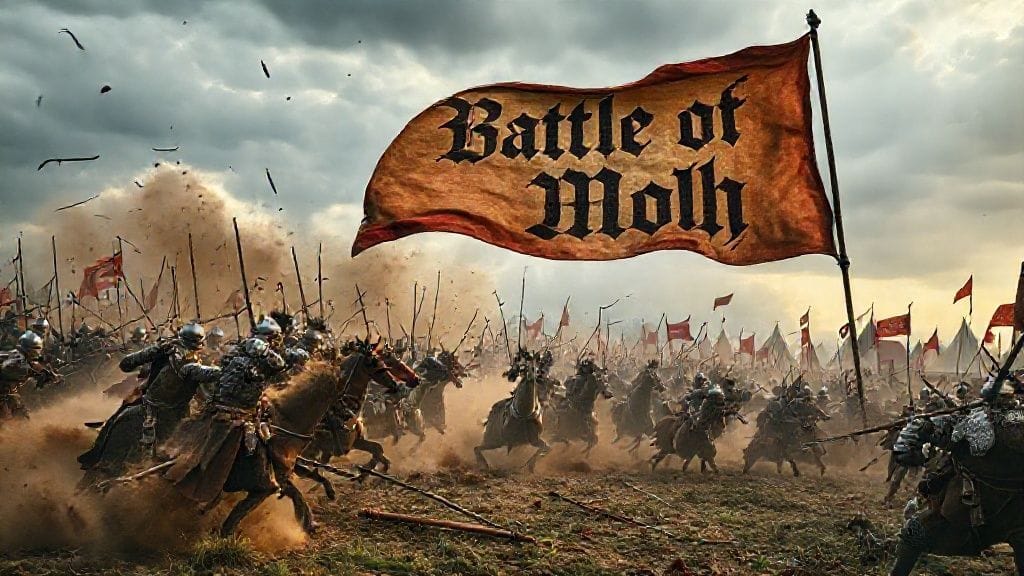
In the pale light of dawn on April 11, 1241, the dense mist clinging to the banks of the Sajó River slowly surrendered to the roar of hooves and clangor of steel. From the east emerged an relentless tide of horsemen, arrows blotting out the sky like a storm of death — the Mongol horde had come at last. This was no ordinary skirmish; it was a collision of worlds, a battle that would reverberate through the centuries, forever altering the fate of Hungary and the destiny of Europe.
1. The Dawn of Doom: Setting the Stage for the Battle of Mohi
The morning of April 11 was heavy with expectation and dread. For days, scouts had reported strange riders approaching—unfamiliar, swift, and terrifyingly efficient. The horizon was darkened not by clouds, but by the undulating masses of Mongol warriors intent on conquest. On the muddy banks of the Sajó River, Hungarian knights donned their armor, their visors reflecting the cold sunrise as they prepared for what many feared would be the battlefield of their lives.
Few could imagine the scale of the destruction that would soon be unleashed. The Battle of Mohi was not just a fight for territory; it was the crucible where medieval Europe’s defenses would be tested to their breaking point.
2. The Mongol Storm Approaches Europe
The Mongol Empire, under the iron rule of Genghis Khan and his successors, had spent decades sweeping across Asia with an almost supernatural momentum. By 1241, the Mongol forces under Batu Khan, the grandson of Genghis, amassed in the steppes westward, their ambitions set on the rich kingdoms of Central Europe.
Their campaign was ruthless, brilliant, and unparalleled in its synthesis of speed, psychological warfare, and tactical ingenuity. The Mongols utilized a combination of light cavalry archers, heavy cavalry, and siege engineers, creating a terrifyingly versatile fighting force. Their reputation alone had subdued many, but Hungary would prove the ultimate challenge.
3. Medieval Hungary on the Eve of Invasion
Hungary in the early 13th century was a patchwork of burgeoning cities, fortified castles, and vast rural estates. It was a kingdom attempting to consolidate power while fending off both internal dissension and external threats. King Béla IV, a ruler conscious of the precariousness of his realm, had tried to strengthen his borders and fortify key locations, but much remained vulnerable to the swift Mongol onslaught.
The kingdom’s armies were composed largely of feudal levies, knights bound by honor and obligation, peasants thrust unwillingly into the defense of their homeland. Communication delays and political fragmentation meant that the response to the Mongol threat was chaotic at best.
4. King Béla IV: A Monarch in Peril
Known as the “Second Founder” of Hungary for his later efforts to rebuild, King Béla IV stood at the helm as the Mongols approached. His tenure was marked by both determination and despair. Legends tell of a ruler who prayed desperately for divine intervention, yet faced the harsh need to outwit an enemy whose methods were unlike any Europeans had encountered.
Béla’s decisions in the months leading to the battle — including attempts to rally allies and strengthen fortresses — revealed a monarch who perceived the stakes but perhaps underestimated the ferocity and ingenuity of the Mongol war machine.
5. The Mongol War Machine: Strategy and Tactics
What made the Mongol forces so fearsome wasn’t just their numbers but their strategic mastery. Their warriors were tacticians as much as fighters, masters of deception, feigned retreats, and swift encirclement.
At Mohi, the Mongols employed a bold plan involving crossing the Sajó River under cover of darkness and striking with surprise and overwhelming force. Their use of composite bows, capable of devastating volleys even against armored knights, combined with coordinated cavalry charges, shattered traditional European battle paradigms.
6. April 11, 1241: The Clash at the Sajó River Begins
At dawn, Hungarian forces, estimated around 15,000 to 20,000 men, arrayed themselves along the western bank of the Sajó River. Opposite them, the Mongols arrayed in hidden positions across a vast front, ready to unleash their ambush.
The first moments were chaotic — arrows darkened the morning sky, shields splintered, and the river itself became a crucible of death. Hungarian cavalry attempted charges that were met with feigned retreats, luring them into deadly traps.
7. The Encirclement: Mongol Maneuvers and Hungarian Responses
Aware of their disadvantage in numbers and cavalry mobility, Hungarian commanders sought to hold firm against the Mongol tide. But the Mongols’ encirclement tactics completed a lethal noose.
As the day progressed, Hungarian troops found their flanks and rear attacked simultaneously. Panic rippled through the ranks. Attempts to rally scattered squads only fragmented the cohesion further. The genius of Mongol generals shone; they cut off Hungarian retreat paths and exploited every weakness.
8. The Thunder of Arrows and the Roar of Cavalry
The battlefield echoed with an incessant barrage of arrows — tens of thousands — a relentless storm tearing through armor and shield. Mongol horsemen circled with a predator’s patience, striking with precision and then withdrawing before counters could be mounted.
For the Hungarians, their traditional heavy cavalry advantage was neutralized by the agility of the Mongol mounted archers. This disparity in mobility and firepower spelled doom for Béla’s armies on the muddy riverbanks.
9. The Breaking of Hungarian Lines and the Death Knell of Resistance
By midday, the Hungarian lines began to crumble under coordinated assaults. Knights fell in droves, the soldiery lost its nerve, and the river became a scene of desperate attempts to escape.
Eyewitness accounts describe the horror: men drowning, horses struggling in the mud, commanders cut down as they tried to reorganize defense. Amidst this chaos, King Béla IV narrowly escaped, fleeing to the safety of fortified strongholds. The once-proud Hungarian force was broken.
10. Survivors and Sorrow: The Human Toll of the Battle
The human cost of Mohi was staggering. Contemporary chronicles estimate tens of thousands of Hungarian casualties, with many villages ravaged and nobility decimated.
The aftermath was a scene of desolation — survivors traumatized, fields and towns looted or burned. For common folk and nobility alike, the nightmare had only begun. The scale of loss created a trauma that echoed for generations.
11. After the Smoke Clears: The Immediate Aftermath
In the weeks after Mohi, Mongol forces swept across much of Hungary with relative ease. Key cities were sacked, populations displaced or slaughtered. Béla IV retreated east, regrouping amidst shattered defenses.
But the Mongols could not maintain an endless occupation. Political changes in the Mongol heartland would soon influence their strategic decisions, yet the devastation they left would redefine Hungary’s future.
12. Hungary in Ashes: Pillage, Death, and Flight
The kingdom was plunged into crisis. Survivors fled to hills and forests; many castles fell to ruin. Agricultural productivity collapsed, famine loomed, and societal structures were shaken.
Civil administration teetered. The psychological scars inflicted by Mongol cruelty altered the Hungarian collective psyche — distrust, fear, and determination mingled in the ashes of defeat.
13. Europe’s Shockwave: The Mongol Threat Reverberates
The news of the Mongol victory at Mohi rippled outwards, sending shudders across royal courts from Poland to the Holy Roman Empire. For many, the threat seemed existential — a barbarian tidal wave rolling westward unchecked.
Alliances were formed, armies mobilized, but also fear and fragmentation. The Mongol advance challenged Western Europe's military doctrines and political stability in unprecedented ways.
14. Béla’s Long Shadow: Rebuilding a Fractured Kingdom
Against all odds, King Béla IV refused to surrender. His subsequent programs to rebuild fortifications, encourage immigration, and reform military defenses would earn him the title “Second Founder of Hungary.”
His reign post-Mohi was defined by resilience and reconstruction, a deep recognition that Hungary’s survival depended on learning hard lessons — fortifying against steppe cavalry and healing a fractured society.
15. Mongol Withdrawal: Why Did the Horde Pull Back?
In a twist of fate, the Mongols abruptly withdrew from Europe later in 1241, driven in part by the death of the Great Khan Ögedei. Internal politics demanded the Mongol princes return to Mongolia for the kurultai.
This withdrawal spared Europe from immediate further devastation, but the legacy of Mohi lingered ominously — a brutal warning of what might come without vigilance.
16. The Battle's Enduring Legacy: Shaping European Fortifications and Policies
Mohi instilled a new urgency in European military thinking. Fortresses were rebuilt with thicker walls; cavalry tactics slowly evolved to counter mobile archery.
Politically, it accelerated centralization and cooperation among European powers wary of Mongolia’s shadow. The battle stands as an inflection point, foreshadowing the transition from medieval skirmishes to organized warfare.
17. Echoes Through Time: Remembering Mohi in Hungarian Memory
For centuries, Mohi has lived in Hungarian lore as both a tragedy and a testament to national endurance. Folk tales, songs, and histories commemorate the sacrifice, and Béla IV’s leadership during reconstruction remains a point of pride.
The battle symbolizes the fragility but also the tenacity of a kingdom resisting overwhelming odds.
18. Lessons in Strategy and Survival: The Military Paradigm Shift
Historians recognize Mohi as a watershed moment for medieval warfare. The battlefield illustrated the deadly efficiency of combined arms, speed over static defense, and the necessity of intelligence and adaptability.
European commanders would revisit these lessons in later conflicts, shaping the evolution of mounted warfare and defenses.
19. The Historians’ Debate: Was the Defeat Inevitable?
Scholars have long debated whether the Hungarian defeat was the product of Mongol brilliance alone or Hungarian mistakes — poor coordination, inadequate communication, and underestimating the enemy.
Whatever the cause, Mohi remains a stark lesson on the interaction between preparation, technology, and the unpredictability of war.
20. Conclusion: The Battle of Mohi as a Mirror of Medieval Europe’s Fragility
The Battle of Mohi was more than a confrontation of armies; it was a confrontation of civilizational limits and capacity for adaptation. It revealed the vulnerabilities of European kingdoms to new forms of warfare and sparked transformations still visible in modern military and political structures.
While it marked a moment of dark catastrophe, it also ignited a phoenix-like renewal under King Béla IV, a testament to human resilience amid profound adversity.
Conclusion
The Sajó River flowed on as it had for centuries, silent witness to the chaos that had once raged on its banks. The Battle of Mohi was a cataclysm, a shattering upheaval that could have drowned Hungary’s spirit in blood and ash. Instead, it became a crucible, forging a new path born out of devastation.
King Béla IV’s survival and determination to rebuild transformed a shattered kingdom into a symbol of perseverance. The Mongol victory at Mohi sent ripples across Europe, forcing medieval realms to rethink their defenses and place their faith not only in bravery but in innovation and unity.
To grasp the Battle of Mohi is to enter a bitter yet hopeful moment in history — where armor met arrow, empire met kingdom, and where the fate of nations hung perilously on the edge of a sword.
FAQs
1. What strategic mistakes did the Hungarians make at the Battle of Mohi?
The Hungarians underestimated Mongol mobility and tactics, failed to secure secure flanks, and were caught off-guard by the Mongols’ night river crossing and coordinated ambushes.
2. How significant was the Mongol victory at Mohi for European history?
It was a crucial turning point that exposed European vulnerabilities, prompted military reforms, and shifted political alliances due to the fear of Mongol expansion.
3. What role did King Béla IV play before and after the battle?
Before Mohi, Béla attempted to organize resistance; after, he led reconstruction efforts, rebuilt fortifications, and earned his legacy as the “Second Founder” of Hungary.
4. Why did the Mongols withdraw from Europe after their victories?
The death of the Great Khan Ögedei required Batu Khan and other leaders to return for the election of a new Khan, diverting focus from western conquests.
5. How did the Battle of Mohi influence future European military tactics?
It underscored the importance of mobility, intelligence, and combined arms, pushing Europe away from purely knight-centered armies toward more diverse forces.
6. What was the human cost of the Battle of Mohi?
Tens of thousands died; many castles and towns were destroyed; the societal impact was profound, leading to famine, displacement, and trauma.
7. How is the Battle of Mohi remembered in Hungary today?
As a national tragedy and a symbol of resilience, commemorated through historical works, folklore, and modern scholarly study.

