Table of Contents
- The Twilight of the Latin Empire: A City on the Brink
- Baldwin II Ascends to a Fragmented Throne
- The Legacy of the Fourth Crusade: Seeds of Discord
- Constantinople’s Changing Fortunes: From Glory to Desolation
- Political Landscape in the 1240s: Enemies at Every Gate
- Baldwin II’s Quest: Reclaiming Authority Amid Chaos
- Alliances and Betrayals: Diplomacy in a Turbulent Era
- Economic Struggles: The Empire’s Waning Wealth
- The Role of the Venetian Republic: Patron or Puppetmaster?
- Military Campaigns: Battles Lost and Won in the Shadow of Giants
- Norman Ambitions and Nicaean Resurgence: The Empire’s Two-Pronged Threat
- Baldwin II’s Court: A Melancholy Center of Power
- Cultural Interactions: Latin, Greek, and Other Worlds Collide
- The Siege Threats and Defenses of Constantinople
- The Brief Recovery: Political and Symbolic Victories of the 1240s
- The Fragile Nature of Latin Rule: Internal Divisions and External Pressures
- The Yearning for Support from the West
- The Papacy’s Role and the Eastern Christian Question
- Baldwin II’s Legacy: A Prelude to the Fall of the Latin Empire
- The Fall of the Latin Empire and the Restoration of the Byzantine Empire
- Conclusion: The Fleeting Revival of a Lost Crown
- FAQs: Questions about the Latin Empire’s Last Days
- External Resource: Wikipedia Link on the Latin Empire
- Internal Link: Visit History Sphere
1. The Twilight of the Latin Empire: A City on the Brink
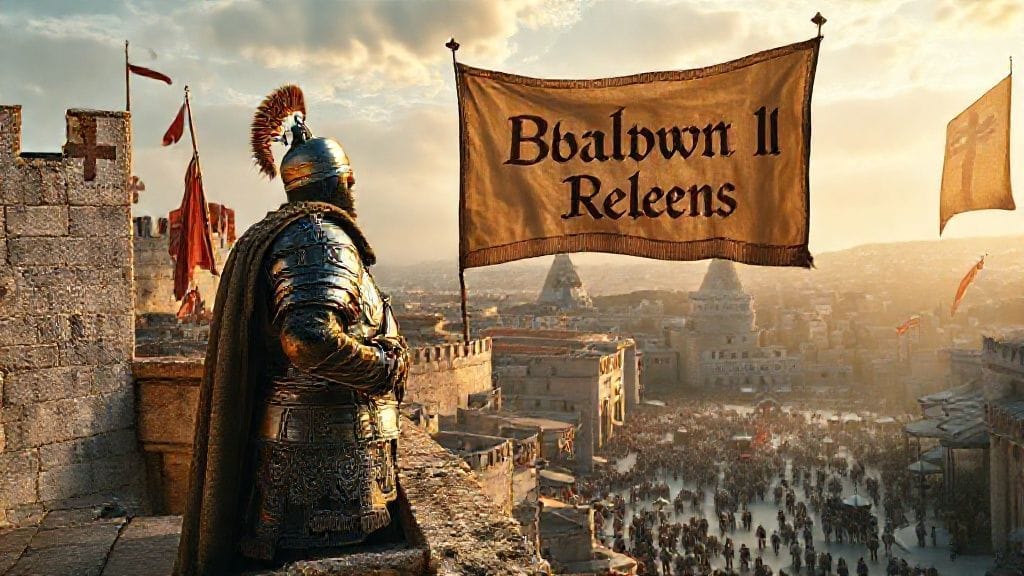
The sun dipped low over the silhouette of Constantinople in the early 1240s, casting long shadows over the fractured walls and battered ramparts that once proudly guarded the jewel of the Eastern Mediterranean. Despite the lingering grandeur of Byzantine architecture, the city bore the scars of recent strife and foreign occupation—scars that told stories of conquest, betrayal, and desperate survival. At the heart of this fragile empire, Baldwin II, the last Latin Emperor reigning in Constantinople, grappled not just with external foes but the very survival of his throne—and the promise of a fading dream that had first been forged by crusaders several decades earlier. The Latin Empire, born amid the chaos of the Fourth Crusade, was now nothing more than a tenuous hold on a city trembling between the ambitions of East and West.
2. Baldwin II Ascends to a Fragmented Throne
When Baldwin II inherited the crown in 1228 as a child, the empire was already a shadow of its former aspirations. Yet it was during the 1240s that the young emperor, now a man, sought to rekindle the embers of Latin authority amidst turbulence unrivaled in the city’s long history. Baldwin’s reign was a complex mixture of hope and desperation, a chronicle of a ruler caught between inherited debts of honor and the harsh realities of geopolitics. The empire he was charged to govern had shrunk, lost much of its wealth and military might, and was consistently threatened by neighboring powers eager to snatch Constantinople back for themselves.
3. The Legacy of the Fourth Crusade: Seeds of Discord
The Latin Empire’s uneasy foundation lay in the dramatic detour of the Fourth Crusade in 1204, when crusaders—originally en route to the Holy Land—besieged and sacked Constantinople. Instead of liberators, they became conquerors, carving out a new Latin realm atop Byzantium’s ruins. This foundational betrayal sowed deep distrust among Greek Orthodox populations, while also fracturing Christendom itself. Latin rulers struggled to impose Western feudal structures on a population and traditions that belonged to a different world. Baldwin II’s reign inherited this legacy, one rife with cultural tensions and relentless opposition.
4. Constantinople’s Changing Fortunes: From Glory to Desolation
Once the imperial capital of the Eastern Roman Empire, Constantinople remained a prize of immense symbolic and strategic value. But by Baldwin II’s time, its power was a pale reflection of its storied past. Economic decline, war damage, and depopulation had drained the city of its former vibrancy. The great marketplaces that once thrummed with commerce had grown quiet. Narrow, winding streets echoed with whispers of a fading past. Yet, even amid desolation, the city was a melting pot of cultures that lent it a fractured but persistent vitality—Latin crusaders mingling uneasily with Greeks, Armenians, Venetians, and Genoese.
5. Political Landscape in the 1240s: Enemies at Every Gate
The 1240s presented Baldwin II with a perilous strategic environment. The resurgent Empire of Nicaea, under Theodore II Laskaris and other dynamic leaders, expanded ever closer to reclaiming Constantinople. The Despotate of Epirus also posed a threat, driven by regional ambitions and Byzantine nostalgia. To the west, the Republic of Venice maintained uneasy dominance over maritime routes and Black Sea access, mixing cooperation with exploitation. Baldwin’s Latin Empire was caught between these forces—surrounded, embattled, and ever fragile.
6. Baldwin II’s Quest: Reclaiming Authority Amid Chaos
Despite the enormity of his challenges, Baldwin II was determined to restore Latin control and prestige. His early rule was defined by tireless diplomatic efforts to secure military aid and financial support from Western Europe. He traveled far and wide—spending time in France and Italy—trying to rally crusading nobles, monarchs, and the Pope to his cause. Yet the Latin Empire was viewed as a lost cause by many, and Baldwin’s pleas were often met with indifference or skepticism. Still, the emperor’s persistence illuminated a deep personal commitment to reclaiming a legacy nearly lost.
7. Alliances and Betrayals: Diplomacy in a Turbulent Era
Baldwin’s reign was a constant tightrope walk between fragile alliances and inevitable betrayals. The Venetians, whose fleet was crucial for holding Constantinople’s lifelines, were both allies and mercenary opportunists. At the same time, the Emperor had to manage relations with regional lords, both Latin and Greek, who harbored their own ambitions. Baldwin’s diplomatic maneuvering revealed both his political savvy and the limits of his power—the Latin Empire was no longer a monolith but a patchwork quilt held together by brittle threads.
8. Economic Struggles: The Empire’s Waning Wealth
One of the most pressing challenges for Baldwin II was the dire economic situation. The Latin Empire suffered from depleted coffers, disrupted trade routes, and the devastation of agricultural lands in the countryside. Constantinople’s forced reliance on Venetian merchants further eroded local economic autonomy. Baldwin’s reign saw multiple attempts to reform taxation and stabilize the economy, but medieval Europe’s broader crises and the specific conditions of the shattered empire limited these efforts. This economic fragility undermined military capacity and political stability in equal measure.
9. The Role of the Venetian Republic: Patron or Puppetmaster?
Venice, the dominant naval power of the Mediterranean, played a decisive role in the fate of the Latin Empire. The Republic’s merchants controlled key trade routes and fortified quarters in Constantinople, with Venice effectively operating as a shadow authority. Baldwin II’s rulership was both supported and constrained by Venetian interests. The delicate relationship—part partnership, part exploitation—highlighted the complex interplay of commerce, power, and sovereignty. Many historians argue Venice held the strings of the throne more than the emperor himself.
10. Military Campaigns: Battles Lost and Won in the Shadow of Giants
Militarily, Baldwin’s Latin Empire fought a desperate defensive war. Smaller armies, plagued by lack of resources and manpower, faced off against the growing forces from Nicaea and Epirus. Several key skirmishes and sieges defined the 1240s, often pushing the limits of the empire’s endurance. While Baldwin managed occasional successes, the momentum was increasingly against Latin control. It was a war of attrition, where even small victories served as temporary relief rather than decisive turns.
11. Norman Ambitions and Nicaean Resurgence: The Empire’s Two-Pronged Threat
Further complicating the landscape were the ambitions of the Normans, who controlled parts of southern Italy and sought to exert influence over the Balkans. Meanwhile, the Nicaean Empire emerged as the principal Byzantine successor state, determined to restore Orthodox rule in Constantinople. Theodore II Laskaris and his successors embodied a renewed vigor that attracted support from disaffected Greeks and other regional powers. The Latin Empire had to balance threats from both directions, a struggle that drained its remaining vigor.
12. Baldwin II’s Court: A Melancholy Center of Power
Inside the imperial palace, Baldwin II’s court was a microcosm of the empire’s overall predicament: a mixture of solemn duty, faded grandeur, and persistent uncertainty. Chroniclers describe a ruler often weighed down by debt and despair, yet driven by a resolute belief in his mission. His court included Latin nobles, mercenaries, and clerics, many of whom were expatriates yearning for the lost splendor of Western Europe. The atmosphere was bittersweet, with ceremonial pomp shadowed by the knowledge of impending decline.
13. Cultural Interactions: Latin, Greek, and Other Worlds Collide
Baldwin’s reign was marked by a complicated cultural tapestry—Latin Catholic rulers presiding over a largely Greek Orthodox population, with Armenian, Frankish, Venetian, and other ethnic groups intertwined. This mixture created daily tensions: religious conflict, language barriers, and diverging customs challenged governance. Yet it also produced pockets of cultural exchange, where art, architecture, and scholarship reflected an uneasy fusion of East and West. These interactions shaped the city’s character during the fleeting recovery.
14. The Siege Threats and Defenses of Constantinople
One of the most defining realities of Baldwin’s tenure was the constant threat of siege. The city’s walls, ancient but still formidable, provided a crucial bulwark. Baldwin invested considerable efforts into maintaining and repairing fortifications, organizing defenses, and rallying troops. The psychological weight of a city under siege—its citizens living with the daily fear of conquest—gave a dramatic urgency to every decision. Each attack became a test of Latin resilience and a moment to stoke hope amidst despair.
15. The Brief Recovery: Political and Symbolic Victories of the 1240s
Remarkably, the 1240s did witness moments where Baldwin II’s leadership restored some measure of stability and authority. Diplomatic successes brought limited military aid. The reaffirmation of alliances with Western monarchies boosted morale. The emperor achieved brief recoveries of outlying territories, and the symbolic importance of holding Constantinople—however tenuously—offered a beacon for Latin Christendom. These gains were fragile, ephemeral, but crucial reminders that the empire was not yet entirely lost.
16. The Fragile Nature of Latin Rule: Internal Divisions and External Pressures
Yet beneath these hopeful signs, the Latin Empire’s foundations remained perilous. Rivalries within the Latin nobility, discontent among subject populations, and relentless external attacks undermined the stability Baldwin sought so desperately. The empire lacked the cohesion and resources to unify its disparate elements, and internal dissent frequently hampered collective defense. This chronic instability presaged the inevitable erosion of Latin authority.
17. The Yearning for Support from the West
Baldwin’s reliance on Western Europe for military and financial reinforcement was both a necessity and a vulnerability. Crusading enthusiasm had waned by the mid-13th century, and the papacy was distracted by other conflicts and ambitions. Baldwin’s personal appeals—to the French crown, the Holy Roman Empire, and even the Papal Curia—reflected both diplomatic skill and increasing desperation. The slow and uncertain flows of aid became symbolic of the empire’s liminal status—caught between continents but fully embraced by neither.
18. The Papacy’s Role and the Eastern Christian Question
Religion was not merely spiritual but a decisive political factor. The Latin Empire was a Catholic establishment imposed on Orthodox populations, and this religious division shaped its alliances and conflicts. The papacy’s endorsement was a double-edged sword—it legitimized the empire but also deepened resentment among Greeks. Efforts at church union or rapprochement repeatedly stumbled, contributing to the empire’s alienation and internal fractures.
19. Baldwin II’s Legacy: A Prelude to the Fall of the Latin Empire
By the end of the 1240s, Baldwin II’s brief resurgence efforts had yielded little durable change. His reign was remembered as an era of poignant bravery shadowed by inexorable decline. Despite his commitment and occasional victories, the Latin Empire’s demise was accelerating. Baldwin’s struggles and failures became emblematic of a polity caught in the tides of history—a realm born in conquest, fated to be a fleeting experiment.
20. The Fall of the Latin Empire and the Restoration of the Byzantine Empire
The Latin Empire’s brief revival was merely a closing chapter in a longer saga. By 1261, Constantinople fell back into Greek hands under Michael VIII Palaiologos, restoring the Byzantine Empire. Baldwin II’s attempts in the 1240s had delayed but could not prevent this outcome. The fall marked not only the end of Latin ambitions in the East but the reassertion of Byzantine identity, signaling new chapters of cultural renaissance and renewed conflict in the centuries ahead.
21. Conclusion: The Fleeting Revival of a Lost Crown
Baldwin II’s leadership during the 1240s stands as a testament to human tenacity in the face of overwhelming odds. The Latin Empire’s brief revival was less a restoration of former glory than a poignant struggle to preserve identity and hope amid collapse. Constantinople, with its layered histories, bore witness to an empire's last flicker—a lesson in the fragility of conquest, the endurance of memory, and the relentless march of history. What Baldwin could not hold, others would soon reclaim—but his era remains an essential chapter in the story of East meets West.
Conclusion
The decade of the 1240s unfolded as a desperate dance between survival and decline for the Latin Empire under Baldwin II. His determined yet often forlorn efforts to recover authority and legitimacy typify the complex interplay of ambition, resilience, and tragedy that marked this period. The Latin Empire, once a bold new power forged by crusaders, was by then an empire of shadows—still claiming a title but struggling to fulfill its promise. Baldwin II’s reign humanizes this historical crossroads, revealing the emotional weight borne by rulers wrestling with fate, legacy, and the shifting tides of empire. The brief recovery of the 1240s endures as a compelling episode: a moment when the impossible seemed within reach, if only fleetingly, and when a lost crown was worn with dignity amid the ruins of a fallen world.
FAQs
Q1: What was the Latin Empire and how did it come into existence?
A1: The Latin Empire was established in 1204, following the Fourth Crusade’s sack of Constantinople. Crusaders diverted from their original mission to the Holy Land, conquering Byzantine territories and setting up a Western European governed empire on former Byzantine lands.
Q2: Who was Baldwin II, and why is he significant?
A2: Baldwin II was the last Latin Emperor, ruling from his youth in 1228 through the 1240s and beyond. His reign marked a period of tenuous control in Constantinople amidst external threats and internal weaknesses, symbolizing the empire’s last stand.
Q3: What were the main external threats facing the Latin Empire during Baldwin II’s reign?
A3: The resurgent Empire of Nicaea and the Despotate of Epirus were major Byzantine successor states threatening Latin holdings. Additionally, the Normans and shifting Venetian interests posed significant military and diplomatic challenges.
Q4: How did Baldwin II attempt to regain power and stability?
A4: Baldwin relied heavily on diplomatic missions to Western Europe to solicit military and financial assistance. He also worked to reinforce Constantinople’s defenses and managed complex alliances with Venice and regional lords.
Q5: Why did the Latin Empire ultimately fail to sustain itself?
A5: In addition to military pressure and economic weakness, the empire suffered from deep cultural and religious divisions, internal factionalism, and lack of consistent Western support, all culminating in its fall in 1261.
Q6: How did the Latin occupation affect Constantinople culturally?
A6: The occupation sparked cultural hybridity as Latin Catholics governed a predominantly Greek Orthodox populace, leading to both conflict and exchange in religion, language, and art.
Q7: What was Venice’s role during Baldwin II’s reign?
A7: Venice was a crucial ally but also a self-interested power controlling vital maritime trade and territories in Constantinople, often wielding economic influence that constrained the emperor’s autonomy.
Q8: What happened to Baldwin II after the Latin Empire’s fall?
A8: After Constantinople’s fall in 1261, Baldwin II continued to claim the imperial title in exile, seeking further support from Western rulers but never regaining his throne.

