Table of Contents
- The Dawn of a New Age: Seville on the Brink
- The Iberian Peninsula in the 13th Century: A Fragmented Mosaic
- The Rise of Castile: Ambitions and Strategies
- Almohad Decline: The Crumbling Power of Muslim Al-Andalus
- Ferdinand III of Castile: The King of Reconquest
- Preparing for Siege: Castilian Forces Gather by the Guadalquivir
- The Siege Begins: November 1247
- Life Inside Seville’s Walls: Civilians and Defenders in the Shadow of War
- The Naval Campaigns: Controlling the Guadalquivir
- Siege Warfare in the Middle Ages: Tactics and Technologies at Play
- Turning Points: The Struggles and Breakthroughs of 1248
- Negotiations, Deceptions, and the Fall of Seville
- November 23, 1248: The Triumphant Entry of Castilian Forces
- The Aftermath: Transforming Seville into a Christian Stronghold
- Repercussions for Al-Andalus and the Islamic World
- The Role of Religion and Identity in the Reconquista
- Economic and Cultural Changes in Post-Conquest Seville
- The Memory of Seville’s Fall in Iberian History and Literature
- Sequels to Victory: The Rio Tinto and the Final Push to Granada
- Legacy of the Reconquista: The Birth of Modern Spain
- The Global Impact: How Seville’s Capture Influenced Europe and Beyond
- Conclusion: Seville’s Fall as a Turning Point in History
- FAQs: Understanding the Siege of Seville
- External Resource: Further Reading and Research
- Internal Link: Visit History Sphere for More Historical Narratives
The late autumn sun dipped toward the Guadalquivir River, casting long shadows over the formidable walls that encircled the ancient city of Seville. From the watchtowers, the besieged inhabitants — a blend of Andalusi Muslims steeled by years of uncertainty — could see the advancing army of Castile tightening its grip. The air was heavy with the sounds of clanging armor, whispered prayers, and the distant thud of siege engines. The city, once a jewel of the Islamic world in Iberia, was about to face its most profound transformation in centuries. November 23, 1248, was more than a date on a calendar; it was a chapter closing with sorrow, a dawn cracking open onto a new epoch shaped by sword, faith, and destiny.
This is the story of Seville’s capture by the Christian Kingdom of Castile — a narrative woven from shifting alliances, desperate endurance, and the inexorable drive of a reconquest that would redraw the map of Europe forever.
The Iberian Peninsula in the 13th Century: A Fragmented Mosaic
The Iberian Peninsula in the 1200s was anything but united. Instead, it was a complex tapestry of diverse kingdoms, cultures, and religions. Christian powers — notably Castile, Aragon, and Portugal — had expanded relentlessly southward, pressing into territories long held by the Muslim dynasties collectively known as Al-Andalus. Yet the Islamic presence was far from a monolith; fractured into smaller taifas after the decline of the great Almoravid and Almohad empires, these realms struggled to maintain their sovereignty and cultural identity against mounting pressure.
Seville itself, formerly the Almohad capital in the region, represented a critical prize. Its strategic location along the Guadalquivir, vibrant markets, and formidable fortifications made it both a jewel to covet and a base for further conquest.
The Rise of Castile: Ambitions and Strategies
In the mid-13th century, Castile was under the rule of King Ferdinand III, a shrewd and devout monarch whose vision transcended mere territorial gain. He saw the Reconquista not only as a noble crusade to reclaim lands for Christendom but also as an opportunity to unify the fragmented Peninsula under Christian rule.
Castile’s military was robust and well-organized, capitalizing on advances in siegecraft and logistics. Ferdinand III forged alliances with Aragon and Portugal, coordinated military campaigns, and mobilized massive armies. His ambition to capture Seville was central to altering the balance of power decisively.
Almohad Decline: The Crumbling Power of Muslim Al-Andalus
Behind the defensive walls of Seville, however, the reality was stark. The once-mighty Almohad Caliphate had fractured under internal strife and external challenge. The loss of cohesion meant that local leaders struggled to mount a coordinated defense. Morale among Seville’s defenders was a mixture of stoicism, fear, and hope for relief that never fully materialized.
Moreover, the erosion of central authority was exacerbated by economic strain — the flow of trade disrupted by warfare, dwindling manpower, and a populace caught between loyalty to faith and survival.
Ferdinand III of Castile: The King of Reconquest
Ferdinand III was more than a king; he was a symbol of a new Christian hegemony. Canonized centuries later, his piety was intertwined with pragmatic politics. Behind the scenes, his court was bustling with advisors, chroniclers, and diplomats who painted the capture of Seville as a pivotal moment in Christian history.
His leadership during the siege was decisive — balancing the morale of his troops, the intricacies of siege warfare, and political negotiations that would shape the city’s fate.
Preparing for Siege: Castilian Forces Gather by the Guadalquivir
As autumn waned in 1247, the Castilian forces began amassing on the plains surrounding Seville. Thousands of knights, infantrymen, engineers, and sailors coordinated a complex operation, positioning themselves to encircle the city.
The river itself became a theater of war: control of the Guadalquivir was vital to cut off supplies and reinforcements. Coastal and riverine engagements became frequent, featuring galleys captained by seasoned soldiers.
The Siege Begins: November 1247
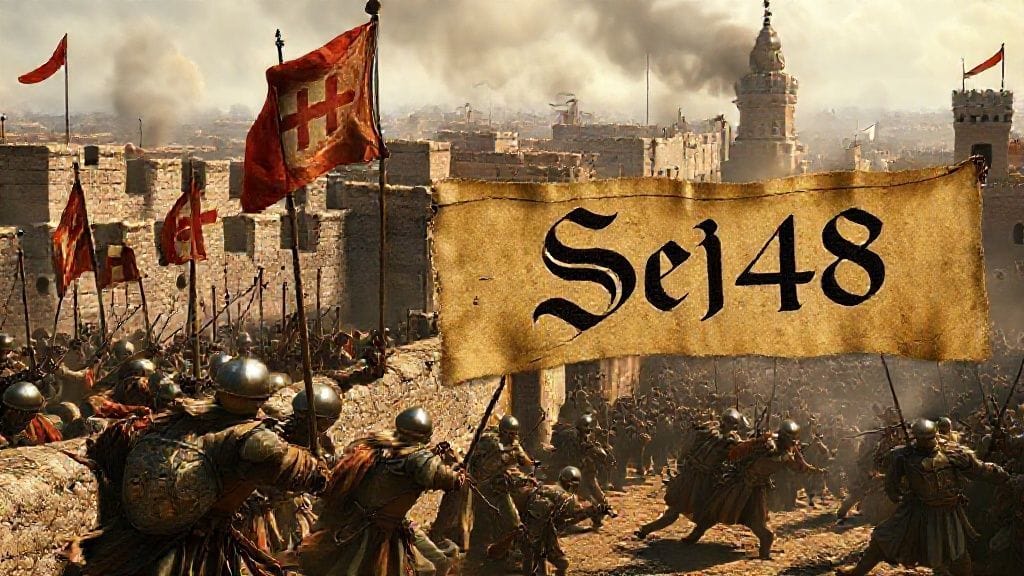
When the first battering rams struck the gates and siege towers rolled forward, the people of Seville braced for a trial that would last nearly a year. The defenders fortified their positions, readying catapults, boiling oil, and archers to repulse the invaders.
But Castile’s strategy was relentless and multifaceted: starvation, psychological warfare, and cutting off the city’s lifelines were all underway. The Norman-style siege engines, crossbows, and mercenary forces introduced dynamics Seville’s defenders had seldom faced at such scale.
Life Inside Seville’s Walls: Civilians and Defenders in the Shadow of War
The siege was not only a military operation; it was a human ordeal. Inside the city walls, families huddled in cramped quarters, markets emptied, and food supplies grew perilously low. The rich cultural life that once animated Seville—its mosques, libraries, and bustling trade—quieted into a stifling vigil.
Chroniclers later recounted stories of both courage and despair, including scenes of famine, disease, and internal dissent. The social fabric was fraying, yet the people’s resilience remained.
The Naval Campaigns: Controlling the Guadalquivir
A pivotal element in the siege was controlling the Guadalquivir River. Castilian sailors, supported by naval contingents from allied Christian realms, engaged Muslim fleets in bitter clashes. Naval superiority was crucial to isolating Seville and preventing outside aid.
These battles tested the tactical innovation of both sides, involving fast galleys, boarding actions, and cunning river maneuvers unseen before in many parts of Iberia.
Siege Warfare in the Middle Ages: Tactics and Technologies at Play
The capture of Seville showcased the evolution of medieval siege warfare. Castilian engineers deployed trebuchets hurling massive stones to chip away at walls, while undermining and scouting operations probed for weaknesses.
Defenders countered with sorties, repairing walls, and utilizing the city’s natural defenses. This cat-and-mouse game tested leadership, morale, and technological aptitude in equal measure.
Turning Points: The Struggles and Breakthroughs of 1248
As 1248 unfolded, several key moments shifted the tide. A Catastrophic fire engulfed parts of Seville’s outer districts, exacerbating the chaos inside. Castilian forces found breaches after weeks of bombardment. Negotiations quietly commenced amid rumors of desertions and internal strife.
Yet, the defenders fought fiercely, delaying the inevitable even as hope waned.
Negotiations, Deceptions, and the Fall of Seville
Behind battle lines, a complex diplomatic dance unfolded. Secret envoys brokered terms as hunger gnawed and the city's leadership debated surrender.
Ultimately, on November 23, 1248, Seville’s Muslim rulers capitulated, agreeing to terms that spared civilian life but ceded control. The peaceful, solemn procession of Christian troops into the city marked both an end and a beginning — a shift from centuries of Islamic rule to Christian dominion.
November 23, 1248: The Triumphant Entry of Castilian Forces
The day resonated with symbolism and ceremony. King Ferdinand III entered Seville beneath banners, flanked by clergy and knights, proclaiming the city reclaimed for Christendom. The great mosque was consecrated as a cathedral, signaling not only politico-religious conquest but a reordering of identity.
Crowds cheered, but echoes of sorrow lingered. The changed landscape bore witness to a hard-earned victory wrapped in complexity.
The Aftermath: Transforming Seville into a Christian Stronghold
Following the conquest, Ferdinand initiated urban restructuring. Islamic institutions were supplanted or repurposed, new settlers arrived from northern realms, and the economy realigned toward European trade networks.
The Reconquista had transformed both land and culture, with Seville emerging as a vital center in the nascent Kingdom of Castile.
Repercussions for Al-Andalus and the Islamic World
Seville’s fall sent ripples through remaining Muslim polities in Iberia, hastening the erosion of Al-Andalus. It also resonated across the broader Islamic world, as the Christian reconquest deeply wounded the prestige and control of Muslim dynasties on the Peninsula.
For centuries, tales of resistance and loss would be woven into collective memories and histories.
The Role of Religion and Identity in the Reconquista
The capture of Seville was as much a spiritual conquest as a military one. The intertwining of faith and politics framed the conflict — Christian crusading zeal met Islamic resistance rooted in centuries of tradition.
This collision forged identities and narratives that profoundly influenced Spanish culture and medieval Christendom.
Economic and Cultural Changes in Post-Conquest Seville
In the decades following, Seville transformed into a thriving commercial hub. The river port flourished, fostering trade beyond Iberia into the Mediterranean and, eventually, the New World centuries later.
Art, architecture, and scholarship reflected new hybrid identities, where Islamic, Jewish, and Christian influences mingled unevenly across time.
The Memory of Seville’s Fall in Iberian History and Literature
Seville’s capture inspired poets, chroniclers, and chroniclers who captured the drama of loss and conquest. The event carved deep emotional landscapes, becoming a symbol of Christian triumph and Muslim resilience in the cultural imagination.
Stories of bravery and tragedy permeated oral histories and written records alike.
Sequels to Victory: The Rio Tinto and the Final Push to Granada
Far from the end, Seville’s fall encouraged Castile to press on toward Granada, the last Muslim stronghold. Subsequent campaigns leveraged Seville’s new resources, enabling the final chapters of the Reconquista, culminating in 1492.
Thus, Seville was both a prize and a launchpad.
Legacy of the Reconquista: The Birth of Modern Spain
The conquest marked a step toward Spain’s unification under Catholic monarchs. It set patterns of religious homogeneity, imperial ambition, and cultural transformation that defined early modern Spanish identity.
The long shadow of these events shaped Europe and its emerging colonial empires.
The Global Impact: How Seville’s Capture Influenced Europe and Beyond
Beyond Iberia, the fall of Seville contributed to shifts in Mediterranean power balances. The Christian reconquest opened new opportunities for maritime expansion, trade routes, and cross-cultural exchanges.
Seville itself would become a gateway to the Age of Discovery, linking continents and histories in unprecedented ways.
Conclusion
Seville’s fall to Castile on that cold November day in 1248 was far more than a military victory; it was a fulcrum in the great turning wheel of history. It etched a moment when cultures clashed and intertwined, when faith fueled wars of destiny, and when new worlds began to emerge on the ashes of old conflicts.
The story of the siege and capture reminds us that history is never a simple tale of winners and losers. It is a tapestry woven from courage, loss, hope, and transformation — facets that continue to resonate in the heart of Spain, and indeed, the world.
FAQs
Q1: What caused the Siege of Seville in 1247-1248?
The siege was driven by Castile’s ambition under King Ferdinand III to reclaim Muslim-held territory and complete the Christian Reconquista in southern Iberia. Seville’s strategic and economic significance made it a prime target in this expansion.
Q2: How long did the siege last?
The siege lasted nearly a year, beginning in November 1247 and culminating in November 1248, reflecting the city’s formidable defenses and the complex military operations involved.
Q3: Who was Ferdinand III and what was his role?
Ferdinand III was King of Castile and León, a devout Christian monarch who led the military campaign against Seville. His leadership was decisive in organizing forces and negotiating the city’s surrender.
Q4: What were the immediate consequences of Seville's fall?
Seville became a Christian city, its mosque converted into a cathedral, and its social, economic, and cultural institutions reorganized. It also became a key center for further reconquest efforts and later maritime ventures.
Q5: How did the siege impact the Muslim population of Seville?
While the surrender spared many lives, the Muslim population faced displacement, religious conversion pressures, and cultural changes as Christian rule was established.
Q6: How is the Siege of Seville remembered today?
It is remembered as a pivotal moment in Spanish history, symbolizing both the culmination of the Reconquista and the transformation of Iberia’s religious and cultural landscape.
Q7: What role did naval power play during the siege?
Control of the Guadalquivir River was critical for blockade and supply. Castilian naval forces engaged Muslim fleets to establish dominance, cutting off Seville from reinforcements and resources.
Q8: How did the capture of Seville influence future European history?
It established Castile as a dominant power, paved the way for Spain’s unification, and laid a foundation for the exploration and colonization efforts that would reshape the global order.

