Table of Contents
- The Fateful Dawn near Jenin: Setting the Stage for Ain Jalut
- The Mongol Sundering: Origins and Expansion of a Fearsome Empire
- The Rise of the Mamluks: Slave Soldiers to Sovereigns of Egypt
- From Baghdad to the Levant: Mongol Conquests and Near Invincibility
- Shadows of Invasion: The Mongol Threat Looms over the Islamic World
- The Mamluk Sultanate’s Resolve: Preparing for an Unprecedented Challenge
- The Tides of War Align: The Battlefield and Forces at Ain Jalut
- September 3, 1260: The Clash That Shook Empires
- Strategy and Bravery: The Mamluk Art of War Unfolds
- The Turning Point: How the Mamluks Shattered the Mongol Myth
- Leadership in Crisis: Sultan Qutuz and Baibars’ Decisive Decisions
- The Aftermath: Mongol Retreat and the Resurgence of the Levant
- The Ripple Effect: Shifts in Power across the Islamic World
- Ain Jalut’s Global Significance: An Unlikely Halt to Conquest
- The Human Cost: Soldiers, Cities, and Communities in the Wake of Battle
- Cultural Reverberations: Memory and Mythmaking around Ain Jalut
- Lessons from the Battlefield: Military Innovations and Legacy
- Historiographical Perspectives: How Ain Jalut Was Remembered
- The Mongols’ Changing Ambitions after Ain Jalut
- Ain Jalut in Modern Imagination: Nationalism, Identity, and History’s Echoes
- Conclusion: The Enduring Legacy of Ain Jalut in World History
- FAQs: Understanding the Battle, its Players, and its Impact
- External Link: Wikipedia on the Battle of Ain Jalut
- Internal Link: Visit History Sphere
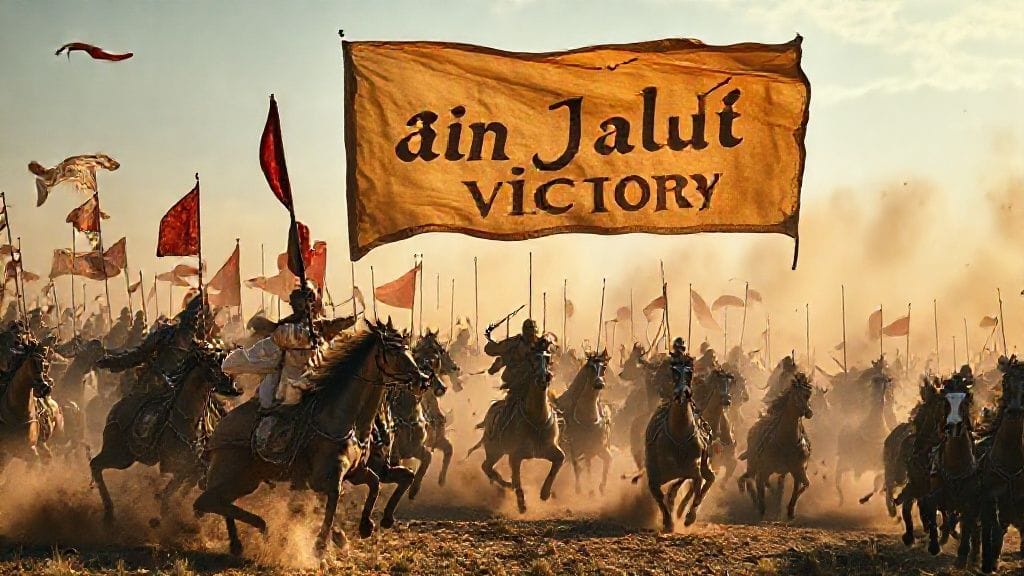
The sun was just rising over the rolling hills near the ancient town of Jenin, its light casting long shadows across a landscape already thick with tension and anticipation. Hundreds of experienced horsemen, dust clinging to their armor, sat poised for combat—a clash of titans that would decide the fate of empires. Little did they know this would be a watershed moment, the first time the seemingly unstoppable Mongol tide would be decisively checked. This was the dawn of the Battle of Ain Jalut.
The sheer horror of the Mongol conquests was still fresh in many minds. Cities laid to ruin, trembling populations, the thunder of hooves sweeping across Asia and the Middle East like a tempest of destruction. For decades, the Mongol horde had seemed invincible, their empire rising faster and fiercer than the world had ever seen. Yet, here, in the autumn of 1260, amidst the hills and plains of the Levant, the Mamluks—former slaves turned warrior elite—would stand firm and reshape history.
The Mongol Sundering: Origins and Expansion of a Fearsome Empire
To grasp the magnitude of Ain Jalut’s historical importance, one must first understand the vast Mongol empire that surged across Eurasia. In the early 13th century, under Genghis Khan, the Mongols transitioned from disparate tribes on the Central Asian steppes to the architects of the largest contiguous empire the world had ever witnessed. The swift, brutal campaigns obliterated resistance from China to Eastern Europe. Their strategies were ruthless but effective: lightning-fast cavalry, psychological warfare, and a network of spies and messengers that kept their armies coordinated.
By the mid-13th century, the Mongols had crushed the Khwarezmian Empire, destroyed the Abbasid Caliphate’s capital Baghdad in 1258—an act that shook the Islamic world to its core—and had their sights set on the Levant. Their invasion was not just motivated by conquest but also by strategic control of key trade routes and religious-political dominance.
The Rise of the Mamluks: Slave Soldiers to Sovereigns of Egypt
But the Levant was defended by no ordinary foes. The Mamluks of Egypt, originally slave soldiers brought from Central Asia and the Caucasus, had risen from servitude to power over a century. By 1250, they had seized control of Egypt, establishing a dynasty that combined military prowess, religious legitimacy, and political cunning.
The Mamluks’ discipline and training made them formidable. They were expert cavalrymen, fluent in archery and swordplay, steeped in Islamic scholarship and courtly culture. With Sultan Qutuz at the helm in 1260, and the charismatic commander Baibars by his side, they were poised to face the Mongol threat as both a pragmatic and existential matter.
From Baghdad to the Levant: Mongol Conquests and Near Invincibility
The Mongol army sent to the Levant was led by Kitbuqa, a seasoned general and loyal to the Great Khan. After sweeping through Syria, the Mongols had bested local forces and marched towards Egypt. The sense of inevitability hung heavy; few had survived confrontations with these warriors.
Yet, fate dealt a twist. The death of the Great Khan Mongke forced the majority of Mongol forces back east to participate in the succession struggle, leaving Kitbuqa’s contingent isolated. The stage was set for a confrontation that would test both Mamluk resolve and Mongol prestige.
Shadows of Invasion: The Mongol Threat Looms over the Islamic World
In Egypt, the news of the Mongol advance sparked urgency and fear. The Abbasid Caliphate was shattered, and the Mamluks understood that their own realm was the next target. If the Mongols succeeded, the Islamic heartlands—from Egypt to Arabia—could fall under foreign domination.
Yet the Mamluks, led by Qutuz, mustered their forces rapidly. They forged alliances with local powers, calling upon not just horsemen and infantry, but also administrators and religious scholars who framed this war in sacred terms—a defense of Islam itself.
The Mamluk Sultanate’s Resolve: Preparing for an Unprecedented Challenge
The preparation of the Mamluks was as strategic as it was psychological. The army, disciplined and highly mobile, marched north with a purpose. There was little room for error. Qutuz famously vowed to punish any who showed cowardice, underscoring the battle’s existential significance.
Ain Jalut, near the springs (the name means “Spring of Goliath”), was chosen for its terrain—ideal for ambush tactics and cavalry maneuvers. The Mamluks knew they were facing a foe that relied heavily on mobility and archery; their response would rely on similarly fast-moving horse archers and heavy cavalry charges.
September 3, 1260: The Clash That Shook Empires
The morning mist slowly dissipated on that early September day as the two armies spotted one another. The Mongol force, though depleted, remained confident. Kitbuqa’s troops had the reputation of invincibility and battle-hardened troops who had never been defeated.
The battle commenced with typical Mongol tactics: feigned retreats and archery salvos designed to lure enemies out of formation. But the Mamluks were prepared. Baibars, a brilliant tactician, orchestrated a masterful feint and trap that slowly turned the tide.
Strategy and Bravery: The Mamluk Art of War Unfolds
Mamluk horse archers harassed the Mongol lines, drawing them into the reach of heavy cavalry hidden in the hills and ambush positions. The discipline and timing were exquisite. Rather than being overwhelmed, the Mongols found themselves surrounded.
The fighting was brutal—horsemen crashing, arrows piercing armor, cries and dust choking the battlefield. But the Mamluks pressed on, their weaponry and fierce resolve unyielding. The Mongols, whose usual tactical superiority had failed them for the first time, were cornered.
The Turning Point: How the Mamluks Shattered the Mongol Myth
At the pivotal moment, Sultan Qutuz personally led a cavalry charge, rallying his troops with a force of will and courage that would be recounted for centuries. Kitbuqa was captured and executed, and with the Mongol general slain, the surviving horsemen scattered and fled.
For the first time, the shadow that had loomed over the Islamic world had been broken. The fearsome Mongol advance was halted. It was a shattering blow to the myth of Mongol invincibility.
Leadership in Crisis: Sultan Qutuz and Baibars’ Decisive Decisions
The battle’s success owed much to the decisive leadership of Qutuz and Baibars. Qutuz, despite his short reign, proved to be a visionary commander who understood the stakes beyond mere conquest: the identity and survival of his people were at risk.
Baibars, who would later become sultan himself, showed himself as an able commander, combining tactical innovation with an intuitive grasp of Mongol methods. Their partnership was brief but historic, a confluence of talents that changed the course of history.
The Aftermath: Mongol Retreat and the Resurgence of the Levant
Following Ain Jalut, the Mongols retreated northwards, unable to sustain campaigns that far from their heartlands, especially with succession crises distracting their main forces. The Mamluks consolidated control over Syria and Palestine, stabilizing a region ravaged by years of conflict.
Relief and jubilation spread through the Islamic world. The city of Cairo, once threatened, became the beacon of resistance and revival.
The Ripple Effect: Shifts in Power across the Islamic World
Ain Jalut was not just a military victory but a turning point in power dynamics. The Mamluks inherited the mantle as defenders of the Islamic world, and their regime flourished culturally and politically for centuries.
The Mongols, though still powerful in Persia and Central Asia, no longer projected their horrors into the heart of the Levant or Egypt. This recalibration gave breathing room for Islamic societies to rebuild and develop.
Ain Jalut’s Global Significance: An Unlikely Halt to Conquest
From a global perspective, the battle demonstrated that relentless conquest could be overcome, even in the face of seemingly insurmountable odds. Ain Jalut thwarted what might have been Mongol domination of the Middle East and even North Africa.
This check on the Mongol advance had profound implications: it preserved the cultural and political continuity of the Islamic world, influencing the balance between East and West for centuries to come.
The Human Cost: Soldiers, Cities, and Communities in the Wake of Battle
Yet, amid the glory were the tragic human costs. Thousands died on the battlefield; families lost sons, brothers, and fathers. Towns like Jenin and surrounding villages bore scars and had to navigate the chaos of war’s aftermath.
For everyday people, the conflict was more than political—it was survival, loss, and the haunting memory of invasion.
Cultural Reverberations: Memory and Mythmaking around Ain Jalut
Over time, Ain Jalut achieved mythic status in Islamic and world historiography. It was celebrated as proof of divine favor, a marker in the Muslim consciousness of resilience.
Poets, chroniclers, and historians wove tales of valor and sacrifice, turning the battle into a symbol of hope against overwhelming odds. The very name “Ain Jalut” became synonymous with resistance.
Lessons from the Battlefield: Military Innovations and Legacy
The battle showcased Mamluk military innovations—effective use of combined arms, psychological warfare, and deep knowledge of terrain. Their tactics influenced subsequent warfare in the region and beyond.
The lesson was clear: adaptability and leadership could neutralize even the most terrifying forces.
Historiographical Perspectives: How Ain Jalut Was Remembered
Western and Eastern chroniclers differently interpreted Ain Jalut. Some Mongol sources treated it as a temporary setback, while Muslim historians elevated it to divine victory.
Modern historians analyze it as a complex event—less myth, more strategic brilliance and circumstance.
The Mongols’ Changing Ambitions after Ain Jalut
Post-Ain Jalut, Mongol expansion shifted focus. The empire fragmented into khanates, and direct advances into the Levant ceased. Their ambitions turned inward and towards Persia and China.
This battle, thus, marked a definitive boundary in Mongol imperial aspirations.
Ain Jalut in Modern Imagination: Nationalism, Identity, and History’s Echoes
In the modern Middle East, Ain Jalut is invoked in nationalistic and cultural discourse—a potent symbol of unity against foreign invasion.
It reminds many that history is not only about conquest but also about enduring spirit and resilience—a narrative powerful even today.
Conclusion
The Battle of Ain Jalut stands as a defining moment in history—a testament to courage, strategy, and the indomitable will of a people defending their land and identity. It was a rare event: the first great military defeat of the Mongol empire, reshaping the fate of the Middle East and echoing through the centuries.
Behind the clash of swords and the thunder of hooves lay stories of leaders who grasped the gravity of their moment and soldiers who fought not just for victory, but survival. Ain Jalut’s legacy is a poignant reminder that history’s tides may surge, but they can be held back by human resolve and the art of war.
It remains an enduring symbol of hope, courage, and the complex dance between destiny and agency. The battle, remembered through generations, invites us to reflect on how even the mightiest forces can be stopped—and how resilience, above all, defines the human story.
FAQs
1. What were the main causes behind the Battle of Ain Jalut?
The battle arose from Mongol expansion into the Middle East, threatening the Mamluk Sultanate in Egypt and the Levant. The Mamluks sought to defend their territories and stop the Mongol advance, which was facilitated by the Mongols’ northern forces being weakened due to internal succession struggles.
2. Who were the key leaders involved in the battle?
Sultan Qutuz led the Mamluks, with the tactical genius of Baibars playing a crucial role. The Mongols were commanded by Kitbuqa, one of the Great Khan’s trusted generals.
3. Why was the Battle of Ain Jalut significant in world history?
It marked the first major defeat of the Mongols, halting their westward expansion. This preserved the existence of several Islamic states and influenced political and cultural developments in the Middle East.
4. What military tactics were employed by the Mamluks that led to their victory?
They executed strategic feigned retreats, ambushes, and coordinated cavalry charges. The use of terrain and superior knowledge of Mongol strategies allowed them to encircle and defeat the Mongol forces.
5. How did the aftermath of Ain Jalut affect the Mongol Empire?
The Mongols retreated and refocused on internal matters. Their expansion into the Levant stopped, and the empire later fragmented into distinct khanates.
6. What impact did the battle have on the Mamluk Sultanate?
It solidified their position as a dominant power in the Middle East and guardians of Islamic lands. The victory boosted their legitimacy and allowed for political and cultural flourishing.
7. How is Ain Jalut remembered in modern Middle Eastern cultures?
It is celebrated as a symbol of resistance and national pride, often invoked in narratives of identity and unity against foreign threats.
8. Are there lasting cultural or historical legacies from the Battle of Ain Jalut?
Yes, it remains a celebrated event in Islamic history, symbolizing triumph against a seemingly invincible foe and influencing military doctrine and historiography in the region.