Table of Contents
- The Tense Frontier: Iberia’s Mosaic in the Late 13th Century
- After a Century of Conflict: Setting the Stage for Truce
- The Kingdom of Granada: Last Muslim Stronghold in Iberia
- The Crown of Castile: A Rising Christian Power
- Jaén: The Bloodied Borderland
- Political and Military Context of the 1290s
- The Fragile Balance: Why Both Sides Needed Peace
- The Negotiators and Their Interests
- The First Truce Agreements: Terms and Conditions
- The Role of Diplomacy in a War-Weary Land
- Daily Life Along the Frontier: Soldiers, Merchants, and Civilians
- The Impact of Truces on Trade and Cultural Exchange
- Moments of Fragility: Skirmishes and Broken Promises
- Jaén as a Strategic Pivot: Fortresses and Garrisons
- Symbolism of the Truces in the Iberian Reconquista
- The Influence of the Papacy and External Powers
- Perspectives from Muslim and Christian Chroniclers
- The Truces’ Effect on Later Iberian Politics
- The Long Shadow: Iberian Frontiers Beyond the 1290s
- Human Stories from the Border: Letters and Anecdotes
- The Architecture of Peace: Castles and Signal Towers
- Lessons from the Granada–Castile Frontier Truces
- Conclusion: The Complexity of Peace in a Divided Land
- FAQ: Understanding the Granada–Castile Frontier Truces
- External Resources
- Internal Link: Visit History Sphere
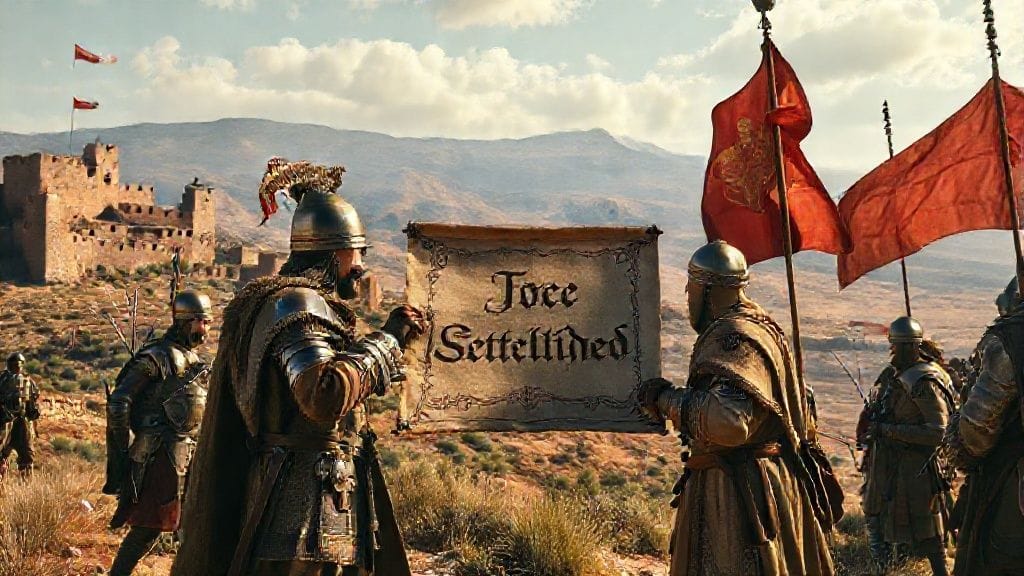
In the shimmering dawn of a cool autumn day, the air along the rugged borderlands of Jaén was thick with anticipation and apprehension. For decades, this narrow strip of land where the Kingdom of Granada met the might of Castile had been soaked in blood and smoldering ashes. Yet today, murmurs of a fragile peace whispered from the hillsides. The Granada–Castile frontier, heavily scarred by relentless skirmishes and campaigns, was about to enter a new phase — truce and cautious cohabitation that would redefine the very landscape of medieval Iberia.
The 1290s did not just usher in a ceasefire; they marked a profound transformation in the medieval politics of the Iberian Peninsula. These frontier truces, negotiated with painstaking care and fraught with suspicion, were more than mere pauses in conflict. They embodied the complex interplay of religious rivalry, cultural exchange, political pragmatism, and human endurance in a land forever poised between war and peace.
The Tense Frontier: Iberia’s Mosaic in the Late 13th Century
Iberia in the late 13th century resembled a grand mosaic of cultures, faiths, and ambitions. The Reconquista — the centuries-long Christian effort to reclaim Muslim-held territories — was entering its twilight stages. Yet, despite Castile’s military successes, the Emirate of Granada remained a resilient Muslim enclave, clinging to the south with tenacity born of desperation and hope.
Bordered by jagged mountains and fertile valleys, the frontier around Jaén was not simply a political dividing line but a living, breathing space of tension and interaction. This frontier zone pulsed with the movement of soldiers, traders, artisans, and spies — each actor playing a vital role in shaping its destiny.
After a Century of Conflict: Setting the Stage for Truce
The 1290s did not appear out of nowhere. They were the culmination of a century of fluctuating fortunes, alliances, and betrayals. In the decades prior, Castile had consolidated vast territories, pushing Muslims gradually southward, while Granada managed to survive through smart diplomacy and a determined defense. However, continuous warfare had drained resources and frayed nerves. Both powers sensed a tipping point, a moment where continuous hostilities could no longer be sustained without risking total catastrophe.
By the late 13th century, large-scale warfare was giving way to a pragmatic acceptance of the necessity for negotiated truces. It was a slow, reluctant realization that coexistence — temporary and conditional — was an essential step toward long-term objectives.
The Kingdom of Granada: Last Muslim Stronghold in Iberia
Granada represented the enduring heartbeat of Islamic Iberia. Governed by the Nasrid dynasty, the kingdom was small but strategically vital — controlling key passes, fertile lands, and important trade routes. The Nasrids' diplomatic acumen rivaled their military prowess. Although they owed nominal allegiance to the Almohad caliphate’s fading legacy, Granada had effectively become an independent entity, balancing precariously between submission and defiance.
Despite constant threats, the Nasrid court invested heavily in fortifications and cultural sophistication. Cities like Granada itself became beacons of Andalusian art, science, and governance — a last flourishing of Al-Andalus civilization amid the relentless Christian press.
The Crown of Castile: A Rising Christian Power
Castile had been burgeoning into a dominant force on the Iberian Peninsula, fueled by dynamic kings and expanding aristocracy. The union with León, the conquest of newly acquired territories, and advances in administration created an emerging powerhouse. For Castile, Granada was both an obstacle and an opportunity — a remaining piece to complete the Christian reclamation.
In the 1290s, Castile was governed by King Sancho IV, who confronted internal nobility disputes while pressing forward militarily. The Kingdom recognized that outright conquest was difficult and costly; therefore, negotiation became a valuable tool, complementing the sword.
Jaén: The Bloodied Borderland
Jaén was the geographic and symbolic fulcrum of these frontiers. Possessing key fortresses like the Castle of Santa Catalina, it represented Castile’s forward bastion against Granada's incursions. The land itself was a scarred witness to centuries of raids, sieges, and pitched battles.
Life on this border wasn’t merely military; local populations lived under threat but also benefited from the crossing of ideas and goods. Peasants and townsfolk experienced moments of peace and violence in quick succession, embodying the volatility of the era.
Political and Military Context of the 1290s
Throughout the 1290s, military expeditions continued intermittently, though outright wars gave way to a pervasive stalemate. Both sides fortified defenses and engaged in cautious raids intended to test the opponent’s resolve without provoking full-scale retaliation.
Politically, the internal stability of both kingdoms was a factor. Castile was balancing the demands of its nobility and clergy, while Granada was managing complex relations with powerful Muslim factions and the Christian states around it. The Mediterranean powers, such as Aragon and the Marinid dynasty in North Africa, also exerted influence.
The Fragile Balance: Why Both Sides Needed Peace
War had worn down confidence and resources on both fronts. For Granada, the threat of collapse loomed with every campaign. For Castile, a prolonged conflict risked rebellion among its nobles and exhaustion of its treasury.
Diplomatic truce was thus a valuable respite. It allowed both kingdoms to regroup, fortify, and engage in trade — a paradoxical coexistence of enemies bound by necessity and mutual recognition.
The Negotiators and Their Interests
Negotiations took place through emissaries and envoys, including clerics, nobles, and even merchants who understood the delicate art of frontier diplomacy. These figures navigated a labyrinth of demands: territorial claims, tribute payments, prisoner exchanges, and guarantees of non-aggression.
Both sides sought to use truces as means to project strength and avoid appearing weak — a complex dance where trust was minimal and every clause weighed heavily in the balance of power.
The First Truce Agreements: Terms and Conditions
The resulting truces of the 1290s included strict conditions designed to limit offensive operations. Key stipulations demanded the cessation of raids, respect for borders, and sometimes pledged non-aggression pacts lasting for a pre-set number of years.
Tribute — in money or goods — often flowed from Granada to Castile, marking a tacit acknowledgment of Castilian superiority but also binding the relationship in economic ties.
The Role of Diplomacy in a War-Weary Land
Diplomacy became not just a political necessity but a cultural and social phenomenon. Envoys exchanged gifts and letters, feasts were held under guarded neutrality, and ceremonies punctuated the uneasy calm.
Letters survive hinting at the behind-the-scenes intrigues, betrayals, and secret assurances exchanged that no formal treaty could document fully. This diplomatic maneuvering tempered hostility and created channels for dialogue amid ongoing enmity.
Daily Life Along the Frontier: Soldiers, Merchants, and Civilians
For the common folk, the truces enabled fragile pockets of stability. Markets reopened, roads became safer for trade caravans, and some sense of normality returned, though always tempered by the fear of sudden violence.
Soldiers rotated between garrison duty and recruitment drives, while families on both sides learnt to live alongside a shadow of "the other" — sometimes neighbors turned foes overnight.
The Impact of Truces on Trade and Cultural Exchange
Economic ties blossomed quietly. Merchants took advantage of reduced hostilities to transport goods such as textiles, spices, and metals. Intellectual and cultural exchanges persisted, with artisans and scholars crossing borders when possible.
This paradoxical interplay of conflict and cooperation enriched both societies despite political adversities.
Moments of Fragility: Skirmishes and Broken Promises
Yet, the peace was brittle. Skirmishes flared over disputed lands, accusations of betrayal circulated, and individual commanders occasionally broke terms for advantage or revenge.
Such incidents threatened the fragile truce, reminding all parties that peace, in these years, was a constant negotiation, not a fixed state.
Jaén as a Strategic Pivot: Fortresses and Garrisons
The network of castles in Jaén exemplified the militarized peace. Fortresses acted as both bulwarks and symbols of control, overseeing valleys and passes essential to defense.
The flow of reinforcements, supplies, and intelligence through Jaén shaped the frontiers’ security and defined the limits of truce endurance.
Symbolism of the Truces in the Iberian Reconquista
The truces of the 1290s symbolized a chapter not of absolute victory but of mutual respect enforced by exhaustion. They foreshadowed the gradual integration and eventual collapse of Muslim Granada, which would fall in 1492, but also illustrated the long nuances of frontier life before the final conquest.
They underscored the intricate interdependence of Christian and Muslim realms in Iberia’s twilight centuries.
The Influence of the Papacy and External Powers
The papacy’s role was notable, often encouraging truces framed as steps toward a Christian victory while urging restraint. Papal legates sometimes mediated or blessed agreements, adding a layer of spiritual authority to political accords.
Meanwhile, North African powers and Aragonese interests shaped negotiations, seeking to influence outcomes favorable to their own expansionist hopes.
Perspectives from Muslim and Christian Chroniclers
Muslim chroniclers like Ibn al-Khatib painted the period with a mix of sorrow and admiration for the Nasrid resilience. Christian sources emphasized the calculated strength of Castile but admitted the difficulty of total conquest.
These accounts provide rich, if partial, narratives of an era where truth was often a matter of allegiance.
The Truces’ Effect on Later Iberian Politics
The agreements set precedents for future diplomacy. They demonstrated that negotiation, tribute, and coexistence were tools as powerful as armies. Future Iberian rulers would adopt these lessons, using frontier truces as means to consolidate power while preparing for eventual dominance.
The Long Shadow: Iberian Frontiers Beyond the 1290s
Though the 1290s truces eventually gave way to renewed conflict, the patterns established endured. The borderlands remained a place of shifting control, cultural blending, and diplomatic innovation into the 15th century.
They remind us that medieval frontiers were fluid, contested, and alive.
Human Stories from the Border: Letters and Anecdotes
Fragments of letters, local chroniclers’ tales, and oral traditions reveal vivid human moments: a Castilian captain negotiating the release of a captive child; a Muslim merchant sending spices southward under truce protection; lovers divided by faith and politics dreaming of peace.
These stories enliven the dry chronicles and bring history closer to the soul.
The Architecture of Peace: Castles and Signal Towers
The fortifications were not only military but communication hubs. Signal fires, watchtowers, and roads linked the castles, enabling rapid responses and warnings that shaped the military geography of peace.
Their design reflected a pragmatic acceptance of enduring tension, where peace was ever on the brink of war.
Lessons from the Granada–Castile Frontier Truces
These truces teach a timeless lesson: that peace requires endurance, negotiation, and mutual recognition even between sworn enemies. The frontier was less a line of division than a space of dialogue, conflict, and accommodation.
Understanding this history nuances the romantic conflict of Reconquista into a story of human complexity.
Conclusion
The frontier between Granada and Castile in the 1290s was a crucible of transition — a place where swords were sheathed not out of weakness but from war-weariness and strategy. These truces reveal how medieval society grappled with the burdens of conflict and the possibilities of peace. Far from a simple ceasefire, they were rich, complicated moments of diplomacy, culture, and survival.
The legacy of these agreements is not merely a footnote in the Reconquista but a testament to the endurance of human hope and the intricacy of historical change. In the shifting shadows of granite castles and olive groves, the peoples of Iberia forged a delicate balance that would shape centuries to come.
FAQ
Q1: What were the main causes behind the Granada–Castile frontier truces in the 1290s?
The prolonged warfare drained resources and morale on both sides. Political instability, military stalemate, and mutual desire to avoid further devastation created a mutual interest in negotiating peace.
Q2: Who were the key figures involved in negotiating these truces?
Envoys were often nobles, clergy members, or trusted officials representing King Sancho IV of Castile and the Nasrid rulers of Granada. Specific names remain sparse but reflected political elites and diplomatic agents.
Q3: What terms were typical in these frontier truces?
Common clauses included cessation of raids, respect for borders, tribute payments from Granada to Castile, prisoner exchanges, and agreements to avoid hostility for a defined period.
Q4: How did these truces affect the local populations along the frontier?
They enabled temporary stability for farmers, traders, and townspeople, reducing violence and encouraging commerce, though underlying tensions and the threat of renewed fighting remained.
Q5: In what ways did these truces influence Islamic-Christian relations in Iberia?
The truces demonstrated that despite conflict, pragmatism often governed relations, allowing periods of peaceful coexistence, trade, and cultural exchange before the eventual Christian conquest.
Q6: Were the truces completely respected, or were there breaches?
Truces were fragile and occasionally broken by skirmishes or opportunistic commanders. However, both sides generally sought to maintain them due to strategic necessity.
Q7: How did external powers, like the papacy or North African dynasties, influence these truces?
The papacy promoted peace aligned with Christian interests and occasionally mediated agreements. North African dynasties provided diplomatic and sometimes military support to Granada, influencing truce negotiations.
Q8: What is the historical significance of these truces in the broader Reconquista narrative?
They mark a crucial phase of transition from continuous warfare to negotiation, framing the eventual collapse of Muslim rule and highlighting the complexity of medieval frontier politics.

