Table of Contents
- Introduction
- Early Life in Liège
- Rise to Power
- Coronation as King of the Franks
- Military Campaigns and Conquests
- Religious Reform and Papal Alliance
- Coronation as Emperor in 800
- Administrative Innovations
- Cultural Renaissance and Learning
- Legal Reforms and Capitularies
- Relationship with the Church
- Succession and Death
- Legacy and European Identity
- Charlemagne’s Myth and Memory
- Conclusion
- External Resource
- Internal Link
1. Introduction
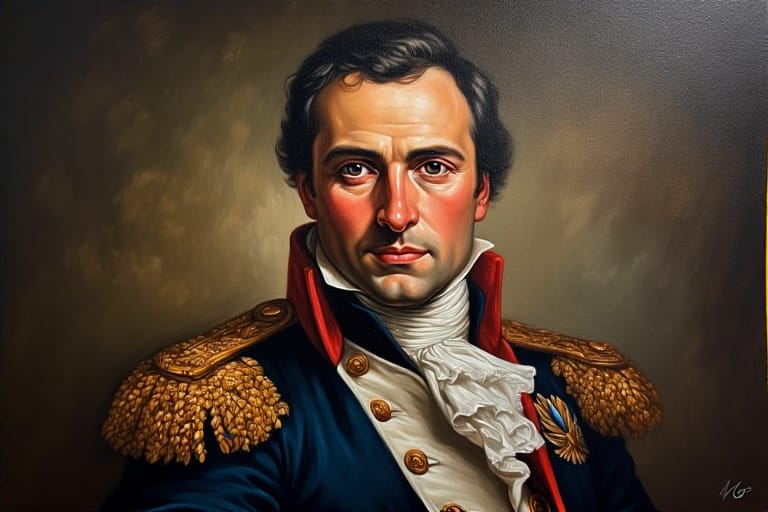
Charlemagne, also known as Charles the Great, stands as one of the most influential figures in European history. Crowned Emperor in 800, he is remembered for uniting a large portion of Europe under one banner and laying the groundwork for what would later become the Holy Roman Empire. But his journey began humbly in Liège, in present-day Belgium, on April 2, 747.
2. Early Life in Liège
Charlemagne was born into the Carolingian dynasty, the son of Pepin the Short and Bertrada of Laon. His early life in Liège was surrounded by the traditions of the Merovingian court, but it was clear even in youth that Charles was destined for more.
Though little is documented about his childhood, Charlemagne likely received a practical education in statecraft, religion, and military strategy—tools he would master as he rose to power.
3. Rise to Power
In 768, upon the death of Pepin, the Frankish kingdom was divided between Charlemagne and his brother Carloman. This division did not last long—Carloman died unexpectedly in 771, leaving Charlemagne as the sole ruler of the Franks.
From then on, Charlemagne began consolidating and expanding his realm with singular focus and determination. His vision was not just territorial but cultural and spiritual, seeking to restore the unity of the Roman Empire in a Christian context.
4. Coronation as King of the Franks
Charlemagne officially became King of the Franks in 768, but it was after Carloman’s death that he wielded complete control. He was crowned again in a more symbolic ceremony to consolidate his authority and underscore his divine right to rule.
The Frankish realm was already formidable, but under Charles’s leadership, it would become the largest empire in Western Europe since the fall of Rome.
5. Military Campaigns and Conquests
Charlemagne’s military conquests were central to his legacy:
- The Lombards in Italy (773–774): He deposed King Desiderius and took the Iron Crown.
- The Saxons: A prolonged and bloody campaign lasting over 30 years, ending in forced Christianization.
- The Avars in Central Europe: A crushing victory that secured his eastern frontier.
- Campaigns in Spain: Limited success, including the famed Battle of Roncevaux Pass, immortalized in the Song of Roland.
His military prowess expanded his empire to encompass present-day France, Germany, the Low Countries, Austria, Northern Italy, and beyond.
6. Religious Reform and Papal Alliance
Charlemagne saw Christianity as the glue that could bind his vast empire. He worked closely with the papacy, supported monastic reform, and sponsored the standardization of liturgy and church doctrine.
He saw himself as a defender of the faith, a role he leveraged to assert both secular and spiritual authority.
7. Coronation as Emperor in 800
On Christmas Day, 800, in St. Peter’s Basilica in Rome, Pope Leo III crowned Charlemagne Emperor of the Romans. This act revived the imperial tradition in the West and laid the ideological foundation for the Holy Roman Empire, which would last until 1806.
The coronation was not just symbolic; it marked Charlemagne as the successor to the ancient Roman emperors and further strengthened ties between Frankish power and the Church.
8. Administrative Innovations
To govern such a vast realm, Charlemagne introduced administrative reforms:
- Created the role of missi dominici (royal envoys) to oversee local counts.
- Standardized coinage and measurements.
- Implemented a system of capitularies, written directives for governance.
These changes increased central authority and improved communication across the empire.
9. Cultural Renaissance and Learning
Charlemagne’s reign sparked the Carolingian Renaissance, a revival of art, literature, and education:
- Founded the Palace School in Aachen, with Alcuin of York as head scholar.
- Promoted the use of Latin and preservation of classical texts.
- Sponsored the creation of Carolingian minuscule, a clear script still used in medieval manuscripts.
His efforts were groundbreaking in re-establishing learning as a state priority.
10. Legal Reforms and Capitularies
Charlemagne issued dozens of capitularies, royal edicts covering everything from legal procedure to moral conduct. These helped unify and regulate the sprawling empire.
He often blended Roman, Germanic, and Christian principles to create a unique legal code that reflected his empire’s diversity.
11. Relationship with the Church
Charlemagne held enormous sway over church appointments, theology, and practice. He convened councils, corrected doctrine, and even took on a semi-priestly role at times.
Yet his power was balanced by his alliance with the Pope, which gave him legitimacy while allowing the Church to expand its influence.
12. Succession and Death
Charlemagne died on January 28, 814, in Aachen, the capital of his empire. He was buried in Aachen Cathedral, which still stands as a UNESCO World Heritage Site.
He was succeeded by his son, Louis the Pious, whose reign saw the beginning of the empire’s fragmentation.
13. Legacy and European Identity
Charlemagne is often called the Father of Europe. His efforts to unify disparate tribes and kingdoms under one rule, religion, and culture provided the blueprint for the modern nation-state.
He is revered in France and Germany, both of which claim him as a founding figure. His image was used by emperors and nationalists for centuries as a symbol of authority, civilization, and unity.
14. Charlemagne’s Myth and Memory
In the centuries following his death, Charlemagne became a mythic figure. He was canonized (though never officially recognized by the Catholic Church) and featured prominently in medieval epics.
To this day, he remains a subject of scholarly interest and political symbolism across Europe.
15. Conclusion
From a princely birth in Liège to emperor of a revived Roman Empire, Charlemagne reshaped the political and spiritual map of Europe. His reign was marked by military conquest, religious zeal, cultural renewal, and administrative innovation.
His dream of a unified Christian Europe echoes through the ages, reminding us that leadership, when combined with vision, can alter the course of history.