Table of Contents
- A Dawn over the Frozen Rivers: The Birth of a New Power
- The Waning Influence of the Golden Horde
- Dmitry Donskoy’s Legacy: Foundations of Authority
- The Early Reign of Vasili I: Challenges and Aspirations
- The Political Chessboard of Rus’: Allies and Enemies
- The Intricate Dance with the Tatars: Tribute and Resistance
- Moscow’s Expansion: Beyond Mere Survival
- Fortress and Faith: The Dual Pillars of Power
- The Role of the Russian Orthodox Church in Unifying the Duchy
- Socioeconomic Transformations: Growth Amidst Turmoil
- The Struggle for Succession: Stability Amidst Dynastic Tensions
- The Rise of Moscow’s Bureaucracy: Governance and Control
- The Strategic Marriages that Shaped Moscow’s Destiny
- The Mingling of Old and New: Cultural Shifts in the Grand Duchy
- The Role of the Military in Defining Authority
- The Fall of Rival Principalities: Integration into Moscow’s Sphere
- The Beginnings of a Narrative: Moscow as the “Third Rome”
- Economic Networks: Trade Routes and the Wealth of Moscow
- The Moscow Kremlin: Symbol of Emerging Sovereignty
- From Feudal Fragmentation to Centralized Power
- The Legacy of Vasili I and Prospects for Moscow’s Future
- Conclusion: The Quiet Forge of an Empire’s Soul
- FAQs – Unpacking the Rise of the Grand Duchy of Moscow
- External Resource
- Internal Link
A Dawn over the Frozen Rivers: The Birth of a New Power
Winter gripped the land in an icy embrace as the mighty rivers of Rus’ froze over, their glassy surfaces reflecting a pale, cold sun. Somewhere on the banks of the Moscow River, in the late 14th century, voices murmured in the shadow of ancient pines and wooden fortifications. It was a time of uncertainty—yet beneath the snowdrifts lay the brittle roots of a burgeoning power, restless and indigent but determined to rise. This was the Grand Duchy of Moscow under Dmitry–Vasilii, a formidable chapter in the story of Rus’ that would irreversibly alter the fate of Eastern Europe.
By then, the heritage of Mongol domination still poisoned the air, but a spirit of resilience burned quietly in the hearts of the Muscovite princes. The story that unfolded — of consolidation, struggle, and eventual ascendancy — was more than a political tale; it was the genesis of a nationhood, etched onto the frozen landscapes, rivers, and stone walls that would long witness Moscow's rise.
The Waning Influence of the Golden Horde
For over a century, the vast steppes had belonged to the Golden Horde, the Mongol khanate that ruthlessly dictated politics and economics across the Rus’ principalities. Its tributary demands, military raids, and dominion had left an indelible imprint on Eastern Europe. But by the 1370s, this great power was fracturing under internal strife and external pressures.
The once-mighty Horde had fractured into warring factions, each vying for dominance. This power vacuum beckoned the Rus’ princes to reconsider their futures. More than a mere shift in alliances, this was an epochal moment — the erosion of Mongol authority allowed new ambitions to surface. The Grand Duchy of Moscow was poised to stake a bold claim.
Still, tribute payments and symbolic submission to the khan remained the norms. The Rus’ princes wove a subtle dance of appeasement and covert sovereignty, strategically navigating between subjugation and autonomy. For Dmitry Donskoy before Vasili I, this had meant military defiance at Kulikovo and a fragile, hard-won prestige. For Vasili, the task was consolidation—transforming Moscow not just into a powerful principality, but into the nucleus of future Muscovite greatness.
Dmitry Donskoy’s Legacy: Foundations of Authority
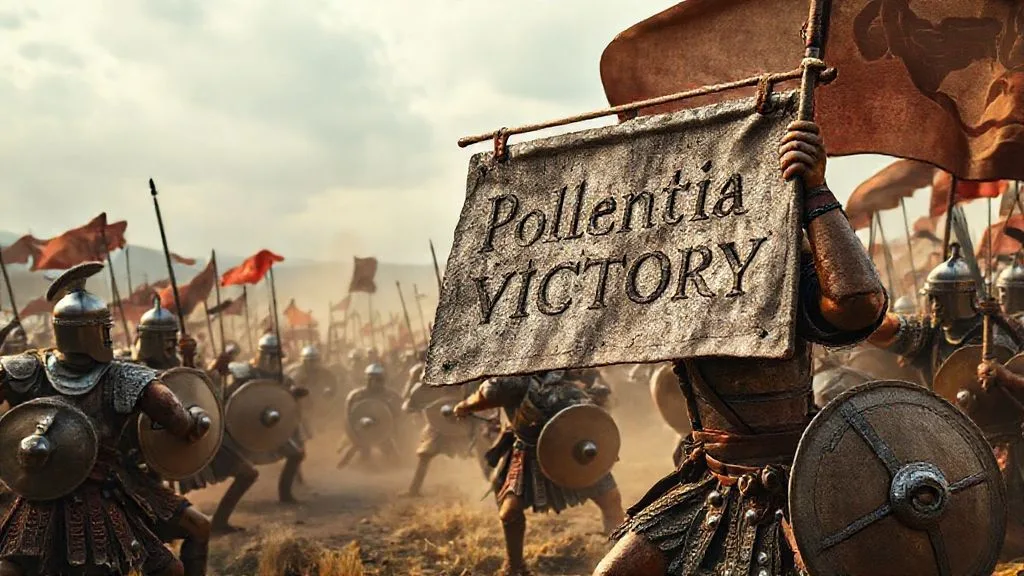
The thunder of hooves at the Battle of Kulikovo in 1380 still echoed in Muscovite memory. Dmitry Ivanovich, later known as Dmitry Donskoy, took a monumental step by challenging the Mongol yoke. Though the victory was not the outright liberation from Mongol overlordship many later imagined, it marked the first large-scale, coordinated Rus’ resistance.
Dmitry’s leadership was a testament to growing Muscovite diplomacy and military acumen. Notably, he had woven alliances with other principalities that were fragmented and exhausted by incessant raids, offering a glimpse of political maturity through unity.
Upon his death, however, the mantle passed uneasily. Vasili I, Dmitry’s son, inherited a realm still entangled in the delicate obligations to the Horde and internal discontent. Vasili’s reign (1389-1425) was not one of grand battles but of steady and strategic statecraft—deepening Moscow’s hold over Rus’ and redefining its political architecture.
The Early Reign of Vasili I: Challenges and Aspirations
Vasili I ascended the throne during tumultuous times. The Golden Horde was not only weakened but also vengeful, conducting sporadic raids that tested Moscow’s emerging resilience. Vasili’s genius lay in combining military vigilance with shrewd diplomacy.
His efforts extended beyond the battlefield. He sought legitimacy through marriages with neighboring dynasties, such as his marriage to Sophia of Lithuania, which stitched Moscow’s destiny ever more closely with its western neighbors. This union underscored a new geopolitical reality: Moscow was carving out a new axis of power, both east and west.
Yet, internal challenges loomed. Rival principalities viewed Moscow's rise with suspicion, and feudal fragmentation still defined much of Rus’. Vasili had to balance the coercive power of the sword with the soft influence of faith and alliances.
The Political Chessboard of Rus’: Allies and Enemies
Rus’ during the late 14th century was a fractured collage of principalities and city-states: Tver, Ryazan, Novgorod, and others vying for dominance. Moscow’s rise was constantly contested and scrutinized. The political landscape was a chessboard of shifting alliances, betrayals, and opportunism.
Tver remained a stubborn rival. Its princes refused to cede influence to Moscow. On the other hand, Novgorod, a wealthy mercantile republic, held a unique position; sometimes allying with Moscow, other times resisting its encroachments.
Vasili I had to exhibit the political dexterity of a seasoned player — neutralizing threats, integrating rivals diplomatically, and securing Moscow’s strategic edges, especially towards the vital trade routes that linked the Baltic and Black Seas.
The Intricate Dance with the Tatars: Tribute and Resistance
Despite Dmitry Donskoy’s defiance, Moscow remained, for decades, a tributary to the Golden Horde. Paying homage could be humiliating, but it was a pragmatic survival strategy. Vasili’s reign witnessed delicate negotiations with the Tatars, blending tribute payments with calculated gestures of submission and quiet assertion of independence.
One famous anecdote recounts how Vasili hosted Tatar envoys with respect yet skillfully deflected demands that might weaken Muscovite sovereignty. This long game gradually eroded the Horde’s grip, as the Grand Duchy cultivated strength internally while tactfully managing outward appearances.
The reality was complex: the Tatars were both the looming threat and reluctant patrons, providing legitimacy and a measure of protection at once. This intricate dance underscored the geopolitical sophistication developing under Moscow’s leadership.
Moscow’s Expansion: Beyond Mere Survival
The decades of Vasili’s rule saw Moscow expanding its territories—sometimes through military conquest, often via dynastic marriages or purchase agreements. The Grand Duchy’s borders pushed steadily outward, absorbing smaller principalities and towns that once enjoyed relative autonomy.
This expansion was not chaotic conquest but measured and deliberate growth. It laid the critical foundation for future Muscovite dominance over all Rus’. It fashioned a political entity with coherent governance, economic resources, and military capacity.
Yet this growth also sowed seeds of future internal tensions, as integrating diverse peoples and traditions required ever more complex administrative structures.
Fortress and Faith: The Dual Pillars of Power
Physical and spiritual fortresses defined Muscovite dominance. The Moscow Kremlin, reconstructed and fortified during this period, was a tangible emblem of strength and protection. Its walls safeguarded not only princes and armies but the heart of emerging centralized authority.
Simultaneously, the Russian Orthodox Church fortified Moscow’s ideological claim. As a spiritual center, the city sought to unite the fragmented Rus’ peoples under a common faith—a bedrock for political unity.
Vasili I supported the Church with grants and patronage, entwining the clergy with state interests. The Church, in turn, reinforced Moscow’s claim as the protector and inheritor of Orthodox traditions, especially as Constantinople’s influence waned after the fall of the Byzantine Empire.
The Role of the Russian Orthodox Church in Unifying the Duchy
The Church was more than an institution; it was the cultural and moral core knitting together Muscovite society. It provided not only religious rites but also education, literacy, and a shared identity that transcended feudal divides.
The elevation of Moscow's religious status was crucial. Its archbishops gained authority rivaling that of prince-bishops elsewhere, making the city not just a political capital but a spiritual beacon.
This ecclesiastical ascendancy fostered a self-conscious narrative of Moscow as the "Third Rome," a destiny that would define Russian identity for centuries.
Socioeconomic Transformations: Growth Amidst Turmoil
Beneath the toppling swords and fortifications, everyday life in the Grand Duchy evolved silently but profoundly. Towns grew, and trade increased despite the constant threat of raids. Peasants tilled fields, artisans honed their crafts, and merchants traveled along riverine and overland routes.
The socio-economic fabric grew more complex, marked by increasing stratification and bureaucratic specialization. This slow metamorphosis supported stronger princely rule and offered new opportunities—yet also hardened social divides.
Moscow’s control over critical trade routes boosted wealth, which was reinvested in military and civic infrastructure. The emergence of a nascent Muscovite nobility reflected this socioeconomic ascent.
The Struggle for Succession: Stability Amidst Dynastic Tensions
The legacy of Dmitry and Vasili was not without internal upheaval. Succession disputes and rival claims simmered quietly beneath the surface. Vasili’s position as heir seemed secure, but historians recount tensions that foreshadowed later dynastic crises.
Princely courts became arenas not only for governance but for competing factions, intrigue, and occasional violence. Managing these tensions demanded political acumen and a robust legal framework that the Grand Duchy was only beginning to develop.
The Rise of Moscow’s Bureaucracy: Governance and Control
Central to this period of consolidation was the emergence of a more formalized administrative system. Vasili I and his predecessors began professionalizing governance—appointing officials, codifying duties, and expanding record-keeping.
This bureaucracy was the backbone of the Grand Duchy's power, ensuring that decrees reached distant territories and that taxes flowed regularly to Moscow’s coffers. It marked a shift from a loose federation of principalities towards a centralized state.
Such reforms were subtle yet revolutionary, setting the stage for the autocratic structures that would characterize later Russian governance.
The Strategic Marriages that Shaped Moscow’s Destiny
Marriage was a powerful tool of statecraft. Vasili’s union with Sophia of Lithuania symbolized the Grand Duchy’s aspirations beyond militaristic expansion: it was a bridge between Orthodox Rus’ and the Catholic realms of Eastern Europe.
These alliances opened diplomatic channels, secured mutual defense pacts, and sometimes quelled potential conflicts. They laid the foundation for Moscow’s eventual leadership of a unified Slavic and Orthodox bloc.
This matrimonial diplomacy was slow, cautious, but increasingly effective in weaving Moscow into the broader tapestry of Eurasian power politics.
The Mingling of Old and New: Cultural Shifts in the Grand Duchy
The 14th and early 15th centuries were a time of cultural crosscurrents. Mongol influence lingered in military tactics and administrative methods. At the same time, Byzantine religious and artistic traditions infused Muscovite culture, especially after the fall of Constantinople in 1453.
The court became a crucible where varied traditions mixed—some ancient, some novel. Literature, iconography, and architecture took on unique forms, reflecting both adherence to Orthodox canons and pragmatic adaptations.
These cultural dynamics enhanced Moscow's self-image as not just a political power but as the spiritual heir of Eastern Christendom.
The Role of the Military in Defining Authority
While Moscow’s military forces were modest by later standards, their tactics and organization evolved greatly during Vasili’s tenure. Infantry, archery units, and cavalry became more systematically trained and deployed.
The legacy of intense conflict with the Tatars and internal rivals forged a pragmatic military doctrine rooted in mobility, fortifications, and diplomacy.
Military leaders were often also advisors and diplomats, meaning that power was exercised through both the sword and subtle negotiation.
The Fall of Rival Principalities: Integration into Moscow’s Sphere
Throughout Vasili’s lifetime, key rival principalities succumbed peacefully or through force to Moscow’s influence. Tver, once a dominant city-state, was gradually absorbed, its rulers subordinated.
This process of integration turned sporadic princely rivalry into structured hierarchy, with Moscow at the apex. It also involved the exchange of hostages, marriages, and oaths, weaving tighter bonds of loyalty.
Moscow’s ability to combine soft and hard power transformed the Rus’ landscape, setting a precedent for future Russian unification.
The Beginnings of a Narrative: Moscow as the “Third Rome”
Though the grand ideological concept of Moscow as the "Third Rome" would blossom later, the seeds were planted during Vasili’s reign. Moscow’s self-fashioning involved claiming the mantle of true Christian leadership after Byzantium’s fall.
Chroniclers and clerics began framing Moscow’s destiny in eschatological terms—a city not only of temporal power but spiritual inevitability.
This narrative imbued Muscovite policy with a sense of historic mission and helped unify the populace under a common purpose.
Economic Networks: Trade Routes and the Wealth of Moscow
Moscow’s geographical position provided access to vital trade routes stretching from the Black Sea to the Baltic and beyond into Central Asia. Control over these corridors encouraged urban growth and wealth accumulation.
The city became a nexus for goods such as furs, grain, fish, and crafted products. Trade also fostered contacts with foreign merchants, further integrating Moscow into the Eurasian economy.
This economic vitality underpinned the political centralization and military capacity that defined Vasili’s reign.
The Moscow Kremlin: Symbol of Emerging Sovereignty
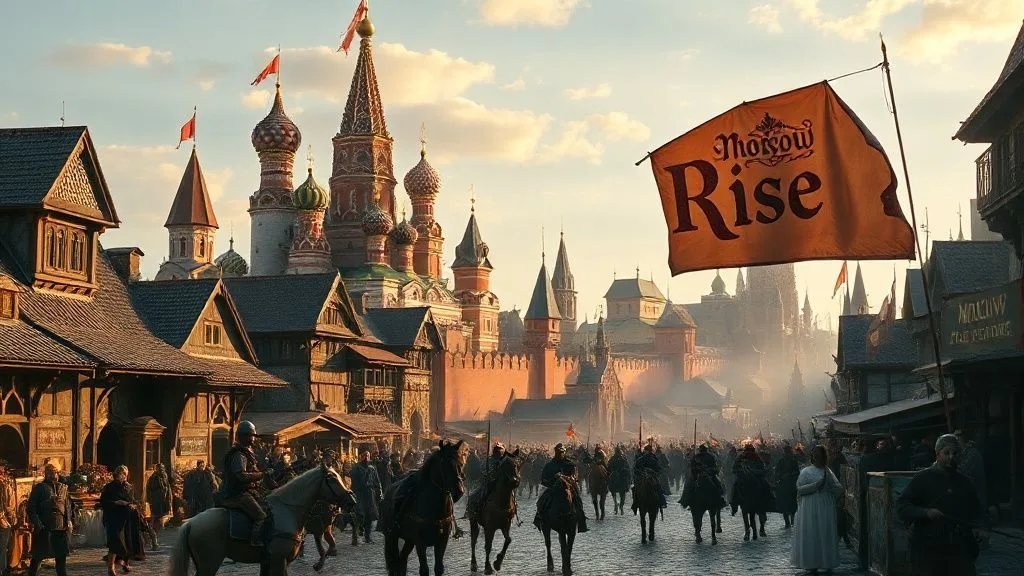
The Kremlin rose as the indomitable heart of Muscovite power—not just a military fortress but the administrative and ceremonial center. Its walls and towers were rebuilt and expanded during this period, signaling permanence and strength.
It housed the princely family, their court, and the highest government officials, embodying the union of secular and spiritual authority.
The Kremlin’s presence was a constant reminder to neighboring states that Moscow was no lightweight principality but a realm steadily claiming greatness.
From Feudal Fragmentation to Centralized Power
The rise of the Grand Duchy of Moscow under Dmitry–Vasilii is fundamentally the story of transformation—from a patchwork of feudal dominions struggling for survival, to a centralized state capable of projecting power across vast territories.
This shift was slow and incremental, punctuated by conflict, negotiation, and cultural synthesis. Vasili’s reign stands as a key turning point in this evolution—a period when the foundations of the Russian state were quietly but firmly laid.
The Legacy of Vasili I and Prospects for Moscow’s Future
Vasili I may not have left a dramatic trail of battles or conquests as his father did, but his steady hand ensured stability and growth. His reign set in motion processes that would continue for centuries, culminating in the Tsardom of Russia.
He secured Moscow’s dynastic survival, expanded its reach, and deepened its political, religious, and cultural roots. The Grand Duchy was no longer a fledgling polity but an emergent powerhouse.
For Moscow’s future rulers, Vasili’s legacy would be both inspiration and blueprint.
Conclusion
The Grand Duchy of Moscow’s rise under Dmitry and Vasili was not a story of spectacular conquests or legendary heroes alone—it was the patient forging of a state, tempered by hardship, diplomacy, faith, and vision. Through icy winters and turbulent politics, Moscow emerged from the shadows of domination to shape the destiny of Rus’ and Eastern Europe.
This metamorphosis from a modest river city to a seat of power embodies the resilience and ambition that would define Russian history. More than bricks and armies, Moscow’s rise was nurtured by a shared narrative—a determination to claim identity, sovereignty, and legacy.
As we gaze back across six centuries, the story of Dmitry and Vasili stands as a timeless testament to how the quiet work of consolidation and unity can, in time, shape empires.
FAQs
Q1: What were the main causes behind the rise of the Grand Duchy of Moscow during the 1370s-1390s?
A1: The main causes included the weakening of the Golden Horde’s control, the consolidation efforts of Dmitry Donskoy and Vasili I, strategic marriages, territorial expansion, and the rising influence of the Russian Orthodox Church, all fostering political centralization.
Q2: Who was Dmitry Donskoy, and why is his legacy important?
A2: Dmitry Donskoy was Vasili I’s father and a pivotal figure who led the Rus’ forces to victory at the Battle of Kulikovo in 1380, symbolizing defiance against Mongol domination. His reign laid foundations for Moscow’s future authority.
Q3: How did Vasili I consolidate Moscow’s power without large-scale wars?
A3: Vasili employed diplomacy, strategic marriages (notably with Lithuanian nobility), careful tribute negotiations with the Tatars, expansion through peaceful means, and strengthening of administrative institutions.
Q4: What role did the Russian Orthodox Church play in Moscow’s rise?
A4: The Church unified the diverse peoples under a common religious identity, legitimized princely authority, promoted the idea of Moscow as the spiritual successor to Byzantium, and supported centralization efforts.
Q5: Why was the Golden Horde’s decline significant for Moscow?
A5: It created a power vacuum that allowed Moscow to assert greater autonomy, gradually end Mongol dominance, and expand its territories without facing overwhelming external pressure.
Q6: How did economic factors contribute to the Grand Duchy’s strength?
A6: Control of key trade routes increased wealth, which was reinvested in military and civic infrastructure, supported a growing bureaucracy, and underpinned political power.
Q7: How did the concept of Moscow as the “Third Rome” begin?
A7: Though it matured later, ideas about Moscow’s divine destiny as the protector of Orthodox Christianity and its link to Byzantine heritage emerged during this period, shaping political and religious narratives.
Q8: What was the significance of the Moscow Kremlin during this era?
A8: The Kremlin symbolized emerging sovereignty—both a military fortress and administrative center—reflecting Moscow’s growing status as a political and spiritual capital.